
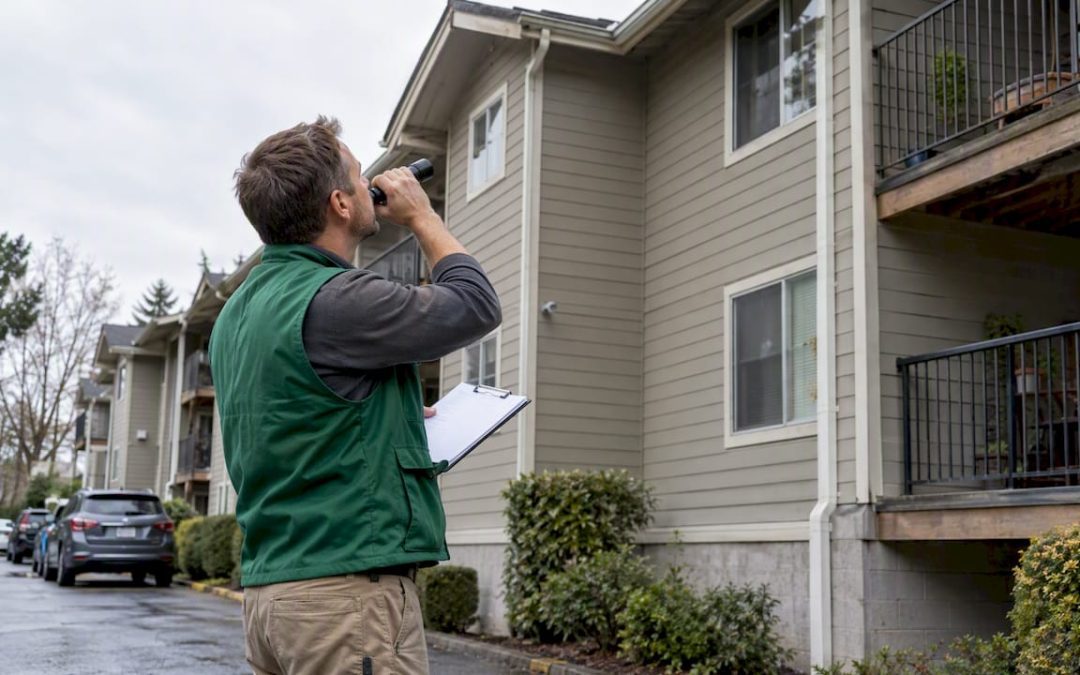
A purchase due diligence multifamily inspection checklist must cover five inspectable areas: site, building exteriors, building systems, common areas, and dwelling units. Priorities belong on life safety, deferred maintenance, and capital needs over cosmetic wear, and before ordering an inspection, confirm the lender or agency’s specific scope requirements, since HUD, Freddie Mac, and Fannie Mae each define their own report expectations.
TL;DR:
- Lenders’ scope requirements vary, so confirm minimum sample sizes and documentation expectations with each agency before inspection.
- Immediate safety hazards such as gas odors or blocked egress must be addressed before closing, while deferred repairs are documented with cost and lifespan estimates.
- Visual testing for mold, lead, asbestos, and radon triggers deeper sampling or specialist evaluations, especially in buildings constructed before 1978 or with moisture issues.
- Roof and other capital items require detailed examination of age, condition, and maintenance history, beyond just noting the installation date.
- Inspection reports are typically issued within 24 hours and include cost opinions, remaining useful life, photographic evidence, and recommendations aligned with lender protocols.
Table of Contents
- Checklist at a glance: the five inspectable areas
- Checking building systems and major capital items
- Environmental screening: when to sample or call a specialist
- Scope, sampling, and unit-selection rules for multifamily PCAs
- What the report should deliver and how lenders use it
- Ordering the inspection: documents, questions, and red flags
- Acting on the report: repairs, escrows, and financing decisions
- How we approach multifamily due diligence
- Multifamily and HUD-ready inspection services
- FAQ
- Sources
Checklist at a glance: the five inspectable areas
The HUD NSPIRE model organizes multifamily inspections into five areas, and it is now the reference point most property condition assessments build from, since it keeps inspectors focused on function, health, and safety rather than paint color or carpet stains. A useful walk-through confirms coverage of each zone before the inspector sets foot on site.
- Site: drainage, parking lot condition, retaining walls, fencing, and exterior lighting.
- Building exteriors: roof, siding, windows, foundation cracks, and signs of water intrusion.
- Building systems: HVAC, plumbing, electrical service, and fire protection equipment.
- Common areas: hallways, stairwells, laundry rooms, and accessible egress paths.
- Dwelling units: a representative sample of interiors covering appliances, fixtures, and unit-level safety devices.
Flag life safety items immediately: blocked egress, exposed wiring, gas odors, or missing smoke detectors go to the top of the report regardless of where they sit on the checklist. Our commercial inspection checklist walks through sampling rules in more depth for readers managing larger portfolios.
Checking building systems and major capital items
Roof age alone tells you little. Inspectors should note drainage patterns, flashing condition, membrane wear, and any patching history, since a roof with 5 years of visible life left changes the capital plan differently than one that is simply old but well maintained. HVAC checks go beyond “does it turn on”: capture nameplate data, confirm the system type, run a full cycle if possible, and look for filter and service records that suggest regular maintenance.
Plumbing inspection covers visible leaks, pipe material (older galvanized or cast iron piping often triggers a sewer lateral replacement or sewer scope), and, where applicable, septic or well system condition. Electrical panels need a direct look at service capacity, double-tapped breakers, and any exposed conductors, along with a check of life safety devices like hardwired smoke and carbon monoxide detectors.
For buildings with elevators, sprinklers, or fire alarm systems, inspectors should request current certificates and note any lapsed inspections.
- Roof: drainage, flashing, membrane wear, patch history.
- HVAC: system type, nameplate capacity, operational test, maintenance evidence.
- Plumbing: leaks, pipe material, septic or well status.
- Electrical: panel capacity, exposed wiring, life safety devices.
- Fire and life safety: elevator, sprinkler, and alarm certificates.
Pro Tip: Ask for dated photos of every major system’s nameplate. It settles disputes over age and capacity faster than a verbal description ever will.
Environmental screening: when to sample or call a specialist
Environmental hazards are where a straightforward inspection can turn into a negotiation. Moisture staining, musty odors, peeling paint in pre-1978 buildings, pest droppings, and proximity to old underground tanks are all triggers for deeper testing rather than a visual note.
- Mold and moisture: stains, odors, or recent water events warrant sampling.
- Asbestos and lead: pre-1978 construction or deteriorating materials call for lab testing.
- Radon: ground-contact units and common areas need direct measurement.
- Pests and belowground contaminants: droppings, damage, or old fuel tanks justify a specialist review.
EPA guidance recommends sampling radon in all ground-contact units and common areas touching the ground, with a representative portion of units on higher floors tested following AARST protocols. EPA’s radon assessment protocols set the baseline most multifamily radon programs follow, and mitigation is typically recommended once results cross the EPA action threshold. EPA’s multifamily protocols also warn that renovations can worsen indoor air quality when assessment is skipped, which is reason enough to screen before any planned retrofit. Our environmental hazard inspection guide covers when to order lab-confirmed testing versus a visual-only check.
Scope, sampling, and unit-selection rules for multifamily PCAs
Sampling rules depend on property size and risk signals, not a flat percentage applied everywhere. Smaller properties often see a higher proportion of units inspected, while larger or multi-building portfolios rely on representative samples guided by the inspector’s judgment and the lender’s requirements.
- Confirm the lender’s minimum sample size before the site visit, since HUD, Fannie Mae, and Freddie Mac each set their own expectations.
- Expect the inspector to document which units were sampled and why, particularly in buildings with mixed renovation histories.
- Any visible pattern of failure, a history of leaks or remediation, or units vacant long-term should expand the scope toward 100% inspection or invasive testing.
ASTM’s E2018 guidance frames the baseline property condition assessment as non-exhaustive by design, scaled to the transaction’s risk rather than a fixed checklist length.
What the report should deliver and how lenders use it
A usable report separates immediate safety defects from priority repairs, typically framed around short action windows versus a 365-day planning horizon. Immediate items (gas leaks, exposed live wiring, blocked fire exits) belong in a distinct section, not buried in a general findings list.
- Cost opinions attached to each major deficiency, not just a description of the problem.
- Remaining useful life estimates for roofs, HVAC, and other capital items.
- A capital needs outlook lenders and investors can plug directly into underwriting.
- Photographic documentation and nameplate data for every major system.
Freddie Mac’s best practices specify that age alone is not a sufficient basis for a repair or replacement decision: installation quality, documented failure history, and maintenance records matter just as much. Fannie Mae’s PCA instructions call for the same structure across three phases, preliminary research, site visit, and final report, with photographic evidence tied to each finding.
Ordering the inspection: documents, questions, and red flags
Before scheduling, gather the records the inspector will need to produce a useful opinion rather than a guess.
- Request the rent roll, prior service records, and any fire, elevator, or boiler certificates.
- Ask the inspector directly about their multifamily PCA experience and how they subcontract specialist scopes like radon or asbestos testing.
- Review the proposal for cost opinions, photographic documentation requirements, and clearly defined scope boundaries.
A proposal that skips cost opinions or uses vague scope language is a reason to ask more questions before signing.
Pro Tip: A short pre-site call with the inspector, covering access, occupied units, and known problem areas, saves rework once the team is on-site.
Acting on the report: repairs, escrows, and financing decisions
Once the report lands, immediate safety items (exposed wiring, gas odors, blocked egress) should be resolved before closing, not deferred to a post-closing punch list. Freddie Mac warns against deferring material investigation until after closing, since testing that waits until after the deal closes routinely surfaces costs the buyer has no leverage left to negotiate.
- Require repair or escrow for any life safety finding before the closing date.
- Order further specialist testing (asbestos, vapor intrusion, targeted indoor air sampling) when the baseline report flags a probable hidden issue.
- Use the cost opinions and capital needs outlook to set loan reserves and support a price adjustment.
Cost opinions tied to remaining useful life give both sides a shared basis for negotiation rather than a dispute over opinions.
How we approach multifamily due diligence
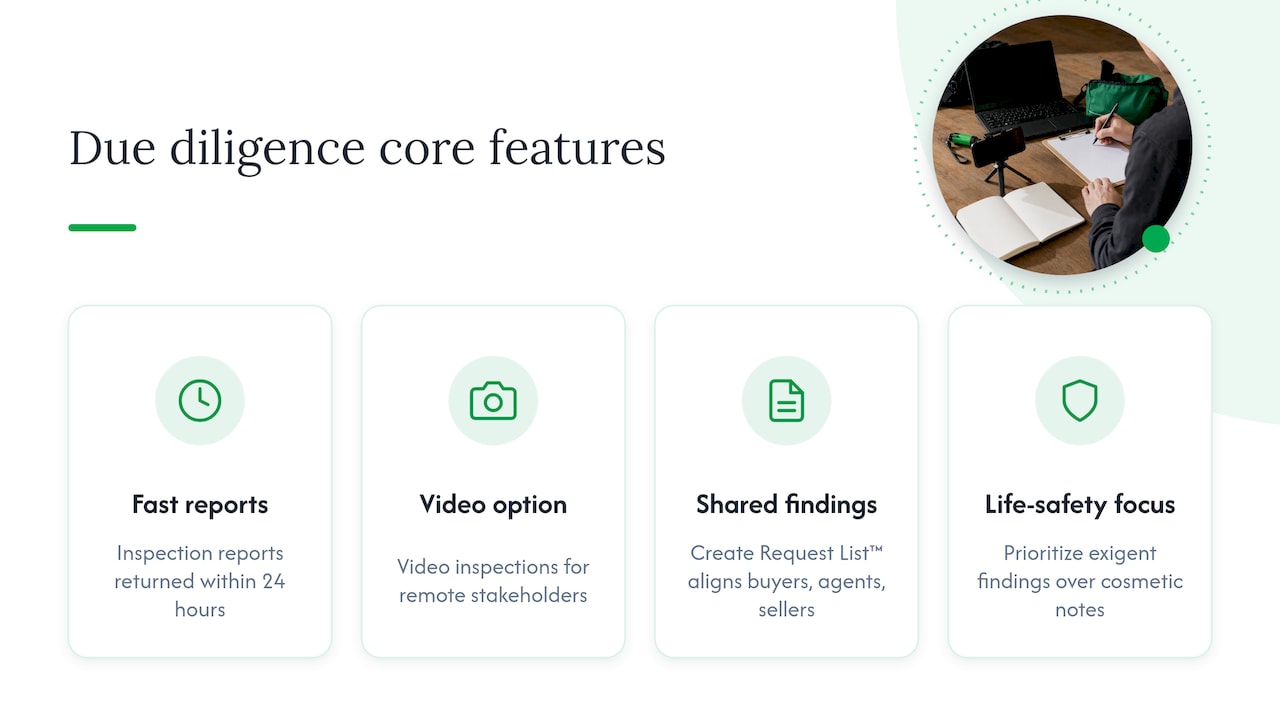
Multifamily due diligence rewards speed without cutting corners. We return inspection reports within 24 hours, which matters when a buyer is working against a financing contingency clock, and we offer video inspection options for stakeholders who cannot attend every site visit in person. A Create Request List™ tool can help buyers, agents, and sellers work from the same documented findings instead of a scattered email thread, which may shorten the negotiation phase. The inspection process is informed by a life-safety-first framework similar to that used by HUD and major agencies, prioritizing exigent findings over cosmetic notes in reports.
Multifamily and HUD-ready inspection services
We offer commercial inspection services built for multifamily purchase due diligence, including HUD compliance certifications for buyers and owners who need NSPIRE-aligned reporting. Add-on environmental testing covers mold, radon, lead, and asbestos screening alongside the base inspection, so you are not coordinating three separate vendors.

- Commercial Inspection for multifamily and mixed-use properties.
- HUD Compliance Certifications for NSPIRE and HUD-financed transactions.
- Environmental add-ons: mold, radon, lead, and asbestos testing.
- 24-hour report turnaround and video inspection scheduling.
Review our commercial inspection services and request a scope that matches your lender’s requirements before you set a closing date.
FAQ
How many units should be sampled in a multifamily PCA?
Sample size depends on property size and risk signals rather than a single fixed rule, and lenders including HUD, Fannie Mae, and Freddie Mac each set their own minimum expectations. Confirm the specific sampling requirement with your lender before the site visit so the inspector’s scope matches what underwriting will accept.
When is radon testing required in a multifamily inspection?
EPA guidance recommends testing all ground-contact units and common areas touching the ground, with at least 10% of upper-floor units sampled following AARST protocols. Mitigation is typically recommended once results cross the EPA action threshold, so plan for a follow-up test if initial readings are borderline.
What counts as an immediate safety issue versus a deferred repair?
Immediate safety issues include gas leaks, exposed live wiring, blocked fire exits, and inoperative smoke detectors, items the HUD REAC preparation guidance lists as exigent health and safety deficiencies. Deferred maintenance items, by contrast, get documented with a cost opinion and remaining useful life estimate rather than requiring resolution before closing.
Do I need a specialist for asbestos or lead testing?
Pre-1978 construction or any deteriorating paint, flooring, or insulation material typically warrants a specialist asbestos or lead inspection rather than a visual-only note in the general report. EPA’s multifamily protocols treat these as standard screening items alongside mold, moisture, and pest evidence.
How fast can I get a multifamily inspection report back?
Inspection reports are typically returned within 24 hours of the site visit, helping buyers stay on schedule with financing contingency deadlines. Scheduling for video inspections may be available for stakeholders who need to review findings remotely before closing.
Sources
- HUD NSPIRE
- EPA: Indoor Air Quality guidelines for multifamily building upgrades
- Freddie Mac: Property condition and environmental report best practices
Recent Comments