
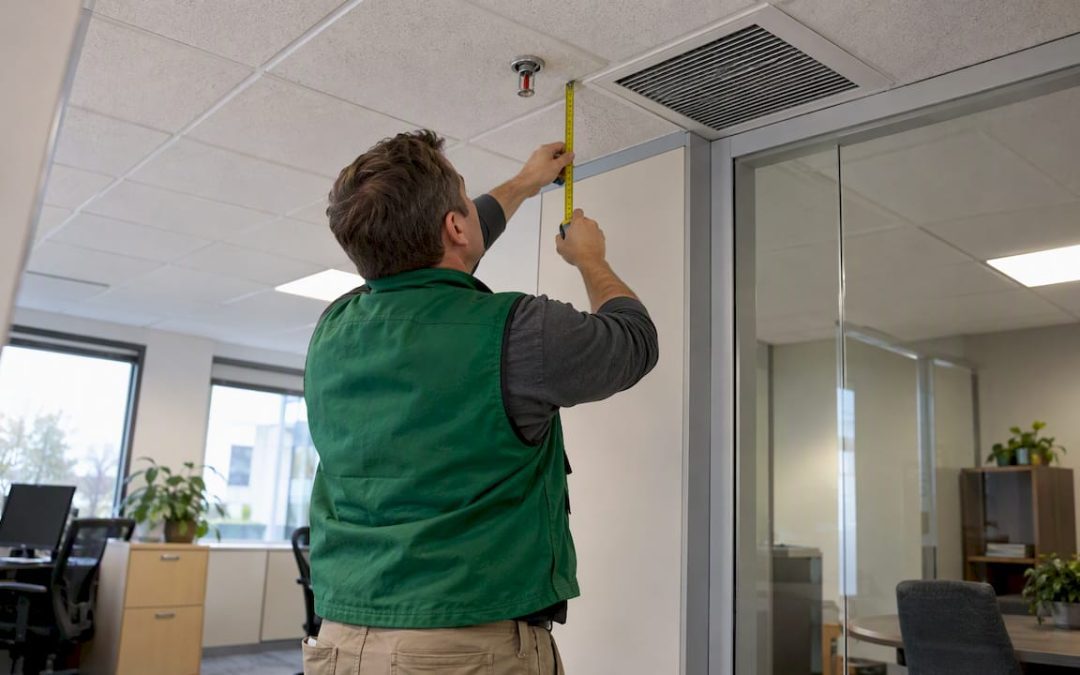
An office building inspection is a visual, systems-by-systems review of a commercial property: roof, structure, HVAC, electrical, plumbing, life safety, accessibility and site. Buyers, lenders and investors order one before closing so they know what the building needs and roughly what it will cost. Owners and tenants run a different kind of check, a workplace safety walk-through, to keep people from getting hurt. This guide covers both, so you can tell which one you need and what a good one looks like.
TL;DR
- A pre-purchase office inspection is a baseline property condition assessment: a walk-through, document review and interviews that end in a written report with repair cost opinions.
- The core systems are roof, structure, HVAC, electrical, plumbing, fire and life safety, accessibility and the site. Unpermitted tenant build-outs are a common surprise.
- It is not a forensic audit. It flags material deficiencies, not every minor maintenance item, so add specialists (mold, sewer lines, environmental testing) where the building’s age or use calls for them.
- Safety checklists for employees are a separate, ongoing job for the employer, not a substitute for a buyer’s inspection.
- We inspect commercial properties across the St. Louis Metro area and Southern Illinois and return reports within 24 hours.
Table of Contents
- Two kinds of office inspection, and which one you need
- What the inspection follows: the ASTM E2018 baseline
- What inspectors check in an office building
- The surprise that costs the most: unpermitted tenant build-outs
- A practical office inspection checklist
- Workplace safety inspections: the employer’s side
- How to prepare for a commercial inspection
- Reading the report
- Add-ons worth considering
- Our perspective: inspect the paperwork as hard as the building
- Commercial inspections from Hunt Home Inspection
- FAQ
- Sources
Two kinds of office inspection, and which one you need
People searching for an office inspection usually mean one of two things.
A property condition inspection is for someone about to buy, refinance, lend against or take over a building. The question is: what shape is this asset in, and what will it cost to fix? The deliverable is a report.
A workplace safety inspection is for the people running the space. The question is: could someone get hurt here tomorrow? OSHA’s guidance treats this as an ongoing responsibility, not a one-time event, and recommends involving employees because they are often first to notice worn equipment or sloppy housekeeping.
This article spends most of its time on the first, because that is where a paid inspector earns the fee. The second gets its own section further down, with a checklist you can use in-house.
A quick way to decide:
| Your situation | What you need |
|---|---|
| Buying an office building or suite | Pre-purchase commercial inspection |
| Lender requires a condition report | Property condition assessment |
| Selling and want no surprises | Pre-listing inspection |
| Managing a space you already occupy | Maintenance review plus safety walk-through |
| Planning a renovation draw | Loan draw inspection |
What the inspection follows: the ASTM E2018 baseline
In the United States, commercial due diligence usually refers to ASTM E2018, the guide for property condition assessments. It lays out a framework for assessing the primary improvements of a commercial property through a walk-through survey and related research: reviewing documents and interviewing people who know the building. The result is a property condition report that names physical deficiencies and gives opinions of repair costs.
Two limits matter, and a good inspector will say them out loud before the visit:
- The assessment targets material physical deficiencies. The standard is a baseline for prudent due diligence, not an exhaustive audit of every component, and it leaves out minor routine maintenance and de minimis conditions.
- It is visual. The inspector does not open walls or load-test the structure. If something looks wrong, the report recommends a specialist, such as a structural engineer or a roofing consultant.
Not every commercial inspection is a full ASTM-style assessment. Scope depends on what the buyer or lender asks for, so confirm the scope in writing before the appointment.
What inspectors check in an office building
The systems below make up the core of any thorough office walk-through.
Roof and building envelope
Most office buildings in the Midwest have low-slope or flat roofs, which makes drainage, membrane condition, flashing and rooftop equipment penetrations the first things to examine. Inspectors also look at exterior walls, sealants, windows, glazing and the weatherproofing around them. Ceiling stains on the top floor are often the quickest clue that a roof is leaking.
Structure and foundation
Expect a look for cracks, settlement, sagging floors, water intrusion in basements or garages, and signs of past repairs. One crack rarely tells the story. Patterns do.
HVAC
Office buildings often run multiple zones, rooftop units and shared distribution. The inspector checks equipment age and condition, whether capacity looks reasonable for the space, thermostat and zone operation, condensate drainage and visible maintenance records. Ask for service logs ahead of time. A unit that is 20 years old with no records is a budget line, not a footnote. For a plain-language primer on what a system check covers, see our HVAC inspection explainer.
Electrical
Panel capacity and condition, visible wiring, grounding, disconnects and emergency lighting are standard. Tenants who have added servers, kitchens or medical equipment may have outgrown the original service, so look at the loads, not only the panel’s age.
Plumbing
Supply lines, drainage, water heaters, restrooms, fixtures and visible leaks. On older buildings the underground sewer lateral is the part nobody sees until it fails. A camera scope of the lateral is a separate service, and we offer it alongside commercial work.
Fire protection and life safety
This covers sprinklers, alarms, extinguishers, exit signs, emergency lighting and exit routes. The inspector is checking for visible condition and obstruction, not certifying the system. Required fire inspections and testing are done by licensed fire protection contractors and the local fire authority, so ask the seller for current inspection tags and reports.
Accessibility
Parking, entrances, routes to the elevator, restrooms, door hardware and signage get a look for obvious barriers. Accessibility compliance under federal and local rules is a legal question, so the report flags what it sees and recommends an accessibility specialist when the issues look serious.
Site and parking
Pavement condition, drainage and grading, curbs, lighting, retaining walls and landscaping. Parking lots are expensive to repair, and they are easy to underestimate.
The surprise that costs the most: unpermitted tenant build-outs
Office buildings get remodeled tenant by tenant. A new conference room goes up, a wall lands in front of an HVAC return, a partition ends up too close to a sprinkler head. A Texas Department of Public Safety building safety checklist is one example of how public agencies list exits, alarms and extinguishers as items to verify, and the same logic applies to the layouts inside a leased floor.
When these changes were never permitted or inspected, the problem becomes the new owner’s. That is why we suggest asking for permit history and comparing floor plans to what you see on the walk. If a suite looks different from the drawings, say so in writing during your due diligence window, while you still have leverage to negotiate.
A practical office inspection checklist
Use this before you hire anyone, or as a pre-listing self-check. It is not a substitute for a professional inspection.
Exterior and site
- Roof surface free of ponding, blisters, open seams
- Drains, scuppers and downspouts clear
- Parking lot cracks, potholes and ponding noted
- Exterior lighting working
- Sealants and window gaskets intact
Interior common areas
- Ceiling tiles free of stains
- Lobby, stairs and corridors clear of storage
- Restrooms functioning, no leaks under sinks
- Elevator inspection certificate current
Mechanical and electrical
- Rooftop and split units running in every zone
- Filters changed, service records available
- Electrical panels labeled and accessible, covers in place
- No extension cords or daisy-chained power strips used as permanent wiring
Life safety
- Exit doors open freely and routes are unblocked
- Exit signs and emergency lights lit
- Extinguishers charged with current tags
- Alarm and sprinkler inspection records on file
Records to request
- Permit history and certificates of occupancy
- Roof warranty and repair history
- HVAC service logs
- Prior inspection or condition reports
- Tenant improvement drawings
We keep a more detailed lender-oriented version on our commercial inspection checklist page, including how sampling works on larger properties.
Workplace safety inspections: the employer’s side
If you occupy the space, safety inspections are your routine. OSHA states that a failure to identify hazards is one of the root causes of workplace injuries, and its hazard identification guidance covers how to collect information, inspect and assess. OSHA’s own local emphasis program for retail facilities tells inspectors to focus on significant hazards, and lists blocked exits and electrical conditions among the items to examine. Office tenants see the same hazards.
A good in-house routine:
- Walk the space on a fixed schedule and write findings down.
- Check exit routes, extinguishers, cords and storage first.
- Ask employees what they have noticed. They see the space every day.
- Assign every finding an owner and a date.
- Re-check what you fixed.
This is an employer task. A buyer’s inspector is not auditing your OSHA compliance, and your OSHA walk-through will not tell a buyer what the roof has left.
How to prepare for a commercial inspection
The visit goes faster and the report gets better when access is easy.
- Give access to everything. Roof hatch, mechanical rooms, electrical closets, basements and every tenant suite. Locked rooms become “not inspected” lines in the report.
- Coordinate tenants. Notify them in advance. Occupied floors are harder to inspect, and a tenant who is surprised is rarely helpful.
- Send documents early. Plans, permits, service logs and prior reports.
- Plan for time. One published guide puts the on-site portion at roughly 4 to 10 hours depending on size and complexity; larger campuses take longer. We cover what drives scope and price on our commercial inspection cost page.
- Attend if you can. Walking the building with the inspector is the fastest education you will get.
Reading the report
A useful report separates items by urgency: safety issues, items that need repair soon, and items to budget for over the next few years. Look for photos, locations, and cost opinions you can use in negotiation or in your capital plan.
Then act on it. Typical moves include asking the seller to repair, negotiating the price, requesting a credit, or walking away if the building is not what you were told. Lenders may also require corrections before funding.
For how we structure reports on residential property, which follows the same logic, see what is in our inspection report.
Add-ons worth considering
A general office walk-through does not replace specialty testing. Depending on the building, consider:
- Mold inspection when you see staining, musty odor or past leaks.
- Sewer camera lateral inspection for older buildings with clay or cast iron lines.
- Radon testing, especially for ground-level and below-grade occupied space.
- Environmental testing (lead, asbestos, water) for older buildings. Our primer on environmental hazard inspections explains what each test answers.
- Septic or well inspection for rural offices outside municipal services.
Our perspective: inspect the paperwork as hard as the building
Most of the trouble we see in commercial deals is not a failing boiler. It is a mismatch between what the seller says and what the property actually is: a suite that was reconfigured without a permit, a maintenance history that exists only in someone’s memory, a roof that is called “newer” and has no warranty behind it.
Our approach is to treat the inspection as a decision tool, not a pass or fail. We work with buyers, investors, lenders and agents across the St. Louis Metro area and Southern Illinois, and what they all need is a report they can use quickly, which is why we return reports within 24 hours. Our tools, such as the Create Request List™, exist so that what we find turns into a clear repair request instead of a long email chain.
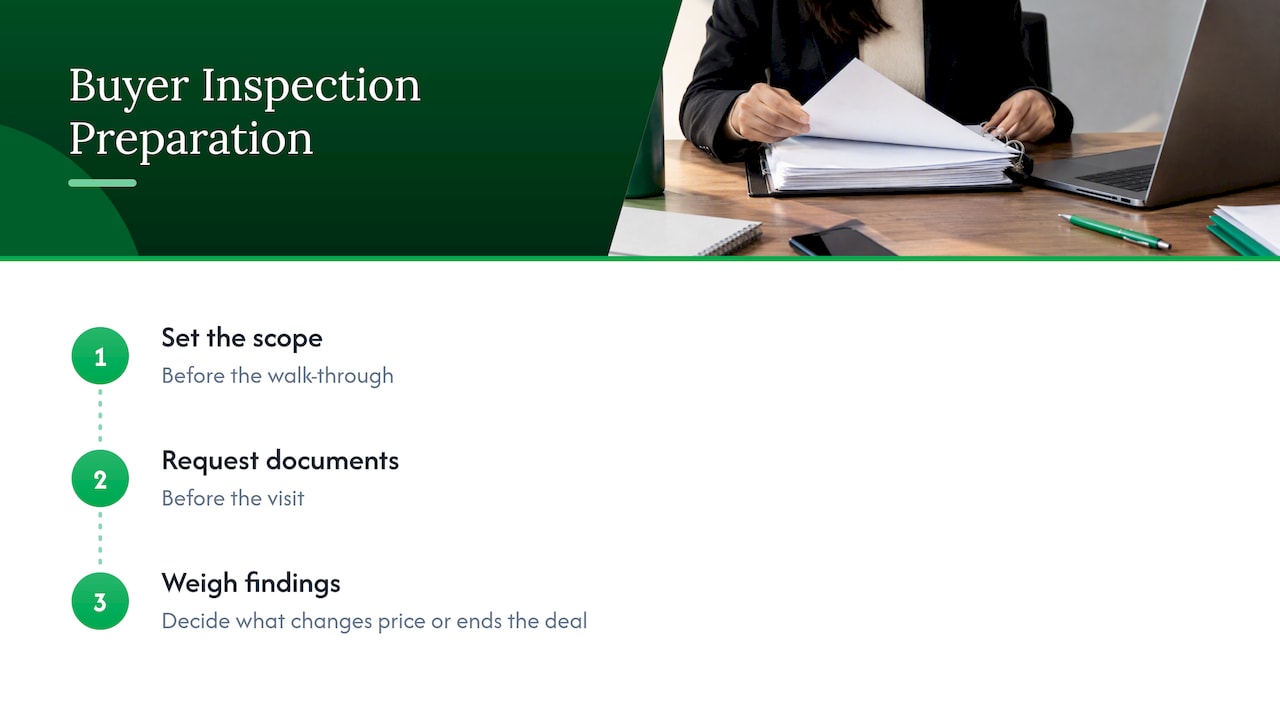
Our advice to any buyer: set the scope before the walk-through, ask for documents before the visit, and decide ahead of time which findings would change your price and which would end the deal. A good inspection removes surprise. It does not remove risk, and no honest inspector will tell you otherwise.
— JOHN
Commercial inspections from Hunt Home Inspection
If you are weighing an office purchase or lending decision in the St. Louis area or Southern Illinois, our commercial inspection service covers the systems described above, with add-on testing available and reports delivered within 24 hours. We also issue HUD compliance certifications where required. For a sense of what drives scope and price before you call, read our commercial inspection cost guide.
FAQ
How long does an office building inspection take?
It depends on size, number of tenants and how easy access is. One published guide puts on-site time at about 4 to 10 hours for a typical commercial property, and larger buildings can take more. Reporting comes after the visit.
What would fail an office building inspection?
There is no pass or fail in a buyer’s inspection. The report lists deficiencies. The ones that most often change a deal are roof failure, aging HVAC, electrical capacity problems, water intrusion, blocked or non-compliant life safety features and unpermitted alterations.
Do inspectors check every room?
They aim to access every system and a representative sample of spaces. On larger properties, sampling rules apply, which is why you should confirm scope in writing. Locked or blocked areas are noted as not inspected.
Is an office inspection the same as an OSHA inspection?
No. A buyer’s inspection assesses the physical condition of the building. OSHA-style safety inspections look at hazards to workers, and the employer is responsible for carrying them out regularly.
Do I need a specialist in addition to the inspector?
Sometimes. If the report points to structural movement, fire system problems, serious accessibility barriers or environmental concerns, bring in the relevant licensed professional, such as a structural engineer, fire protection contractor or accessibility consultant.
Sources
- ASTM E2018-24, Standard Guide for Property Condition Assessments
- ASTM E2018-15, Baseline Property Condition Assessment Process
- OSHA: Hazard Identification and Assessment
- OSHA: Local Emphasis Program for Retail Facilities
- Texas Department of Public Safety: Building Safety Inspection Checklist (FB-3)
Recent Comments