
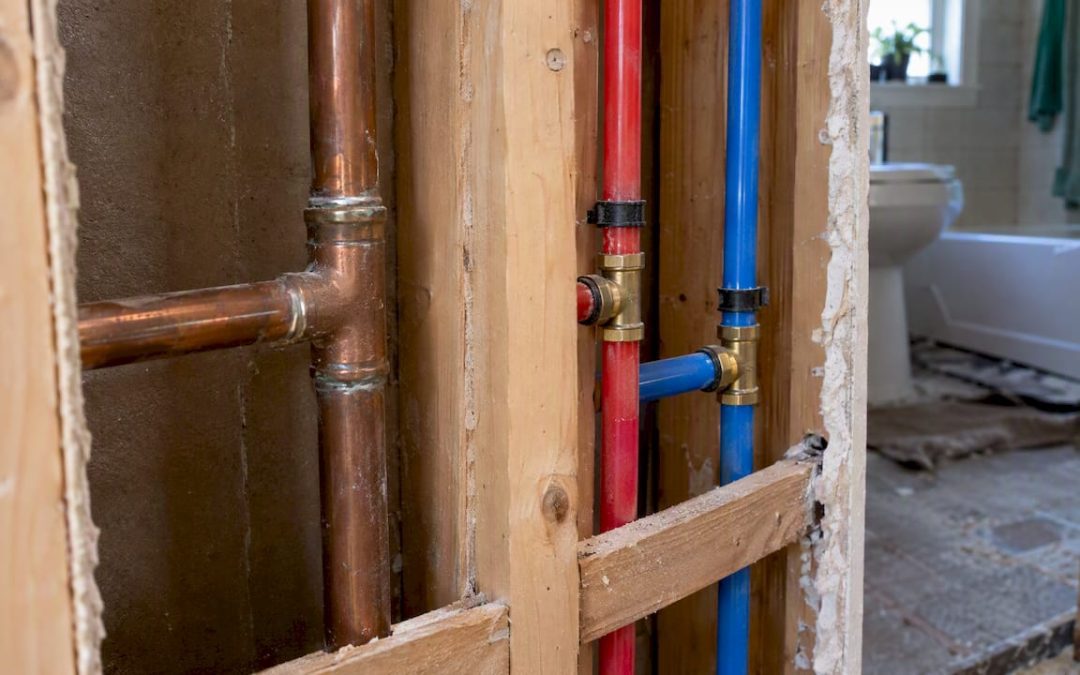
Neither material is the clear winner. Copper is the longer-lived, tougher pipe. PEX is cheaper, faster to install and better at surviving a freeze. In a house you are buying, the pipe material matters less than how it was installed, how old it is and whether it has been damaged. That is what an inspection looks at.
Below we compare the two on the points that affect a buyer, explain what we check when we see each one, and cover the other metal question that comes up in older homes: aluminum vs copper wiring.
TL;DR
- Copper typically lasts 50 to 70 years, PEX 30 to 50. Age and installation quality matter more than the label.
- PEX costs far less per foot and goes in faster, which is why it dominates repipes and new builds. Copper is better where pipe is exposed to impact, sunlight or rodents.
- Both are safe for drinking water when certified to NSF/ANSI/CAN 61. Neither is a reason to walk away from a house.
- Real problems on inspection: bad PEX crimps, sunlit PEX in basements, corroded copper, and mixed metals at connections.
- Aluminum wiring is a separate and more serious issue than either pipe. Copper wiring is the standard you want to see.
Table of Contents
- PEX vs copper at a glance
- What each material actually is
- Lifespan and durability
- Cost: where PEX pulls ahead
- Water flow and pressure
- Is one healthier than the other?
- Problems we look for
- What about codes and insurance?
- Older pipes that matter more than the PEX vs copper debate
- Aluminum vs copper wiring
- Our perspective: judge the system, not the label
- Questions to ask about the plumbing before you buy
- Get the plumbing checked before you close
- FAQ
- Sources
PEX vs copper at a glance
| Factor | PEX | Copper |
|---|---|---|
| Typical lifespan | 30 to 50 years | 50 to 70 years |
| Material cost per linear foot | $0.50 to $2 | $2 to $8 |
| Typical whole-house repipe time | 1 to 3 days | 2 to 5 days |
| Freeze tolerance | Flexes and expands | Can split |
| UV sunlight | Degrades | Unaffected |
| Rodents | Can be chewed | Resistant |
| Corrosion | Immune | Can corrode in aggressive water |
The lifespan, cost and repipe time figures come from The Home Depot’s PEX vs copper guide. Treat them as ranges. Real costs depend on the house, the access and the local labor market.
What each material actually is
Copper is the rigid metal pipe most people picture. It is joined with solder or fittings, and has been used in houses for decades. A copper line from the 1970s or 1980s may still be working fine.
PEX is cross-linked polyethylene, a flexible plastic tubing, usually color-coded red and blue for hot and cold. It is joined with crimp rings, clamps or push fittings. It bends around corners, so a plumber can run long continuous lengths through walls with fewer joints. That is the main reason it took over the market.
Lifespan and durability
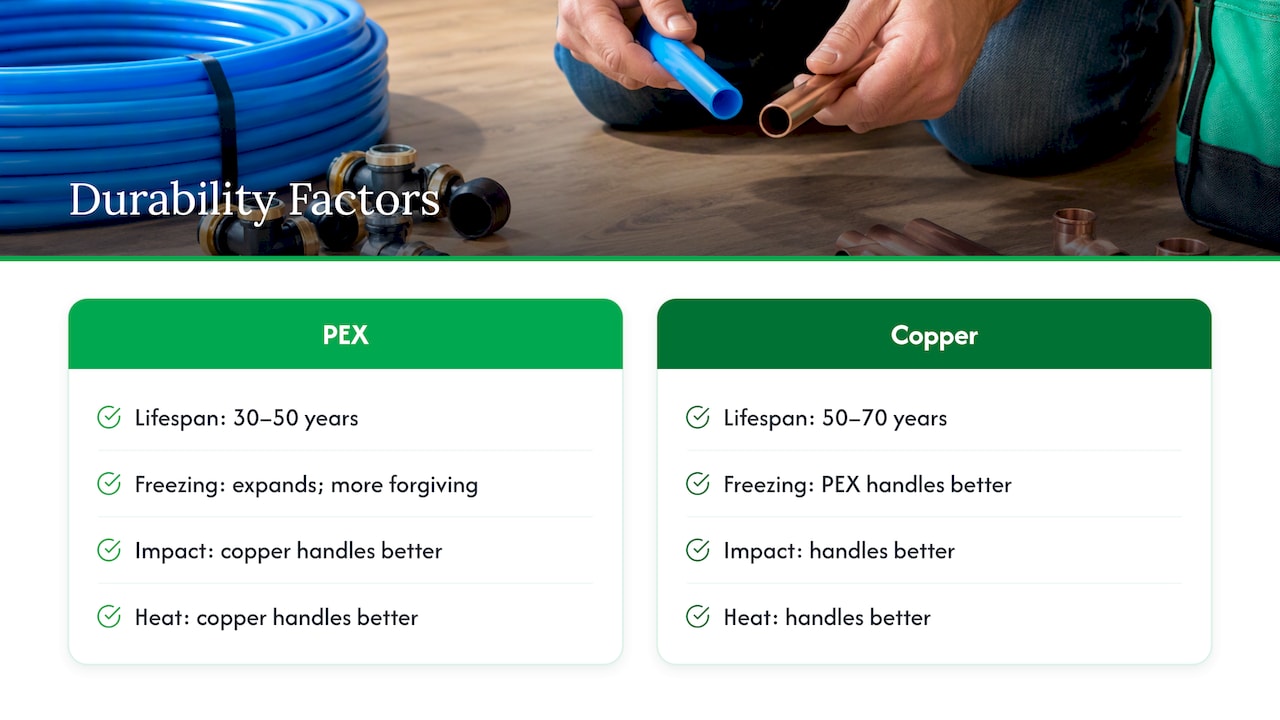
Copper wins on paper. The Home Depot guide puts copper at 50 to 70 years and PEX at 30 to 50. PEX is a newer material in homes, so its long-term record is shorter, and its manufacturers’ ratings are based partly on testing.
Durability is more than lifespan, though. PEX does not corrode, and it handles freezing better because it can expand. Copper handles impact, heat and rodents better. If a pipe runs through an unheated crawlspace in a Midwest winter, PEX is more forgiving. If it runs exposed in a garage where it can be hit or chewed, copper is the safer choice.
Cost: where PEX pulls ahead
Material is only part of it. PEX needs no torch, no solder and fewer fittings, so labor drops too. The plastic pipe industry’s own design guide says installation time and labor are much lower because of the pipe’s flexibility. That is an industry source, so weigh it accordingly, but it agrees with what plumbers report.
If a seller or an agent tells you a house “was repiped,” ask which material and when. A PEX repipe is usually the cheaper job, and a copper repipe is the more expensive one. Neither is automatically better for your resale, but the paperwork and permit matter.
Water flow and pressure
A common worry is that PEX’s slightly smaller inner diameter chokes the water supply. Lab testing says otherwise. In a comparison of fixture flow rates using the same nominal pipe size, flow through the two materials differed by only about 0.1 gallons per minute over a 100-foot run. The study was published on a plastic pipe industry site, so it is worth knowing who is behind it, but the result matches the physics of short residential runs.
In practice, weak pressure in a house is more often caused by old galvanized steel, mineral buildup, a failing pressure regulator or undersized lines than by PEX. If you notice low pressure during a showing, run two fixtures at once and tell your inspector.
Is one healthier than the other?
This is the question behind many searches. The short answer: both are fine when they are certified.
The NSF/ANSI/CAN 61 standard covers drinking water system components and tests for contaminant leaching. Both PEX and copper products are evaluated under it. The standard also has a use limitation for copper: manufacturers must state in their literature if the product needs water with a pH of 6.5 or higher. Acidic water can pull copper from pipes, and that is a water chemistry problem, not a flaw in copper itself.
Some plumbing guides note that copper is naturally antimicrobial and PEX is not, while also stating that both are safe when properly certified. We would not choose a house on that basis.
Two practical cautions apply to buyers:
- Fuel and solvents. PEX should not sit in direct contact with petroleum products or solvents, which can permeate the pipe wall. A municipal water service guide says PEX needs approved protection in contaminated soil or near chemical storage. That matters mostly for underground service lines or a garage with stored fuel and chemicals.
- Lead in older homes. Lead is a risk from old service lines, older solder and some fixtures, not from modern PEX. If your house predates the 1990s, see our guide to first-draw tap water lead testing.
Problems we look for
With PEX
- Bad connections. Professionals say improper crimping or clamping is a frequent failure point, and mismatched tools and rings are a leading cause of future leaks. These leaks can run behind a wall for a long time before anyone sees them.
- Sunlight. PEX breaks down under UV. In unfinished basements or crawlspaces, even reflected light can be enough over time. The same municipal guide points to protective sleeves or insulation as the fix. We look for faded, chalky or cracked tubing near windows and doors.
- Rodent damage and physical damage. Tubing in a garage, a crawlspace or the open ends of a wall can show chew marks or kinks.
- DIY work. PEX is sold as easy for homeowners. Unpermitted work with mismatched fittings is something a buyer should know about before closing.
With copper
- Corrosion. Green or blue-green crust at joints, pinhole leaks, and pitted pipe near the water heater.
- Mixed metals. Copper joined directly to galvanized steel without a proper fitting corrodes at the joint. A house with a patchwork of materials often has a history of repairs.
- Old solder and age. Older lines are not automatically failing, but a copper system 50 or more years old deserves a closer look at every visible joint.
- Frozen-pipe damage. Past splits near exterior walls are often repaired, and the repair evidence is visible.
With either
Stains on ceilings below bathrooms, a musty smell in a cabinet under a sink, or a water meter that moves when everything is off all point to a leak, no matter what the pipe is made of.
What about codes and insurance?
PEX is approved in all model plumbing codes, but the PEX design guide notes that some jurisdictions still prohibit it for water supply. Local rules can differ, so confirm what your city or county requires. In the St. Louis area, St. Louis County publishes its own plumbing code, and other municipalities and Illinois counties have their own rules.
On insurance, people often ask why some insurers are wary of PEX. We have not found a source that gives a single answer, and policies vary. If you are buying a house with PEX, ask your insurance agent how it affects your quote before you close. Do the same for old galvanized or polybutylene plumbing, which are the materials insurers tend to worry about more.
Older pipes that matter more than the PEX vs copper debate
In many older St. Louis and Southern Illinois homes, the bigger plumbing question is not PEX or copper. It is galvanized supply lines that restrict flow, or cast iron drain lines that crack and corrode from the inside. Drain lines are out of sight, which is why we suggest a camera look first. See our guide on cast iron drain pipes. Sellers who find out late that their pipes are a problem also have options. This piece on selling a home with cast iron pipes is written for Florida, so the local details differ, but it shows how pipe condition can shape a sale.
Aluminum vs copper wiring
People searching this topic often also ask about wiring. The two questions are different. Plumbing is a comfort and damage issue. Electrical is a fire issue.
Copper is the standard conductor in house wiring today. Aluminum branch-circuit wiring was installed in some homes in the 1960s and 1970s, and it has a poor record at connections, where it can loosen and overheat. The U.S. Consumer Product Safety Commission and other agencies have investigated hazardous incidents and fires involving it, according to InterNACHI, a home inspector association.
How we handle it as inspectors:
- Aluminum cable is usually marked “Al” or “Aluminum” along the jacket, and it looks like copper cable otherwise. Markings reading copper-clad are a different product.
- If we see aluminum branch wiring, we report it and recommend that a licensed electrician evaluate the home before closing. The fix may be special connectors or other remediation, and only an electrician can say which.
- Do not assume your own outlets are safe because they look fine. Overheating happens inside the connection.
If aluminum wiring turns up, it often belongs on your repair request list and can affect insurance, so raise it early. Our home inspection red flags list covers other items buyers tend to miss.
Our perspective: judge the system, not the label
We inspect homes across the St. Louis Metro area and Southern Illinois, and we do not walk into a house hoping to find PEX or copper. We walk in to find out what is actually happening with the water supply.
A clean PEX repipe with good fittings, protected from sunlight, is a good system. A well-kept copper system is also a good system. A bad one of either type has leaks, corrosion, mismatched fittings or amateur repairs. Buyers who ask us “which is better” are usually better served by asking “who installed it, when, and was it permitted?”
We also think buyers should see the problem in context. A minor plumbing finding is a negotiating point. A system that has failed repeatedly is a cost you should price in. Our reports come back within 24 hours, so you have time to use them, and our Create Request List™ turns findings into a clear list your agent can take to the seller. If you cannot be at the house, we offer video inspections too.
We work with first-time buyers, veterans and families on tight budgets, and we know a surprise plumbing bill hurts most for them. Ask us about veteran and first-time buyer discounts when you book.
— JOHN
Questions to ask about the plumbing before you buy
- What is the supply pipe material, and is it the same throughout the house?
- When was it installed, and was a permit pulled?
- Has there been any water damage, freeze damage or past leak repair?
- Is any PEX visible in the basement or crawlspace, and is it shielded from light?
- Are there signs of mixed metals or galvanized sections?
- What does the drain line look like on camera?
If you want a broader view of what we examine, see what inspectors look for in a home.
Get the plumbing checked before you close
Our buyer’s inspection looks at supply lines, drains, water heaters, fixtures and visible signs of leaks, along with the rest of the house. We can add a sewer camera lateral inspection, radon testing, mold inspection, well and septic inspections or termite inspections when the property calls for it. You can see everything we offer, and book, on our inspection services page. We offer evening and weekend scheduling for busy buyers, and we hold NACA, ASHI and HUD 203k credentials.
FAQ
Is PEX or copper better for a house?
It depends on the house. PEX suits retrofits and freeze-prone areas, and it costs less to install. Copper suits exposed runs and spots where impact, sunlight or rodents are a concern, and it has the longer expected life. A well-installed system of either type is a good one.
What are the downsides of PEX?
PEX degrades in sunlight, can be damaged by rodents, and should be kept away from petroleum products and solvents. Connections made with the wrong tools or rings can leak later. Its track record in homes is also shorter than copper’s.
Is copper plumbing healthier than PEX?
Not in any way that should change your buying decision. Both are considered safe for drinking water when they carry NSF/ANSI/CAN 61 certification. With copper, water that is too acidic can raise leaching, so a water test is the better step if you have concerns.
Should I be worried about aluminum wiring?
Yes, take it seriously. Aluminum branch-circuit wiring has been linked to overheating at connections. Have a licensed electrician evaluate it before closing, and tell your insurance agent. Copper wiring is the standard you want to see.
Can an inspection tell me how long the pipes have left?
Not exactly. An inspector can report the material, visible condition, age indicators and problems like leaks, corrosion or poor connections. Pipes inside walls cannot be seen, so the report is a snapshot, not a guarantee of lifespan.
Sources
- PEX vs. Copper Pipe: Which to Use on the Job, The Home Depot
- PEX Plumbing Design and Installation Guide, Chapter 2, Plastic Pipe Institute
- Fixture Flow Rate Comparison: Cross-linked Polyethylene Piping and Copper Tubing
- NSF/ANSI/CAN 61 cover sheet requirements
- PEX vs Copper Pipes, PlumbingToolsReview
- Residential Water Service, City of Milpitas
- PEX Plumbing Design Guide
- St. Louis County 2019 Plumbing Code
- Inspecting Aluminum Wiring During a Home Inspection, InterNACHI
Recent Comments