
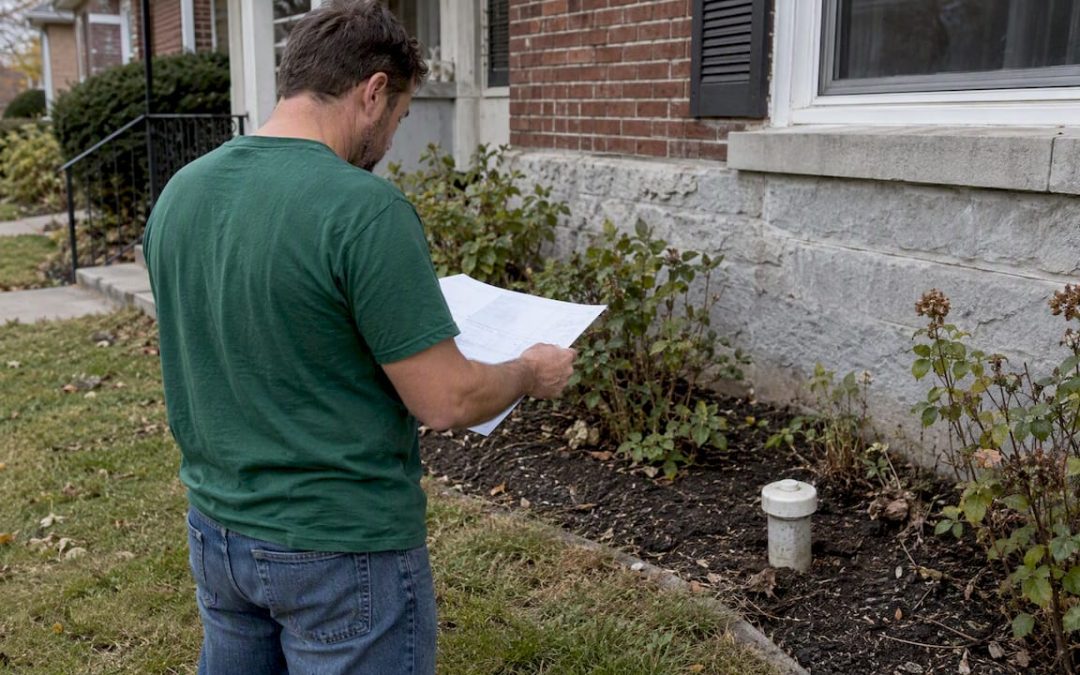
Most sewer cleanouts sit outside near the foundation where the sewer line leaves the house, or near the property line or sidewalk. Indoors, look for a capped pipe on the lowest horizontal run in a basement or crawlspace. If a quick walk-around fails, check your plot plan or your city’s online sewer map, then call a licensed plumber for non-destructive locating.
TL;DR:
- Outdoor cleanouts often sit near where the sewer lateral leaves the foundation or within about one foot of the sidewalk or property line.
- If no outdoor cap appears, inspect the basement or crawlspace’s lowest horizontal drain run, then compare likely locations with property plans or municipal maps.
- Maps can be several feet off, and laterals may lie four to ten feet deep, so avoid blind digging and use a plumber’s locator.
- Call a plumber if you smell sewer gas, several drains slow together, the cap is seized, or locating it proves difficult; never force the cap.
- When hiring help, request a camera inspection, lateral locating, riser installation, and a written estimate with photos; private laterals generally remain the homeowner’s responsibility.
Table of Contents
- Where to look outdoors: foundation line, flower beds and the sidewalk edge
- Where to look inside: basements, crawlspaces and main drain runs
- Use plot plans, surveys and municipal maps to pinpoint the cleanout
- If the cleanout is buried or missing: probing and professional locating
- What cleanout caps and risers look like and how to open them safely
- Next steps when you can’t find it, or you find a blockage
- Keep the cleanout accessible for the next time
- An inspector’s view: why a located cleanout changes the inspection
- Get help finding and inspecting your sewer line
- FAQ
- Sources
Where to look outdoors: foundation line, flower beds and the sidewalk edge
Start where the sewer lateral leaves the house. Guides for homeowners say outdoor cleanouts are near that exit point, so walk the foundation first. Then work outward toward the sidewalk and property line, because many jurisdictions require a cleanout within about one foot of the sidewalk or property line.
Look for these cues:
- A round cap, usually about 4 inches in diameter and made of plastic or metal
- A short pipe stub rising from the soil, sometimes stamped “SEWER”
- An unmarked lid flush with the ground
- A cap hidden under mulch, a flower bed or sod, especially against the foundation
Vegetation and settling hide caps over the years, and a buried one can sit below the surface. Clear visible debris first, then scan the edges of sidewalks and lawn strips before you touch any soil.
Fairfax County’s guidance: Sanitary sewer cleanouts are usually 4 inches in diameter, capped with steel or plastic, and one that you can’t see may simply be buried under dirt.
Home age can narrow the hunt. One city’s guidance says older homes often have it in the backyard, in line with the main toilet vent, while newer ones often have it in the front yard or a flower bed.
Where to look inside: basements, crawlspaces and main drain runs
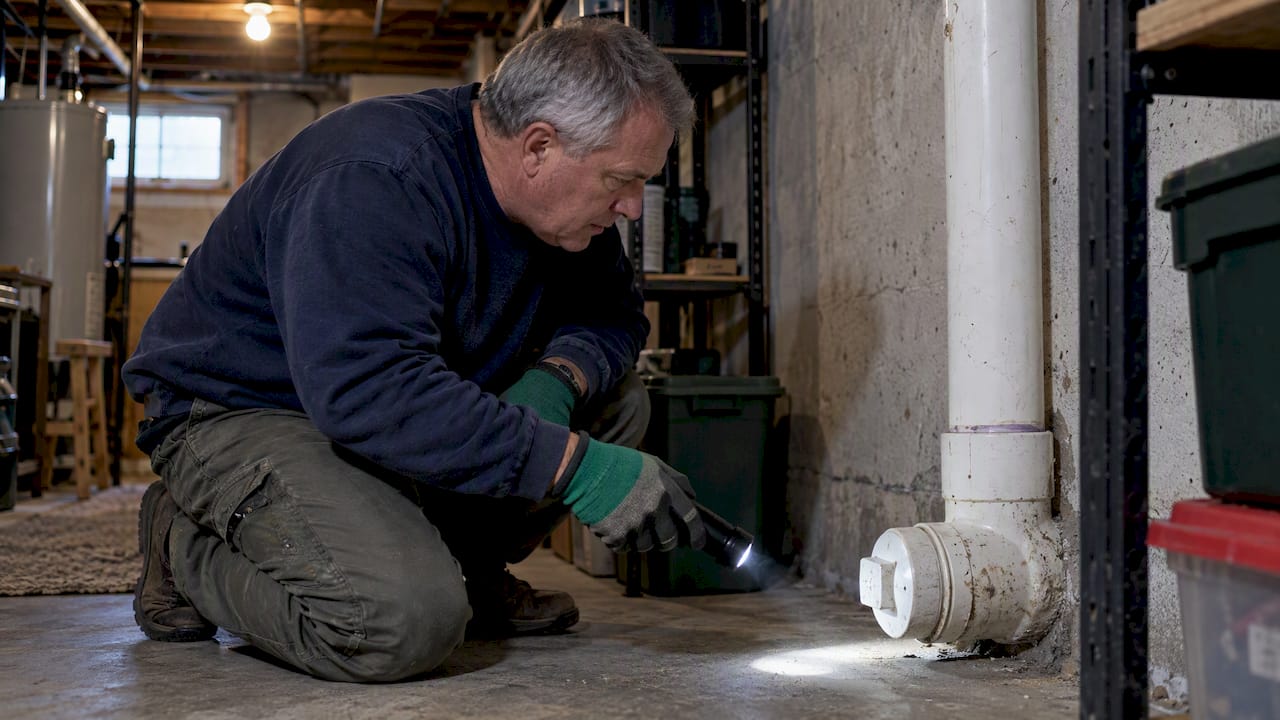
When nothing turns up outside, go indoors. Homeowner guides say indoor cleanouts are typically on the lowest horizontal sewer run, near the floor. Slab homes and older houses often rely on these.
Check these spots:
- The basement floor near the spot where the main drain exits the house
- The base of the main stack, the large vertical pipe that carries waste down
- Areas near floor drains and utility chases
- Crawlspace walls and floors along the main line
A cleanout often looks like a capped pipe stub or a test tee near the floor, sometimes behind a small access cover. Some homes built in recent decades have one under the basement floor where the drain leaves the house.
Work carefully. Use a flashlight, wear gloves, and never force a stuck cap. If you smell strong sewer gas or see signs of an active backup, stop and call a pro. Our guide to stopping sewer gas smells explains what to do first.
Pro Tip: Photograph every capped fitting you find, even if you are unsure what it is. A plumber or inspector can often identify it from the picture alone.
Use plot plans, surveys and municipal maps to pinpoint the cleanout
Paper and screens can save you from digging. Your engineered plot plan or original property survey often traces the lateral from the house to the street, which points to the likely cleanout position. Public works offices keep similar records, and municipal GIS tools and original property surveys are the most reliable documentation for locating sewer assets.
Maps are a starting point, not a guarantee. Symbols vary, and older records can be off by several feet.
- Pull your closing documents or ask the county recorder for your plot plan or survey.
- Find the sewer lateral line and note its distance from the foundation and property line.
- Search your city or county website for a sewer or utility GIS map, then enter your parcel number or address.
- Compare the map to what you see in the yard and mark candidate spots with flags.
- If the records and the yard disagree, call public works to confirm what they have on file.
Before anyone digs, consult these records. That is the order the county recommends: plans, surveys and GIS first, excavation last.
If the cleanout is buried or missing: probing and professional locating
If the plans point to a spot but the ground shows nothing, probe gently. A thin metal rod or long screwdriver can feel for a hard cap beneath mulch or soil.
- Remove mulch and loose soil by hand first
- Push the rod in slowly along likely lines, without forcing it into the soil
- Never drive a tool into the pipe or hammer on a suspected cap
- Mark any hard, round object and stop to uncover it with a hand trowel
Digging blind risks cracking a clay or cast-iron lateral, and lateral depth varies widely: one city notes pipes can run anywhere from four to ten feet underground depending on foundation type. That is why pros bring gear. A licensed plumber can find a buried cleanout with pipe-locating cameras, and electronic locators trace a transmitter sent down the line from above ground. Excavation comes last, and only at a marked spot.
Pro Tip: If your house has cast-iron drain pipes, a camera look is smart before any digging. See why in our piece on camera-first inspection of cast iron drains.
What cleanout caps and risers look like and how to open them safely
Most caps are plastic, brass or cast iron, and most are usually about 4 inches in diameter. A riser is a pipe section that lifts the cap toward the surface. A test tee is a T-shaped fitting with a capped branch, common indoors.
- Plastic caps are usually white or black and often have a square or round knob
- Brass caps are heavy and often have a square nut
- Cast-iron caps are rusty, round and may have a raised nut
To open one, use a pipe wrench or channel locks, turn counterclockwise, and go slowly. Stand clear in case water or pressure is behind it. If the cap fights back, stop. Forcing it can crack the fitting or push the cap into the pipe and create a blockage.
Cities favor elevated caps. Anne Arundel County recommends keeping the cap about 4 inches above grade so debris and surface water stay out and the cleanout is easy to find during a backup.
Next steps when you can’t find it, or you find a blockage
Work through this list in order:
- Verify your plot plan or GIS map one more time.
- Photograph likely spots, indoors and out.
- Probe carefully and check basement and utility chase areas again.
- Mark any confirmed location with a stake and note its distance from two fixed points, like a corner of the house.
- Call a licensed plumber if you smell sewer gas, several drains run slow at once, a cap is seized, or you cannot locate it safely.
When you call, ask for a sewer camera inspection, a lateral locating service, riser installation if the cleanout is buried, and a written estimate with photos. Responsibility matters too: the private lateral and its cleanout generally belong to the property owner, and on older lots a right-of-way cleanout may be missing, yet the owner stays responsible. Budget guidance is in our sewer camera inspection cost breakdown.
Keep the cleanout accessible for the next time
A little upkeep saves hours later.
- Keep mulch, plants and pavers off the cap, and consider a small post or marker beside it
- Lift the cap occasionally if it is accessible, look at the flow, then reseal it snugly
- Save a dated photo and a measurement from the house in your home maintenance file
- If local rules allow, ask a pro about raising a buried riser to grade
Pro Tip: Snap a photo of the cleanout every time you mow or mulch. A quick timeline shows when it was last visible and helps the next person find it fast.
Building standards agree on placement logic. Plumbing specifications call for cleanouts at changes in direction of 90 degrees or more and at the bottom of vertical risers, so a good cleanout is rarely far from a bend in the line.
An inspector’s view: why a located cleanout changes the inspection
When I inspect a house, an accessible cleanout tells me two things: the line can be serviced, and a camera can get in without tearing anything up. A found cleanout keeps the cost of a diagnostic scope down. I recommend a sewer scope when I see chronic backups, cast-iron pipe, or a buyer who needs certainty about the lateral. If a home has no reachable cleanout at all, I treat that as a finding worth fixing, not a footnote.
— JOHN
Get help finding and inspecting your sewer line

You can contact us about our sewer camera lateral inspection. Our sewer camera lateral inspection can help you understand the line’s condition before you spend on repairs. We serve the St. Louis Metro area and Southern Illinois, and our reports are returned after the inspection.
When you book any pro, ask for a sewer camera scope, a locating service, riser exposure or installation, and a photo report with recommendations. Our sewer scope guide for buyers explains what to expect. Ready to schedule? Reach out through our inspection services page.
FAQ
Where should a sewer cleanout be located?
Ideally it sits outside near the foundation where the lateral exits, or near the sidewalk or property line. Many jurisdictions require one within about a foot of the property line, though older homes may lack it.
Where can I find my sewer cleanout?
Check along the foundation, in flower beds, and at the sidewalk edge. Indoors, look on the lowest horizontal drain run in the basement or crawlspace. Plot plans and city GIS maps can narrow the search.
What do old sewer cleanouts look like?
They are usually capped pipe stubs, often rusty cast iron or brass, about 4 to 6 inches across. Time and landscaping may leave only a flat lid or nothing visible, so probe gently before you dig.
Where is the cleanout plug located?
The plug, or cap, sits on top of the cleanout pipe. Outdoors it is at or just below ground level, and indoors it is on a capped fitting near the floor. Unscrew it counterclockwise, and stop if it will not budge.
Sources
- Sewer Cleanouts | Anne Arundel County Government
- Sanitary Sewer House Lateral
- Side Sewer Ownership
- How to Locate Your Sewer or Plumbing Cleanout
Recent Comments