
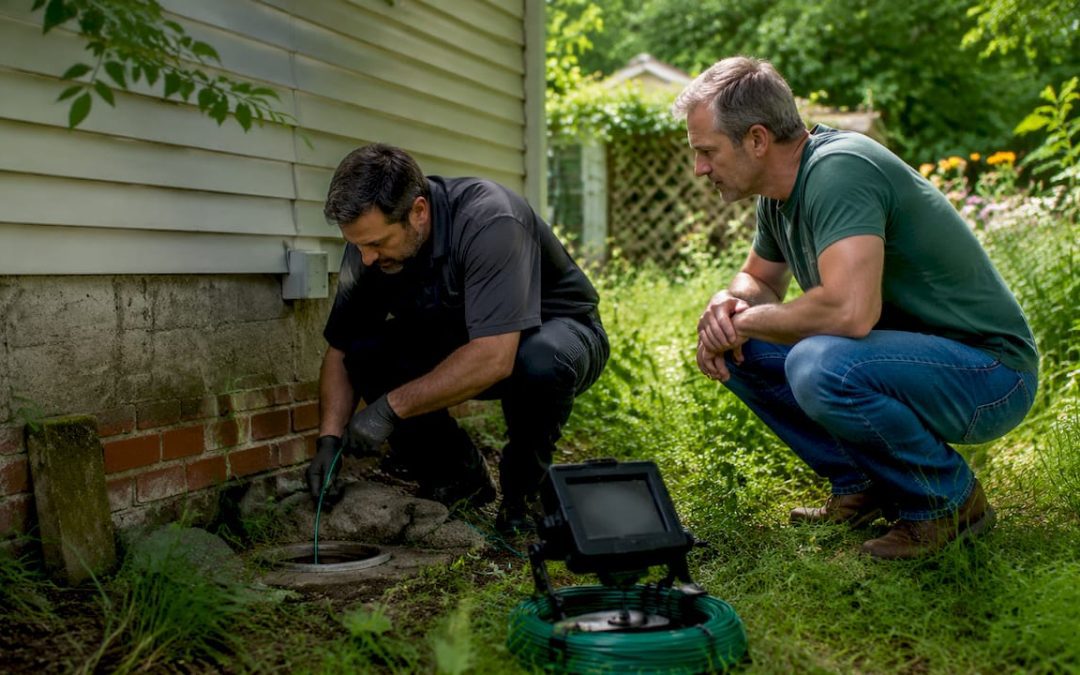
A sewer scope inspection is a camera-based diagnostic procedure that examines the inside of a home’s main sewer line, revealing hidden defects that no standard home inspection can detect. The industry term is “sewer line inspection,” though “sewer scope” is the phrase most homeowners and real estate professionals use daily. If you are buying a home or maintaining one you already own, this inspection is one of the most important evaluations you can schedule. Skipping it means accepting blind risk on a system that, when it fails, can cost tens of thousands of dollars to repair.
What is a sewer scope inspection and why does it matter?
A sewer scope inspection uses a waterproof camera on a flexible rod to travel through your home’s sewer pipe from the house to the municipal connection. The camera transmits live video to a monitor, giving the inspector a real-time view of pipe walls, joints, and any obstructions. This is the only reliable way to see what is happening inside underground pipes without digging.
Standard home inspections check visible systems: roofing, electrical panels, HVAC units, and plumbing fixtures. They do not include the sewer line. That gap matters because standard inspections exclude sewer lines, and buyers who skip a sewer scope risk inheriting repair bills exceeding $20,000 after closing. A sewer scope fills that gap directly.
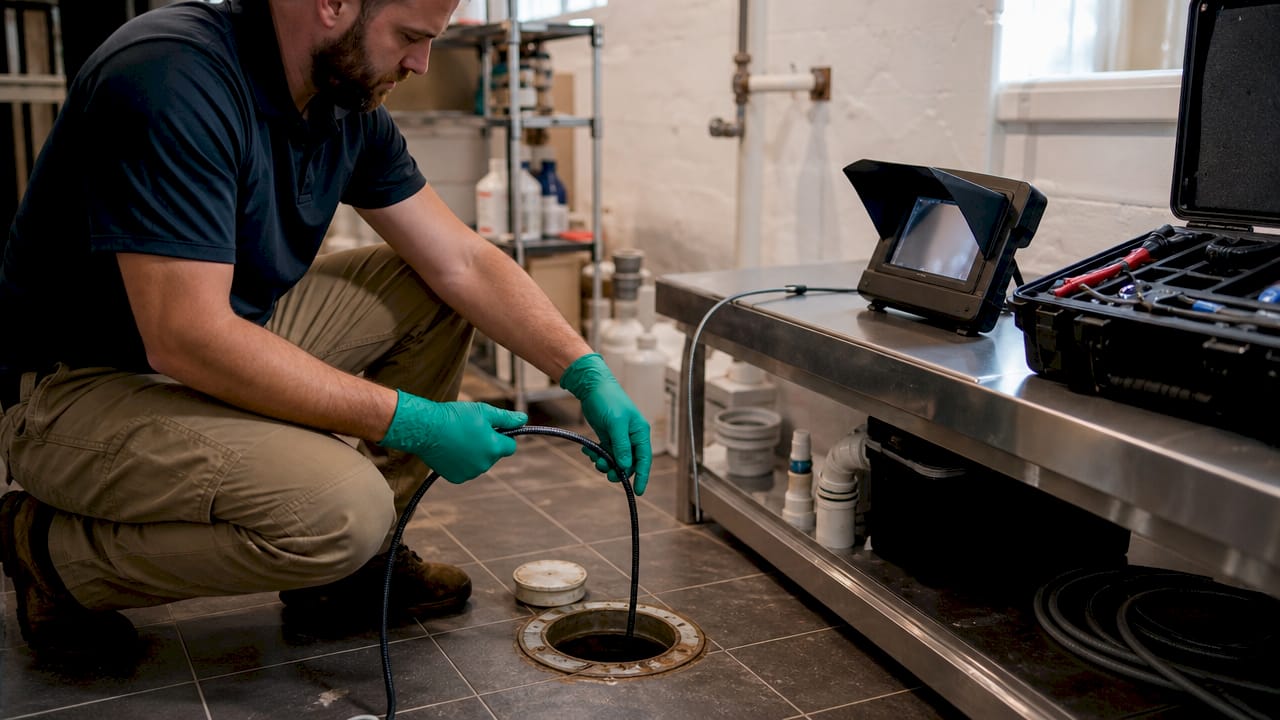
The inspection is non-invasive and takes roughly 30–60 minutes. It produces a video record and a written report you can act on immediately. For homebuyers in the St. Louis Metro area or Southern Illinois, adding a sewer scope to your home inspection checklist is a straightforward way to protect your investment.
How does the sewer scope inspection process work?
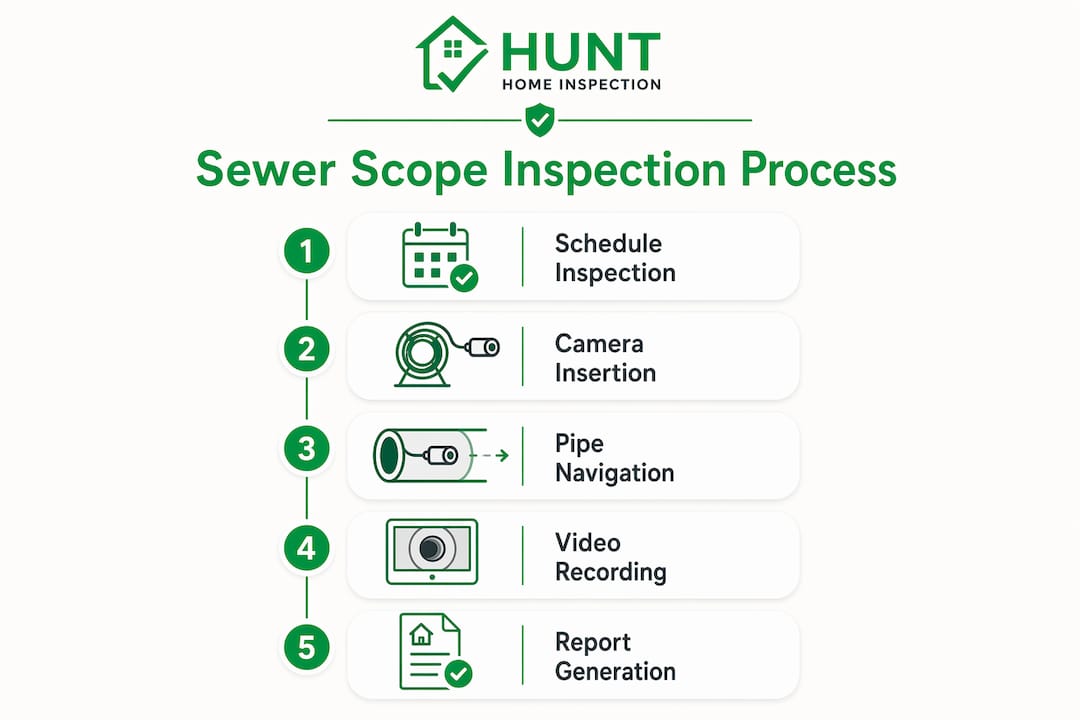
The sewer inspection process follows a clear sequence. Understanding each step helps you know what to expect on inspection day.
-
Access point identification. The inspector locates the cleanout, which is a capped pipe fitting that provides direct access to the sewer line. Most homes have an exterior cleanout near the foundation. Older homes often lack convenient cleanouts, which means the inspector may need to remove a toilet and access the line from inside. That requires resetting the wax ring afterward, adding minor disruption but no lasting damage.
-
Equipment setup. The inspector connects a high-definition waterproof camera to a flexible push cable. LED lights mounted on the camera head illuminate the pipe interior. A locating transmitter attached to the camera head sends a signal to the surface.
-
Camera insertion and live inspection. The camera feeds through the pipe while the inspector watches live footage on a monitor. The inspector notes pipe material (cast iron, clay, PVC), joint conditions, wall integrity, and any visible obstructions or damage.
-
Defect location mapping. When the camera reaches a problem area, a ground-level receiver maps the defect’s location above ground. This pinpoints exactly where a repair crew needs to dig, eliminating guesswork and reducing excavation costs.
-
Video recording and reporting. The full inspection is recorded. The inspector annotates the footage with timestamps and defect descriptions, then compiles a written report with findings and repair recommendations.
Pro Tip: If your home was built before 1980 and you have no visible exterior cleanout, tell the inspector before the appointment. They can bring the right tools for toilet removal access and reset the wax ring on-site, keeping the process smooth.
What issues can a sewer scope inspection identify?
A sewer scope identifies subsurface issues that would otherwise stay hidden until they cause a backup or structural failure inside your home. The range of problems it catches is wide.
Common findings include:
- Root intrusion. Tree roots enter pipe joints and grow over time, eventually blocking flow or cracking the pipe wall. This is one of the most frequent findings in older neighborhoods with mature trees.
- Cracked or collapsed pipes. Ground movement, age, and heavy loads above the pipe can fracture or fully collapse sections of the line.
- Bellied sections. A belly is a low spot where the pipe has sagged, causing waste to pool and accumulate instead of flowing freely to the municipal main.
- Offset joints. Soil shifting can push pipe sections out of alignment, creating gaps where roots enter and waste escapes into the surrounding soil.
- Corrosion. Cast iron and clay pipes corrode over decades, thinning walls until they crack or collapse entirely.
- Blockages. Grease buildup, debris, and foreign objects create partial or full obstructions that cause slow drains and backups.
“A sewer scope inspection is like a colonoscopy for your pipes. It reveals hidden structural issues that lead to costly clogs and backups.”
— Dean Bennett, president of Dean Bennett Design & Construction
A standard inspection detects symptoms like a slow drain but cannot tell you whether the cause is a minor clog or a collapsed pipe. Only a sewer scope makes that distinction. The difference between those two diagnoses is the difference between a $150 drain cleaning and a $15,000 pipe replacement. Knowing which one you are dealing with before you buy a home changes every negotiation that follows.
Mature trees near the sewer line remain a high-risk factor even when the camera shows no current intrusion. Ongoing vigilance is required in those situations, because roots grow continuously and can breach a joint within a single season.
Sewer line inspection costs and when to schedule one
A professional sewer scope inspection typically costs between $100 and $400 and takes 30–60 minutes to complete. That range reflects real variation in the market.
| Cost factor | Impact on price |
|---|---|
| Pipe length | Longer runs require more time and cable |
| Access complexity | Indoor access or difficult cleanout locations add cost |
| On-site fixes | Minor repairs performed during inspection increase the total |
| Geographic market | Labor rates vary by city and region |
Cost varies by pipe length and access difficulty, so get a quote that accounts for your specific property before scheduling. A home with a long run to the municipal main and no exterior cleanout will cost more than a newer home with a straightforward access point.
Schedule a sewer scope in three situations. First, during the due diligence period of any home purchase. Second, every 5–10 years as routine maintenance, even without symptoms. Third, whenever you notice slow drains, gurgling sounds from fixtures, sewage odors, or wet patches in the yard above the sewer line.
Pro Tip: Compare the inspection cost against potential repair costs before deciding whether to skip it. A $250 inspection that uncovers a $12,000 pipe repair gives you real leverage at the negotiating table. That is a return no other inspection delivers so directly.
How to read a sewer scope report and use it in a property transaction
A sewer scope report contains four core components: the recorded video, timestamped annotations, a written summary of findings, and repair recommendations. Each component serves a specific purpose.
The video is your primary evidence. It shows exactly what the inspector saw, in sequence, from the access point to the end of the inspected run. Annotations mark the footage at the moment each defect appears, so you can review specific sections without watching the full recording.
The written summary translates visual findings into plain language. It describes each defect, its location in feet from the access point, and its severity. Repair recommendations indicate whether a problem needs immediate attention or can be monitored over time.
Key ways buyers use sewer scope reports in property transactions:
- Negotiate repairs before closing. A documented defect gives you a factual basis to request that the seller repair the line or reduce the purchase price accordingly.
- Request a price adjustment. If the seller declines to repair, the estimated repair cost becomes a direct negotiating point on the sale price.
- Walk away with confidence. A collapsed pipe or severely deteriorated line may make a property a poor investment at the listed price. The report gives you the information to make that call before you are legally committed.
- Plan maintenance as a current owner. If you already own the home, the report tells you what to monitor and when to budget for repairs.
The inspection is observational. It provides a snapshot of current pipe condition and cannot predict future failures. A pipe that looks acceptable today may develop a problem next year. That limitation does not reduce the value of the inspection. It means you should treat it as one input in an ongoing maintenance plan, not a permanent clearance certificate.
A sewer scope report is also a powerful negotiation tool for homebuyers. Sellers respond to documented evidence far more readily than to general concerns. A report with video footage and a repair estimate is difficult to dismiss at the closing table.
Understanding the full home inspection process helps you see where the sewer scope fits alongside other evaluations and how each report contributes to your overall picture of the property.
Key Takeaways
A sewer scope inspection is the only reliable method to identify hidden sewer line defects before they become expensive emergencies for homebuyers and homeowners alike.
| Point | Details |
|---|---|
| Core definition | A sewer scope uses a waterproof camera to inspect underground sewer pipes from inside. |
| What it finds | Root intrusion, cracked pipes, bellied sections, offset joints, and blockages are all detectable. |
| Typical cost | Inspections cost $100–$400 and take 30–60 minutes, varying by pipe length and access. |
| Buyer advantage | Reports serve as negotiation tools to request repairs or price reductions before closing. |
| Inspection limits | Results reflect current pipe condition only and require ongoing monitoring over time. |
Why I think skipping a sewer scope is the riskiest decision a buyer can make
After years of inspecting homes across the St. Louis Metro area, the pattern I see most often is this: buyers spend weeks researching neighborhoods, schools, and mortgage rates, then skip a $250 sewer scope because it feels like an optional add-on. It is not optional. It is the one inspection that routinely uncovers the largest single repair cost on a property.
Standard home inspections are thorough for what they cover. But they stop at the foundation. Everything underground is invisible to a general inspector, and that is exactly where the most expensive failures hide. A collapsed clay sewer line under a 1960s ranch home does not announce itself with a visible crack or a dripping pipe. It announces itself six months after closing when sewage backs up into the basement.
The colonoscopy analogy from Dean Bennett is accurate and worth repeating. You would not skip a colonoscopy because you feel fine. You get one because the problems it finds are serious and invisible until they are not. Sewer pipes work the same way.
One thing I tell every first-time buyer: the sewer scope report is not just a pass-or-fail document. It is a map. Even when the findings are minor, the report tells you what to watch, where the vulnerabilities are, and when to schedule the next look. That information has real value for years after closing.
The buyers who skip this inspection and then face a major sewer repair are not unlucky. They made a preventable choice. The inspection exists precisely to prevent that outcome. Schedule it, read the report carefully, and use it. The financial protection it provides is real and measurable.
— JOHN
Sewer scope inspections from Jhunthomeinspections
Jhunthomeinspections serves homebuyers and homeowners across the St. Louis Metro area and Southern Illinois with professional sewer scope inspections as part of a full property evaluation. Their inspectors deliver detailed video reports and written findings within 24 hours, giving you the information you need before any deadline.

Whether you are in the middle of a home purchase or scheduling routine maintenance, Jhunthomeinspections provides the documentation and expert guidance to make informed decisions. Their inspection services cover sewer scopes alongside full home evaluations, so you get a complete picture of any property in a single visit. First-time buyers, veterans, and low-income families receive the same thorough service with the same 24-hour turnaround.
FAQ
What is a sewer scope inspection exactly?
A sewer scope inspection is a visual examination of a home’s underground sewer line using a waterproof camera on a flexible cable. It identifies defects like root intrusion, cracked pipes, and blockages that standard home inspections cannot detect.
How much does a sewer line inspection cost?
A professional sewer scope inspection costs between $100 and $400, depending on pipe length, access complexity, and local labor rates. The inspection typically takes 30–60 minutes to complete.
When should I schedule a sewer scope inspection?
Schedule one during the due diligence period of any home purchase, every 5–10 years as routine maintenance, or whenever you notice slow drains, sewage odors, or wet spots in the yard above the sewer line.
Can a sewer scope inspection save money on a home purchase?
Yes. A documented defect gives buyers factual grounds to negotiate repairs or a price reduction before closing. Buyers who skip the inspection risk repair costs exceeding $20,000 after the sale is final.
Does a sewer scope inspection damage the pipes?
No. The inspection is non-invasive. The camera travels through the existing pipe without cutting or excavating. The only potential minor disruption occurs when a toilet must be removed to access the line in homes without an exterior cleanout.
Recent Comments