

In a multiple-offer situation, your single best move is to either schedule a pre-offer inspection before submitting your bid or commit to a short inspection window lasting a few days with clearly limited repair language. Both approaches signal to the seller that you won’t drag out negotiations after acceptance, and sellers in competitive markets consistently prioritize transaction certainty over the highest price alone.
Here’s what to do in the first 24–48 hours after your offer is accepted:
- Call your inspector immediately. Don’t wait for written confirmation. Verbal acceptance is enough to start scheduling.
- Confirm how your contract counts days. Calendar days move faster than business days. A 5-day window that starts on a Thursday can expire before the weekend is over if you’re not careful.
- Prepare your Create Request List™ in advance. Having your priority concerns documented before the inspector arrives keeps communication tight between you, your agent, and the inspector.
Two risk signals to know before you choose your approach: if you waive the inspection contingency entirely without a pre-offer inspection, you lose your exit right if a major defect surfaces. If you go with a very short window and the inspector flags something serious, you may not have enough time to bring in a specialist. Match your strategy to your risk tolerance and financing situation.
Pro Tip: If you’re using FHA or VA financing, a full contingency waiver is rarely an option. Lenders often require inspections, so a short window with limited repair scope is usually your strongest competitive move.
Table of Contents
- Inspection tactics that help you win without overexposing yourself
- Contingency language options and the trade-offs behind each one
- Sample inspection timelines you can adapt
- Key Takeaways
- Why coordination is the part most buyers underestimate
- Hunt Home Inspection fits exactly where competitive buyers need it most
- Useful sources
Inspection tactics that help you win without overexposing yourself
| Tactic | Seller Appeal | Buyer Risk |
|---|---|---|
| Pre-offer inspection + waiver | Highest — no contingency at all | Upfront cost; limited scope possible |
| a short inspection window, limited repairs | High — fast, low renegotiation risk | Tight timeline for specialists |
| a short inspection window with capped repair requests | Moderate — still competitive | Moderate; more time but still compressed |
| Pass/fail (informational only) | High — buyer can exit, not renegotiate | No repair leverage; exit only |
| Full waiver, no pre-inspection | Highest — but rarely advisable | Maximum; no exit right for defects |
Pass/fail inspections are worth understanding as a middle-ground strategy. The buyer retains the right to walk away if a deal-killer surfaces, but the seller knows you won’t come back asking for a new roof or updated electrical. That combination of exit protection and low renegotiation risk is genuinely attractive in a crowded offer pool.

Full waivers without a prior inspection are the riskiest move a buyer can make. Skipping the inspection entirely exposes you to repair costs and safety issues you had no way to anticipate. Reserve that tactic for properties you know extremely well or situations where the competitive pressure is extraordinary and your finances can absorb a surprise.
Contingency language options and the trade-offs behind each one
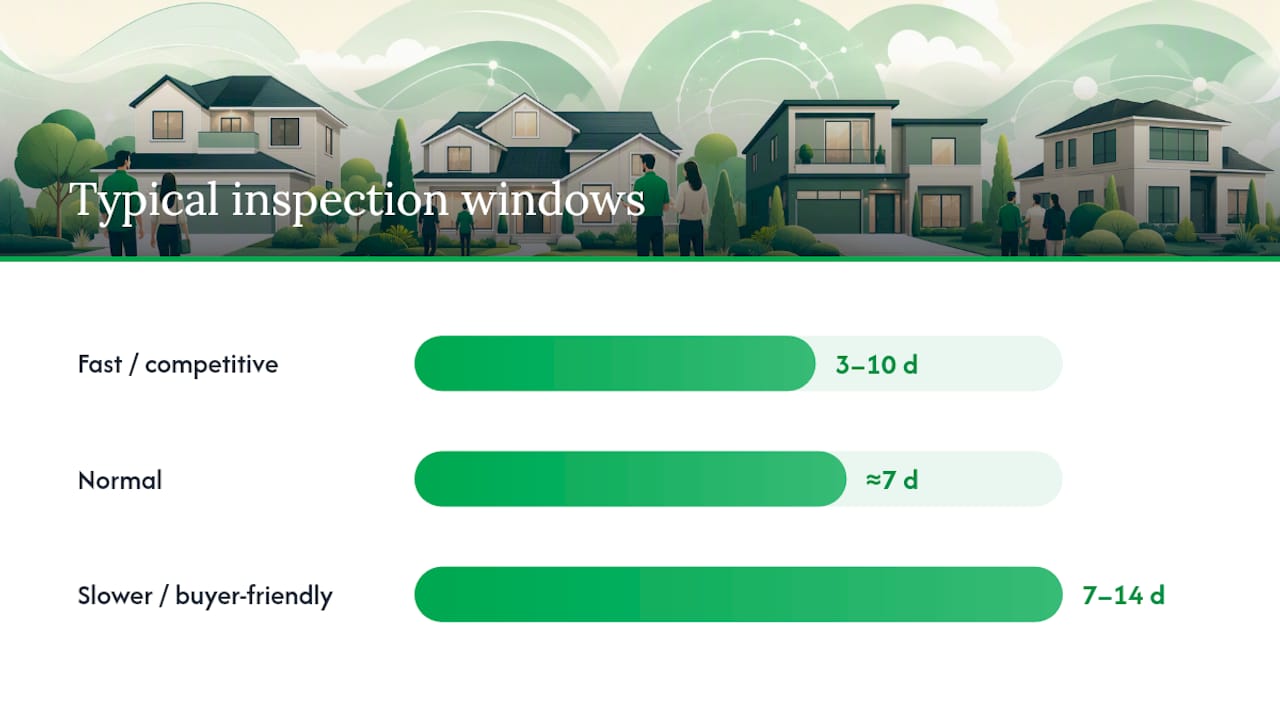
Inspection contingencies typically run 5–10 days, though fast markets sometimes compress that to 3 days. Whether those days are calendar or business days changes everything about your scheduling math.
Sample clause templates:
3-day window (calendar days): “Buyer shall have 3 calendar days from the date of contract ratification to complete inspections and submit any written requests for repairs or credits. Failure to submit within this period constitutes a waiver of this contingency.” (typical inspection contingency periods are usually a few days to a week, varying by market and contract)
a short inspection window with capped repair ask: “Buyer shall have 7 calendar days to complete inspections. Buyer agrees to limit repair requests to items posing immediate health or safety risks, not to exceed $[X] in total remediation cost.”
Pass/fail informational inspection: “Buyer’s inspection is for informational purposes only. Buyer may terminate this agreement within 5 calendar days if inspection reveals a material defect, but shall not request repairs or credits.”
Waiver after pre-inspection: “Buyer has conducted a pre-offer inspection and waives the inspection contingency. This waiver does not affect Buyer’s rights under seller disclosure laws.”
Timing matters as much as language. If your contingency expires on a Saturday and your agent’s office is closed, you need to know that before you sign. Build your response timeline backward from the deadline, not forward from acceptance.
If you need more time, request a written extension early. Sellers aren’t obligated to agree, and asking on the last day of the window leaves you with no leverage and no fallback.
Sample inspection timelines you can adapt
Fast market (a short inspection window):
| Day | Action |
|---|---|
| Day 0 | Book inspector; confirm add-ons; notify listing agent |
| Day 1 | Inspection on-site; specialist appointments booked if needed |
| Day 2 | Report delivered; buyer and agent review within hours |
| Day 3 | Submit repair request or credit ask; or confirm waiver |
| Day 4–5 | Seller response window; negotiate or exit |
Moderate market (a moderate-length inspection window):
| Day | Action |
|---|---|
| Day 0 | Book inspector; confirm scope and access |
| Day 2 | Inspection on-site |
| Day 3 | Report delivered; review same day |
| Day 4–5 | Specialist follow-up if flagged |
| Day 6 | Submit repair request or credit ask |
| Day 7–8 | Negotiation window |
| Day 10 | Final decision: proceed, negotiate, or exit |
Typical contingency lengths by market speed:
| Market Type | Typical Window | Counting Method | Scheduling Pressure |
|---|---|---|---|
| Fast/competitive | 3–10 days | Calendar days | Very high |
| Normal | about a week | Calendar or business days | Moderate |
| Slower/buyer-friendly | about one to two weeks | Business days common | Lower |
For contract language, the buyer inspection contingency page covers the specific wording and deadline mechanics your agent should know before drafting.
Key Takeaways
Coordinating a multi-offer inspection period comes down to one decision made fast: choose your contingency approach before the offer goes in, not after acceptance.
| Point | Details |
|---|---|
| Choose your tactic before bidding | Decide between pre-inspection, short window, or pass/fail before you submit your offer. |
| Count days correctly | Confirm whether your contract uses calendar or business days; the inspection window can expire faster than expected than you expect. |
| Read the report within 48 hours | Delay eats your negotiation window; sort findings into minor, moderate, and major immediately. |
| Submit requests early | Last-day submissions remove your ability to counter if the seller pushes back. |
| Jhunthomeinspections delivers in 24 hours | Hunt Home Inspection’s 24-hour report turnaround and Create Request List™ keep compressed timelines workable. |
Why coordination is the part most buyers underestimate
The conventional advice is to “get a good inspector.” That’s not wrong, but it misses where most buyers actually lose time and leverage. The real friction in a compressed inspection period isn’t the inspection itself. It’s the 6-hour gap between acceptance and the first call to the inspector, the agent who emails instead of calls the listing agent, and the report that sits unread for a day because no one told the buyer it arrived.
Sellers who’ve seen multiple offers know what a clean, fast inspection process looks like. They’ve also seen buyers who treat a 5-day window like a 10-day one. The inspection terms you put in your offer matter, but so does how you execute them once you’re under contract. A buyer who books the inspector within 2 hours of acceptance, gets the report in 24 hours, and submits a focused, documented repair request on day 3 is a fundamentally different counterparty than one who scrambles on day 4.
That’s the gap most articles don’t address. The strategy is the easy part. The execution is where offers fall apart.
Hunt Home Inspection fits exactly where competitive buyers need it most
When you’re working a short multi-day inspection window and a rapid report turnaround isn’t a nice feature. It’s the difference between having two days to negotiate and having none. Hunt Home Inspection, LLC delivers reports within 24 hours, offers both in-person and video inspection options for buyers who can’t always be on-site, and uses the Create Request List™ to keep your agent and inspector on the same page without the back-and-forth.
First-time buyers, veterans, and buyers managing tight budgets can also take advantage of the Pay at Close option, which aligns the inspection payment with your closing date rather than requiring cash upfront during an already expensive offer period. To book an inspection or check availability for your next offer, visit Hunt Home Inspection’s inspection services page.
Useful sources
- Multiple Offer Strategy: Winning in Competitive Buyer Markets – 2026 Guide
- Inspection Contingency Deadline — What to Do Before Time Runs Out
- Pre-Offer Inspection Real Estate Strategy to Win Bids
- How We Won a Multiple Offer Home in Blaine MN Using a Pass – Fail Inspection Strategy
- How to Handle Multiple Offers on Your Property Without Leaving Money on the Table
Recent Comments