
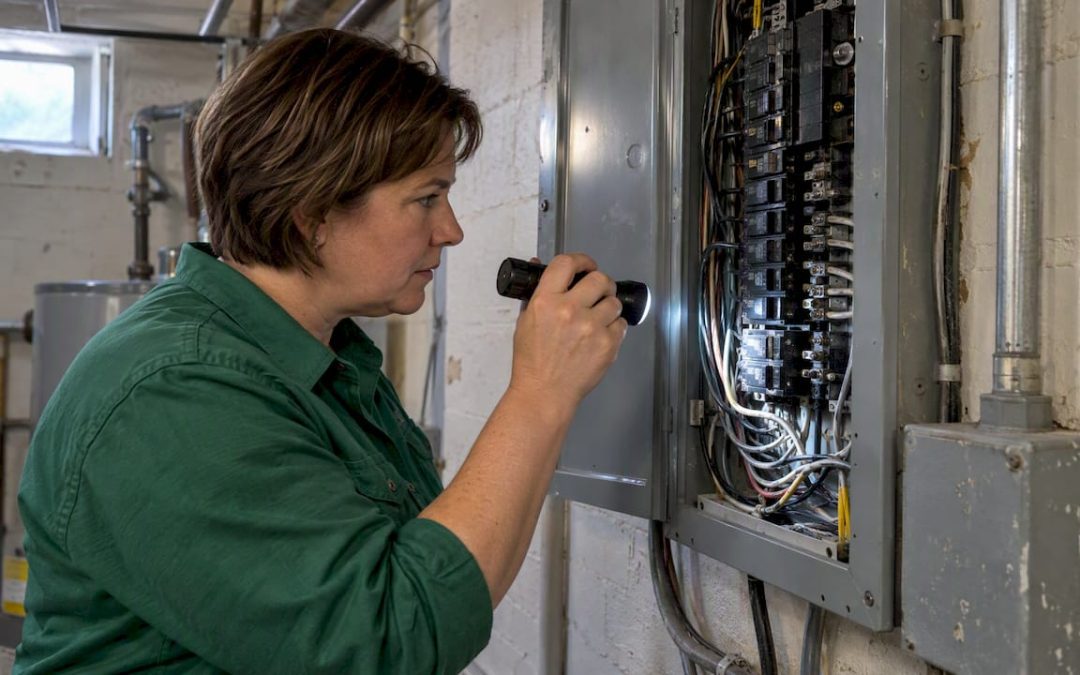
Aluminum branch wiring from the 1960s and 1970s is a documented fire risk at outlets and switches, not necessarily along the wire itself. The right first move is to stop guessing and schedule a professional inspection, since the Consumer Product Safety Commission recognizes only two permanent fixes, COPALUM and AlumiConn connectors, along with full replacement with copper. Do not touch or rewire anything yourself before that inspection happens.
TL;DR:
- Aluminum wiring from the 1960s and 1970s commonly causes fire risks at connections, not through the wire itself, but due to looser, oxidized joints.
- Signs like warm outlet covers, flickering lights, or burning smells indicate potential hazards requiring immediate professional inspection.
- The only permanent fixes accepted by the CPSC are full copper replacement, COPALUM crimp pigtails, or AlumiConn connectors; temporary solutions are unreliable.
- Repair costs depend heavily on access, the number of connections needing work, and local labor rates, influencing buyer and seller negotiations.
- Documented inspections and repair receipts streamline negotiations, insurance claims, and future sales, emphasizing the importance of professional assessment and certified repairs.
Table of Contents
- Why aluminum wiring fails at its connections
- Warning signs you can check without opening a panel
- What a professional inspection actually checks
- Fixing it: replacement, COPALUM, AlumiConn, and the dead ends
- What it costs and what it means for buying or selling
- Your next steps, in order
- How Hunt Home Inspection documents and helps resolve aluminum wiring issues
- Pragmatic safety over alarmism
- Get a documented inspection you can act on
- Where this information comes from
- Sources
- FAQ
Why aluminum wiring fails at its connections
The hazard rarely comes from the aluminum cable itself. It comes from what happens where that wire meets a screw terminal, a switch, or an outlet. Older solid aluminum branch wire, often labeled AA-1350, expands and contracts more than copper does as it heats and cools with normal use. Over years, that movement causes the metal to slowly deform under the pressure of a screw, a process called creep. The connection loosens just enough to let in air, and aluminum forms an oxide layer when exposed to oxygen that conducts electricity poorly.
A loosening, oxidizing connection raises resistance at that single point. Higher resistance under load means more heat, right at the terminal screw or the back of an outlet.
- Steel and brass screws were never a great match for aluminum’s expansion rate, and many older devices were not designed with that difference in mind.
- Inconsistent torque during the original installation left some connections looser than others from day one.
- Oxidation at a loose joint compounds the heat problem, since the added resistance generates more heat than a clean copper connection ever would.
It helps to know what you are actually dealing with. The wiring in question is older single strand aluminum branch circuit wire, typically 15 and 20 amp circuits installed roughly between 1965 and 1973. Modern stranded aluminum used on larger circuits, and copper clad aluminum wire, behave differently and are not part of this particular hazard profile.
Warning signs you can check without opening a panel
Some symptoms show up long before a connection fails completely, and ESFI lists exactly the signs worth watching for: flickering lights, sizzling or buzzing sounds, arcing, warm or discolored faceplates, and breakers that trip for no obvious reason.
- Feel switch plates and outlet covers for warmth, since a warm plate under normal use often means a hot connection behind it.
- Watch for lights that flicker or dim when an appliance kicks on, which can point to a loose connection upstream.
- Notice any burning or hot plastic smell near outlets, switches, or the panel, and treat it as urgent.
- Count how often a particular breaker trips, since a pattern on one circuit is more telling than a single trip.
- Look in unfinished basements or attics for visible cable sheathing marked “AL” or “Aluminum,” which confirms the conductor type without touching anything live.
Pro Tip: If you smell burning plastic or see a breaker trip repeatedly on the same circuit, unplug everything on it, avoid using that circuit, and call a licensed electrician the same day instead of waiting for a scheduled inspection.
What a professional inspection actually checks
A proper electrical inspection goes well beyond a glance at the breaker box. It covers the panel interior, every accessible device termination, and any exposed wiring runs in the attic, basement, or crawl space.
- Inspectors look inside the panel for aluminum conductors landing on breakers, along with any double tapped breakers that add their own separate risk, a detail covered in our guide to double tapped breakers.
- Device terminations get checked individually, since switches and outlets are where most aluminum wiring failures actually happen.
- A qualified inspector verifies whether devices carry a CO/ALR rating, which matters because standard devices were never rated for aluminum conductors.
- Thermal imaging, where the inspector has the equipment, can reveal a hot connection behind a cover plate before it becomes a visible problem.
- Everything gets documented with photos and panel notes, the same documentation practice described in our overview of what inspectors look for in a home.
A certified home inspector can identify aluminum branch wiring, document its condition, and flag connections that look suspect. A licensed electrician is the one who performs any repair, and for serious signs like burning smells or repeated tripping, it makes sense to bring an electrician in directly rather than waiting on a routine inspection cycle.
Fixing it: replacement, COPALUM, AlumiConn, and the dead ends
Three repair paths actually solve the problem, and the CPSC’s repair guidance is specific about which ones qualify.
- Full replacement with copper wiring removes the aluminum conductors entirely and eliminates the hazard at its source, though it is the most disruptive and costly option, especially behind finished walls.
- The COPALUM crimp method pigtails a short length of copper onto each aluminum conductor using a specialized crimp tool and sleeve, and CPSC considers it a safe, permanent repair when done correctly.
- AlumiConn connectors use a setscrew design to join copper pigtails to aluminum wire at each termination, and CPSC recognizes it as an acceptable alternative where COPALUM is not available.
- Twist-on wire connectors and CO/ALR rated devices alone have failed to hold up as permanent fixes in CPSC testing, since standard twist-on connectors not specifically listed for aluminum-to-aluminum use can overheat and fail over time.
Pro Tip: Ask any electrician’s quote to state explicitly whether the repair uses COPALUM or AlumiConn, since a vague estimate that just says “pigtailing” may not specify a method that actually meets CPSC criteria.
COPALUM requires a licensed tool and trained installer, which narrows who can perform it. AlumiConn is more widely available but has a shorter track record than COPALUM’s decades of field use.
What it costs and what it means for buying or selling
Repair costs swing widely based on a few factors.
- The number of terminations needing pigtails drives labor time more than anything else, since each outlet, switch, and fixture connection has to be opened and redone individually.
- Access matters: finished walls and ceilings add demolition and patching costs that an open basement or attic run does not.
- Local labor rates and whether the panel itself needs attention both affect the final bill.
Insurers treat aluminum wiring inconsistently. Some require documentation of repairs, some adjust premiums, and some decline new policies until remediation is complete, so contacting your insurer before or during a sale is worth doing early.
For buyers and sellers, a documented inspection report carries real weight in negotiation, whether that means a price adjustment, a repair holdback at closing, or a disclosure that protects both sides. Our guide to home inspection red flags covers how issues like this typically get prioritized during a transaction.
Your next steps, in order
- Stop using any circuit showing warning signs, unplug devices on it, and avoid touching outlets, switches, or panel components yourself.
- Schedule a professional inspection and specifically ask that aluminum branch circuits be checked and documented.
- Request electrician quotes that name COPALUM or AlumiConn by name, not just generic “wiring repair,” so you know the fix actually meets recognized standards.
- Keep every inspection report and repair receipt on file, since both matter later for insurance claims and for a future sale.
How Hunt Home Inspection documents and helps resolve aluminum wiring issues
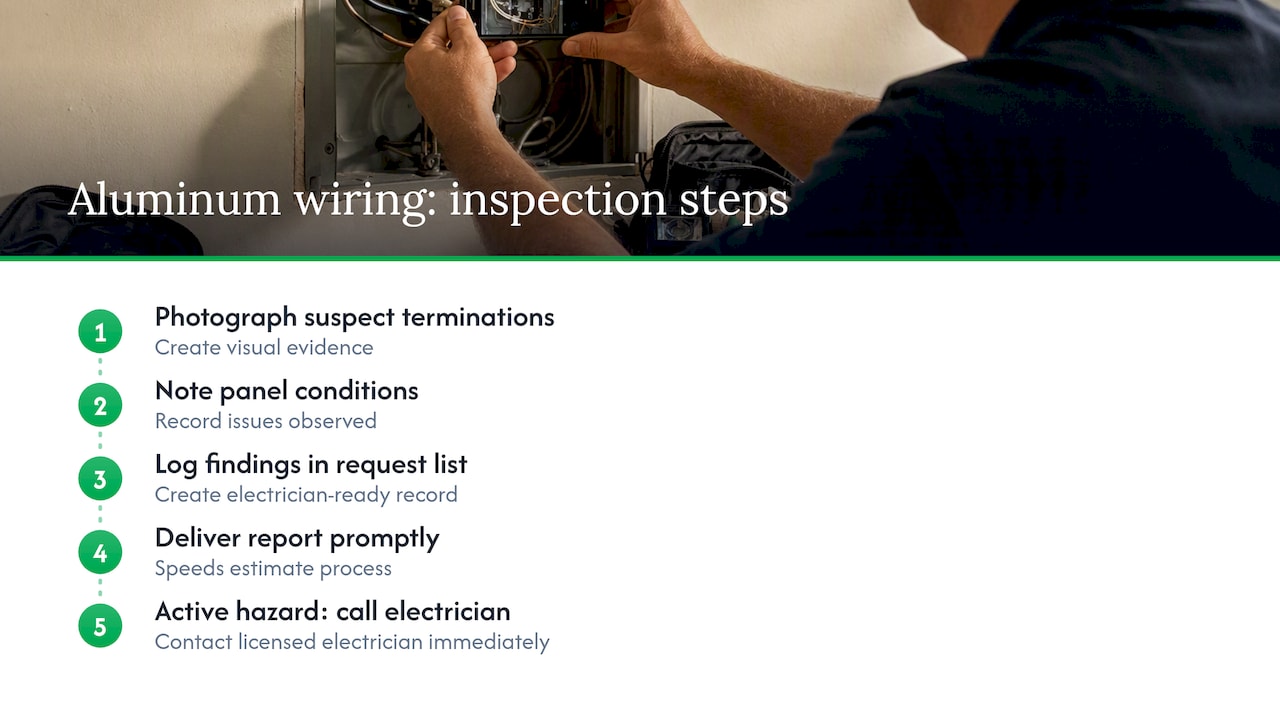
During an inspection, suspect terminations can be photographed, panel conditions noted, and findings logged through a request list tool, providing a clear record to hand to an electrician. Flexible scheduling options and timely report delivery can help you get electrician estimates moving faster instead of waiting weeks. When signs point to an active hazard, Hunt recommends involving a licensed electrician right away rather than waiting on the full report.
Pragmatic safety over alarmism
Aluminum terminations are a documented hazard, not a myth, and the fix is well established rather than mysterious. What matters is acting on a real inspection and a repair method CPSC actually recognizes, not a quick twist-on fix that looks finished but is not. Skip the panic, skip the shortcuts, and get the documentation that tells you exactly where you stand.
— JOHN
Get a documented inspection you can act on
A home with aluminum branch wiring does not need guesswork, it needs a clear record of what is actually at risk. Hunt Home Inspection, LLC covers electrical systems as part of a full home inspection, with findings logged and photographed so you walk away with something an electrician can quote against immediately.
- Evening and video inspection options fit around work schedules and closing deadlines.
- Reports return within 24 hours, so you are not stalled waiting on paperwork.
- The Create Request List™ keeps your findings organized as you collect electrician quotes.
Visit the inspection services page to see the full scope of what is included and schedule a time that works for you.
Where this information comes from
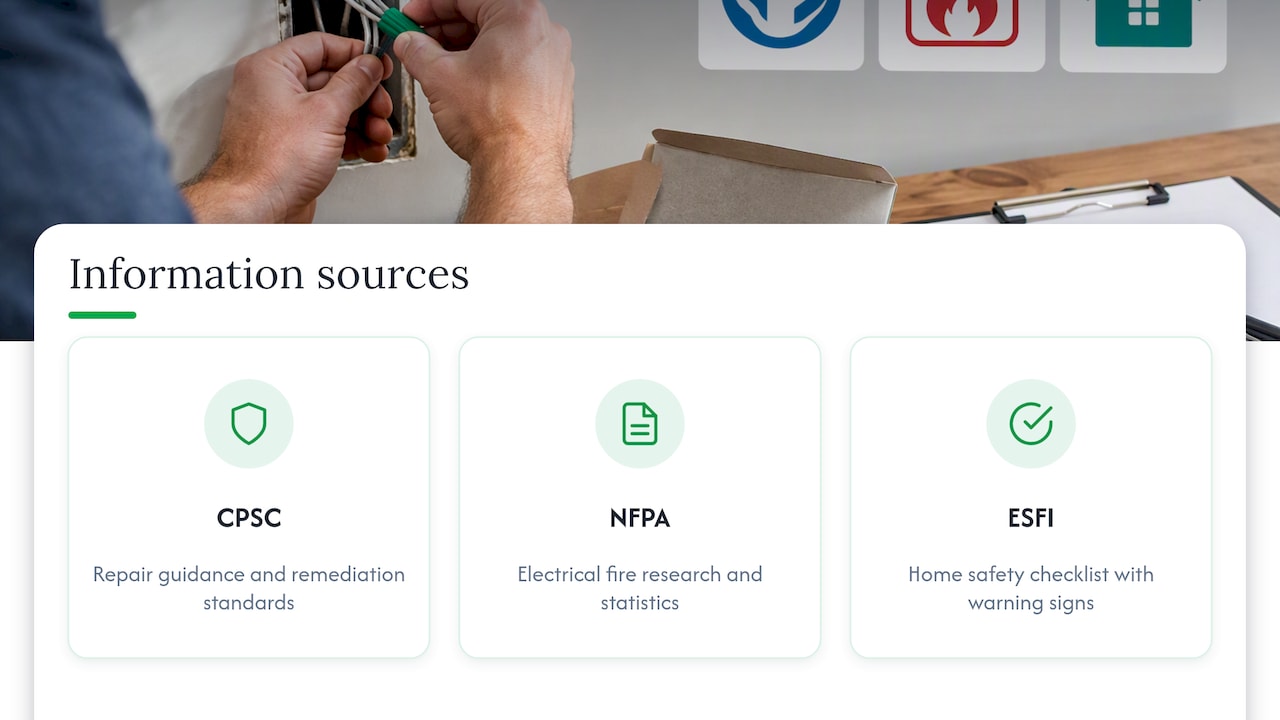
The CPSC’s repair guidance and NFPA’s electrical fire research cover the statistics and remediation standards cited here, and ESFI’s safety checklist outlines the warning signs worth watching for at home.
Sources
- CPSC Publication 516 — Repairing Aluminum Wiring
- Electrical Safety Foundation International — Home wiring safety tips
- NFPA — Electrical distribution and lighting equipment fire research
FAQ
Is it safe to live in a house with aluminum wiring?
Aluminum wiring itself is not automatically dangerous, but connections at outlets and switches can develop into fire hazards over time. A CPSC-sponsored survey found homes built before 1972 with aluminum branch wiring were 55 times more likely to have an outlet connection reach fire hazard conditions than copper-wired homes, which is why an inspection matters before you decide anything else.
Is it a good idea to buy a house with aluminum wiring?
It can be a reasonable purchase as long as you budget for inspection and likely remediation costs upfront. Getting a documented inspection before closing lets you negotiate a price adjustment or repair holdback rather than discovering the issue later.
Can I sell a house with aluminum wiring?
Yes, aluminum wiring does not prevent a sale, but most states require disclosure of known material defects, and buyers often request repairs or credits once it shows up in an inspection. Having repair documentation ready, especially proof of COPALUM or AlumiConn work, tends to smooth the negotiation.
Will a house pass an inspection with aluminum wiring?
A home inspection will note aluminum branch wiring as a finding rather than a pass or fail item, since inspections document conditions rather than issue approvals. The real question buyers and lenders ask afterward is whether the wiring has been remediated using a method CPSC recognizes as permanent.
Recent Comments