
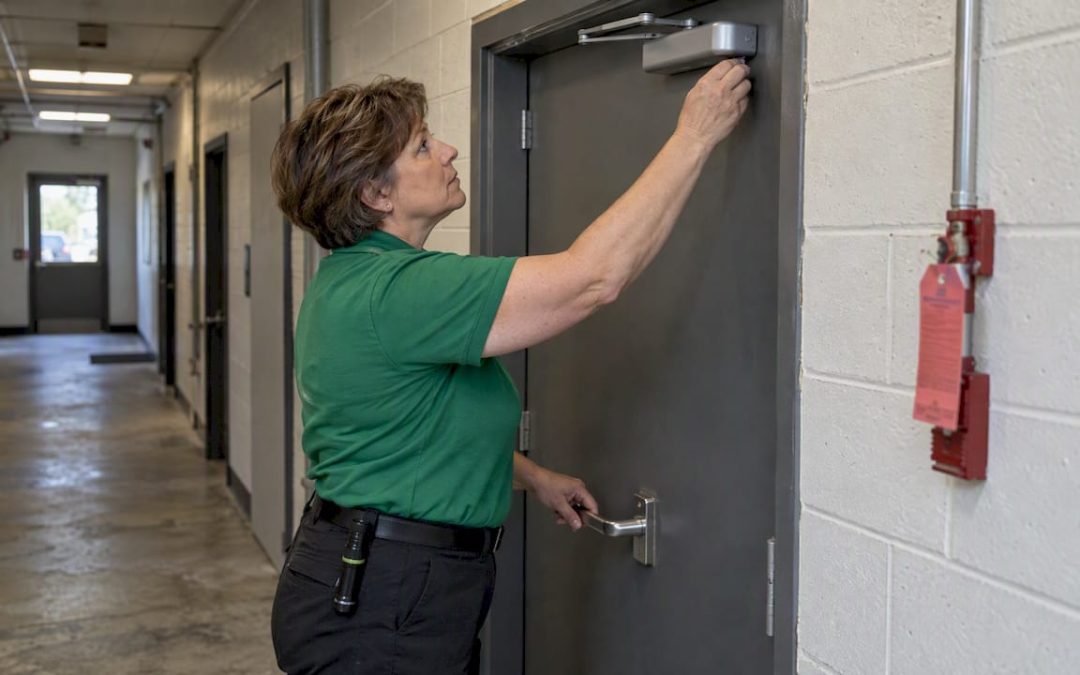
A thorough commercial building inspection checklist covers site and exterior conditions, the structural envelope, mechanical and electrical systems, fire and life safety equipment, accessibility compliance, and document review. The immediate next step is to triage any safety hazards you find, then gather permits, maintenance logs, and service contracts before you walk the property. Below, each system gets its own detailed checklist.
TL;DR:
- The inspection should verify site grading and drainage to prevent interior moisture issues caused by poor exterior water management.
- Fire safety checks must confirm recent inspections and proper function of alarms, sprinklers, and egress routes, with documentation review for recurring deficiencies.
- Structural and envelope observations require noting visible signs of foundation movement, water intrusion, or roof membrane damage to determine the need for engineering evaluation.
- Mechanical, electrical, and plumbing systems need a thorough review of equipment age, leak signs, and safety hazard indicators before ownership transfer.
- Prioritizing findings based on safety risk and understanding the scope of full property assessments can prevent overlooking critical issues during transactions.
Table of Contents
- Pre-Inspection Prep: Documents, Access, and Who Should Be There
- Site and Exterior Checklist: Grading, Parking, and Façade Condition
- Structural Components and Building Envelope: What a Walkthrough Can and Can’t Tell You
- Building Systems: HVAC, Plumbing, and Electrical Checks
- Fire and Life Safety Checklist: Sprinklers, Alarms, and Egress Paths
- Accessibility Checklist: ADA Routes, Parking, and Restrooms
- Documentation Review and When a Full PCA Makes Sense
- Turning Findings Into Action: Severity, Budgeting, and Referrals
- What We Watch for in Commercial Walkthroughs
- Why Checklists Alone Don’t Close the Gap
- Book a Professional Commercial Inspection
- FAQ
- Sources
Pre-Inspection Prep: Documents, Access, and Who Should Be There
Before you walk a commercial property, gather the paperwork that shapes what you will actually find and how you will interpret it. A certificate of occupancy mismatch, a lapsed fire sprinkler tag, or a missing permit for a rooftop unit tells you as much as the physical walkthrough does.
- Collect the certificate of occupancy, full permit and alteration history, and current maintenance or service contracts.
- Request inspection logs, fire system test records, warranties, and as-built drawings if available.
- Confirm lockout/tagout procedures, identify any confined spaces, and bring basic PPE for mechanical rooms and roof access.
- Coordinate with tenants or facility staff ahead of time so occupied spaces are accessible on inspection day.
Note who attends the walkthrough, whether that’s a property manager, maintenance lead, or tenant representative, since their input often explains anomalies you can’t diagnose by sight alone.
Site and Exterior Checklist: Grading, Parking, and Façade Condition
Water management starts outside the building, so site conditions deserve as much attention as the structure itself. Poor grading or a clogged drainage system will eventually show up as interior moisture problems, often long after the exterior issue was first visible.
- Check site grading to ensure proper slope away from the foundation, and visually inspect for signs of ponding, erosion, or saturated soil near the perimeter.
- Inspect gutters, downspouts, and discharge points for blockages or disconnections.
- Review the parking lot surface for cracking or heaving, and confirm ADA-compliant stalls, curb ramps, and signage are present.
- Examine façades for cracking, efflorescence, staining, loose cladding, and failed window sealants.
- Walk the perimeter for security lighting coverage, fencing condition, and controlled access points.
Pro Tip: Photograph every exterior defect with a wide shot and a close-up so the severity is clear without a second site visit.
Structural Components and Building Envelope: What a Walkthrough Can and Can’t Tell You
A visual walkthrough can surface warning signs of structural distress, but it rarely confirms a diagnosis. Your job is to catalog what you see and know when a finding warrants a licensed structural engineer.
- Look at foundation walls and slabs for stair-step cracking, differential settlement, heave, or active moisture tracking.
- Scan exposed beams, columns, and joists for visible deflection, spalling concrete, or exposed reinforcement.
- Note any unusual vibration or bounce in floor systems during normal foot traffic.
- Inspect roof membranes for ponding water, blistering, open seams, and flashing separation around penetrations.
- Check windows and expansion joints for failed sealants, and look inside for staining patterns that suggest water intrusion at these points.
ASTM E2018 sets the baseline framework professionals use for a full property condition assessment, including how a walk-through survey should be scoped and documented when envelope issues are found. A cracked slab or a stained ceiling tile rarely tells the whole story on its own, which is why the standard pairs physical observation with document review before issuing an opinion of cost.
Building Systems: HVAC, Plumbing, and Electrical Checks
Mechanical, electrical, and plumbing systems account for a large share of a commercial building’s operating cost and failure risk, so this section rewards a methodical pass through each system rather than a quick glance.
- HVAC: note equipment age and nameplate data, filter condition, condensate drainage, and whether recent maintenance records exist; test thermostat and control responsiveness where accessible.
- Plumbing: check for active or past leaks, assess water heater condition and age, confirm backflow prevention devices are tagged and current, and trace storm and sanitary drainage paths including roof drains.
- Electrical: verify service capacity matches building load, confirm panels are labeled accurately, check clearances around panels, and look for discoloration or heat damage on breakers and connections; ask for emergency power testing records if a generator or battery backup is present.
Any overheated component, exposed wiring, or undersized service calls for an electrician’s evaluation before the building changes hands or a lease begins, since these items carry both safety and insurance implications.
Fire and Life Safety Checklist: Sprinklers, Alarms, and Egress Paths
Fire and life safety items are the ones with the least tolerance for deferred action, so this section of the checklist should be completed methodically and cross-checked against service records.
- Confirm sprinkler head tags show current inspection dates and check for obstructions, paint overspray, or physical damage, following the testing intervals in NFPA 25.
- Verify the fire alarm panel shows normal status, detectors are unobstructed, and manual pull stations are accessible, with recent test logs on file.
- Walk every exit path to confirm doors are unlocked from the inside, panic hardware operates smoothly, exit signage is illuminated, and nothing obstructs the route.
- Check fire door operation and self-closing function, and confirm hydrant clearance and fire apparatus access routes meet what your local authority having jurisdiction expects.
Pro Tip: Request the last two fire system service reports rather than relying on the current inspection tag alone. A single tag can mask a pattern of repeat deficiencies.
Accessibility Checklist: ADA Routes, Parking, and Restrooms
Accessibility findings carry legal exposure that most other checklist items don’t, so they deserve their own careful pass even on a general condition inspection.
- Walk the accessible route from parking to entrance, checking running slope, cross slope, and surface stability against the 2010 ADA Standards for Accessible Design, which set specific technical requirements for these elements in Chapter 4.
- Count and measure accessible parking stalls, confirm van-accessible spaces and signage, and check curb ramp condition.
- Review restroom layouts for clear floor space, grab bar placement, and fixture height.
An alteration to any area with a primary function can trigger path-of-travel upgrade requirements under the same ADA standards, so flag recent renovation history for a closer look. When findings are ambiguous, recommend a specialist accessibility review rather than guessing at compliance.
Documentation Review and When a Full PCA Makes Sense
A checklist walkthrough and a formal property condition assessment are related but distinct exercises, and knowing which one a transaction calls for saves time and money.
- Collect the certificate of occupancy, permit and alteration history, service contracts, maintenance logs, inspection tags, and any equipment warranties.
- Understand that ASTM E2018 treats a PCA as a baseline process built from scope-setting, a walk-through survey, document review, and an opinion of probable costs, not a rigid checklist applied the same way every time.
- Order a full PCA, roof core sample, structural analysis, or environmental testing when the walkthrough surfaces findings beyond what a visual review can resolve.
The GSA’s own routine inspection checklist offers a useful model for how owners track recurring issues over time rather than treating each inspection as a standalone event. For a downloadable version built around lender expectations, see our commercial inspection checklist.
Turning Findings Into Action: Severity, Budgeting, and Referrals
A checklist is only useful once you’ve sorted findings by what they demand of you next.
- Tag immediate safety items first, such as blocked egress or exposed wiring, and flag them for same-week correction.
- Separate near-term repairs, like a failing roof membrane, from long-term maintenance items such as repainting or resealing joints.
- Draft a short opinion-of-cost summary grouped by system, so budgeting and capital planning conversations have a starting point.
- Apply referral rules: call a structural engineer for foundation or framing concerns, a fire protection contractor for suppression or alarm deficiencies, an accessibility specialist for ambiguous ADA findings, and an environmental tester for suspected asbestos, mold, or lead.
Pro Tip: Keep severity categories consistent across every report you write. A repair that’s “near-term” in one report and “long-term” in another erodes trust in your findings.
What We Watch for in Commercial Walkthroughs
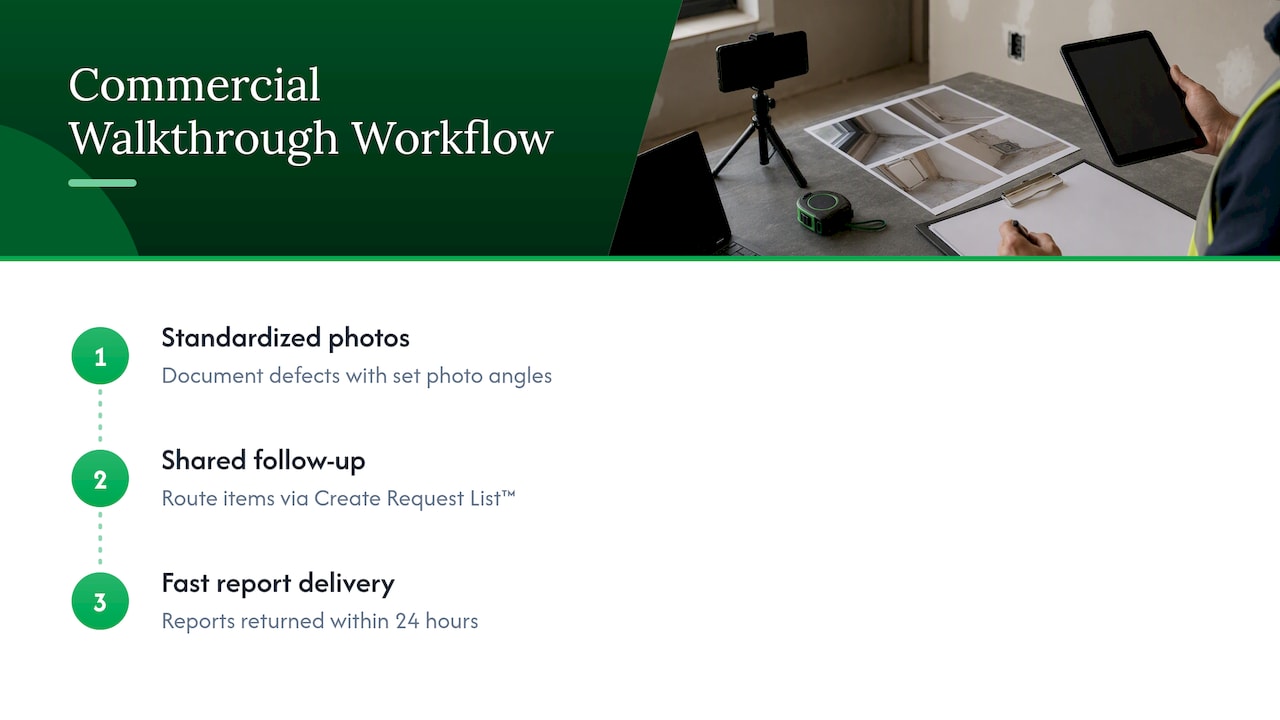
Commercial inspections reward consistency more than instinct. We document every defect with standardized photo angles and route follow-up items through our Create Request List™ so buyers and agents work from the same record instead of a scattered email thread. Reports return within 24 hours, which keeps transactions moving instead of stalling on paperwork.
The most common pitfall we see is a building with current-looking fire tags but no underlying service history, a gap that only document review catches. Access control issues also surface often: worn door hardware or missing master-key coverage on perimeter doors, which a commercial locksmith can address directly once the inspection flags it.
Why Checklists Alone Don’t Close the Gap
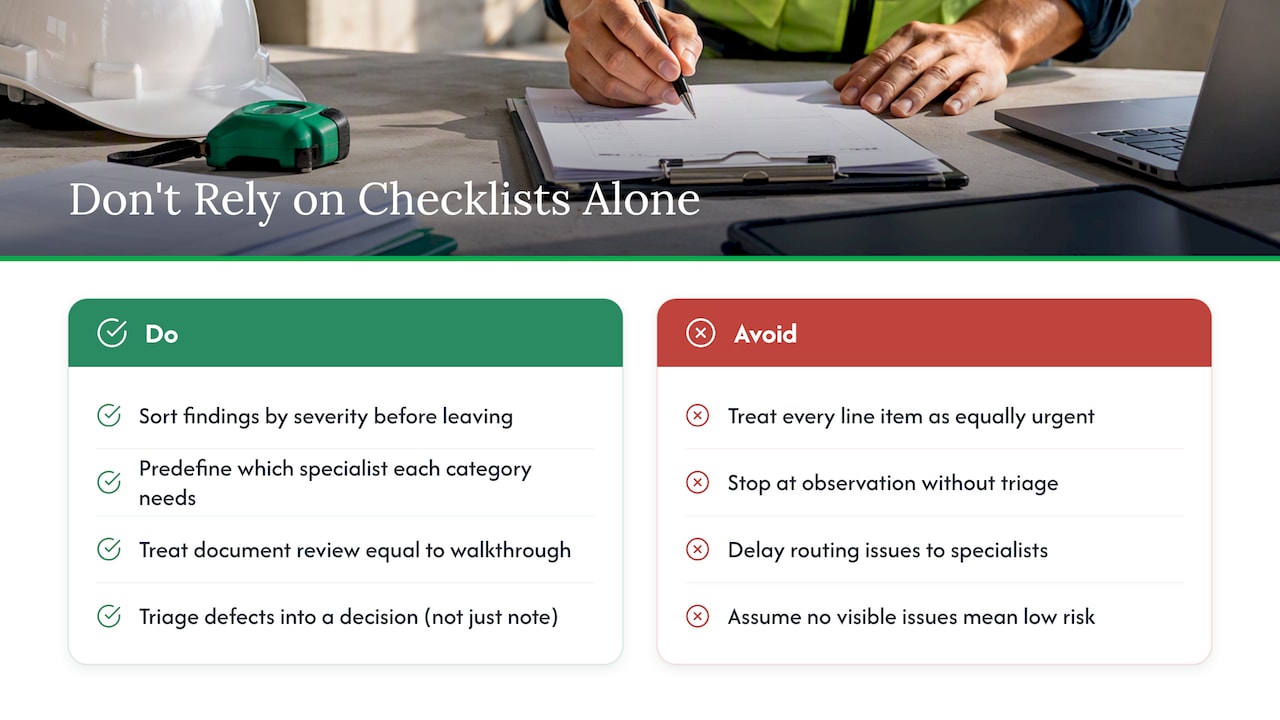
Most commercial inspection checklists treat every line item as equally urgent, and that’s the biggest flaw in how buyers and managers actually use them. A cracked parking curb and an exposed electrical junction box are not the same category of problem, yet a flat checklist format puts them on the same page with the same visual weight.
The standards themselves get this right. ASTM E2018 is explicit that a PCA scope should flex with the user’s objectives and risk tolerance, not apply a uniform depth to every system regardless of transaction size. The gap is in practice: too many walkthroughs stop at observation and skip the triage step that turns a list of defects into a decision.
What matters most is the workflow around the checklist, not the checklist itself. Sort findings by severity before you leave the property, know in advance which specialist each category of problem routes to, and treat the document review as equal in weight to the physical walkthrough. A building with clean service records and one visible roof issue is a better bet than one with no records and no visible issues at all.
— JOHN
Book a Professional Commercial Inspection
We offer commercial inspection services that include a full walkthrough, report turnaround within 24 hours, video inspection options, and support for HUD compliance certification when needed.
Ready to schedule or get a quote? Visit our commercial inspection page to get started.
FAQ
What does a commercial building inspection checklist cover?
A complete checklist covers site and exterior conditions, structural components and the building envelope, HVAC, plumbing and electrical systems, fire and life safety equipment, accessibility compliance, and a review of permits and maintenance records. The goal is to move from observation to a prioritized list of safety concerns, repairs, and budget items.
How is a PCA different from a standard inspection checklist?
A property condition assessment under ASTM E2018 is a structured process that includes scope-setting, a walk-through survey, document review, and a formal opinion of probable costs. A standard checklist inspection is typically narrower and doesn’t always include the same level of document review or cost analysis.
What ADA requirements apply to commercial buildings?
The 2010 ADA Standards for Accessible Design set technical requirements for accessible routes, parking, slopes, and restroom layouts in public accommodations and commercial facilities. Alterations to areas with a primary function can also trigger path-of-travel upgrade requirements under the same standards.
How often should fire and life safety systems be inspected?
Testing intervals vary by system and equipment type, and NFPA 25 governs inspection and testing frequency for water-based fire protection systems like sprinklers. Facility managers should keep current service records on hand since a valid-looking tag doesn’t always reflect a consistent maintenance history.
Does Hunt Home Inspection offer commercial property inspections?
Yes, commercial inspection services include walkthrough evaluation, video inspection options, and HUD compliance certification support, with reports returned promptly. Details and booking are available on our commercial inspection page.
Sources
- 2010 ADA Standards for Accessible Design
- Standard Guide for Property Condition Assessments (ASTM E2018)
Recent Comments