
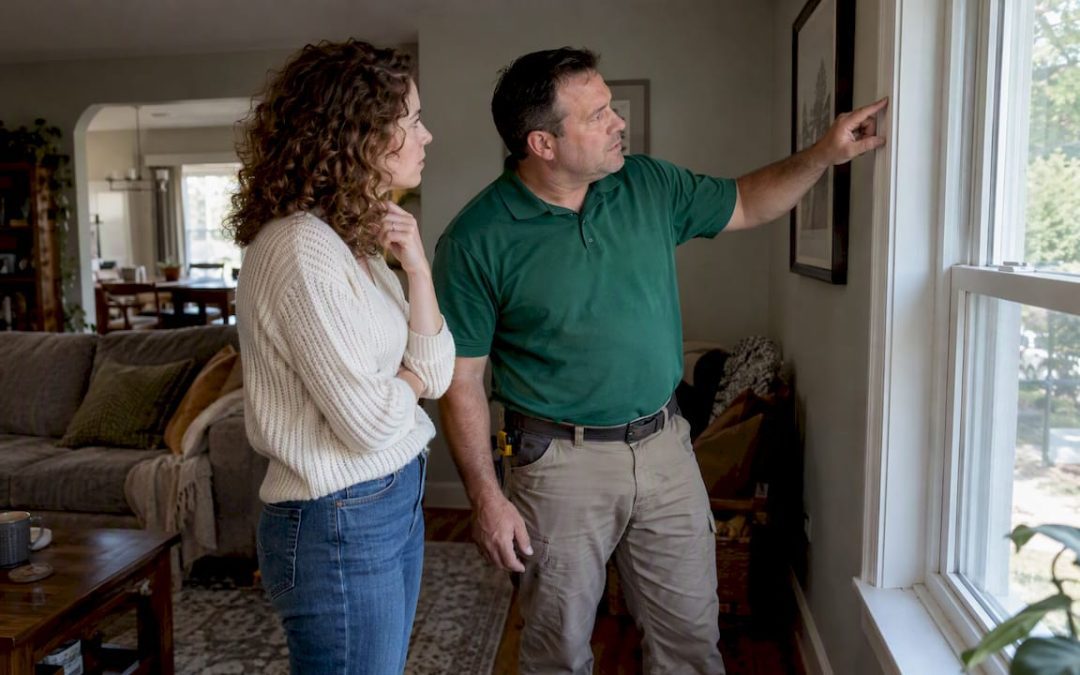
A walk and talk inspection is a short, informal visit. An inspector walks the home with you, points out visible concerns out loud, and usually leaves you without a written report. It can give you a quick read on a house when time is tight. It is not a substitute for a full home inspection, and the gap between the two is where buyers get hurt.
This guide explains what a walk and talk covers, what it cannot do, the few situations where it makes sense, and how to protect yourself if you use one.
TL;DR
- A walk and talk is a verbal, non-invasive walkthrough with no standard scope and, typically, no written report. A full inspection follows established standards and ends in a detailed report.
- It is often sold on speed and price, but the point of an inspection is the documentation you can use to negotiate repairs or cancel under your contract.
- Hazards such as radon, mold, sewer line defects and wood-destroying insects need real testing. A talk-through cannot clear them.
- If you do a walk and talk, get the scope in writing and keep your inspection contingency intact.
- Whatever you choose, be there in person or on video, and ask questions while the inspector is standing in front of the problem.
Table of Contents
- What a walk and talk inspection actually is
- Why buyers choose a walk and talk
- What a walk and talk misses
- The contingency question: what you can lose
- When a walk and talk can make sense
- How to protect yourself if you do one
- Be there, and ask questions
- Our perspective: talk, but also document
- Get the conversation and the report
- FAQ
- Sources
What a walk and talk inspection actually is
The name varies: walk-through consultation, verbal consultation, walk and talk. The idea is the same. You pay an inspector to tour the property, usually with your agent, and describe what they see. Providers who sell it describe it as an informal, non-invasive evaluation of visible conditions, and many state plainly that no written report is produced.
That last point matters more than it sounds. A walk and talk is not legally or technically the same as a professional home inspection because it lacks the Standards of Practice that govern comprehensive inspections. With no standardized scope, nobody has agreed in advance on what the inspector will look at, what they will skip, or what they owe you afterward.
How it differs from a full home inspection
| Walk and talk | Full home inspection | |
|---|---|---|
| Format | Verbal tour, often about an hour | Multi-hour systematic inspection |
| Written report | Usually none | Detailed report with findings and photos |
| Standards | No standard scope | Follows a standards of practice |
| Evidence for negotiation | Your memory and notes | Documented defects you can send to the seller |
| Best use | Quick triage when time is short | Your main due diligence before closing |
A standard inspection is itself a limited tool. The Consumer Financial Protection Bureau describes it as a visual assessment of major systems and components, designed to surface major issues that could change your decision to buy. A walk and talk is a thinner version of that already-limited snapshot.
Walk and talk versus the final walk-through
People mix these up. The final walk-through happens shortly before closing. It is your last chance to confirm that agreed repairs were done and that the home’s condition has not changed. The North Carolina Real Estate Commission’s buyer brochure notes it should ideally happen after the seller has removed belongings, so you can see areas that furniture and boxes hid earlier. A walk and talk happens before you commit. The final walk-through happens after you have committed. They do different jobs.
Why buyers choose a walk and talk
There are real reasons the option exists.
- Competitive markets. When listings draw many offers and sellers allow little time, buyers feel pressure to shorten or skip the full inspection. Industry commentary describes walk and talks as born of market pressure and tight timelines.
- Showing-stage triage. Some buyers want a professional opinion before writing an offer, so they do a quick tour first and decide whether the house is worth a full inspection.
- Cost. One provider’s own comparison puts the fee at roughly half to two-thirds of a full inspection. That is a modest saving against a purchase that may be several hundred thousand dollars.
- Repeat buyers and investors. Someone reviewing many properties may use a brief look to screen out obvious money pits.
Notice the pattern: every legitimate use is a screening step. None replaces the inspection that supports your contract rights.
What a walk and talk misses
No record, no leverage
Without a report, you cannot hand the seller a list of defects with photos and ask for repairs or a credit. You cannot give a lender, insurer or contractor a document. You are relying on what you remembered from a one-hour tour, and a few weeks later you will not recall whether the inspector called the water heater “old” or “fine.”
Hidden and latent problems
Experts at the American Society of Home Inspectors warn that quick consultations lack the depth to catch deeper, latent issues and that a one-hour visit is rarely a substitute for a multi-hour assessment. Those are the problems that turn into post-closing bills: slow plumbing leaks, failing roof flashing, drainage that sends water toward the foundation, wiring that was modified badly.
Specialty hazards
Radon, mold, lead, asbestos, termites and sewer line condition are not things an inspector can judge by looking at a wall. Illinois is a good example: its Radon Industry Licensing Act requires that anyone performing radon measurements in real estate transactions be licensed by the Illinois Emergency Management Agency and Office of Homeland Security. A verbal impression of “the basement seems fine” is not a test result. If you are buying in the St. Louis metro area or Southern Illinois, read our guide to radon in the home and our environmental testing overview for buyers before you decide what to skip.
Out of sight is also out of reach in a different way: older homes with cast iron drain lines can hide serious defects that only a camera shows. See why a camera comes first for cast iron drain pipes and what a sewer scope inspection tells a buyer.
Blocked and inaccessible areas
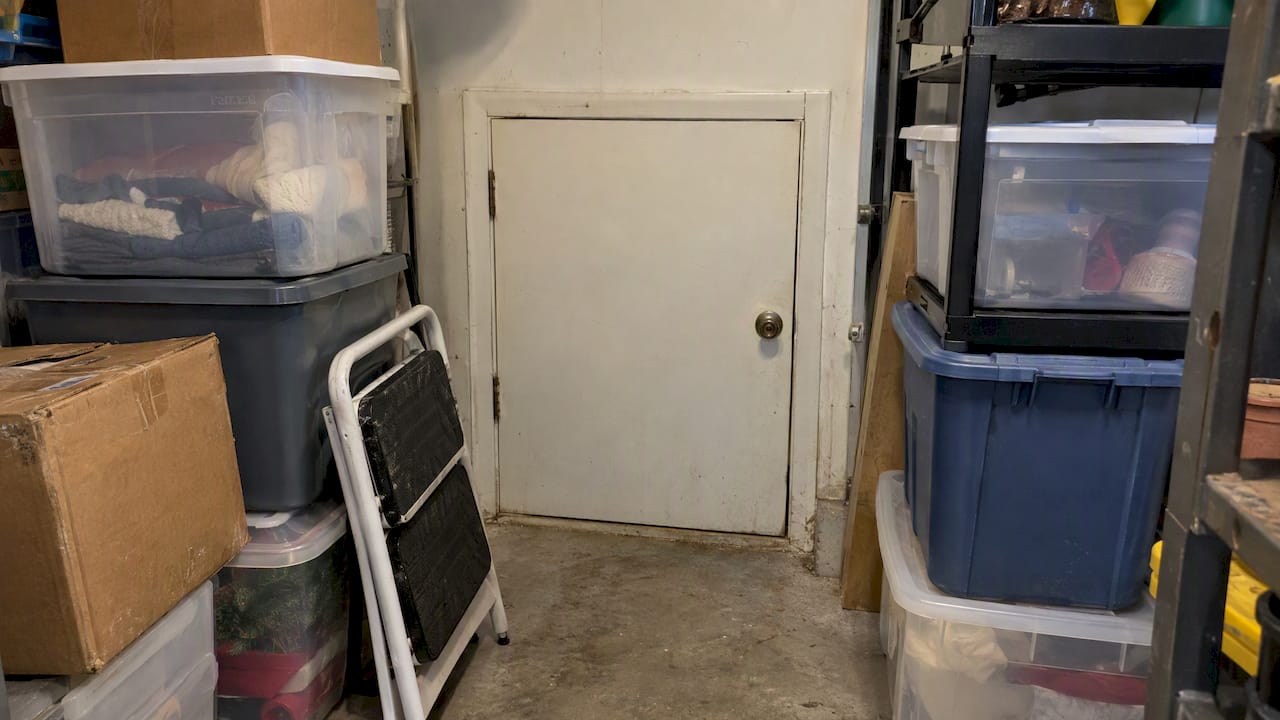
Any inspection is limited by what the inspector can see. Items hidden by belongings, locked, or unsafe to reach cannot be verified. A brief visit has even less time to work around those obstacles.
Unclear liability
Because there is no standardized scope, the inspector’s duty is whatever your paperwork says. The ASHI guidance recommends a specific contract signed beforehand that clearly separates the consultation from a full inspection. If a provider will not put the limits in writing, that tells you something.
The contingency question: what you can lose
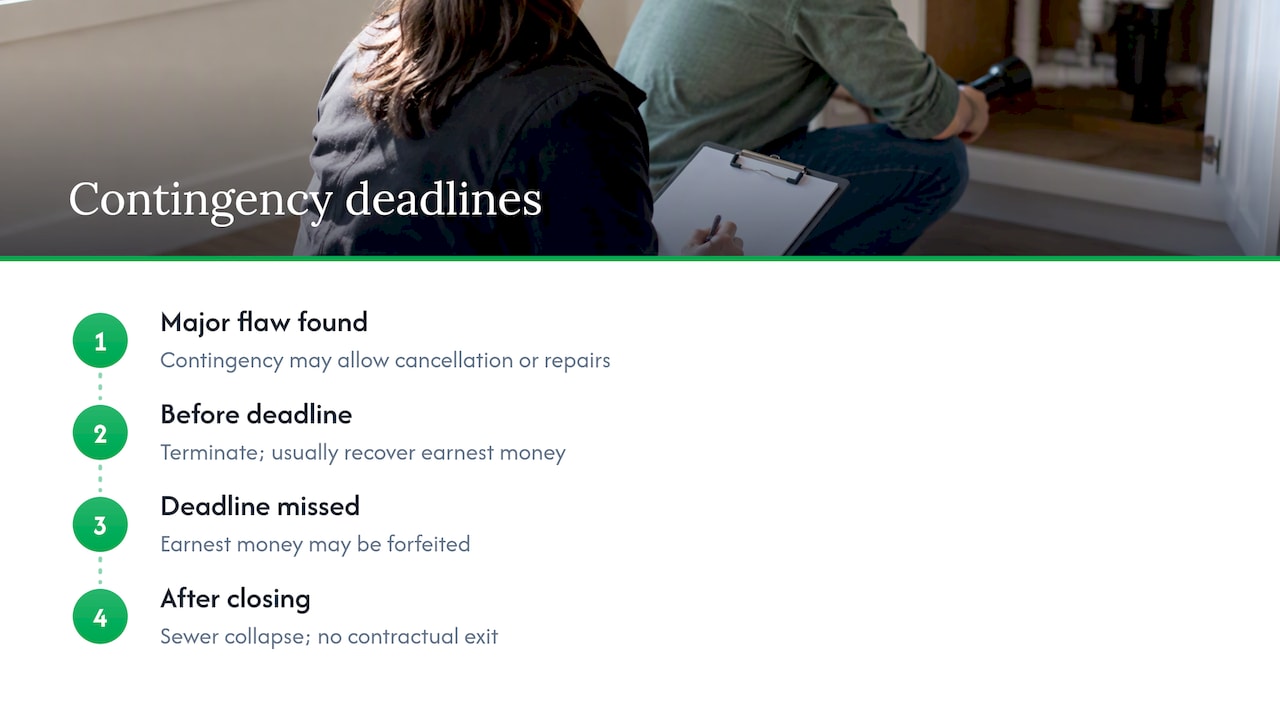
The biggest risk is not the inspector. It is the clock in your contract. If your contract has an inspection contingency, you can typically cancel or negotiate repairs without penalty when major flaws are found. Earnest money works similarly: a buyer can usually terminate and recover the deposit if they act before the contingency deadline, and missing deadlines can mean forfeiting it.
Here is the trap. Say you do a walk and talk, feel reassured, and let the contingency period lapse. A month after closing, a sewer line collapses. You have no report, no testing, and no contractual exit. Our pages on the buyer inspection contingency and the risk of waiving it cover this in detail. Contract terms vary by state and by form, so ask your agent or a real estate attorney how yours reads.
When a walk and talk can make sense
We would not call it useless. Used honestly, it has a place:
- Before you offer. You are unsure about a house and want a professional’s first impression before spending on a full inspection.
- To compare shortlisted homes. You are choosing between two or three and want a rough ranking of condition risk.
- When you already have a full inspection. For example, a second tour to ask follow-up questions or to review repairs.
It makes much less sense as your only inspection on a home you are contractually committed to buy. And do not lean on a seller’s pre-listing report as a stand-in either. Real estate regulators advise buyers to hire their own independent, qualified inspector, because owner-provided reports can underemphasize problems and may not be timely. A pre-listing report is useful to the seller, as we explain in what a pre-listing inspection is, but your decision needs your own documentation.
How to protect yourself if you do one
- Get the scope in writing. It should say it is a consultation, not an inspection, and list what is excluded.
- Take notes and photos. You are your own report. Record the date, the room and the issue.
- Ask what it cannot tell you. Radon, mold, sewer, wood-destroying insects, septic and well are the usual blind spots.
- Protect your contingency. Do not let a verbal chat shorten or replace the window you negotiated.
- Check credentials. Ask whether the person follows a recognized standards of practice and carries the certifications you expect.
- Plan the full inspection anyway if you move forward. Our pre-inspection checklist helps you get ready.
Be there, and ask questions
The best part of a walk and talk is the conversation, and you can have that in a full inspection too. Being present is highly recommended because you see issues firsthand and can interpret findings. For a useful take on observing findings and following the inspector’s assessment, this piece on how teams close defects faster after an inspection shows the same logic from the design trade: walk the space, look at each issue, and agree on what gets fixed.
Bring a list. Our guide to questions to ask your home inspector is a good start, and what to expect on inspection day walks you through the visit.
Our perspective: talk, but also document
We inspect homes across the St. Louis Metro area and Southern Illinois, and a lot of our clients are first-time buyers, low-income families and veterans who cannot afford a surprise. That shapes how we see this question.
The real appeal of a walk and talk is speed and cost. We take both seriously, which is why we built our service around them without dropping the report. Reports come back within 24 hours. We schedule evenings and weekends for people who work. We offer video inspections as well as in-person ones, so a buyer who cannot be on site can still follow along. We offer discounts for veterans and first-time buyers. And our Create Request List™ tool helps buyers and agents turn findings into a clear repair request instead of a long email thread.
In our view, the conversation on site is valuable, but it should end in something you can hold. For a buyer who is under contract, the paper is what lets you negotiate, cancel if you must, and plan your first-year budget. If money is the worry, read about why a home inspection saves money and the benefits of affordable inspection services before you cut scope.
— JOHN
Get the conversation and the report
If you want the walk-through experience with a written record, our buyer’s home inspection and add-on services cover the whole job: the general inspection plus radon, mold, sewer camera, termite, septic and well, and environmental testing when the house calls for it. Certifications include NACA, ASHI and HUD 203k, and you can attend in person or by video. Our Illinois and Missouri pre-inspection agreements are posted so you can see the scope before you book.
FAQ
Is a walk and talk the same as a home inspection?
No. A walk and talk is a verbal, informal tour without a standard scope and usually without a written report. A home inspection follows standards of practice and produces a detailed report. The ASHI guidance says they are not legally or technically the same.
Can I use a walk and talk instead of an inspection contingency?
That is risky. The contingency is a contract right that lets you negotiate or exit if problems turn up, and it depends on deadlines. A verbal tour gives you no documented defects to act on. Ask your agent or a real estate attorney how your contract handles inspections.
Do I lose my earnest money if I walk away after an inspection?
It depends on your contract. With an inspection contingency, buyers can typically terminate and recover the deposit if they act before the deadline, according to Colorado’s Division of Real Estate. Missing the deadline can cost you the deposit.
Does a walk and talk cover radon or mold?
Not reliably. Those hazards need testing, and in some places licensed professionals. Illinois, for instance, requires licensing for radon measurements in real estate transactions. Ask any provider what is excluded.
Sources
- Preliminary Buyer Walk-Throughs, American Society of Home Inspectors
- Elevating the Consumer Experience, American Society of Home Inspectors
- Schedule a home inspection, Consumer Financial Protection Bureau
- Due Diligence for Residential Buyers, North Carolina Real Estate Commission
- Handling Inspections: Guidelines for Brokers, NCREC Bulletins
- Escrow & Inspections, Colorado Division of Real Estate
- Radon real estate guidance, Illinois IEMA-OHS
- The Limitations of a Home Inspection, InterNACHI
Recent Comments