
Yes, you can get a home inspection on an as-is house, and it is one of the smartest moves you can make when you buy one. “As-is” tells you what the seller will do after the inspection: nothing. It does not tell you that you must skip the inspection. The National Association of Realtors says an as-is seller will not make repairs even if the buyer decides to get an inspection. So the inspection’s job changes. It stops being a repair-request tool and becomes your way to decide whether to buy, what to offer and what to budget.
TL;DR
- “As-is” means the seller will not make repairs. It does not remove your right to inspect, which comes from your contract.
- An inspection contingency lets you cancel or renegotiate based on what the report finds. Check your deadline, because it is short.
- In an as-is sale, the report helps you negotiate price, plan repair costs or walk away.
- Inspections are visual and are not a warranty, so add specialty tests (radon, sewer, mold, wood-destroying organisms) where the house calls for them.
- Ask your agent or a real estate attorney how your state treats as-is sales and seller disclosure.
Table of Contents
- What “as-is” actually means
- Does as-is mean no home inspection?
- As-is vs. inspection: two different questions
- How an as-is inspection contingency works
- Why inspect an as-is house
- What an inspection does and does not do
- Specialty tests worth considering on an as-is home
- What does an inspection cost?
- Rules differ by state
- Perspective
- Inspecting an as-is home in St. Louis and Southern Illinois
- A short as-is buying checklist
- FAQ
- Sources
What “as-is” actually means
An as-is listing is a statement about repairs. The North Carolina Real Estate Commission explains that “as is” means the seller decided in advance not to make repairs to the property. Disclosing that decision puts buyers on notice that the seller will not fix anything, whatever the inspection shows.
Realtor.com describes it the same way: the seller is offering the home in its current condition, typically with no repairs, upgrades or credits before closing.
Three things as-is does not usually mean:
- No inspection. The same NCREC bulletin names this as a common misconception and notes that its standard contract gives buyers the right to do due diligence and order inspections.
- No disclosure. Chase notes that an as-is clause does not absolve the seller from providing a seller’s disclosure, though disclosure rules vary by where you buy.
- No negotiation. Chase also says you can still negotiate the price, even when the seller refuses repairs.
The practical translation: the seller is saying “the price reflects the condition, and I’m not fixing things.” Your job is to find out what that condition really is.
Does as-is mean no home inspection?
No. NAR confirms that inspections are not legally required, but a buyer can include an inspection as a contingency in the purchase agreement. That is the mechanism. Whether you can inspect depends on what your contract says, not on the word “as-is” in the listing.
Texas REALTORS makes the point clearly. Under the state’s standard contract, a buyer can purchase as-is or require certain repairs, and neither choice conflicts with the buyer’s right to inspect and potentially terminate under the contract’s termination terms. They also say it is generally not a good idea for a seller to try to block a buyer’s right to inspect freely, and that allowing it does not obligate the seller to agree to repairs.
Realtor.com adds that an as-is sale does not strip buyers of their legal protections. You can schedule an inspection, negotiate based on the findings and, if the sale is contingent on the inspection, walk away if major problems turn up.
As-is vs. inspection: two different questions
People search “as-is vs. inspection” as if they were opposites. They are not. They answer different questions.
| As-is | Home inspection | |
|---|---|---|
| Who decides | The seller, in the listing and contract | The buyer, who orders and pays for it |
| What it answers | Will the seller make repairs? | What condition is the home in? |
| What it changes | Nothing about the house | Your price, budget and decision |
| Can they coexist? | Yes | Yes |
Buying as-is means the seller makes no promises about condition. An inspection gives you the information the seller is not providing. Together they form the safest version of an as-is purchase: you accept the seller’s terms with your eyes open.
How an as-is inspection contingency works
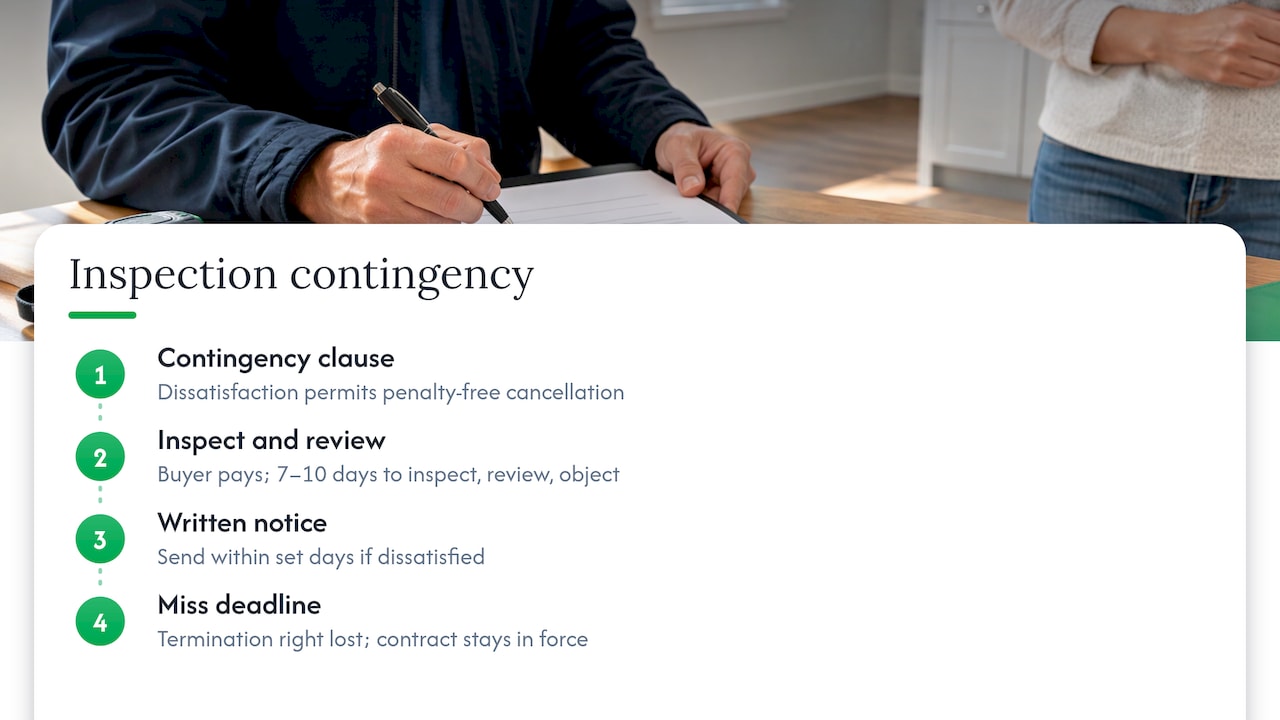
An inspection contingency is a clause that lets you act on what the inspection finds. The Consumer Financial Protection Bureau says that if your contract is contingent on a satisfactory inspection, you have the right to cancel the sale without penalty if you are not satisfied with the results.
The contract language matters a great deal. A West Virginia contingencies addendum, used here as one example, separates “as is” with no inspections from “as is” with inspections and a right to terminate. When inspections and termination rights are included, the buyer may inspect at their own expense and, if dissatisfied, end the contract by written notice within a set number of days. Miss the inspection or the notice deadline, and the right to terminate is lost and the contract stays in force.
That last part is where buyers get caught. Zillow says contingencies typically give buyers 7 to 10 days to order an inspection, review the report and voice objections, with exact rules varying by state and local law. Book your inspector the day your offer is accepted, not the week after.
For a deeper walk-through, see our guide to the buyer inspection contingency. If you are tempted to drop the contingency to make an offer more attractive, read why waiving an inspection contingency is risky first.
What you can do with the report
With an as-is seller, you typically have four options once the report arrives:
- Proceed as planned. The report shows a sound home with normal maintenance items. You buy with confidence and a maintenance to-do list.
- Renegotiate the price. The CFPB notes you may want to negotiate with the seller about who makes or pays for repairs, but whether the seller agrees depends on the contract terms and local market conditions. An as-is seller may decline repairs yet still adjust the price.
- Get specialist opinions. If the report flags a roof, foundation, electrical or drainage concern, a licensed specialist can put a number on it before your deadline.
- Cancel under the contingency. If the problems are larger than you want to take on and your contract preserves the right, you can end the contract as the terms allow.
Even if you proceed at the original price, you have gained something real: you know what to budget for in year one.
Why inspect an as-is house
Chase puts it plainly: even in an as-is sale, it is recommended to get an inspection to uncover potential problems and estimate repair costs. It also notes that if undisclosed issues arise after you buy an as-is home, you may forfeit the right to ask the seller for repairs or credits. NAR warns that as-is buying carries some risk precisely because the seller will not make repairs.
In plain terms, the risk sits with you after closing, so the knowledge should come before it. NAR also links the value of inspections to their ability to flag costly problems a buyer might not notice until after move-in.
As-is homes often are priced below comparable properties, and a lower price can leave room for repairs. But that only works if you know the size of the repairs. A few examples of what changes your math:
- Roof and attic: age, flashing, moisture staining and ventilation.
- Foundation and structure: cracks, movement, drainage patterns.
- Plumbing and sewer: old supply lines, drain materials, and the condition of the sewer lateral you cannot see from the yard.
- Heating and cooling: age and condition of the systems. Our HVAC inspection explainer shows what gets checked.
- Electrical: panel condition, outdated wiring, safety hazards.
- Moisture and pests: mold, past water intrusion, and wood-destroying organisms.
NAR describes a home inspection as an assessment of the structure, exterior, roof, plumbing, electrical, heating and cooling, interiors, ventilation and insulation, and fireplaces. It may also include tests related to health such as mold, radon, lead paint and asbestos. See what inspectors look for in a home for the full picture.
What an inspection does and does not do
Know what you are buying when you hire an inspector. The Louisiana State Board of Home Inspectors explains that a standard inspection is a visual examination of the physical structure and major interior systems, and should not be confused with an appraisal, warranty evaluation, code inspection or insurance policy. It is not a guarantee of any kind.
The North Carolina Real Estate Commission similarly describes an inspection as an evaluation of visible and accessible systems and components, meant to help you understand their condition. It should not be expected to guarantee code compliance or protect you if an inspected item fails later.
That is why the report is a decision tool. It tells you what was visible and accessible on the day, and it tells you where to dig deeper.
HUD adds a point that matters for financed purchases: FHA does not perform home inspections, and one happens only if the buyer arranges it. If you request an inspection early, you may be able to make your contract contingent on the results. An appraisal is a different thing from an inspection.
Specialty tests worth considering on an as-is home
A general inspection covers a lot, but some risks need dedicated testing. These are the ones that often matter most when the seller is not making repairs:
- Radon. It cannot be seen or smelled, so only a test tells you. Learn how long tests take in our radon test duration guide, and see environmental home testing for radon and lead.
- Sewer camera inspection. Older lateral lines can hide breaks and root intrusion. Our sewer scope guide for homebuyers explains what the camera shows.
- Mold. If you see staining, smell mustiness or find past water issues, testing helps you document conditions. Read what a mold inspection is.
- Wood-destroying organisms. Termite and similar damage is easy to miss and costly to repair.
- Septic and well. For rural and Southern Illinois properties, these systems need their own evaluation.
Timelines are tight, so decide which add-ons you want when you book the main inspection, not after the report.
What does an inspection cost?
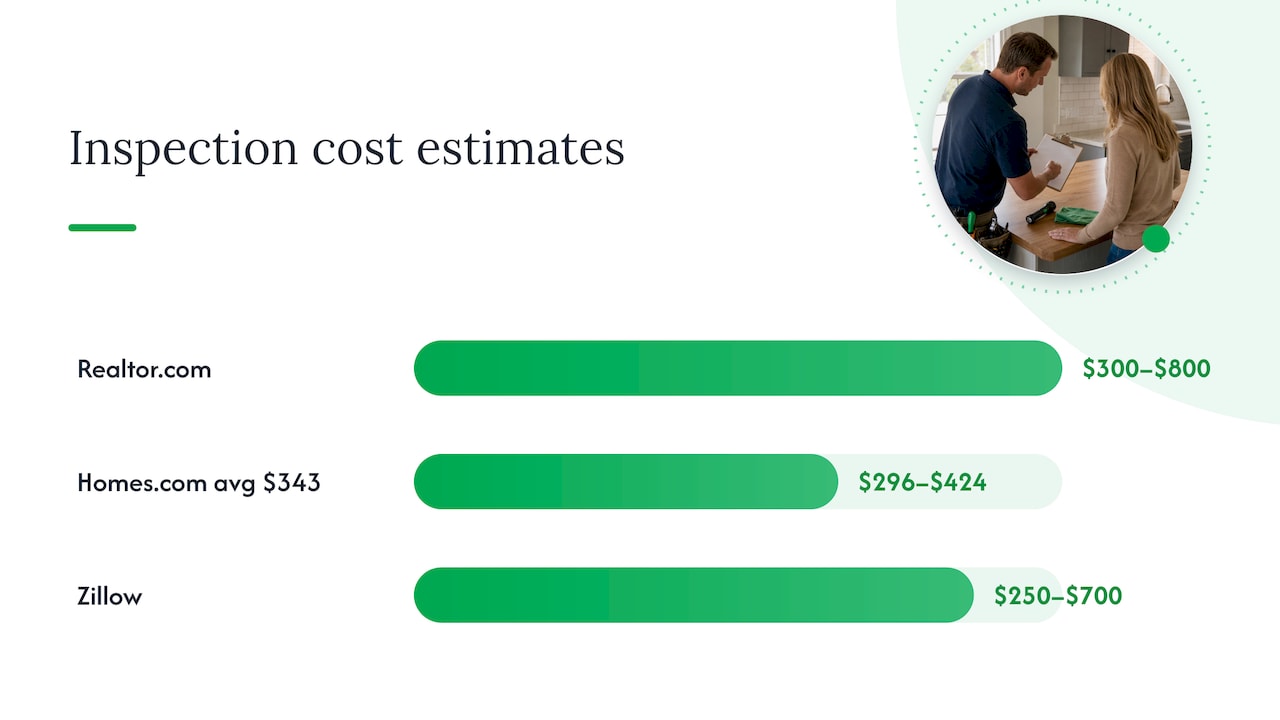
The buyer typically pays. Realtor.com puts a home inspection at roughly $300 to $800. Homes.com reports a typical U.S. range of $296 to $424, averaging $343. Zillow says it can be $250 to $700 depending on where you buy. We do not publish a flat price on our site, because cost depends on the property, so contact us for a quote on your specific home.
Put that against an as-is purchase, where the seller will not repair anything. The fee is small next to the repair bills it can help you see coming.
Rules differ by state
As-is law is local. NAR notes that practice may vary based on state and local law and recommends consulting a real estate professional or attorney about the law where the property is. Chase says the same about seller disclosure regulations.
If you are buying in Missouri or Illinois, your agent can walk you through the contract forms and deadlines. We keep pre-inspection agreements for both states on our site: the Missouri agreement and the Illinois agreement, so you can read the terms before inspection day.
Texas REALTORS also points out that contract structure matters for sellers: allowing inspection rights and termination options can reduce the seller’s risk of later claims about withheld information, even though it does not require repairs. A seller who lets you inspect is not weakening the as-is position. That is a normal, healthy deal.
Perspective
We hear it from first-time buyers all the time: “It’s as-is, so what’s the point of an inspection?” Our answer is that the as-is label is exactly the reason to inspect.
When a seller will repair things, a surprise can become their problem. When a seller will not, a surprise becomes yours the day you close. We would rather you meet that surprise in a report, with time to decide, than in your first winter in the house.
That is why we focus on speed and clarity. Reports come back within 24 hours, so you can use your contingency window. We offer in-person and video walkthroughs, evening and weekend scheduling for busy buyers, and service discounts for veterans and first-time buyers. Our Create Request List™ helps buyers and agents turn findings into a clear next step, whether that is a price conversation, a specialist visit or a confident yes.
An as-is house can be a very good buy. We just want you to know what you are buying.
JOHN
Inspecting an as-is home in St. Louis and Southern Illinois
Hunt Home Inspection serves the St. Louis Metro area and Southern Illinois. Our buyer’s inspections can be paired with radon testing, sewer camera lateral inspections, mold inspections, wood-destroying organism inspections, and septic and well inspections, so you can cover the as-is risks in one visit. We are NACA, ASHI and HUD 203k certified. For some services, payment at closing is available to fit your transaction timing.
If you are buying an as-is property, see our inspection services and book as soon as your offer is accepted.
Not sure what to expect on the day? Our guide to home inspection day for buyers covers who attends, how long it takes and how to use your report.
A short as-is buying checklist
- Read the contract for the inspection period and the exact notice deadline.
- Book your inspector immediately after acceptance, and add specialty tests in the same booking.
- Read the seller’s disclosure and compare it with what the inspector finds.
- Attend the inspection, in person or by video, and ask questions while the inspector is at the item.
- Get specialist estimates on big-ticket findings before your deadline.
- Decide: proceed, renegotiate price, or cancel under your contingency.
- Confirm any agreement in writing through your agent or attorney.
FAQ
Can you do an inspection on an as-is house?
Yes. As-is limits the seller’s repair obligations, not your right to inspect. NAR notes the seller will not make repairs even if you get an inspection. Make sure your contract includes an inspection period.
Is it risky to buy a house as-is?
There is some risk, because the seller will not make repairs after the inspection. You manage that risk by inspecting, adding specialty tests, getting repair estimates and pricing your offer to match the condition. Your agent or an attorney can explain your state’s rules.
Can I back out after an as-is inspection?
If your contract is contingent on a satisfactory inspection, the CFPB says you can cancel without penalty if you are not satisfied with the results. You must act within the contract’s deadline, so check the notice requirements.
Can I negotiate on an as-is home?
Yes, though the seller may refuse repairs. Chase notes you can still negotiate the price. A report with documented findings gives that conversation a factual footing.
Is an inspection a guarantee of the home’s condition?
No. State agencies describe inspections as visual evaluations of accessible systems, not warranties or code checks. Use specialty testing where you need a closer look.
Sources
- NAR: Consumer Guide: Home Inspections
- NCREC Bulletins: What Does “As Is” Really Mean?
- Texas REALTORS: “As Is” and Inspections
- Realtor.com: Selling a House As Is: What It Means for Buyers
- Chase: Buying a House “As Is”
- CFPB: Schedule a home inspection
- West Virginia Contingencies Addendum
- Zillow: What Is a Home Inspection Contingency?
- Homes.com: How Much Does a Home Inspection Cost?
- Louisiana State Board of Home Inspectors: FAQs
- NCREC: Questions and Answers on Home Inspections
- HUD: Home Inspection
Recent Comments