

A home inspection evaluates a property’s current physical condition before you close, while a home warranty is a service contract that covers repair or replacement of systems and appliances after you move in. These two products serve entirely different purposes, and confusing them is one of the most expensive mistakes a homebuyer can make. The home warranty vs inspection explained distinction matters because each fills a gap the other cannot. Jhunthomeinspections works with first-time buyers, veterans, and investors across the St. Louis Metro area and Southern Illinois to make sure neither gap goes unaddressed.
What is a home inspection and why does every buyer need one?
A home inspection is a visual, non-invasive evaluation of a property’s structure, systems, and safety components conducted by a licensed professional before the purchase closes. Inspectors assess the roof, foundation, electrical panel, plumbing, HVAC, and major appliances. The goal is to identify existing deficiencies, safety hazards, and components that are near the end of their useful life.
Inspection duration typically runs 2–4 hours depending on the home’s size and age. Buyer participation during that walkthrough increases understanding of what the report means and what repairs are urgent. Costs typically fall in the $300–$425 range, and the return on that investment is significant.

The inspection report gives buyers documented, empirical leverage. Inspection findings often result in price reductions, seller credits, or the right to exit the contract entirely. That leverage is only available if you schedule the inspection during the due diligence period, which is the window between contract acceptance and closing.
One critical protection tied to inspections is the inspection contingency clause. This clause gives you the legal right to walk away from the deal without losing your earnest money if major defects surface and the seller refuses to address them. Skipping this clause in a competitive market is a serious financial risk.
Inspectors do have limits. ASHI Certified Inspectors do not move personal belongings, disassemble fixed components, or access locked or concealed areas. Sellers should clear attic hatches, crawlspace entries, and electrical panels before the inspection to give the inspector full access.
Pro Tip: Attend the inspection in person. Inspectors can point out issues on the spot that a written report alone may not fully convey, and you can ask questions in real time.
Key areas a standard inspection covers:
- Roof condition, flashing, and gutters
- Foundation, grading, and drainage
- Electrical panel, wiring, and outlets
- Plumbing supply and drain lines
- HVAC systems and ductwork
- Water heater age and condition
- Attic insulation and ventilation
- Windows, doors, and exterior cladding
What is a home warranty and how does it differ from homeowners insurance?
A home warranty is a service contract, not an insurance policy. Home warranties cover repair or replacement of major home systems and appliances that fail due to normal wear and tear after you purchase the home. Covered items typically include the HVAC system, water heater, refrigerator, dishwasher, and electrical and plumbing systems within the home.
Homeowners insurance covers sudden, accidental damage from events like fire, storms, or theft. A warranty covers gradual mechanical failure. Neither product overlaps with the other, and neither replaces a home inspection.
The claims process works like this: you contact the warranty company when a covered system fails, pay a service call fee (typically $75–$125), and a technician from the warranty company’s network arrives to diagnose and repair the issue. You do not choose the contractor. That limitation frustrates some homeowners, particularly when they have a preferred local repair company.
Home warranties are most valuable for homes with aging appliances that are past their manufacturer warranty coverage. A 15-year-old HVAC system or a water heater approaching the end of its lifespan represents exactly the kind of risk a warranty is designed to absorb.
Common exclusions buyers often miss:
- Pre-existing conditions known at the time of purchase
- Cosmetic defects (scratches, dents, finish damage)
- Structural components like the foundation or roof
- Damage caused by improper installation or maintenance
- Items not listed in the contract
| Feature | Home Inspection | Home Warranty | Homeowners Insurance |
|---|---|---|---|
| Timing | Before purchase | After purchase | After purchase |
| Purpose | Identify current defects | Cover future mechanical failures | Cover sudden accidental damage |
| Covers pre-existing issues | Yes, identifies them | No | No |
| Covers wear and tear | N/A | Yes | No |
| Covers structural damage | Identifies it | No | Sometimes |
| One-time or ongoing | One-time | Annual contract | Annual policy |
How do home inspections and home warranties work together?
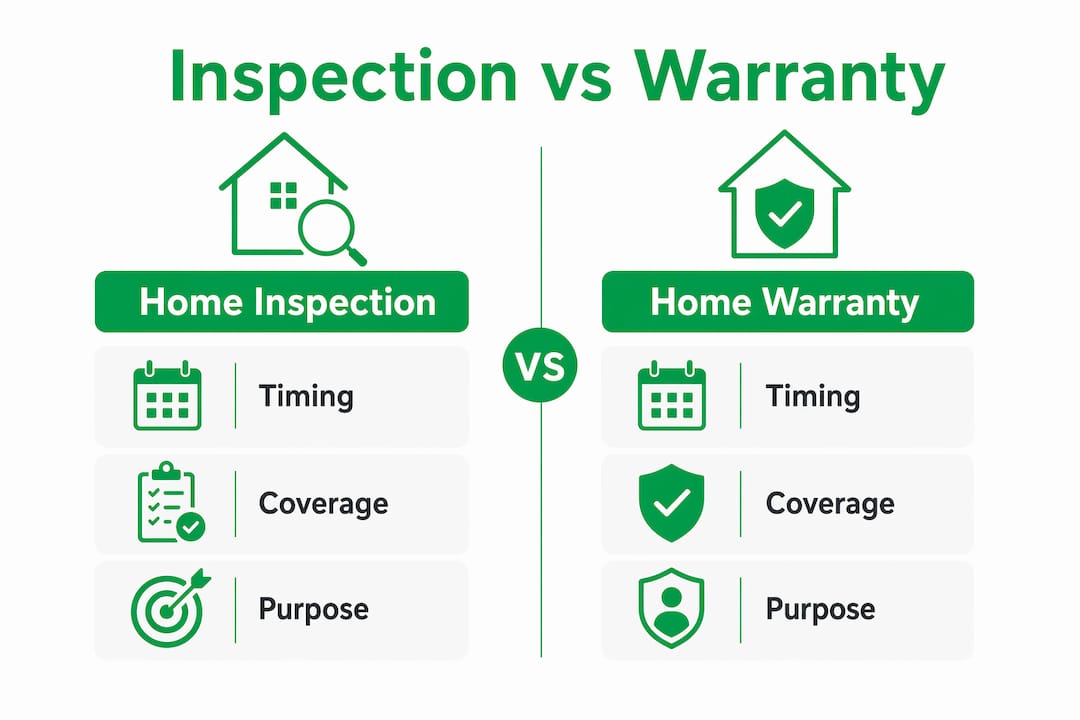
These two products protect you at different points in time. An inspection identifies what is wrong right now. A warranty covers what breaks down later. Used together, they create a layered protection strategy that neither product can deliver alone.
Here is the practical sequence for buyers:
- Schedule the inspection during the due diligence period, immediately after contract acceptance.
- Review the report with your agent and identify items that are functional but aging (HVAC, water heater, appliances).
- Use the inspection report to negotiate repairs or a price reduction for major defects.
- Decide whether a home warranty makes sense based on the age and condition of the systems the inspector flagged.
- If the seller offers a warranty as part of the deal, read the contract carefully before accepting it as a substitute for anything.
Home warranties do not cover pre-existing conditions or cosmetic defects, and they require an active contract post-purchase. This means a warranty will not pay to fix the leaking roof the inspector found before closing. That is the inspection’s job to document and the negotiation’s job to resolve.
The inspection also tells you what to expect from a warranty. If the inspector notes that the furnace is 18 years old and functioning but near end of life, you know a warranty covering HVAC replacement could save you thousands within the next few years. That is a direct, data-driven reason to purchase one.
Pro Tip: Ask the seller to provide a home warranty as a closing concession rather than paying for it yourself. Many sellers agree, especially when the inspection reveals aging systems they do not want to replace before closing.
Older homes benefit most from this combined approach. A property built before 1990 often has systems that are past manufacturer warranty coverage and approaching replacement age. The inspection documents their current condition. The warranty absorbs the cost when they eventually fail.
Common misconceptions that cost buyers money
The biggest misconception about home inspections is that they are pass/fail evaluations. Tim Buell, ASHI Certified Inspector and past President of ASHI, states clearly that the primary purpose of an inspection is to identify significant, unsafe, or end-of-life issues, not cosmetic fixes. A home with a cracked outlet cover is not the same as a home with aluminum wiring. The report distinguishes between the two.
The biggest misconception about home warranties is that they act as a financial safety net for all property damage. Buyers who skip inspections and rely on warranties alone face financial surprises when the warranty denies a claim because the defect was pre-existing or excluded from the contract.
Buyers in competitive markets face a specific risk. 19% of homebuyers waive the inspection contingency in competitive markets, increasing their exposure to costly unknown repairs. Waiving the contingency does not mean skipping the inspection. You can still hire an inspector for information purposes, but you lose the legal right to exit the contract based on findings.
Additional inspections that a standard home inspection does not cover:
- Mold testing (requires a separate specialist)
- Radon measurement (requires a separate test kit or specialist)
- Pest and termite inspection (often required by lenders separately)
- Sewer scope (camera inspection of the main drain line)
- Chimney inspection (requires a certified chimney sweep)
Pro Tip: Read every page of a home warranty contract before signing. Pay specific attention to the exclusions section and the service call fee structure. A low monthly premium with a high service fee can cost more than a higher-premium plan over a year of claims.
The home inspection guide from Jhunthomeinspections walks buyers through exactly what inspectors evaluate and what findings to prioritize. Understanding the report is as important as getting one.
Key Takeaways
A home inspection identifies existing defects before purchase, while a home warranty covers future mechanical failures after closing. These two tools are complementary, not interchangeable, and every buyer benefits from using both.
| Point | Details |
|---|---|
| Inspections protect before closing | Schedule during due diligence to document defects and negotiate repairs or price reductions. |
| Warranties protect after closing | Home warranties cover wear-and-tear failures of systems and appliances, not pre-existing defects. |
| Contingency clauses matter | An inspection contingency lets you exit the contract without losing earnest money if major defects are found. |
| Warranties have real exclusions | Pre-existing conditions, cosmetic damage, and structural components are typically excluded from warranty coverage. |
| Both tools work best together | Use the inspection report to decide which warranty coverage makes financial sense for aging systems. |
What I’ve learned after years of watching buyers get this wrong
The buyers who get hurt financially are almost never the ones who skipped the warranty. They are the ones who skipped the inspection. A warranty is a convenience product. An inspection is a financial safeguard.
I have seen buyers walk into closing on homes with failing electrical panels, active roof leaks, and HVAC systems held together with tape, all because they waived the inspection to win a bidding war. The warranty they purchased covered none of it because those were pre-existing conditions. The inspection would have caught every one of them.
The inspection report is also the most underused negotiation tool in real estate. Buyers treat it as a checklist of repairs to request. Experienced buyers treat it as a pricing document. A $400 inspection that reveals $15,000 in deferred maintenance gives you the right to renegotiate the purchase price or walk away entirely. That is not a minor benefit. That is the entire point.
Home warranties make the most sense when the inspection reveals aging but functional systems. If the inspector notes a 16-year-old water heater and a furnace from 2008, a warranty covering those systems is a rational financial decision. If the home is newly built with systems under manufacturer warranty, a home warranty adds less value.
The resource at greggperrah.com/pear offers a useful buyer-focused perspective on how inspections protect against hidden property risks, and it reinforces what I see in practice: the inspection is the foundation. Everything else builds on it.
— JOHN
Jhunthomeinspections: professional inspections for St. Louis area buyers
Jhunthomeinspections serves homebuyers, first-time buyers, veterans, and property investors across the St. Louis Metro area and Southern Illinois with thorough residential inspections, pre-listing evaluations, and investor-focused property assessments. Reports are delivered within 24 hours, and the proprietary Create Request List™ tool makes it easy to communicate findings directly with your agent and seller.

Scheduling early in the due diligence period gives you the most time to act on findings. Whether you need a standard residential inspection or a detailed investor property review, Jhunthomeinspections delivers the documentation you need to negotiate with confidence. View the full range of inspection services available for buyers across the region.
FAQ
What does a home inspection cover?
A home inspection covers the structure, roof, foundation, electrical, plumbing, HVAC, and major appliances using a visual, non-invasive method. Inspectors do not move belongings or access locked areas, so sellers should clear attic and crawlspace entries before the inspection.
Does a home warranty replace a home inspection?
A home warranty does not replace a home inspection. Warranties cover future mechanical failures from wear and tear, while inspections identify existing defects before purchase. A warranty will not pay to fix a defect the inspector found before closing.
Should I get a home warranty on a new construction home?
New construction homes typically come with builder warranties and manufacturer coverage on appliances and systems. A home warranty adds the most value on older homes where systems are past their original manufacturer coverage and approaching the end of their useful life.
What happens if I waive the inspection contingency?
Waiving the inspection contingency means you give up the legal right to exit the contract without penalty based on inspection findings. You can still hire an inspector for information, but 19% of buyers who waive this protection take on significant financial risk if major defects surface after closing.
What does a home warranty not cover?
Home warranties exclude pre-existing conditions, cosmetic defects, structural components like the foundation and roof, and items not listed in the contract. Reading the exclusions section of any warranty contract before signing is the single most important step buyers skip.
Recent Comments