
Preparing for a home inspection walkthrough is a defined process of confirming utility access, clearing inspection points, and knowing which findings to prioritize before and during the evaluation. Buyers who treat this as a structured task, not a passive event, get more from their inspector’s time and walk away with a clearer picture of what they are buying. The American Society of Home Inspectors (ASHI) sets the professional standards inspectors follow, but how much value you extract depends entirely on how well you prepare. Jhunthomeinspections works with first-time buyers, veterans, and low-income families across the St. Louis Metro area to make this process less stressful and more productive.
How to prepare for home inspection walkthrough: pre-inspection essentials
The single most impactful thing you can do before inspection day is confirm that all utilities are active and testable. Utilities must be on 24 to 48 hours before the inspection so the inspector can properly evaluate plumbing pressure, electrical circuits, and HVAC function. Water pressure in the 40–80 psi range is the standard benchmark for accurate plumbing evaluation. If the gas, water, or electricity is off, entire systems go untested, and you lose critical information.
Access barriers are the second biggest preparation failure. Blocked access points like a locked electrical panel, a cluttered attic hatch, or a sealed crawlspace entry force the inspector to mark those areas as “unable to inspect.” That flag introduces uncertainty into your contract negotiations and gives you less leverage. Clear every access point at least one day before the appointment.
Here is a pre-inspection checklist to work through before the inspector arrives:
- Confirm water, electricity, and gas are fully active 24–48 hours in advance
- Unlock and clear the electrical panel, attic hatch, crawlspace entry, and HVAC units
- Replace all burned-out light bulbs so the inspector can test fixtures without ambiguity
- Secure pets in a crate or off-site so they do not interfere with the walkthrough
- Clean around water heaters, furnaces, and sump pumps for clear visibility
- Pull out your seller’s disclosure and purchase contract and write down your top five concerns to share with the inspector
Pro Tip: Write your top concerns on paper, not just in your phone. Handing a short written list to the inspector at the start of the appointment keeps both of you focused and ensures nothing gets skipped.
How should you conduct yourself during the walkthrough?
Your behavior during the inspection directly affects how much you learn. Arrive 10 to 15 minutes early to introduce yourself, hand over your concern list, and get oriented before the inspector begins. Inspectors work methodically through a property, and joining them from the start means you hear every verbal observation, not just the ones that make it into the written report.
Follow these steps to get the most from your time on site:
- Stay close to the inspector throughout the entire walkthrough without crowding or interrupting mid-task.
- Ask questions during natural pauses, not while the inspector is actively measuring or writing notes.
- Focus your questions on safety implications, system age, and what maintenance the finding requires going forward.
- Take photos and short notes that link to what the inspector says out loud, since verbal observations sometimes carry more context than report language.
- Request a verbal summary of the top three concerns before you leave the property. This gives you an immediate framework before the written report arrives.
- Do not leave early. Buyers who step out to take calls miss the inspector’s closing observations, which are often the most candid.
Pro Tip: Ask the inspector, “If this were your home, what would you fix first?” That single question cuts through report language and gets you a direct priority ranking.
A good resource for building your question list before the appointment is this first-time buyer question guide from Jhunthomeinspections.
What common home inspection issues should buyers focus on?
Common inspection findings include roof and gutter problems, aging HVAC systems, electrical panel quirks, and signs of water intrusion. The significance of each finding ranges from minor maintenance to a deal-breaker. Buyers who do not know the difference often either panic over small items or miss genuinely serious ones.
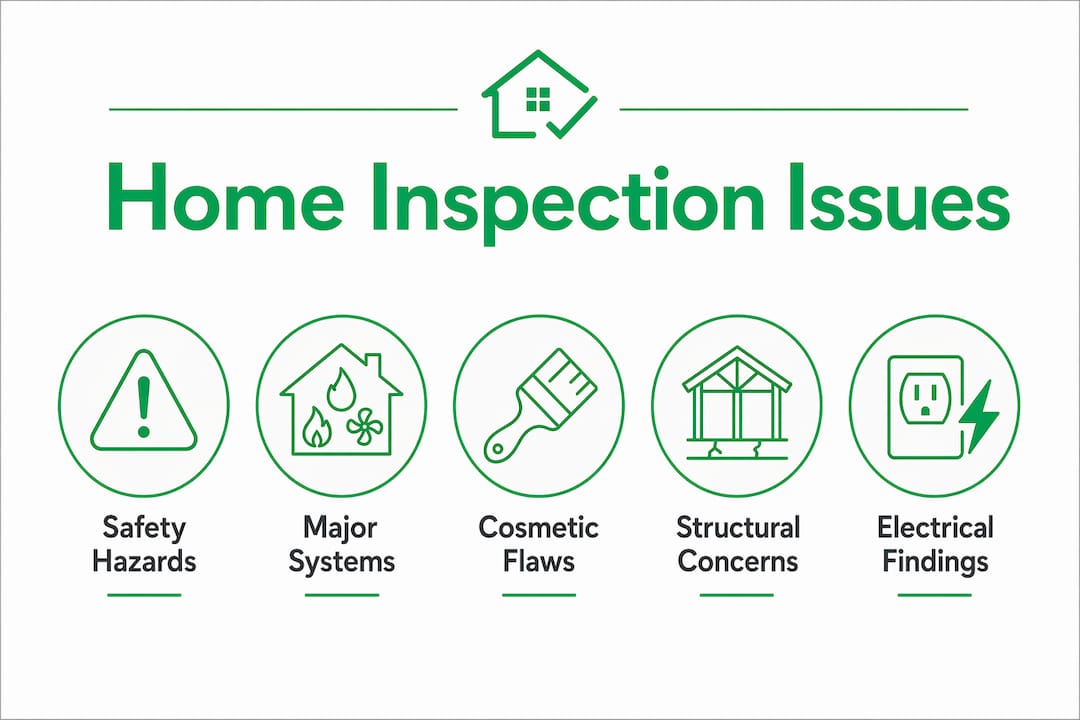
The table below separates findings by category and typical response:
| Category | Examples | Typical response |
|---|---|---|
| Safety hazard | Missing GFCI outlets, exposed wiring, carbon monoxide risk | Negotiate repair before closing |
| Major system issue | Failing HVAC, roof at end of life, active water intrusion | Request specialist evaluation and credit |
| Structural concern | Foundation cracks, sagging framing, compromised load-bearing walls | Require structural engineer report |
| Maintenance item | Caulking gaps, minor grading, worn weatherstripping | Accept or negotiate minor credit |
| Cosmetic flaw | Paint chips, carpet wear, dated fixtures | Rarely worth negotiating |
Structural cracks and active leaks require specialist consultations before your contingency deadline, not after. Getting a structural engineer or licensed plumber on site within days of receiving the report protects your timeline.
Electrical findings deserve a specific note. Double-tapped breakers are a common legacy issue. They were often code-compliant when installed but now require evaluation as a safety or maintenance item. That does not make them emergencies, but they belong in your negotiation list, not your “ignore” pile.
Buyers who fixate on cosmetic flaws waste negotiating capital. A scuffed baseboard or dated light fixture costs $50 to fix. Spending negotiation energy there instead of on a 15-year-old furnace is a strategic mistake.
What should you bring to the inspection?
Arriving prepared with the right materials keeps you organized and ensures you capture everything you need for follow-up decisions.

| Item | Purpose |
|---|---|
| Smartphone with camera | Document findings with photos tied to inspector comments |
| Flashlight | Supplement lighting in attics, crawlspaces, and utility areas |
| Notebook and pen | Record verbal observations that may not appear word-for-word in the report |
| Seller’s disclosure | Cross-reference inspector findings against known issues the seller disclosed |
| Purchase contract | Confirm contingency deadlines so you know your negotiation window |
| Pre-written question list | Keep the conversation focused on your top priorities |
Prepared questions help buyers stay on track and ensure critical topics get addressed during the walkthrough. Without a written list, it is easy to forget a concern you had three weeks ago when you first toured the property. For a full pre-inspection preparation breakdown, the DIY pre-inspection checklist from Jhunthomeinspections covers the steps in detail.
For additional context on what inspectors evaluate room by room, this routine inspection steps guide provides a useful workflow overview.
How to prepare for post-inspection steps and confident decision-making
The inspection report arrives within 24–48 hours in most cases and can run dozens of pages. Triage the findings into three categories immediately: safety issues, major system concerns, and cosmetic items. That structure prevents you from treating every flagged item as equally urgent.
Here is how to work through the report effectively:
- Read the executive summary first to get the inspector’s highest-priority findings before reading the full document
- Create a short list of items in each category using the safety, major system, and cosmetic framework
- Attach your inspection-day photos to the corresponding report items so your real estate agent can see exactly what was observed
- Schedule specialist evaluations for any structural or major system finding within 48 hours of receiving the report, before your contingency window closes
- Frame negotiation requests around safety and major system items only. Presenting a focused, documented list is more persuasive than a long list of minor complaints
Pro Tip: Send your agent the report with your three highest-priority items highlighted before your first negotiation call. That framing shapes the conversation from the start.
For guidance on prioritizing repairs after the report, this residential repairs guide offers a practical framework for ranking and sequencing fixes. Jhunthomeinspections also delivers reports within 24 hours and includes the Create Request List™ tool, which helps buyers and agents organize findings and communicate repair priorities without confusion.
Key Takeaways
Buyers who prepare access points, confirm utilities, and focus negotiations on safety and major systems get the most value from their home inspection walkthrough.
| Point | Details |
|---|---|
| Activate utilities early | Confirm water, electricity, and gas are on 24–48 hours before inspection day. |
| Clear all access points | Unlock panels, attic hatches, and crawlspaces to prevent “unable to inspect” flags. |
| Attend and engage actively | Arrive early, follow the inspector, and request a verbal summary of top concerns. |
| Triage findings by category | Separate safety hazards, major system issues, and cosmetic items before negotiating. |
| Bring documentation tools | A camera, flashlight, notebook, and your written question list keep you organized on site. |
What I have learned from watching buyers walk through inspections
Most buyers treat the inspection as a test the house either passes or fails. That framing causes more stress and worse decisions than almost anything else I have seen. The inspection is a fact-finding mission. Every house has findings. The question is whether those findings are manageable, negotiable, or genuinely disqualifying.
The buyers who get the most from their inspection are the ones who show up prepared and stay curious. They ask the inspector what something means, not just whether it is “bad.” They take notes. They do not leave early. And they do not panic when the inspector flags a double-tapped breaker or a minor roof flashing issue.
The buyers who struggle are the ones who skipped the preparation steps. They show up to find the crawlspace is blocked, the attic hatch is painted shut, and they have no written questions. The inspector marks three areas as “unable to inspect,” and suddenly the negotiation is weaker before it even starts.
Preparation is not about making the house look better. It is about making sure the inspector can do the job completely. That is the difference between a report that gives you real leverage and one that leaves gaps.
— JOHN
Jhunthomeinspections: your partner for a thorough inspection
Buying a home is one of the largest financial decisions you will make. Having a qualified, thorough inspector on your side makes the difference between a confident purchase and a costly surprise.

Jhunthomeinspections serves buyers across the St. Louis Metro area and Southern Illinois with in-person and video inspection options, detailed reports delivered within 24 hours, and the Create Request List™ tool that keeps buyers and agents aligned on repair priorities. Whether you are a first-time buyer, a veteran, or purchasing on a tight timeline, the team at Jhunthomeinspections is built to support you. Review the full range of professional inspection services and schedule your appointment with confidence.
FAQ
What should I do 24 hours before a home inspection?
Confirm that water, electricity, and gas are fully active, and clear access to the electrical panel, attic hatch, crawlspace, and HVAC units. Blocked access forces inspectors to mark areas as “unable to inspect,” which weakens your negotiating position.
Should buyers attend the home inspection walkthrough?
Yes. Attending the walkthrough lets you hear verbal observations, ask questions in real time, and better understand the written report when it arrives. Buyers who skip the walkthrough often misinterpret findings without that context.
What are the most common home inspection issues?
Roof and gutter problems, aging HVAC systems, electrical panel issues, and water intrusion are the most frequent findings. Significance ranges from minor maintenance items to conditions requiring specialist evaluation before closing.
How do I prioritize findings in the inspection report?
Sort findings into three categories: safety hazards, major system concerns, and cosmetic items. Focus negotiation requests on the first two categories and set aside cosmetic flaws, which rarely justify negotiation.
How long does it take to receive the inspection report?
Most inspection reports arrive within 24–48 hours of the walkthrough. Read the executive summary first, then work through the full report using your category framework to identify the items that require immediate action.
Recent Comments