
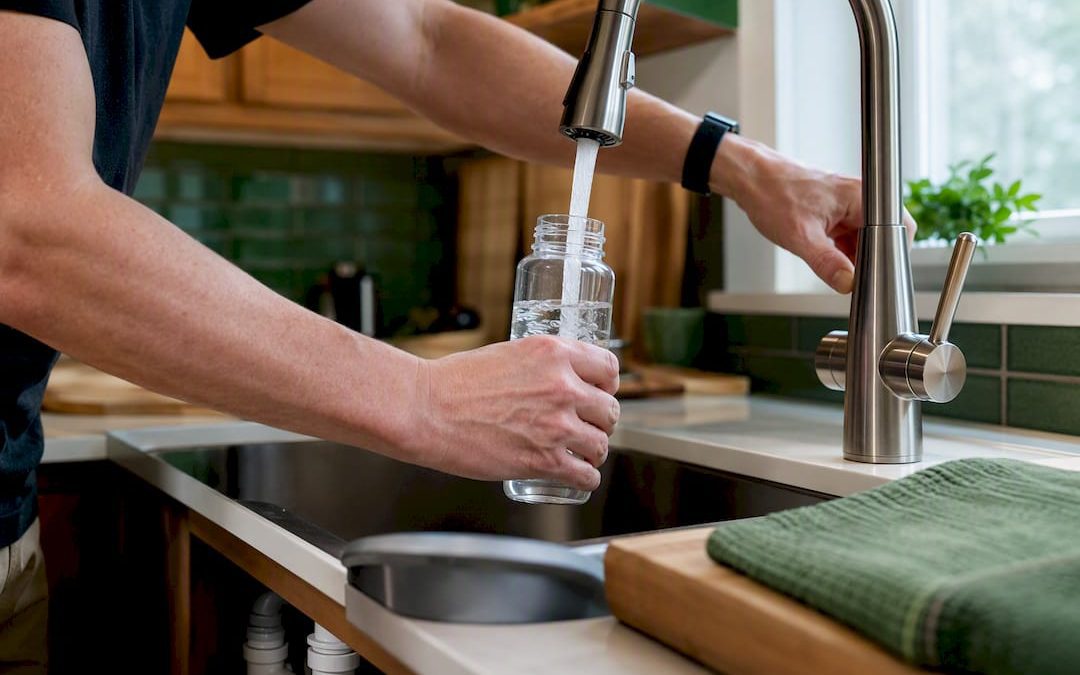
A certified laboratory test, either through your water utility or an independent state-certified lab, is the only reliable way to confirm lead in your drinking water. Lead has no taste, smell, or color, so you cannot detect it by drinking a glass of water. Testing requires a first-draw sample, water that has sat untouched in your pipes for at least six hours, because that’s when lead concentrations peak.
TL;DR:
- Most lead in water cannot be detected by taste or smell and requires a first-draw sample after at least six hours of stagnation for accurate testing.
- Laboratory analysis using spectroscopy is necessary, as store-bought test kits are often unreliable and designed for surface lead, not water.
- Testing results are in parts per billion, with 15 ppb as the EPA action level, but no level is considered completely safe, especially for children.
- Cost for independent lab testing ranges from $25 to $50, with free or subsidized options often available through local utilities or public health programs.
- Professional testing is recommended if plumbing predates 1986, DIY tests are inconsistent, or there is concern about lead service lines; re-testing after service line replacements is also advised.
Table of Contents
- How Do You Test Water for Lead at Home?
- How Do You Collect a Valid Lead Water Sample?
- What Do Lead Test Results Actually Mean?
- What Does Lead Testing Cost and Where Do You Get It Done?
- When Should You Hire a Professional for Lead Testing?
- What Should You Do Right Now to Cut Lead Exposure?
- How Hunt Home Inspection Handles Lead and Water Testing
- Sources
How Do You Test Water for Lead at Home?
Four testing paths exist, and picking the wrong one wastes time or money without giving you a real answer. The right choice depends on how fast you need results, your budget, and whether you’re dealing with a routine check or a suspected problem.
- Utility or public testing programs. Many municipal water systems offer free or subsidized lead testing to residents, especially in older housing stock. This is the best starting point for most homeowners because it costs nothing and the results carry regulatory weight.
- Mail-to-lab kits. These ship you a sterile bottle and instructions, you collect a first-draw sample, then mail it to a certified lab. Expect real lab-grade accuracy without leaving your house.
- Store-bought DIY screening kits. These use color-change strips or basic reagents. They’re fast and cheap but usually have higher detection limits, meaning they can miss lead at levels the EPA still considers concerning.
- Professional sampling by an inspector. A licensed inspector collects samples using proper first-draw protocol, documents chain-of-custody, and can assess your plumbing at the same time.
One caution worth repeating: swab-style test kits sold for lead are built for painted surfaces, not water. Water requires laboratory analysis using spectroscopy methods like ICP-MS or atomic absorption to measure parts per billion. A paint swab wiped across your faucet tells you nothing about what’s in your glass.
How Do You Collect a Valid Lead Water Sample?
Getting an accurate result comes down to technique, not luck. Labs and utilities reject a surprising number of samples because the collection process was rushed or done incorrectly.
- Let the water sit. Don’t run any taps, flush toilets, or run the dishwasher for at least six hours before sampling. Overnight works well for most households.
- Choose cold water only. Hot water dissolves lead faster from pipes and solder, which skews results and doesn’t reflect what you’d actually drink.
- Fill the bottle without pre-flushing. This trips up almost everyone. Turn the tap on and fill the lab-provided bottle immediately. Running water first, even for a few seconds, flushes away the very water you’re trying to test.
- Label the sample. Note the date, time, exact tap location (kitchen sink, bathroom, utility sink), and stagnation time on the form provided.
- Deliver quickly. Many labs require samples within two to three days of collection to remain valid, so in-person drop-off often beats mailing when a lab is nearby.
- Keep your paperwork. Chain-of-custody documentation matters if you ever need to prove when and how a sample was taken, particularly during a real estate transaction.
Pro Tip: If you’re testing multiple taps, sample the kitchen faucet you actually drink from first, then a bathroom or utility sink second. Comparing the two tells you whether the problem is isolated to one fixture or runs through your whole service line.
What Do Lead Test Results Actually Mean?
Lab results come back in parts per billion, or ppb, a measurement so small it’s the equivalent of one drop in an Olympic swimming pool. The EPA sets its action level at 15 ppb, though a stricter 10 ppb threshold takes effect in 2027, pushing water systems toward tighter standards.
Here’s how to read your number:
- Non-detect or “ND”: No lead found at the lab’s detection threshold. Good news, but not a lifetime guarantee if your home has lead pipes or solder.
- Detectable but below 15 ppb: Lead is present in small amounts. Worth monitoring, especially in homes built before 1986.
- Above 15 ppb: This exceeds the EPA action level. Stop drinking or cooking with that tap water until you install a certified filter or identify the source.
The CDC is direct on this point: there is no safe blood lead level, particularly for children. A single clean test doesn’t mean you’re in the clear forever if your plumbing still contains lead solder or a lead service line. Water chemistry changes, pipes corrode over time, and a fixture replaced last year could introduce new lead exposure today. If you have any risk factors, retest annually or after plumbing work.
What Does Lead Testing Cost and Where Do You Get It Done?
Independent lab testing typically runs $25 to $50 per sample, with results back in a few days to two weeks depending on the lab’s workload. That’s a small price for a definitive answer.
- Check with your municipal water provider first. Many offer free testing kits to residents, particularly in cities auditing older housing stock.
- State and county environmental or public health labs, like St. Louis County’s Environmental Laboratories, test both municipal water and private wells with clear collection instructions.
- If you’re on a well, pair your lead test with a broader well water inspection to catch other contaminants at the same time.
- Drop samples off in person when possible rather than mailing, since delays in transit can compromise accuracy.
When Should You Hire a Professional for Lead Testing?
Some situations call for more than a mail-in kit. A professional inspection makes sense when you’re buying or selling a home, when your house predates 1986, when a DIY test came back inconsistent, or when you suspect your service line itself is made of lead.
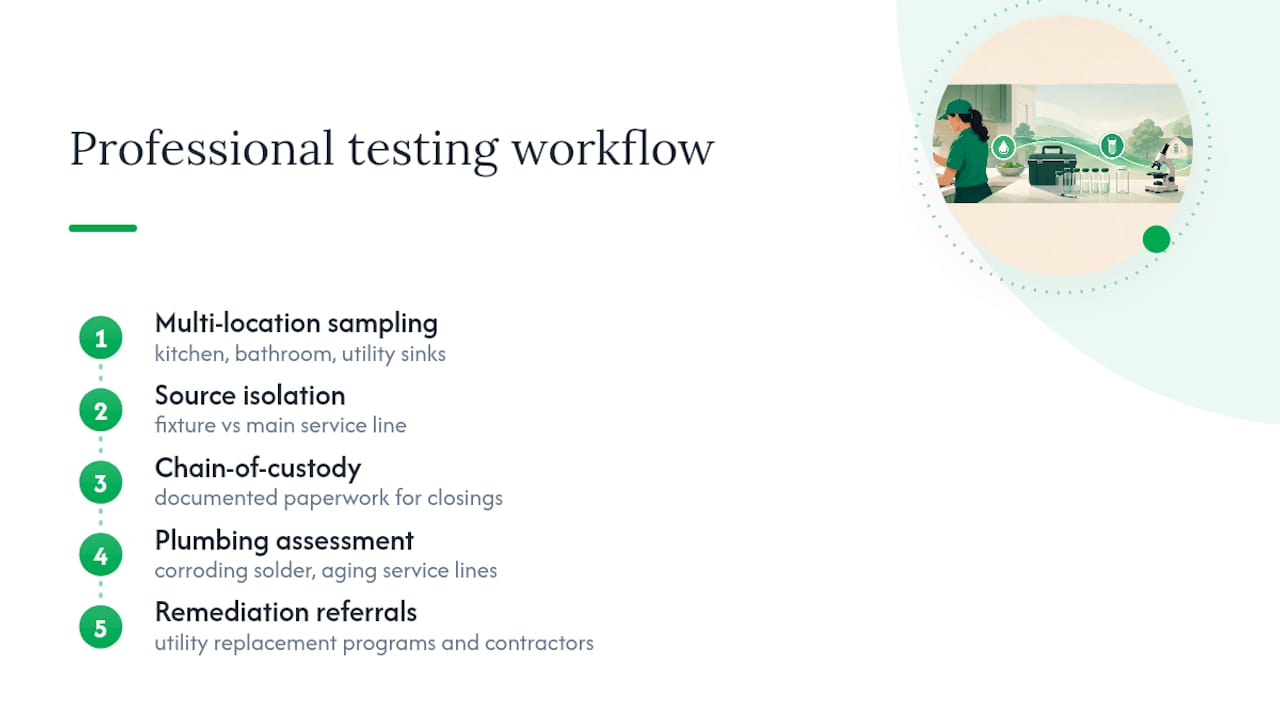
A professional brings a few things a store kit cannot: a multi-location sampling plan that checks the kitchen tap, a bathroom sink, and a utility sink to isolate whether lead comes from one fixture or the main line; documented chain-of-custody paperwork that holds up during a real estate closing; a broader plumbing assessment that flags corroding solder joints or aging service lines; and referrals for remediation if levels come back high. Many older service lines connect to documented replacement programs through local water utilities, and a professional can tell you whether your address qualifies.
Pro Tip: If your home is scheduled for a lead service line replacement through a city program, retest your water afterward. Construction work can temporarily stir up sediment and increase lead levels right after the swap.
For homeowners weighing whether paint or plumbing is the bigger concern, it helps to understand how lead paint hazards differ from water contamination before deciding which test to prioritize.
What Should You Do Right Now to Cut Lead Exposure?
Start with the utility. Call your water provider and ask whether they offer free or subsidized lead testing before spending a dime elsewhere. If they don’t, order a mail-to-lab kit or book a professional sampling appointment. Collect your sample using the first-draw method, always cold water, no pre-flush, at least six hours of stagnation. While you wait on results, run cold water for 30 seconds before drinking if you haven’t tested recently. Once results arrive, act on them: install an NSF-certified filter if levels are elevated, and retest after any plumbing changes.
Pro Tip: Save every water test report you receive. Future buyers, insurance adjusters, and your pediatrician may all ask for it eventually, and having a paper trail saves you from repeating tests unnecessarily.
— JOHN
How Hunt Home Inspection Handles Lead and Water Testing
Jhunthomeinspections gives you a faster path to a defensible answer than piecing together a DIY kit and a guess about your plumbing. Where a store test leaves you wondering if you did it right, a Hunt Home Inspection appointment pairs certified sampling with a trained eye on your service line, solder joints, and fixtures, so you get the full picture in one visit instead of three.

Hunt Home Inspection, LLC serves the St. Louis Metro area and Southern Illinois with both in-person and video inspections, so distance or scheduling conflicts aren’t a barrier. Environmental testing add-ons, including lead and water, slot directly into a standard inspection, and every report comes back within 24 hours. First-time buyers, veterans, and families on tighter budgets can also take advantage of pay-at-close options on eligible services, so testing doesn’t have to compete with moving costs. If you suspect a lead service line, inconsistent DIY results, or you’re closing on an older home, book an inspection with environmental testing and get answers you can actually act on.
This article is general information, not a substitute for advice from a qualified doctor. Consult a qualified healthcare professional about your own circumstances before acting on anything here.
Sources
- Reduce the risk of lead exposure from drinking water | US EPA
- Protect Your Tap: A Quick Check for Lead | US EPA
- About lead in drinking water | CDC
- Basic information about lead in drinking water | US EPA
- Water testing | Environmental Laboratories | St. Louis County
Recent Comments