
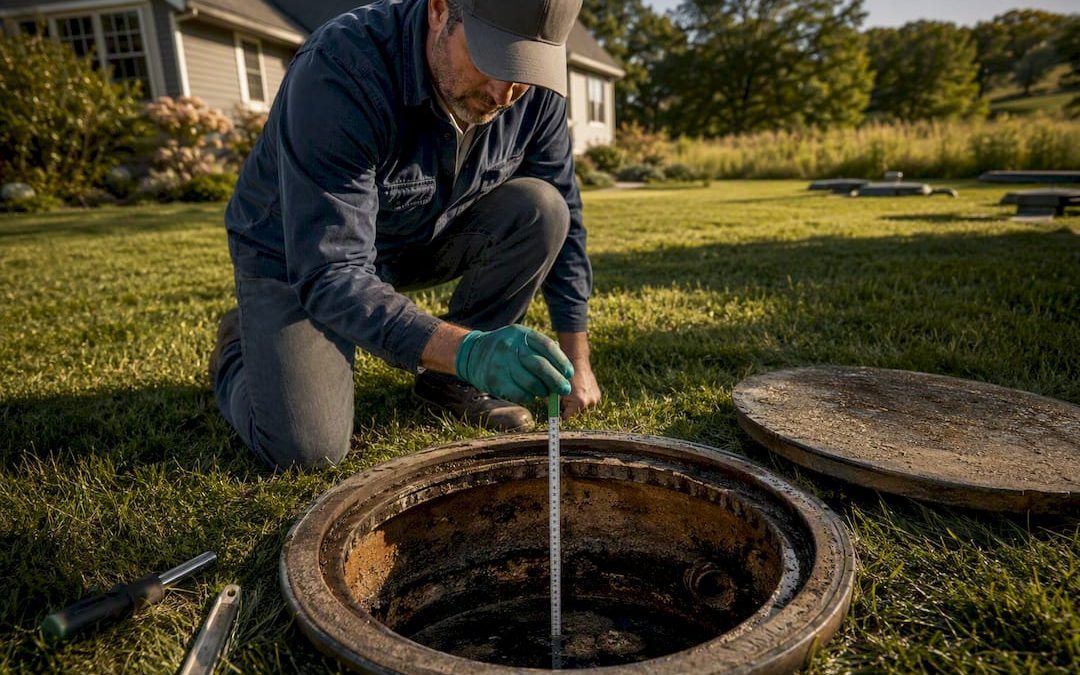
Most septic inspections run $200 to $900, with a national average landing around $400 to $550 depending on the inspection type and any add-ons. A basic visual check sits at the low end. A real estate transaction inspection with a lender-ready report sits at the high end. Pumping, camera scoping, and dye testing sit on top of either as separate line items.
TL;DR:
- Septic inspection prices vary widely, with a typical range of $200 to $900 depending on the inspection type and scope.
- The most common real estate inspection costs $300 to $800 and includes reports suitable for lenders, often bundled with flow and dye tests.
- Additional fees for access, pumping, or camera scoping can add $50 to $500, especially if the system is hard to access or older.
- Inspection duration ranges from 20 minutes for basic checks to four hours for comprehensive evaluations, with results usually returned within 24 to 48 hours.
- Always get a detailed, itemized quote beforehand and confirm what tests and reports are included to avoid surprise costs during closing.
Table of Contents
- What Drives Septic Inspection Cost by Type
- Why Quotes Vary: Cost Factors and Common Add-Ons
- What Happens During a Septic Inspection
- How Long an Inspection Takes and When to Schedule One
- How to Choose an Inspector Without Overpaying
- Hunt Home Inspection’s Approach to Septic Inspections
- The Real Lesson on Septic Inspection Pricing
- Book a Septic Inspection With a Team That Explains What You’re Paying For
- Sources
What Drives Septic Inspection Cost by Type
The word “septic inspection” covers five distinct services, and the price gap between the cheapest and most thorough option is wide enough to catch buyers off guard. Knowing which tier you actually need before you call an inspector saves both money and a second trip.
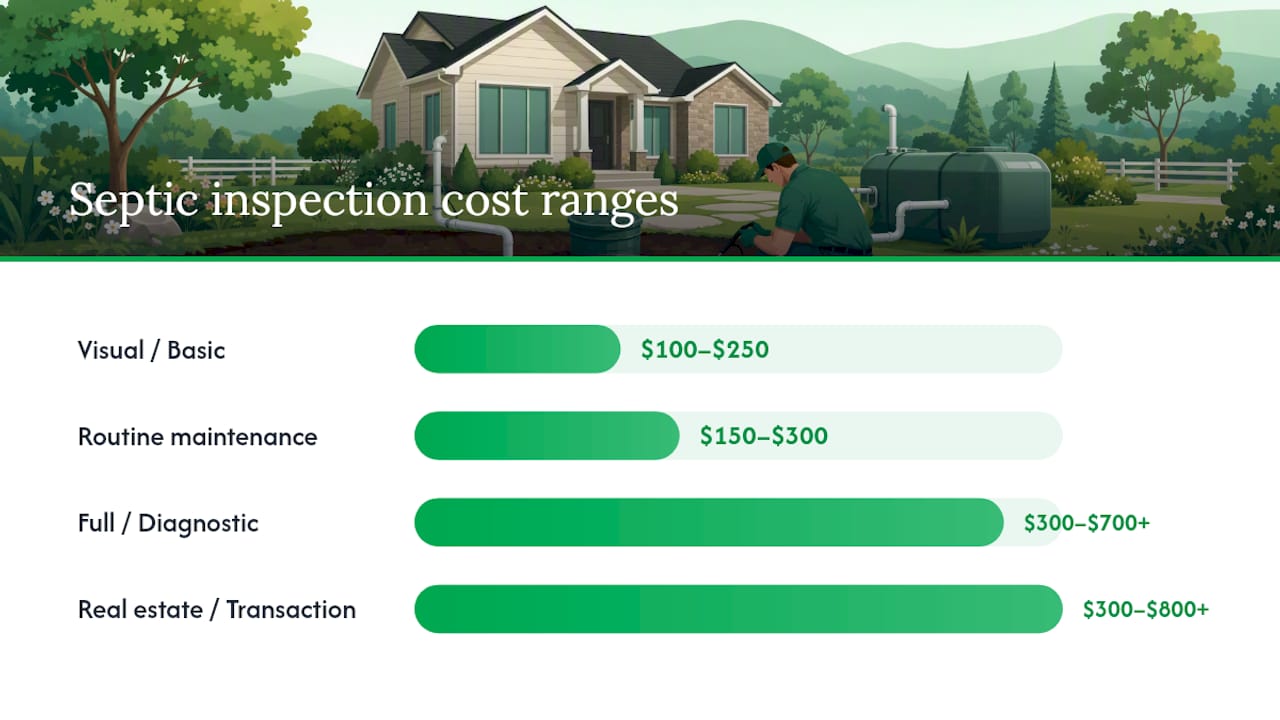
Visual or basic inspection costs $100 to $250 and takes the least time. The inspector walks the property, locates the tank and drain field, checks for surfacing effluent or soggy patches, and confirms the system is functioning without opening anything up. It’s a quick health check, not a diagnostic deep dive. Sellers sometimes order this tier before listing, just to rule out obvious red flags.
Routine maintenance inspection runs $150 to $300 and goes a step further than the visual check. The inspector opens the tank, measures sludge and scum layers, and checks the baffles and effluent filter. This is the tier septic professionals recommend on a recurring basis, roughly every one to three years per EPA guidance, to catch problems before they become expensive.
Full or comprehensive/diagnostic inspection costs $300 to $700 or more and adds hydraulic flow testing, distribution box checks, and often a longer visit. These inspections happen when there’s already a suspected problem (slow drains, odor, a wet yard) or when a system is old enough that the inspector wants a complete picture before signing off. Expect these to run two to four hours on-site since the added testing and distribution box checks take real time.
Real estate or transactional inspection is the priciest standard tier at $300 to $800 or more, and it’s what most homebuyers are actually shopping for. This inspection produces the written, lender-ready report that underwriters and title companies want to see, and it typically bundles several tests: tank inspection, flow test, sometimes a dye test, and a review of the drain field’s condition. If you’re buying a home, this is the tier to budget for, not the cheaper maintenance check.
Camera scoping, ordered as a standalone service or bundled into a comprehensive inspection, adds $125 to $500. A camera run down the sewer lateral or into the tank shows root intrusion, cracks, or blockages that a visual check simply can’t catch. It’s worth the extra cost on older homes or anywhere tree roots are a known issue near the line, and it pairs naturally with a broader sewer scope inspection if you’re already having the plumbing checked.
One wrinkle worth knowing: some states, Massachusetts among them, mandate a specific inspection protocol (commonly called a Title 5 inspection) tied to strict state code rather than a generic checklist. These inspections follow a fixed set of steps and typically cost more than a routine check because the inspector has less flexibility in scope and must document compliance precisely. If you’re in a state with mandated protocols, ask upfront whether your quote reflects that requirement.
- Visual/basic: $100–$250, quick walk-through and surface check
- Routine maintenance: $150–$300, tank opened and measured
- Full/comprehensive: $300–$700+, flow tests and distribution box review
- Real estate/transactional: $300–$800+, written report for lenders
- Camera scope add-on: $125–$500, root and crack detection
Why Quotes Vary: Cost Factors and Common Add-Ons
Two houses on the same street can get wildly different septic inspection quotes, and it usually comes down to five factors: accessibility, system type, age, pumping needs, and location. None of these show up in a generic price chart, which is exactly why line-item quotes matter more than a single headline number.
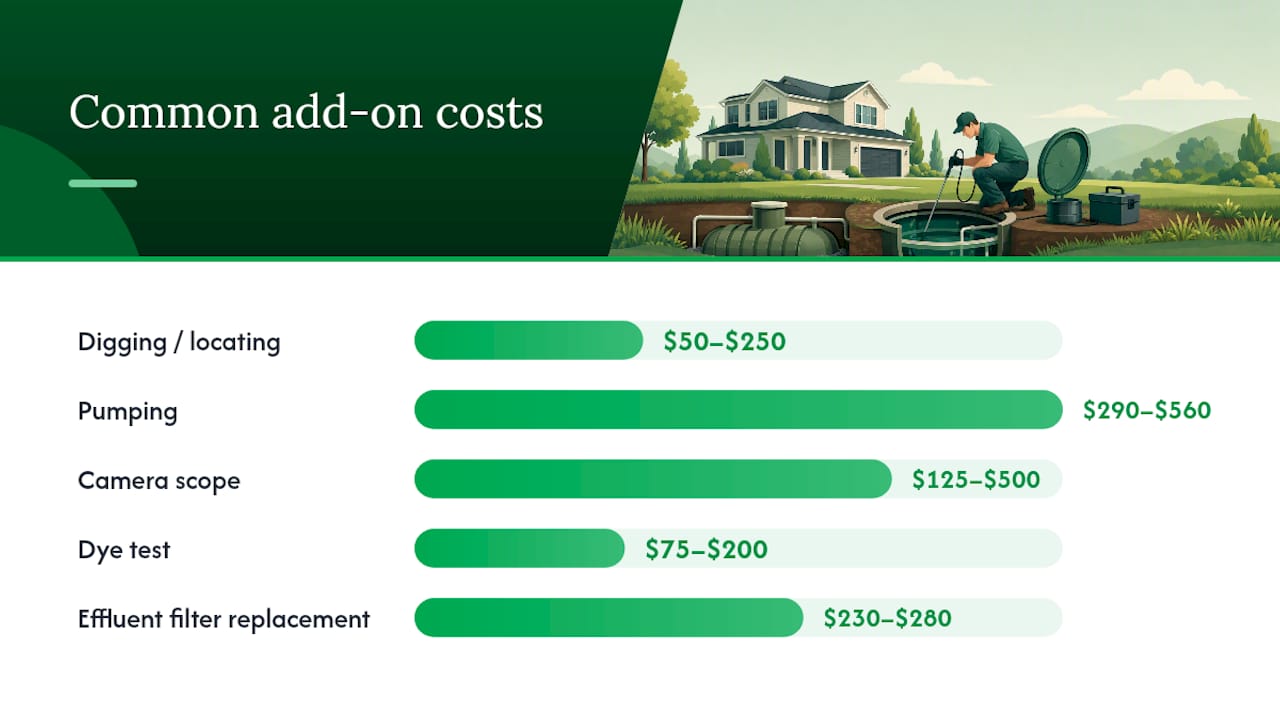
Accessibility is the most common surprise fee. If the tank lid isn’t marked with a riser and has to be located and dug up, expect $50 to $250 in digging and locating charges tacked onto the base inspection price. A riser, which is a one-time install of $200 to $400, eliminates this fee on every future visit and pays for itself within two or three inspections.
Pumping is billed separately from inspection in most cases, and it’s the add-on that trips people up most often. Expect $290 to $560 for pumping, and know that inspectors generally recommend pumping every three to five years depending on household size and usage. If your tank hasn’t been pumped in that window, budget for both services at once rather than assuming the inspection alone covers it.
Camera scoping and dye tests are the diagnostic add-ons. A dye test, where colored dye is flushed and tracked through the system to confirm proper drainage, runs $75 to $200. Camera scoping, covered above, adds $125 to $500. Lab sampling of effluent or groundwater, when a health department requires it, is priced separately and varies by lab.
System type and age change the math too. Aerobic treatment units and mound systems are mechanically more complex than a standard gravity septic tank, and inspecting one typically adds 20% to 40% to the time and cost because of the extra components and required specialist knowledge. Older concrete tanks, especially ones without documented pumping history, often need more careful sludge measurement and structural checks, which extends the visit.
Geography and permit fees play a smaller but real role. Inspection type still matters more than zip code, but labor rates in coastal and major metro markets tend to run higher across the board, and some counties charge a separate permit or filing fee when a report needs to go to a health department.
Add-on costs at a glance: Digging/locating $50–$250 · Pumping $290–$560 · Camera scope $125–$500 · Dye test $75–$200 · Effluent filter replacement $230–$280
- Riser installed: no digging fee on future visits
- No riser: $50–$250 added for locating and exposing the lid
- Tank not pumped in 3+ years: budget pumping alongside inspection
- Aerobic or mound system: add 20–40% to standard pricing
- Health department report required: ask about permit/filing fees upfront
What Happens During a Septic Inspection
A septic inspection isn’t just someone glancing at your yard. Here’s what a properly run inspection actually covers, step by step, so you know what you’re paying for and what to double-check before the inspector leaves.
- Locate and expose the tank. The inspector finds the tank lid, either using a riser, a probe, or property records, and opens it for direct access.
- Measure sludge and scum layers. A measuring tool checks how full the tank is, which tells the inspector whether pumping is overdue.
- Check baffles and the effluent filter. These components control flow and catch solids; damaged or clogged baffles are a common finding.
- Inspect the distribution box. On systems with multiple drain field lines, the inspector confirms wastewater is distributing evenly.
- Run a flow or hydraulic test. Water is run through fixtures to watch how the system handles a working load, not just a static snapshot.
- Perform a dye test, if ordered. Dyed water traces where wastewater actually goes, exposing leaks or drainage failures.
- Camera scope, if ordered. A camera run through the lateral or tank flags cracks, roots, or blockages invisible from the surface.
- Document and photograph findings. Photos back up the written report and matter enormously if a lender or buyer disputes a finding later.
What’s usually not included unless specifically requested: pumping the tank, any repairs, filing permits with the local health department, and laboratory analysis of effluent or groundwater. If you assume any of these are bundled in, you’ll be quoted a change order mid-inspection.
For a real estate transaction, lenders and health departments generally want a written report that documents tank condition, sludge/scum measurements, any test results, and photo evidence, not just a verbal “it passed.” Always confirm before booking that the report format matches what your lender or title company requires.
Pro Tip: Clear brush and debris away from the suspected tank location before the inspector arrives. It sounds minor, but a hidden lid is the single most common reason a basic inspection quote turns into a $50–$250 digging surcharge on-site.
How Long an Inspection Takes and When to Schedule One
Duration scales directly with inspection tier, so it pays to know what you’re booking before you clear your calendar. A visual/basic check takes 20 to 30 minutes. A routine maintenance inspection runs closer to an hour once the tank is opened and measured. A full comprehensive or real estate transaction inspection, with flow testing and distribution box checks, typically takes two to four hours on-site.
Report turnaround varies by provider, with same-day delivery on the fast end and up to 48 hours on the slower end. Delays usually come from lab sampling results, if ordered, or from an inspector juggling multiple jobs during a busy closing season.
On frequency, the EPA recommends inspecting a septic system every one to three years, with pumping every three to five years depending on household size and usage. That cadence holds whether you’re a long-term homeowner doing routine upkeep or a buyer who just wants a clean bill of health before closing.
- Visual/basic inspection: 20–30 minutes on-site
- Routine maintenance inspections take about an hour
- Comprehensive/transactional inspections typically take multiple hours on-site
- Report delivery varies from same-day to a couple of days depending on testing ordered
- Recommended cadence is to inspect every few years and pump according to usage patterns
How to Choose an Inspector Without Overpaying
Price shouldn’t be the only filter you apply when hiring a septic inspector, because the cheapest quote often leaves out exactly the things you need for a real estate closing. A short screening process up front avoids a much more expensive redo later.
Start with credentials. Look for a NAWT Certified Inspector (CI) designation or equivalent state licensing, and confirm the company carries liability insurance. Ask directly whether they’ve inspected the specific system type on your property, since aerobic and mound systems require different expertise than a standard gravity tank.
Get a genuine line-item quote before you book, not just a flat number. Ask explicitly: Is pumping included, or billed separately? Is camera scoping part of the price, or an add-on? Will I receive a written report suitable for a lender, with photos? These three questions alone eliminate most surprise fees.
Watch for red flags. No written report, no photo documentation, vague scope language, or an unlicensed technician showing up alone with no company paperwork are all signs to walk away. A legitimate inspector should be comfortable explaining exactly what’s included before you agree to anything.
On saving money without cutting corners: bundle pumping and inspection into a single visit when your tank is due, since it typically saves $75 to $150 versus booking them separately and gives the inspector a clearer interior view of the tank. Installing a riser is a one-time cost that eliminates digging fees on every inspection going forward. And always get three quotes, comparing scope line by line, not just the bottom-line total. Reviewing our inspection company selection criteria before you call anyone is a fast way to know what questions actually matter.
Pro Tip: When comparing three quotes, ask each company the exact same three questions about pumping, camera scoping, and report format. Side-by-side answers expose padded quotes faster than comparing total price alone.
- Verify NAWT CI certification or equivalent state licensing
- Confirm insurance coverage and ask for references
- Request a written, itemized quote before scheduling
- Ask if the report is lender-ready with photo documentation
- Bundle pumping with inspection to save $75–$150
Hunt Home Inspection’s Approach to Septic Inspections
Jhunthomeinspections built its septic inspection process around one problem buyers run into constantly: uncertainty about what’s actually happening underground during a time-sensitive closing. Clients get a choice between in-person and video inspection scheduling, which matters when a buyer, agent, and seller are juggling different calendars or locations.
Reports come back within 24 hours, with photo documentation built in, so lenders and title companies get what they need without a follow-up request. Jhunthomeinspections’s proprietary Create Request List™ tool streamlines the back-and-forth between buyers and agents once findings come in, cutting out the usual email chains over repair negotiations.
The practice focuses heavily on first-time buyers, low-income families, and veterans navigating the process for the first time, which shapes how findings get explained: plainly, with context, not just checkbox jargon. Bundled scheduling across septic, well, and sewer camera services in the St. Louis Metro area and Southern Illinois means one visit often covers what would otherwise be several separate appointments.
The Real Lesson on Septic Inspection Pricing
The number that matters most isn’t the average. It’s the tier. Quoting a single “average septic inspection price” without naming the tier is how buyers end up shocked at closing, because a $180 visual check and a $650 transactional inspection with camera work are not the same product, even though both get called a “septic inspection” in casual conversation.
Conventional advice tells buyers to shop for the lowest quote. That’s backwards for anything tied to a real estate closing. The cheapest inspector who skips the written report, skips photos, or doesn’t test flow is the one who costs you money later, either in a failed underwriting review or in a system problem nobody caught. Prioritize the written, photo-backed report first, then negotiate on price within that scope, not before it.
If you take one thing from this: ask what’s included before you ask how much it costs. The order matters more than most buyers realize.
— JOHN
Book a Septic Inspection With a Team That Explains What You’re Paying For
Jhunthomeinspections gives you a line-item quote before you book, not a vague estimate you have to decode after the invoice arrives. Every septic inspection booked through our services page comes with a clear scope up front: what’s tested, whether pumping and camera work are included, and when your written report lands.

Scheduling works around your timeline, with in-person or video inspection options depending on what fits your closing date, and reports return within 24 hours so you’re not stuck waiting through a contingency window. Buyers who need flexibility on payment timing can also use our pay-at-close option to align inspection costs with the actual closing rather than paying out of pocket weeks early. Ready to lock in a date? Request your quote through the inspection services page and get a real number, not a placeholder range, before you commit.
Sources
The price ranges and testing standards in this article come from established industry and government sources, useful if you want to dig deeper into your local requirements.
- How to care for your septic system | EPA
- How Much Does a Septic Inspection Cost? 2026 Data | Angi
- Septic Inspection Cost 2026: What Each Type Costs and What’s Actually Included | The Septic Guide
- Septic inspection cost (HomeAdvisor) — price components and add-ons
Local health departments and state environmental agencies set their own inspection protocols in some jurisdictions, so confirm requirements specific to your county before scheduling.
Recent Comments