

A general home inspection is an objective, visual examination of a home’s accessible physical structure and systems, covering everything from the roof to the foundation, to identify current and potential issues before you commit to a purchase. The American Society of Home Inspectors (ASHI) defines this objective examination as covering major components and producing findings and recommendations based on what is observable. For first-time buyers and families, understanding what this process involves is the difference between a confident purchase and a costly surprise. The inspection typically takes 2 to 4 hours and covers the roof, foundation, electrical panel, plumbing, and HVAC systems. Reports from Jhunthomeinspections are delivered within 24 hours, giving you the information you need without slowing down your timeline.
What does a general home inspection include?
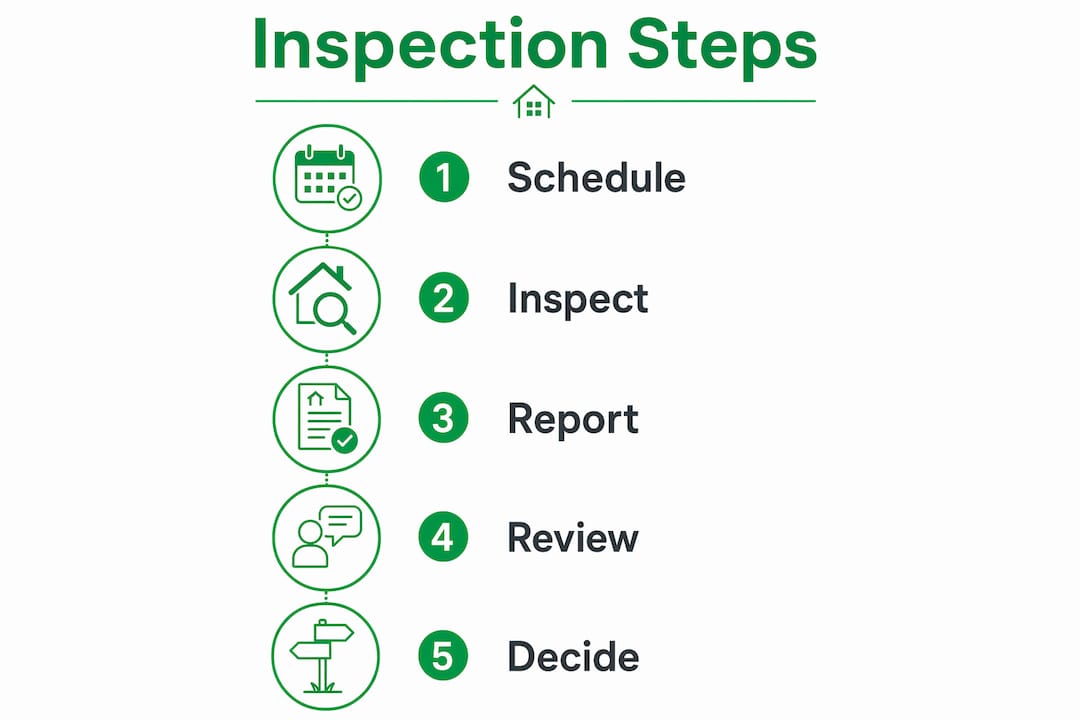
A general home inspection covers the visible and accessible components of a home across six major categories. Inspectors work through the property systematically, documenting conditions and flagging items that need repair, monitoring, or further evaluation.
Exterior systems are the first line of assessment:
- Roof covering, flashing, gutters, and downspouts
- Siding, trim, and exterior wall surfaces
- Grading and drainage around the foundation
- Driveways, walkways, and attached structures like garages
Structural and foundation elements come next:
- Foundation walls and visible framing
- Basement or crawlspace conditions, including moisture and ventilation
- Visible structural components in the attic
Major mechanical systems receive detailed attention:
- Electrical panel, visible wiring, outlets, and grounding
- Plumbing supply lines, drain lines, water heater, and visible fixtures
- Heating and cooling equipment, including furnace, air conditioning, and ductwork
Interior spaces are evaluated room by room:
- Walls, ceilings, and floors for damage or moisture staining
- Doors and windows for operation, sealing, and condition
- Stairways, railings, and built-in appliances
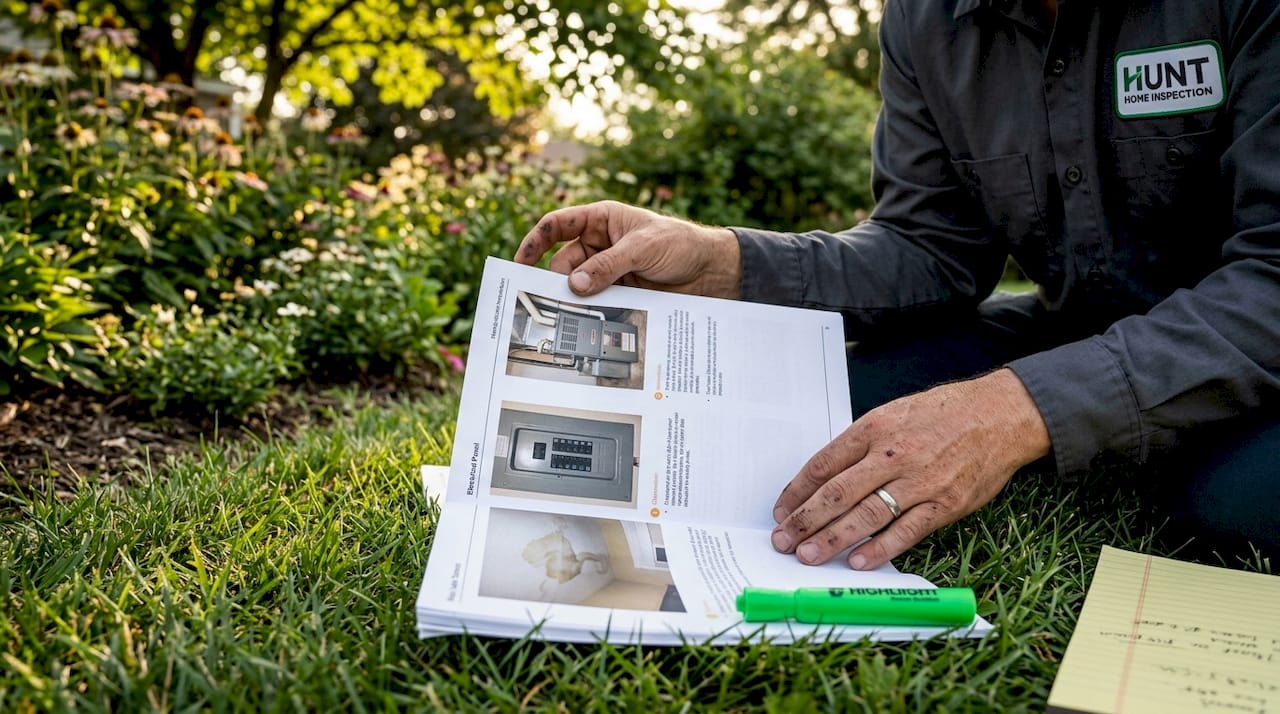
The inspection report documents all findings with photos, descriptions, and recommendations. Every item is assessed visually. Inspectors do not move furniture, lift carpet, or open walls to look behind surfaces.
Pro Tip: Ask your inspector to walk you through each system as they go. Seeing a cracked flashing or a double-tapped breaker in person makes the written report far easier to understand later.
What are the limitations of a general home inspection?
A general home inspection is thorough, but it has defined boundaries. Knowing those boundaries helps you set realistic expectations and decide when a follow-up specialist is worth the cost.
-
No destructive testing. Inspectors do not punch holes in walls, lift floor coverings, or dismantle equipment. The noninvasive, visual nature of the inspection means anything concealed behind a finished surface stays unseen.
-
Inaccessible areas are excluded. A locked attic hatch, a crawlspace with standing water, or a panel blocked by stored items cannot be inspected. The report will note these limitations, but the conditions inside remain unknown.
-
It is a snapshot, not a guarantee. A home inspection captures conditions at the exact moment of the visit. An intermittent electrical fault that was not active during the inspection will not appear in the report.
-
Specialized systems require specialized inspectors. A general inspection does not include sewer scope, radon testing, mold sampling, or structural engineering analysis. If the general inspector flags a concern in any of these areas, a specialist follow-up is the appropriate next step.
-
No market value assessment. The report tells you about physical condition, not price fairness. It does not tell you whether the home is worth what you are paying.
A home inspection is best understood as an informed overview of observable conditions, not a certification that the home is problem-free. Use it as a starting point for deeper questions, not a final verdict.
Buyers who treat the inspection as a pass/fail test often feel either falsely reassured or unnecessarily alarmed. The report is a tool for decision-making, not a scorecard.
How does a general home inspection help with the home buying decision?
The inspection report helps buyers uncover potential issues, plan ongoing maintenance, and negotiate repairs or price adjustments. This is where the real value of the process shows up for first-time buyers and families.
Here is what the inspection directly enables:
- Identifying safety hazards. Faulty wiring, missing smoke detectors, deteriorating gas lines, and structural cracks are the kinds of findings that change a buyer’s decision entirely.
- Negotiating repairs or credits. When the inspection reveals a failing HVAC system or a roof near the end of its life, buyers can request repairs before closing or negotiate a price reduction to cover the cost.
- Planning for future maintenance. Not every finding is urgent. A water heater that is eight years old is not a crisis, but knowing it will need replacement within a few years lets you budget accordingly.
- Reducing post-purchase surprises. Buyers who skip the inspection often discover expensive problems within months of moving in. The inspection shifts that discovery to before the purchase, when you still have options.
One thing the report does not do: it does not assess market value or tell you whether the asking price is fair. That is the job of an appraisal. The inspection is focused entirely on physical condition.
The home inspection process is one of the few steps in the buying process that is entirely in your interest as a buyer. The seller does not commission it. The lender does not control it. You do.
How to prepare for a general home inspection
Preparation makes the inspection more useful and less stressful. Here is how to approach it from the moment your offer is accepted.
-
Schedule immediately after offer acceptance. Buyers typically have 7 to 10 days for inspection after going under contract. Book your inspector the same day your offer is accepted to protect that window.
-
Choose a qualified inspector. Look for ASHI Certified Inspectors, who must pass rigorous exams, complete field experience requirements, and fulfill yearly continuing education. Certification is the clearest signal of professional standards.
-
Plan to attend the full inspection. Buyers who attend the inspection leave with a much clearer understanding of the home’s condition than those who only read the report afterward. You can ask questions in real time and see issues firsthand.
-
Prepare a list of concerns in advance. If you noticed anything during your showing, write it down. Share it with your inspector at the start of the visit so they can pay extra attention to those areas.
-
Read the report carefully before your contingency deadline. Reports are typically delivered within 24 to 48 hours after the inspection. Review it with your agent and decide which findings, if any, you want to address with the seller.
Pro Tip: Use a tool like the Create Request List™ from Jhunthomeinspections to organize findings from your report and communicate repair requests to your agent clearly and efficiently.
Inspection timing and report comparison
| Stage | What happens | Your action |
|---|---|---|
| Offer accepted | Inspection window opens (7 to 10 days) | Book inspector immediately |
| Inspection day | 2 to 4 hour walkthrough with inspector | Attend and ask questions |
| Report delivery | Detailed report with photos within 24 to 48 hours | Review before contingency deadline |
| Post-report | Negotiate repairs or credits with seller | Work with your agent on next steps |
Understanding how to read your report is just as important as attending the inspection itself. A well-organized report separates safety concerns from maintenance items, which tells you exactly where to focus your negotiation energy.
Key takeaways
A general home inspection is a visual, noninvasive evaluation of a home’s structure and systems that gives buyers the information they need to negotiate, plan, and decide with confidence.
| Point | Details |
|---|---|
| Inspection scope | Covers roof, foundation, electrical, plumbing, HVAC, and interior systems visually. |
| Core limitation | Inspectors cannot see behind walls or certify the home is problem-free. |
| Buyer benefit | Findings support repair negotiations, maintenance planning, and risk reduction. |
| Timing | Schedule within 7 to 10 days of offer acceptance; reports arrive within 24 to 48 hours. |
| Inspector selection | Choose an ASHI Certified Inspector for verified professional standards. |
What first-time buyers consistently get wrong about home inspections
After years of working with buyers in the St. Louis Metro area and Southern Illinois, the single biggest misconception I see is treating the inspection as a pass/fail test. Buyers either walk away relieved because “nothing major came up” or panicked because the report lists 40 items. Neither reaction is usually warranted.
Every home has a list of findings. A 20-year-old house with a long report is not necessarily a bad buy. A newer home with a short report is not necessarily problem-free. What matters is the category of the finding: safety hazard, major system failure, or routine maintenance. Those three categories should drive every conversation you have with your agent after the report lands.
The second mistake I see constantly is buyers skipping the inspection to make their offer more competitive. I understand the pressure in a tight market. But waiving the inspection means waiving your clearest look at what you are actually buying. The inspection is not just a negotiation tool. It is an education. You will own this home for years. Understanding its systems, its quirks, and its needs from day one makes you a better owner and a smarter negotiator on the next purchase too.
Choose your inspector based on certification and communication, not price. The cheapest inspection is rarely the most useful one.
— JOHN
Ready to schedule your home inspection in St. Louis?
Jhunthomeinspections serves buyers across the St. Louis Metro area and Southern Illinois with thorough, professionally delivered inspections backed by same-day scheduling and reports returned within 24 hours. Whether you are a first-time buyer, a veteran, or a family navigating a competitive market, the team at Hunt Home Inspection, LLC brings the expertise and communication you need to move forward with confidence.

Jhunthomeinspections also offers video inspections for buyers who cannot attend in person, plus the Create Request List™ tool to simplify communication between you and your agent after the report is delivered. Explore the full range of inspection services available and book your inspection today. If you want flexibility on payment timing, check out the pay at close option to fit the inspection into your buying timeline without upfront stress.
FAQ
What is a general home inspection?
A general home inspection is a visual, noninvasive evaluation of a home’s accessible structure and systems, including the roof, foundation, electrical, plumbing, and HVAC. According to ASHI, it produces findings and recommendations based on observable conditions at the time of the visit.
How long does a home inspection take?
A typical home inspection takes 2 to 4 hours, depending on the size and condition of the property. Larger or older homes with more complex systems generally take longer.
What does a home inspection not cover?
A general home inspection does not include sewer scoping, radon testing, mold sampling, or any area that is inaccessible or concealed behind finished surfaces. Buyers who need those assessments should schedule specialized follow-up inspections.
When should I schedule a home inspection?
Schedule your inspection immediately after your offer is accepted. Most contracts allow 7 to 10 days for inspection during the due diligence period, and booking early protects that window.
Do I need to be present during the home inspection?
Attending the inspection is strongly recommended. Being present lets you see issues firsthand, ask questions in real time, and leave with a much deeper understanding of the home’s condition than the written report alone provides.
Recent Comments