

A pre-listing inspection agent checklist is a structured tool real estate agents use to evaluate a property system by system before it hits the market. The goal is simple: find problems before buyers do. Agents who use a formal pre-sale inspection guide catch defects early, control the repair timeline, and walk into negotiations with full documentation. This guide covers every component of an effective checklist, from roof to foundation, plus timing, coordination, and documentation strategies that separate prepared listings from reactive ones.
What does a pre-listing inspection agent checklist include?
A pre-listing inspection agent checklist covers every major system in a home, organized so agents and sellers can triage findings by severity. The standard industry term for this process is a seller’s pre-listing inspection, though agents often call it a listing inspection or home inspection checklist for sellers. Both terms describe the same structured evaluation conducted before a property goes on the market.

Core systems every checklist must address
Key home systems to inspect include the foundation, roof, electrical panel, plumbing, HVAC, septic or well systems, pest activity, and safety devices. Each system gets its own set of specific tests, not just a visual pass. Here is what a thorough real estate listing inspection covers by category:
- Roof and exterior: Shingle condition, flashing, gutters, grading, and drainage away from the foundation
- Foundation and structure: Visible cracks, settlement signs, moisture intrusion in the basement or crawlspace
- Electrical: Panel labeling, double-tapped breakers, GFCI outlet function in kitchens and bathrooms, smoke alarm and CO detector operation
- Plumbing: Water pressure at fixtures, supply line age, water heater condition and age, visible leaks under sinks
- HVAC: Heating and cooling operation, filter condition, ductwork integrity, furnace age and last service date
- Pests and moisture: Termite or wood-destroying insect evidence, mold indicators, attic ventilation
- Safety devices: Smoke alarms on every floor, CO detectors near sleeping areas, handrail stability on stairs
Pro Tip: Test every GFCI outlet and smoke alarm yourself during the walkthrough. Buyers and their inspectors always check these, and a dead alarm battery signals neglect.
Timing and documentation tools
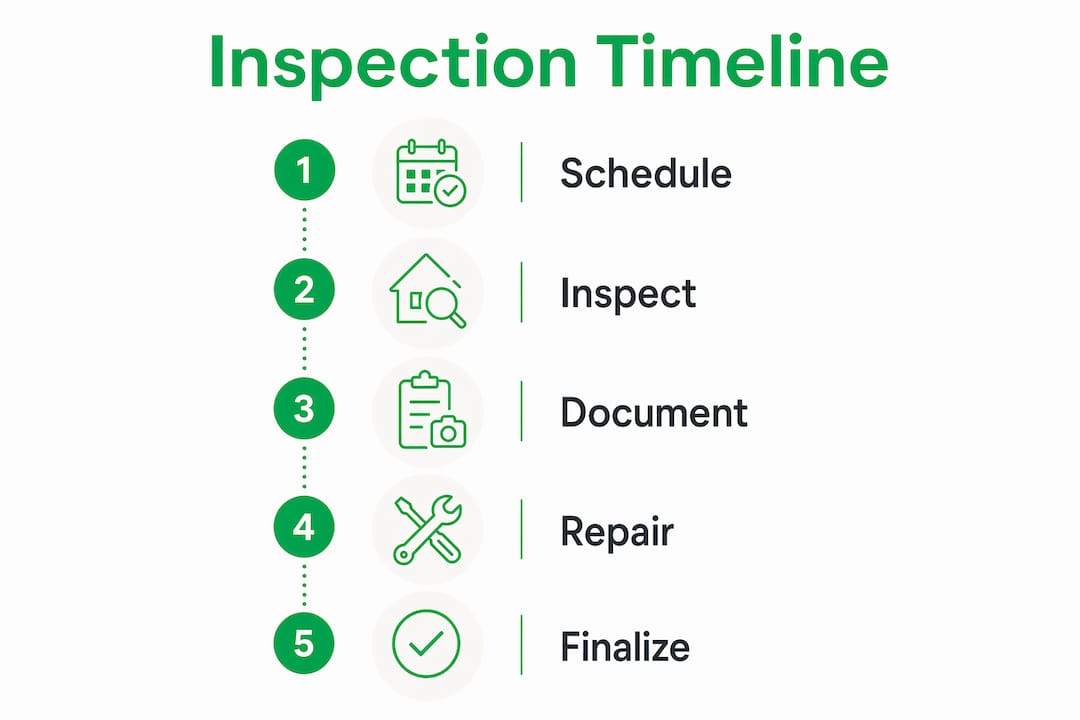
Schedule the inspection 4–6 weeks before listing to leave enough time for repair quotes, contractor scheduling, and final documentation. Some agents prefer a 1–3 month buffer on older homes with deferred maintenance. That buffer is not optional on properties with known system issues.
| Checklist item | Recommended timing |
|---|---|
| Hire licensed inspector | 5–8 weeks before listing |
| Receive and review report | 4–6 weeks before listing |
| Get repair quotes | 3–5 weeks before listing |
| Complete priority repairs | 2–3 weeks before listing |
| Compile disclosure package | 1–2 weeks before listing |
Documentation tools agents rely on include digital report platforms, photo logs, repair receipts, and disclosure forms. Paper checklists still work, but digital formats make sharing with sellers, buyers, and attorneys far faster.
How can agents coordinate pre-listing inspections effectively?
Agent inspection coordination is the process of scheduling, managing, and communicating all inspection activity between the seller, the inspector, contractors, and eventually the buyer’s agent. Coordination done well prevents last-minute surprises and gives sellers a clear action plan. Here is a step-by-step process that works in practice:
- Book the inspector early. Contact a licensed inspector as soon as the listing agreement is signed. Availability fills fast in spring and summer markets.
- Attend the inspection in person. A walkthrough with the inspector helps agents understand which findings are urgent versus routine age-related wear.
- Separate condition from age in the report. A 20-year-old furnace that still functions is different from a furnace with a cracked heat exchanger. Keeping those two facts separate focuses negotiations on real risk.
- Sort findings into three buckets. Use a fix/disclose/price decision structure: fix safety and active defects, disclose cosmetic or older items, and adjust price for issues the seller chooses not to repair.
- Build the agent packet. Compile the full inspection report, repair receipts, contractor invoices, and completed disclosure forms into one organized package. Managing disclosures and repair receipts as a single package reduces back-and-forth during escrow.
- Share the packet proactively. Providing buyers with the seller’s inspection report upfront builds trust and often shortens the negotiation window.
- Assign deadlines. Use a transaction coordinator or your own tracking system to set firm dates for each repair and document submission.
Pro Tip: Using a transaction coordinator to manage inspection reports and repair deadlines improves transaction smoothness and keeps all parties accountable without the agent becoming a project manager.
The agent packet is the most underused tool in pre-listing preparation. Sellers who hand buyers a complete file of reports, receipts, and disclosures remove the uncertainty that drives aggressive repair requests.
What steps make a property market-ready after inspection?
Market readiness after a real estate listing inspection comes down to three decisions for every finding: fix it, disclose it, or price for it. Agents who help sellers make those decisions clearly and quickly move listings faster.
Prioritizing safety and active defects before listing is non-negotiable. A leaking roof, faulty electrical panel, or active pest infestation will kill a deal at the buyer’s inspection stage. Fix those first, document the work, and keep every receipt.
What to fix before listing
- Active water leaks at any location
- Electrical hazards: exposed wiring, missing breaker covers, non-functional GFCI outlets
- HVAC systems that do not heat or cool to the set temperature
- Structural concerns flagged as active or worsening
- Any safety device that fails its test
What to disclose rather than repair
Cosmetic issues, older but functional systems, and past repairs with documentation are better disclosed than rushed into repair. A 15-year-old water heater that works fine does not need replacement before listing. Disclosing its age with a note that it is functional gives buyers the information without triggering a price reduction.
“Buyers are not afraid of old houses. They are afraid of surprises. A complete disclosure package turns a potential objection into a known quantity.”
Document every repair with dated photos, contractor invoices, and permit records where applicable. That paper trail becomes part of the agent packet and signals to buyers that the seller managed the property responsibly. Common seller mistakes include underestimating how long repairs take and spending money on cosmetic upgrades while leaving active defects unaddressed.
Final systems check before listing day
Run every system the day before photos are taken. Turn on the HVAC, run all faucets, test every outlet in the kitchen and bathrooms, and verify all smoke alarms respond. A property that performs well during the buyer’s walkthrough creates confidence that carries into the offer.
Paper checklist vs. digital report: which format works better?
The format of a pre-listing checklist affects how useful it is for agents, sellers, and buyers. Traditional paper checklists are fast to fill out but hard to share, update, or attach to a disclosure package. Digital formats solve all three problems.
| Format | Best for | Limitations |
|---|---|---|
| Paper checklist | Quick on-site notes | Hard to share, no photos |
| Agent-created digital template | Customizable by property type | Requires manual updates |
| Inspector-provided PDF report | Professional, photo-rich, shareable | Locked format after delivery |
| Branded digital report platform | Agent branding, easy buyer sharing | Requires platform access |
Inspection reports with photos and clear language help non-inspectors understand severity without needing to interpret technical language. A branded PDF with photos, priority labels, and plain-English descriptions communicates far more than a handwritten list. Agents who present sellers with a visual report see fewer questions and faster decision-making on repairs.
Agent-created templates work well for properties with specific characteristics. A condo checklist skips foundation and roof sections but adds common area and HOA system items. A rural property checklist adds well and septic testing. Tailoring the format to the property type prevents agents from missing category-specific issues.
One thing a seller’s inspection does not do: replace the buyer’s inspection. Buyers will still conduct their own evaluation for contingency purposes. The seller’s checklist is background documentation, not a substitute for independent verification.
Key Takeaways
A thorough pre-listing inspection agent checklist, completed 4–6 weeks before listing, gives agents the documentation and repair timeline needed to bring a property to market with confidence.
| Point | Details |
|---|---|
| Start inspection early | Schedule 4–6 weeks before listing to allow time for repairs and documentation. |
| Cover all major systems | Inspect roof, foundation, electrical, plumbing, HVAC, pests, and safety devices. |
| Triage every finding | Sort findings into fix, disclose, or price categories before listing. |
| Build an agent packet | Compile the report, receipts, and disclosures into one shareable file for buyers. |
| Use digital report formats | Photo-rich, branded reports reduce buyer questions and speed up negotiations. |
What I have learned from years of pre-listing inspections
The single biggest mistake I see agents make is treating the pre-listing inspection as a formality. They order it, skim the report, and hand it to the seller without a clear action plan. That approach wastes the entire value of the exercise.
The key value of a pre-listing inspection is knowing what buyers will find before they find it. When you know the findings in advance, you control the narrative. You decide what gets fixed, what gets disclosed, and how the property is priced. When buyers find it first, they control the narrative, and that almost always costs the seller more money.
Attending the inspection in person changed how I work. Reading a report is useful. Standing next to the inspector while they explain why a finding matters is a different level of understanding. You learn to distinguish a 25-year-old roof with two good years left from one that needs replacement before the first rain. That distinction is worth thousands of dollars in negotiation.
I also think agents underestimate how much a clean, organized agent packet does for buyer confidence. A seller who hands over a complete file of reports, receipts, and disclosures signals that they managed the property well. That signal reduces aggressive lowball offers more reliably than any cosmetic upgrade. Pair the packet with a home inspection checklist for buyers and you give buyers a framework that works in your favor.
The agents who master this process list properties that close faster, with fewer surprises, and at prices closer to asking. That is not luck. It is preparation.
— JOHN
How Jhunthomeinspections supports agents with pre-listing inspections
Jhunthomeinspections serves real estate agents and sellers across the St. Louis Metro area and Southern Illinois with fast, thorough pre-listing inspections. Reports are delivered within 24 hours, giving agents the documentation they need to build their agent packet without delays.

Jhunthomeinspections offers both in-person and video inspection options, which is especially useful for out-of-area sellers or agents managing multiple listings. The Create Request List™ tool makes it easy to share findings between buyers and agents in a clear, organized format. Agents who want a reliable inspection partner for their pre-listing inspection services can book directly through the Jhunthomeinspections website. Reports are professional, photo-rich, and ready to include in any disclosure package.
FAQ
What is an agent inspection checklist?
An agent inspection checklist is a structured list of systems and items a real estate agent reviews before listing a property. It covers areas like the roof, electrical, plumbing, HVAC, and safety devices to identify defects before buyers see the home.
When should a pre-listing inspection be scheduled?
Schedule the inspection 4–6 weeks before listing to allow enough time for repair quotes, contractor work, and final documentation. Older homes with known issues may need a 1–3 month buffer.
Does a seller’s inspection replace the buyer’s inspection?
A seller’s pre-listing inspection does not replace the buyer’s inspection. Buyers still conduct their own evaluation for contingency purposes, but the seller’s report reduces surprises and shortens negotiations.
What is agent inspection coordination?
Agent inspection coordination is the process of scheduling the inspection, managing findings, organizing repairs, and compiling disclosure documentation before listing. It connects the seller, inspector, contractors, and buyer’s agent into one organized workflow.
What should sellers fix before listing?
Sellers should fix active defects first: water leaks, electrical hazards, non-functional HVAC, and any failing safety devices. Cosmetic issues and older but functional systems are better disclosed with documentation than rushed into repair.
Recent Comments