
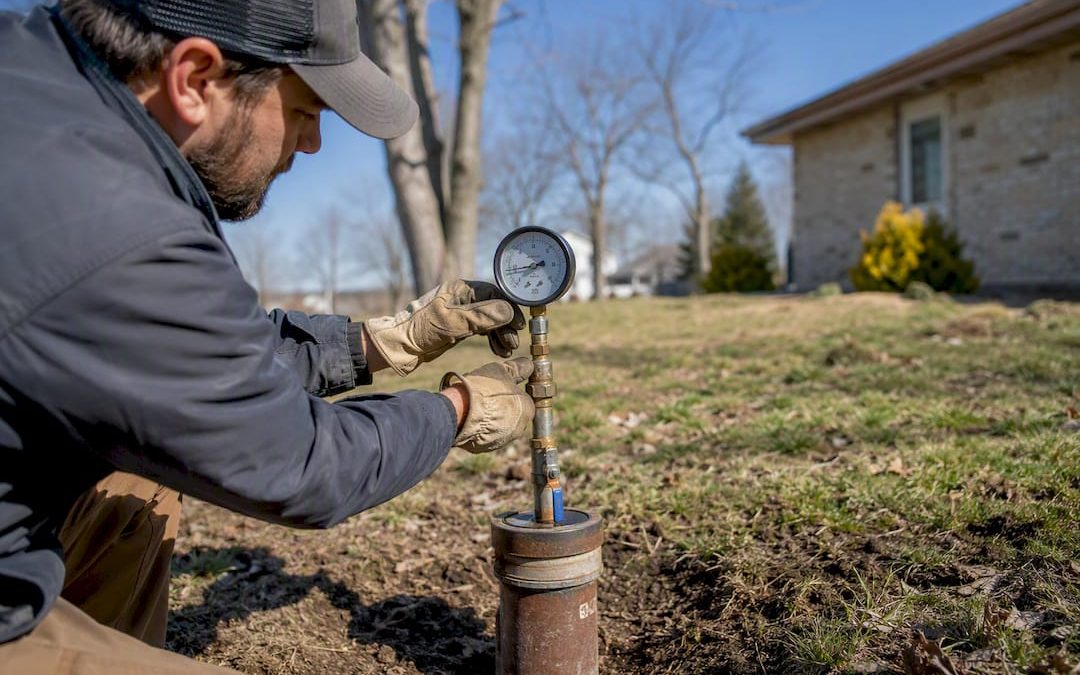
Expect to pay roughly $250 to $550 for a standard well inspection, with basic water testing pushing the total to $350 to $550. Get quotes from two or three local inspectors and, at minimum, order a bacteria and nitrate panel before closing. That single test catches the contamination issues that cause the most expensive post-purchase surprises, according to EPA guidance for private well owners.
TL;DR:
- Well inspections typically cost between $250 and $550, with additional water testing adding up to $150 to $200 depending on the panel.
- Inspection costs vary based on well type, depth, pump type, and access difficulty, often increasing for drilled wells or wells over 400 feet deep.
- A standard inspection covers wellhead, casing, plumbing, pressure tank, electrical safety, flow, and produces a report within 24 to 48 hours.
- Basic water tests for bacteria and nitrates cost $50 to $150, while more extensive testing for metals, VOCs, or PFAS can range up to $300 or more.
- Buyer usually pays for well inspections before closing, and prep such as locating and clearing the well cap can reduce inspection costs and delays.
Table of Contents
- How Much Does a Well Inspection Cost on Average?
- What Makes a Well Inspection More or Less Expensive?
- What Does a Standard Well Inspection Include?
- How Much Does Well Water Testing Cost?
- What Repairs Cost If Your Well Inspection Finds a Problem
- Who Pays for a Well Inspection When Buying a Home?
- How Hunt Home Inspection Handles Well Inspections
- What I’d Tell a Buyer Budgeting for This
- Ready to Book a Well Inspection?
- Where to Go for Official Well Testing Guidance
- Sources
How Much Does a Well Inspection Cost on Average?
A basic visual inspection, checking the wellhead, casing, and visible components without any flow testing, generally costs less than more comprehensive inspections. Most buyers need more than that. A standard inspection, including a flow and pressure test plus a written report, lands between $250 and $550 nationally. Add a basic bacteria and nitrate water test and you’re looking at $350 to $550 total, since labs charge separately from the on-site mechanical check.
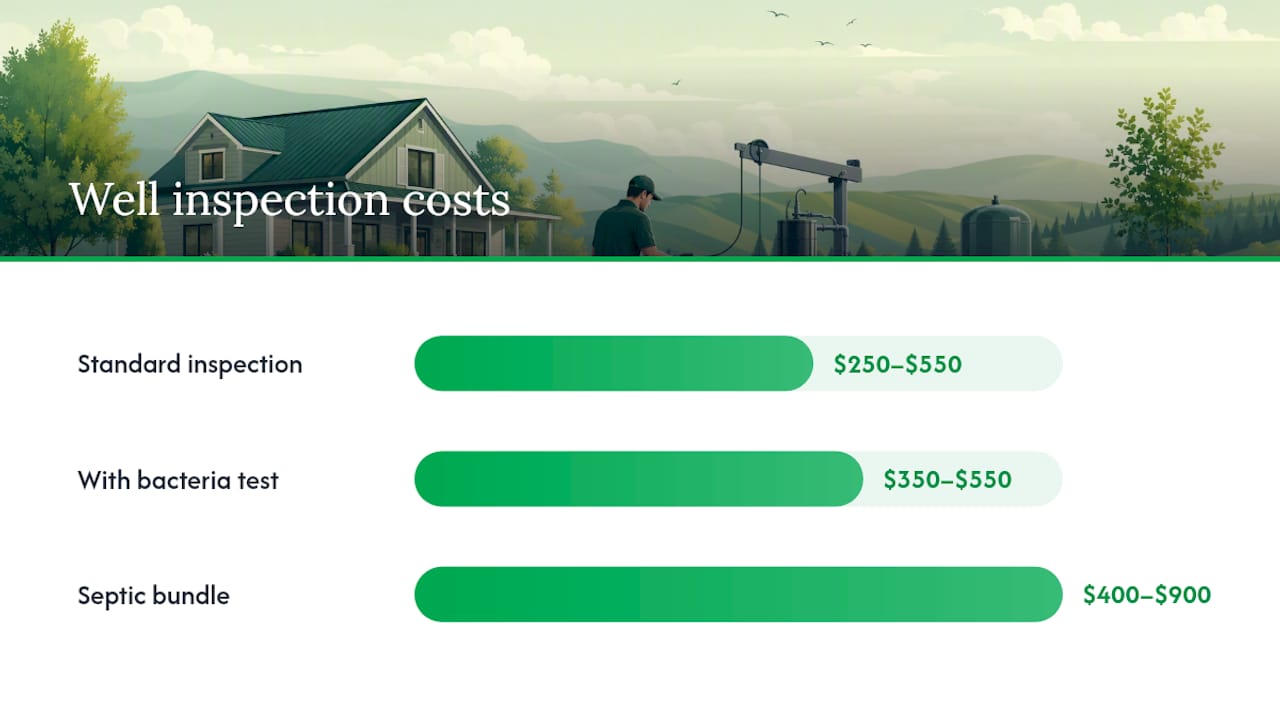
Comprehensive inspections that include an in-well camera or full pump evaluation cost more, increasing with well depth and equipment access difficulty. Bundle a well inspection with a septic evaluation, which is common because both systems sit outside what a standard home inspection covers, and you’ll often see package pricing in the $400 to $900 range, with the discount reflecting a single trip instead of two separate visits.
The low end applies to shallow, easily accessible wells with routine equipment. The high end shows up when an inspector needs specialized tools, extra drive time, or a second technician to pull a pump for a closer look.
What Makes a Well Inspection More or Less Expensive?
Well type sets the baseline. Drilled wells, which are narrow and deep, require specific probes and cameras that dug or bored wells don’t need, so drilled-well inspections often cost more even at the same depth. A dug well from the 1960s might get a full visual and flow check for $200, while a 300-foot drilled well needs pressure-rated equipment that adds to the bill.
Depth matters more than most buyers expect. A 100-foot well is straightforward. A well past 400 feet sometimes requires specialized cable and monitoring gear, and on rare occasions the cost can roughly double compared to a shallow well of the same type.
Pump type shifts the price too. Submersible pumps sit down in the well and are harder to evaluate without pulling them, which adds labor. Jet pumps sit above ground and are quicker to inspect, keeping costs closer to the low end.
Then there’s access. Inspectors frequently cite buried well caps and overgrown landscaping as hidden cost drivers, because locating and clearing a cap can eat 30 minutes or more before the actual inspection even starts. That time often converts a flat fee into an hourly charge.
- Drilled wells generally cost more to inspect than dug or bored wells of similar depth.
- Wells deeper than 400 feet can approach double the cost of a shallow well inspection.
- Submersible pumps add labor time compared to above-ground jet pumps.
- Buried caps, thick landscaping, and remote well siting often trigger access fees.
- Rural properties far from an inspector’s service area may carry a travel surcharge.
Pro Tip: Find your well cap and clear a path to it before the inspector arrives. That alone can save you an access fee, and it shaves real time off the visit.
What Does a Standard Well Inspection Include?
A base fee typically covers a defined set of checks, not just a quick look at the wellhead. Here’s what’s usually built into the price:
- Wellhead and cap inspection — checking for cracks, proper sealing, and rodent or insect entry points.
- Casing condition review — looking for corrosion, damage, or improper grouting near the surface.
- Visible plumbing check — inspecting exposed pipes for leaks, age, and material condition.
- Pressure tank and switch test — confirming the tank holds pressure and the switch cycles correctly.
- Electrical component review — checking wiring, the pump control box, and grounding for safety issues.
- Flow and production test — running water for a set period to measure gallons per minute, the number that tells you whether the well can support a household.
- Written report — a summary of findings, usually delivered within 24 to 48 hours.
Flow and pressure checks happen on-site, while water quality testing routes through a certified lab on its own timeline, which is why those two costs show up as separate line items on your invoice. Optional add-ons include an in-well camera inspection for structural issues deep in the casing, a full pump pull for direct examination, or a bundled septic inspection if you’re closing on both systems at once.
How Much Does Well Water Testing Cost?
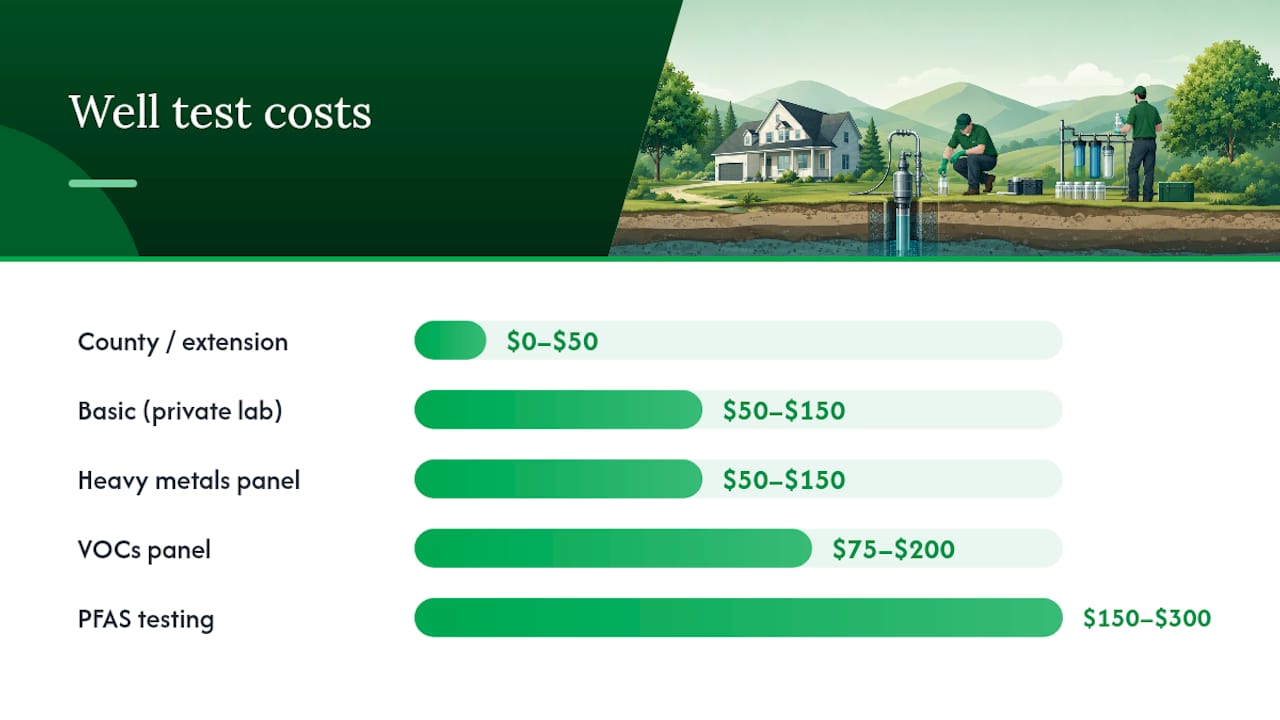
A basic bacteria and nitrate panel, the test that FHA and VA loans typically require before closing, generally runs $50 to $150 through a private lab. That panel catches the two contamination risks most likely to affect immediate health and loan approval.
Beyond the basics, add-on tests widen the picture:
- Heavy metals panel (lead, arsenic, iron): roughly $50 to $150
- VOCs (volatile organic compounds, often from nearby fuel or chemical sources): $75 to $200
- PFAS testing (a newer concern in many regions): often $150 to $300 depending on the lab
Here’s the part most buyers miss: many county health departments and state university extension labs offer basic bacteria and nitrate testing for $0 to $50, a fraction of private lab pricing. Call your county health department first. If they don’t test for what your lender requires, or you need faster turnaround, a certified private lab or mail-in panel fills the gap.
What Repairs Cost If Your Well Inspection Finds a Problem
Inspection findings range from cosmetic to deal-breaking, and the repair costs vary just as widely:
- Pump replacement: $900 to $2,500, depending on well depth and pump type
- Pressure tank replacement: $400 to $1,200
- Well disinfection/shock chlorination: $75 to $250
- Water treatment system (filtration, softener, UV): $500 to $3,000+
- Casing repair or sealing: $500 to $2,000
- New well drilling: $5,500 to $15,000 or more, depending on depth and geology
A cracked cap or minor disinfection issue is a quick, negotiable fix, and often a fair reason to ask for a seller credit rather than walking away. A collapsed casing or a well that can’t produce enough flow for the household is a different story. Repair costs can run into the tens of thousands of dollars, which is exactly why a $350 inspection is one of the cheaper insurance policies you’ll buy during closing. Get at least two contractor quotes before agreeing to any credit amount in negotiations.
Who Pays for a Well Inspection When Buying a Home?
Buyers order and pay for the well inspection in most U.S. transactions, since standard home inspections exclude private wells and septic systems entirely. Sellers sometimes agree to a credit or repair after the fact, but the upfront cost almost always falls to the buyer, and local custom varies enough that it’s worth confirming with your agent early. Review your inspection contingency deadlines in the purchase contract, since missing that window can forfeit your right to negotiate repairs at all.
- Schedule early. A standard on-site inspection takes one to two hours; add another 30 to 60 minutes if the well needs to be located or accessed.
- Plan for lab turnaround. Basic water panels typically return results in three to seven business days.
- Prep the site. Locate the well cap, clear vegetation, and gather any maintenance records before the inspector arrives.
How Hunt Home Inspection Handles Well Inspections
Hunt Home Inspection, LLC serves buyers, sellers, and agents across the St. Louis Metro area and Southern Illinois, offering both in-person and video well inspections depending on your schedule and comfort level. Reports come back within 24 hours, which matters when you’re working against a tight inspection contingency deadline.
Well inspections here often pair with water testing or a septic add-on in a single visit, saving a second trip and a second fee. The firm’s proprietary Create Request List™ tool streamlines the back-and-forth between buyer and agent once findings come in, so repair negotiations move faster instead of stalling over email threads. First-time buyers, veterans, and low-income families working through their first well-served property get the same fast turnaround and direct communication as any other client.
What I’d Tell a Buyer Budgeting for This
Don’t skip the basic bacteria and nitrate panel to save $75. That test is cheap insurance against the one contamination scenario that can actually make you sick or stall your loan. Save the comprehensive metals and PFAS panels for properties near agricultural land, old fuel tanks, or industrial sites, where the risk profile actually justifies the extra cost. My rule of thumb: budget $400 for inspection plus basic testing, and keep a mental reserve of a few thousand dollars for a pressure tank or minor repair. That’s the range where most well surprises actually land.
— JOHN
Ready to Book a Well Inspection?
Hunt Home Inspection gets you a same-week appointment and a report back in 24 hours, faster than waiting on a general contractor referral or piecing together separate well and water-testing vendors on your own.
If you’re closing on a property with a private well, the inspection services page covers well, water, and septic packages you can bundle into one visit. Have your well cap location and any past maintenance records ready when you schedule, and ask about paying at close if you’d rather not front the cost before your loan finalizes. Book your inspection now and get your report back before your contingency deadline closes in.
Where to Go for Official Well Testing Guidance
The EPA’s private well resources link out to state and county programs for testing and maintenance schedules. The CDC’s testing guidelines detail which contaminants matter most and how often to test for them. For help locating a certified lab near you, USGS maintains a directory of testing resources by state, and wellowner.org offers maintenance timelines specific to your well type and region.
Sources
- Private Drinking Water Wells | US EPA
- Guidelines for testing private well water | CDC
- Well inspection cost | HomeGuide
- Cost of a Well Inspection in 2026 | Angi
Recent Comments