
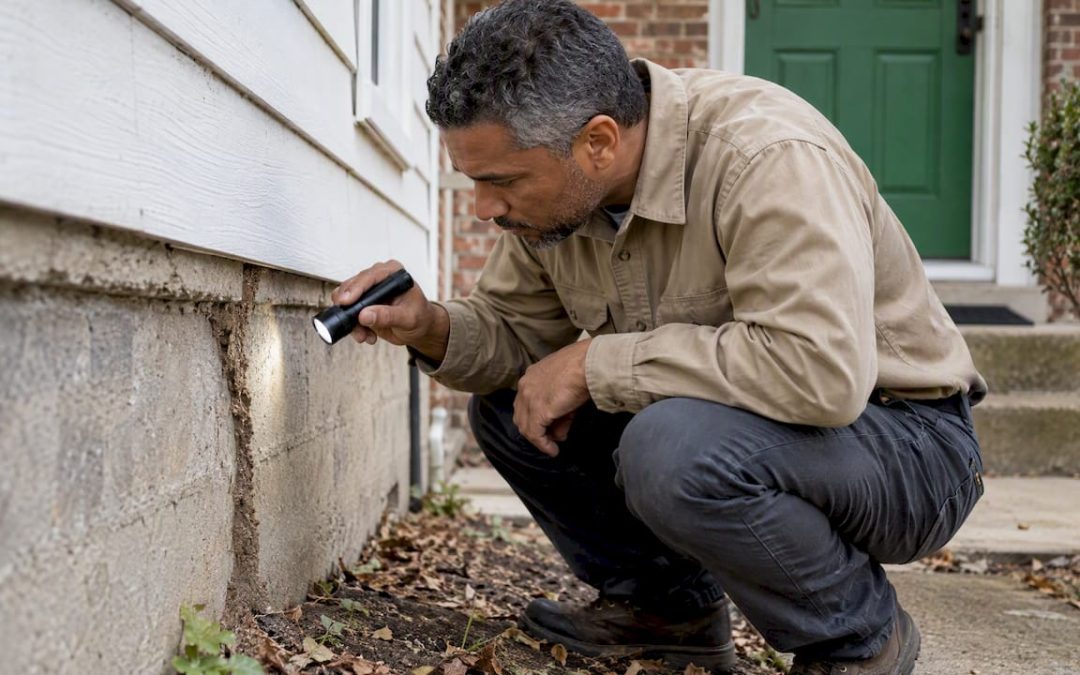
Most termite inspections cost between $75 and $325, and the national average sits somewhere around $100 to $150, depending on which survey you trust. A free inspection is possible if you only want to know whether termites are active. If you need a written report for a home purchase, expect to pay for it, usually somewhere from $100 to $200. Below we break down the numbers, the factors that move them, and who normally pays.
TL;DR
- A general termite inspection runs about $75 to $325, with averages reported between $100 and $150.
- Real estate transaction reports (often called termite letters or WDO reports) usually cost $100 to $200.
- A WDO inspection covers more than termites, so it is the more complete product for buyers.
- Inspection and treatment are priced separately. Treatment is where the big bills come from.
- A standard home inspection may not include wood-destroying insects, so budget for this as its own line item.
Table of Contents
- What a termite inspection costs in the United States
- Termite inspection vs. WDO inspection: why the name matters
- What pushes the price up or down
- Free termite inspections: when they are free and when they are not
- Who pays for the termite inspection?
- Does a regular home inspection cover termites?
- What the inspector actually does
- Inspection cost vs. treatment cost
- Our perspective
- Get a WDO or termite inspection with your home inspection
- How to keep the cost down without cutting corners
- FAQ
- Sources
What a termite inspection costs in the United States
No single national price exists, and the published figures disagree. That is normal for a service priced by the local market. Here is what the main guides report:
| Source | Reported average | Reported range |
|---|---|---|
| Forbes Home (Dec. 2023) | about $150 | free to $325 |
| This Old House (Feb. 2024) | $100 | $75 to $325 |
| U.S. News Real Estate (May 2023, citing HomeAdvisor) | $100 | $75 to $325 |
| Realtor.com (Aug. 2022) | not stated | $50 to $150 |
The practical reading: if a quote for a standard house lands between $75 and $200, it is in the normal band. A quote above $325 should come with a reason, such as a very large property, a hard-to-reach crawl space or a complicated structure.
We do not publish a flat price for termite work, because the right number depends on the property. We quote after we know the address, size and what the buyer needs the report for.
Termite inspection vs. WDO inspection: why the name matters
The two terms get used as if they were the same thing. They overlap, but they are not identical.
A termite inspection looks for subterranean or drywood termites and their signs. A wood-destroying organism (WDO) inspection is broader: it checks for other pests and conditions that damage wood, such as carpenter ants, wood-boring beetles and decay-related moisture problems. The report is written in a format lenders and agents recognize, which is why it is the one you will usually be asked for in a sale.
People also call it a termite letter, a WDI report (wood-destroying insect) or a pest inspection. When you request one, say what you need it for. “I’m buying a house and my lender wants a WDO report” gets you the right product. “Can you check for termites?” might get you a quick look and a verbal answer.
How much a WDO inspection costs
WDO inspections for a sale tend to cost more than a casual look because the inspector completes a formal report. HomeGuide puts the average for a WDO inspection at $100 to $200, and This Old House gives the same $100 to $200 band for real estate termite letters. Some states require their own forms, and those can cost more because they are more detailed and take longer.
What pushes the price up or down
Forbes Home lists the main drivers: home size and complexity, how severe an infestation is, geography and local termite prevalence, local cost of living, and whether the inspection is preventative or tied to a real estate transaction. In plain terms:
- Size and layout. Larger or more complex homes take longer to inspect, so they cost more. A 900-square-foot ranch on a slab is a different job from a 3,000-square-foot two-story with a basement, an attached garage and a crawl space.
- Access. Inspectors need to see attics, basements, crawl spaces and garages. If those areas are packed with boxes or the crawl space is nearly impassable, the job gets slower, and the report may note areas that could not be inspected.
- Purpose. A free courtesy look is sales-driven. A signed report that a lender will rely on is a deliverable, and it is priced that way.
- Location. Termite pressure and labor costs vary. A report in a high-pressure region may be more detailed than one where termites are rare.
- Add-ons. Detached garages, sheds, decks and fences usually need to be requested up front.
Free termite inspections: when they are free and when they are not
Many pest-control companies offer free inspections to check for active infestations. That is useful if you are a homeowner who noticed mud tubes or swarmers and wants to know what you have.
There is a catch to understand. The free inspection is a lead for a treatment sale. It usually comes with a treatment quote and not a formal, transaction-ready report. U.S. News Real Estate notes that annual inspections are typically free, while a termite inspection during a purchase may be separate from the home inspection.
So for a home purchase, treat the inspection as an independent check. If the same company that inspects also profits from treating what it finds, you may want a second opinion on any large treatment quote.
Who pays for the termite inspection?
The default is that the buyer pays. A U.S. Army home-inspection guide says that unless the parties agree otherwise, the homebuyer is responsible for paying for the home inspection and subsequent inspections. The purchase contract can shift that, and in some deals the seller agrees to cover it or to cover treatment if something is found.
VA loans have their own rules in many areas, and who pays can differ from conventional deals. We cover that in our VA termite inspection guide. Read your contract and ask your lender and agent before you order.
Does a regular home inspection cover termites?
Not necessarily. A standard home inspection evaluates visible and accessible systems and components, and it does not necessarily include wood-destroying insects. Buyers may need a separate specialist inspection. U.S. News advises buyers to budget for it separately because lenders or transaction requirements may call for an extra report.
If you are building your budget, put the general inspection and the WDO report side by side. Our home inspection cost guide covers the first line, and the termite report is the second. Radon, mold and sewer camera work are the other usual extras, and our sewer camera cost guide shows how that one is priced.
It also helps to know what a limited scope looks like. If a termite look is bundled into something narrow, read what a limited home inspection is so you know what is left out.
What the inspector actually does
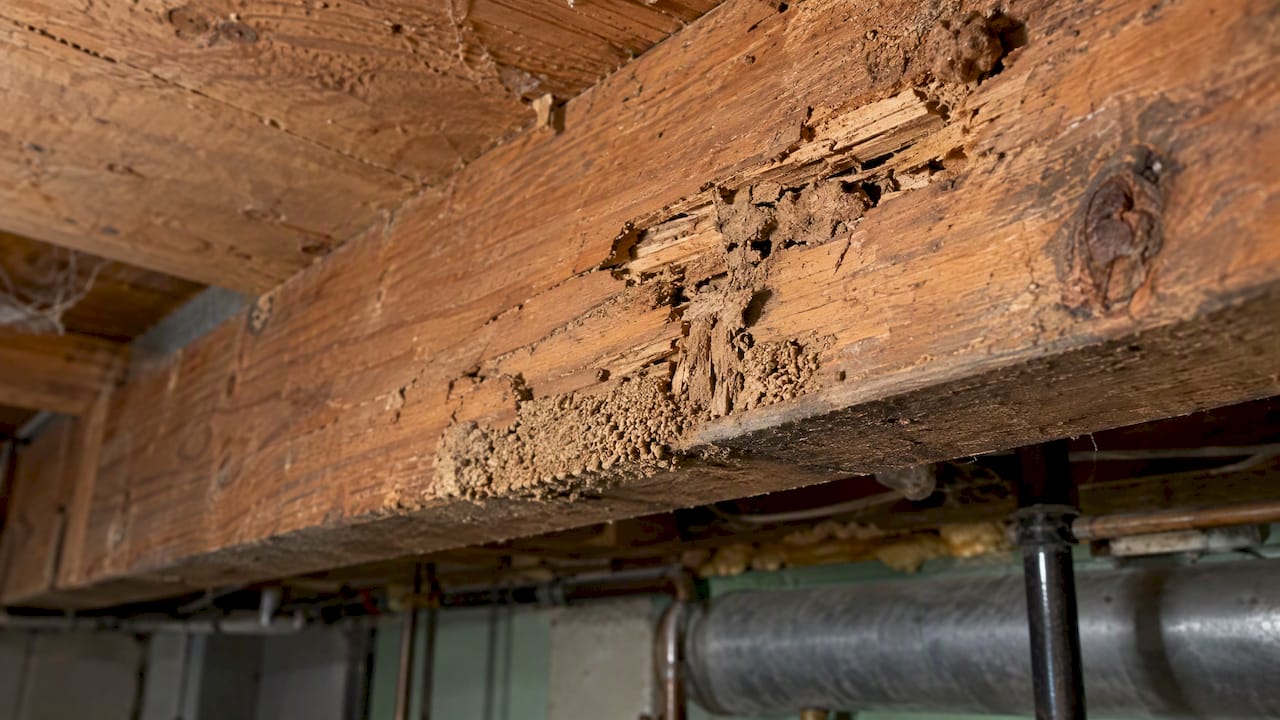
A typical termite or WDO inspection examines interior and exterior areas, including attics, basements, crawl spaces and garages. Per HomeGauge, that covers accessible interior spaces such as closets, baseboards, window frames and door frames, plus exterior cracks, crevices, mud tubes and damaged wood.
The signs the inspector is looking for are mud tubes, wood damage, frass (insect droppings) and live termites. The findings go into a report that can include recommended action and repair recommendations.
Expect the visit to take a while for a larger house. If someone is done in ten minutes, ask what they covered.
Can you inspect for termites yourself?
You can spot some signs, but they may not be readily visible. A walk around the foundation and a flashlight check of the basement is worthwhile for any homeowner. A termite inspection checklist can help you know what to look for in the first place.
But a DIY check does not produce a document a lender or buyer will accept, and it will not see inside walls or under insulation. Use it to decide whether to call someone, not to replace the call. Our guide to what inspectors look for in a home shows the wider picture.
Inspection cost vs. treatment cost
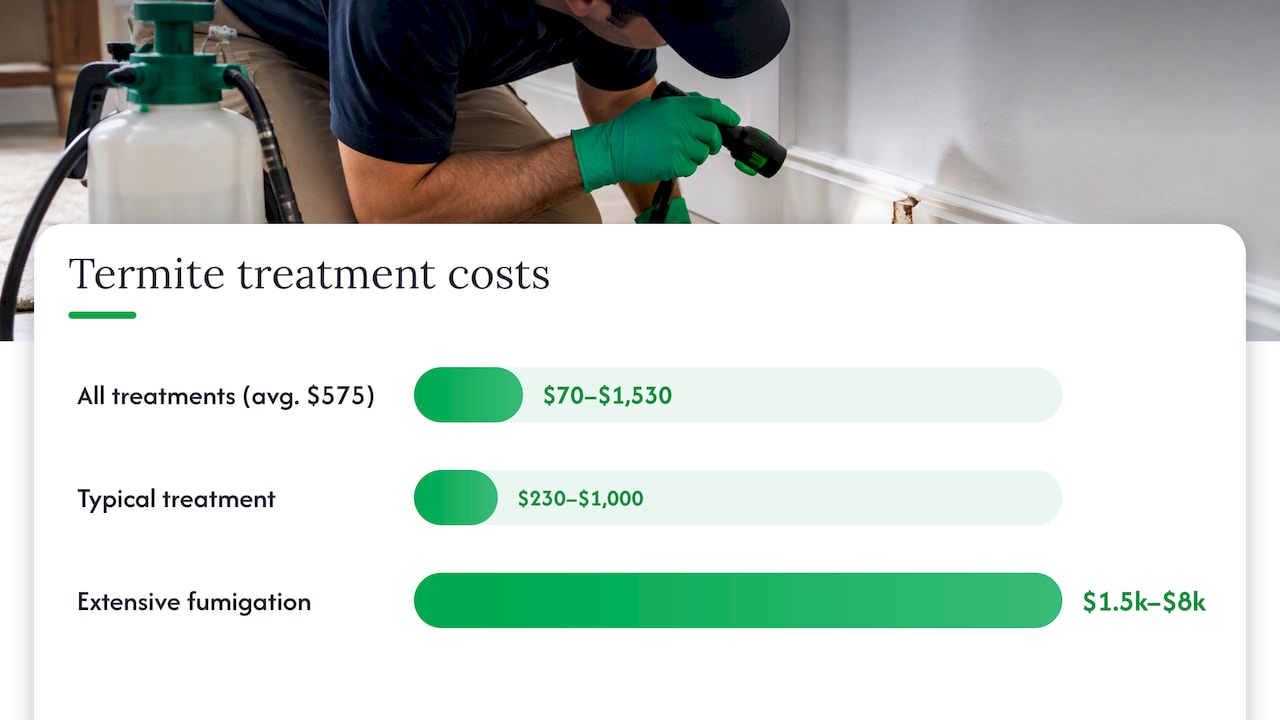
The inspection price is small next to what comes after a positive finding. Inspection identifies evidence and scope. Treatment is priced separately. Forbes reports treatment at $70 to $1,530 per treatment, averaging $575. HomeAdvisor’s figures, as reported there, run $230 to $1,000 for typical treatment and $1,500 to $8,000 for extensive fumigation.
That is why a $100 to $200 report is cheap insurance on a purchase. The report gives you something concrete to negotiate with: a repair credit, a seller-paid treatment or, in the worst case, a reason to walk away. If the report turns up something, a post-inspection consultation is the place to turn those findings into a request for the seller.
Our perspective
We inspect homes in the St. Louis Metro area and Southern Illinois, and termite findings are one of the most misunderstood parts of a purchase. Buyers see a low price online and assume the report is a formality. Then a lender asks for it, a seller disputes it, or it turns up a repair that was never in the budget.
Our view is simple. Order the WDO or termite inspection early, at the same time as the home inspection, so the results land while you can still negotiate. Ask what is included, and which areas the inspector could not reach. Do not pick a provider on price alone, and be careful with a “free” inspection when the company doing it sells the treatment.
We return reports within 24 hours, so your agent can act on findings quickly. We also work with first-time buyers, low-income families and veterans, and we offer discounts for veterans and first-time buyers. Our Create Request List™ tool turns what we find into a clear list your agent can send to the seller. For some services we can arrange payment at closing, so ask when you book.
— JOHN
Get a WDO or termite inspection with your home inspection
We offer WDO and termite inspections alongside buyer’s inspections, mold, radon, sewer camera and septic or well work. You can book in person or with a video walkthrough, and evening and weekend appointments are available for busy schedules. Look at our inspection services and ask for a quote for your property.

Want the termite report and the home inspection handled together? Tell us the address and your closing timeline, and we will build the schedule around it.
How to keep the cost down without cutting corners
- Bundle. Schedule the termite or WDO report for the same visit as the home inspection, so the inspector is already on site and you avoid a second trip.
- Clear access. If you are the seller, move stored items away from basement walls and crawl space entries. Blocked areas mean a report with exceptions.
- Ask what the report is for. A lender-ready report and a homeowner check are different. Pay for the one you need.
- Get the scope in writing. Confirm whether outbuildings, decks and fences are included.
- Get a second quote on treatment. Not on the inspection, but on any treatment bill the inspection leads to.
- Know what is negotiable. In a purchase, a treatment bill or repair credit can usually be requested from the seller through the addendum process.
FAQ
How much does a termite inspection cost?
Most cost between $75 and $325, with reported averages of about $100 to $150. Real estate reports usually cost $100 to $200. Larger or harder-to-access homes cost more.
What is a WDO inspection?
A wood-destroying organism inspection checks a home for termites and other pests that damage wood, like carpenter ants and wood-boring beetles. It results in a written report that lenders and agents accept. It is broader than a basic termite check.
Is a termite inspection included in a home inspection?
Not necessarily. A standard home inspection covers visible and accessible systems and may not include wood-destroying insects. Ask for a separate WDO or termite inspection when you book.
Who pays for a termite inspection when buying a house?
Unless the contract says otherwise, the buyer typically pays. Some deals have the seller cover it, and VA loans have their own rules. Confirm with your agent and lender before ordering.
Are termite inspections ever free?
Often, yes, for homeowners checking for active infestation. These are usually tied to a treatment quote and may not be a formal report for a sale.
Sources
- How Much Does A Termite Inspection Cost? – Forbes Home
- Termite Inspections: Everything You Need To Know – This Old House
- Termite Inspections: Cost and What to Expect – U.S. News Real Estate
- How Much Does a Termite Inspection Cost? – Realtor.com
- Home inspections guide – U.S. Army
- Guide to Termite Inspections – HomeGauge
- How Much Does a Pest Inspection Cost? – HomeGuide
Recent Comments