
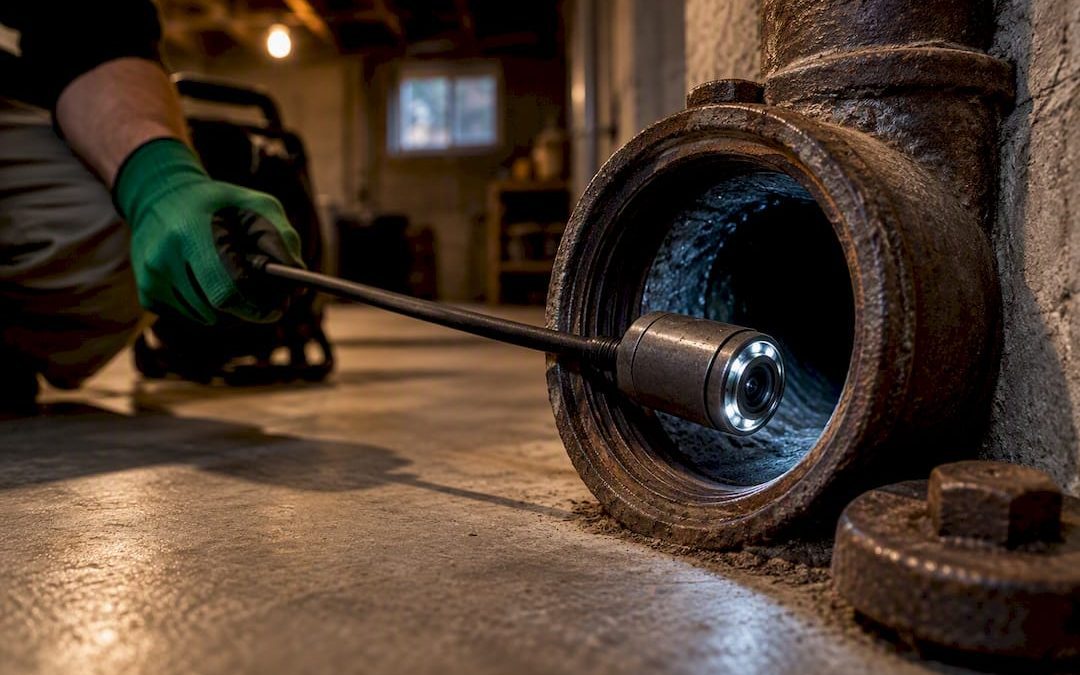
A cast iron drain pipe’s age alone doesn’t mean it needs replacing. What matters is condition. If you’re seeing recurring backups, sewer odor indoors, or visible rust weeping from a stack, that’s an urgent signal, not a wait-and-see one. For everything short of that, the right move is a sewer camera inspection, which tells you whether the fix is cleaning, lining, or full replacement before you spend a dollar on any of them.
TL;DR:
- Pipe condition determines urgency; recurring backups, sewer odors, or rust signals require immediate repair, not waiting or guessing.
- A sewer camera inspection provides detailed footage and reports, distinguishing between minor buildup and structural damage like cracks or channeling.
- Descaling or hydrojetting can restore flow if the pipe wall is sound, but advanced issues such as channeling or graphitization may require lining or full replacement.
- Replacement options vary from trenchless methods like pipe lining or bursting to open-cut excavation, with costs influenced by depth, length, and access issues.
- Regular inspections are crucial before home purchases or renovations, especially for homes with original cast iron, to avoid costly mistakes and over- or under-repairing.
Table of Contents
- How Long Do Cast Iron Drain Pipes Last?
- What Are the Warning Signs of a Failing Cast Iron Pipe?
- What Does a Sewer Camera Inspection Show?
- Repair or Replace? Matching the Fix to the Damage
- What Do Cast Iron Pipe Repairs Typically Cost?
- When Should You Call a Professional?
- Why Camera-First Inspection Beats Guessing
- Monitor or Replace? An Editorial Take
- Get a Sewer Camera Inspection Before You Guess
- Sources
- FAQ
How Long Do Cast Iron Drain Pipes Last?
Cast iron sewer pipe lifespan typically falls between 50 and 100 years, though the low end of that range is more common once you factor in real-world conditions rather than lab specs. Soil chemistry, groundwater, and how well the joints were sealed at installation all push that number up or down, sometimes by decades.
What shortens the life of cast iron plumbing:
- Internal corrosion from waste chemistry, especially in homes that ran a garbage disposal hard for years
- Acidic or highly conductive soils that eat away at the pipe’s exterior from the outside in
- High groundwater tables that keep the pipe wet and accelerate rust
- Root intrusion at joints, particularly in hub-and-spigot sections with aging gaskets
- Poor original joint work, which creates weak points long before the pipe itself fails
What extends it: careful installation, dry and stable soils, and waste patterns that don’t dump grease or harsh chemicals down the line year after year.
This is also why modern residential construction has largely moved to PVC or ABS for drain, waste, and vent lines. Plastic is lighter, cheaper, easier to repair, and far less prone to internal corrosion than cast iron. Cast iron still has real advantages, mainly sound dampening and fire resistance, which is why code still allows it and manufacturers still produce it under CISPI 301 and related ASTM A888/A74 standards. But nobody’s ripping out sound plastic drain lines to install cast iron today.
What Are the Warning Signs of a Failing Cast Iron Pipe?
Some signs you can catch from inside the house. Others only show up once the damage is advanced. Here’s how to triage what you’re seeing:
- Chronic slow drains or repeat clogs in multiple fixtures. One slow sink is a local clog. Several slow drains across the house, especially on the lowest level, points to a shared line problem.
- Sewer smell indoors, particularly near floor drains or basement stacks. This usually means a joint has opened up somewhere and gas is escaping instead of venting properly.
- Rust staining, flaking, or dampness around exposed cast iron stacks. By the time you can see rust on the outside, corrosion has usually been working on the inside longer.
- Gurgling toilets or drains when another fixture runs. That’s often a sign of a partial blockage or a bellied section holding water.
- Backups that show up after heavy rain. This suggests root intrusion or a cracked line letting groundwater in, which overwhelms the pipe’s capacity.
- Foundation cracks or unexplained damp spots near where the sewer line runs. A leaking underground line can erode soil support and cause settling.
DIY checks can confirm something’s wrong, but they can’t tell you how bad it is underground. A magnet will stick to cast iron pipe but not plastic, which helps with identifying what you’re dealing with, but it won’t show you wall thickness or a hidden crack three feet under your yard. Any of the symptoms above, especially odor plus recurring backups, is your cue to book a camera inspection rather than keep plunging and hoping.
What Does a Sewer Camera Inspection Show?
A sewer camera inspection sends a waterproof camera on a flexible cable through the line, recording continuous video while a technician notes footage locations for anything unusual. You get a video run, still images at problem points, and a written report tying each observation to a distance from the cleanout. This is the reliable way to assess the condition of an aging cast iron line, and it’s far more informative than guessing based on the pipe’s age.
Inspectors trained in NASSCO’s Pipeline Assessment and Certification Program (PACP) use a standardized vocabulary to describe what the camera sees:
- Scaling or tuberculation: mineral buildup on the pipe wall, often reversible with cleaning
- Channeling: a worn trough along the pipe’s bottom from years of flow, a structural issue, not a cleaning one
- Graphitization: the iron has corroded chemically, leaving a brittle graphite shell that looks solid but crumbles under pressure
- Cracks, offsets, and bellies: physical damage or sagging sections that hold standing water
Heavy scale with a sound wall behind it usually means descaling solves the problem. Channeling or generalized graphitization means the pipe has lost structural integrity, and cleaning won’t fix that.
Camera inspection costs vary depending on line length and access. Insist on getting the actual video file plus a written condition report, not just a verbal summary. A detailed cost breakdown can help you budget before you call anyone out.
Repair or Replace? Matching the Fix to the Damage
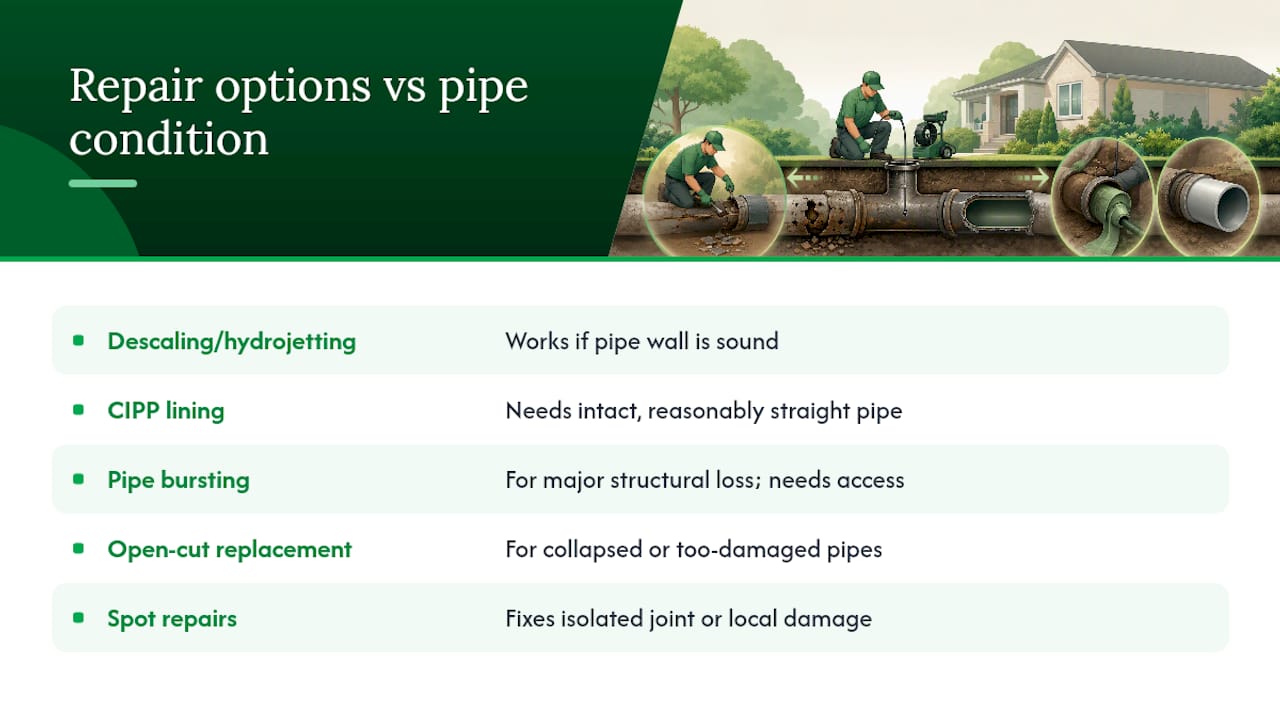
Once you have camera footage, the repair path usually becomes obvious. Here’s what each option actually does:
Descaling and hydrojetting blast mineral buildup and grease off the pipe wall using high-pressure water. It restores flow fast and costs little compared to structural work, but it’s only a real fix when the camera shows the pipe wall itself is sound. If channeling or graphitization caused the flow problem, descaling buys you a few months at best before the same symptoms return.
CIPP lining (cured-in-place pipe) inserts a resin-saturated liner into the existing pipe and cures it in place, creating a smooth, jointless interior surface. It works well when the host pipe retains enough structural integrity and is reasonably straight. Bellied sections or heavily offset joints can make lining difficult or impossible.
Pipe bursting replaces the old pipe with new material by fracturing the original and pulling a new line through the same path. It works for lines with significant structural loss, but it needs adequate clearance from other utilities and a relatively accessible run.
Open-cut replacement means digging up the yard, driveway, or basement floor to install new pipe. It’s the most disruptive and expensive option, but it’s the only reliable choice for collapsed pipe or lines too damaged for any trenchless method.
Spot repairs and joint sealing fix isolated problems, like one bad joint, without touching the rest of the line. Cost effective, but limited to situations where the damage is truly contained.
Pro Tip: Ask your contractor to re-run the camera after any cleaning or repair work. A follow-up inspection confirms the fix actually worked instead of just moving the problem downstream.
What Do Cast Iron Pipe Repairs Typically Cost?
Camera inspections generally cost a few hundred dollars, depending on line length and access difficulty. Hydrojetting and descaling for a typical residential line often lands in a similar range, sometimes higher for heavy buildup or long runs. CIPP lining is usually priced per linear foot, and pipe bursting follows the same per-foot model, though total cost depends heavily on pipe diameter, depth, and access points. Open-cut replacement is the most expensive path because it includes excavation and restoration on top of the pipe work itself.
A few things push any of these numbers up:
- Deeper burial depth, which means more excavation or longer trenchless runs
- Landscaping, driveway, or garage slab restoration after open-cut work
- Permit requirements, which vary by jurisdiction
- Multiple access points needed for long or bent runs
Most jobs follow the same sequence: inspection first, then cleaning or lining or excavation, then a follow-up camera check to confirm the work held.
When Should You Call a Professional?
- Call immediately if you have recurring backups, standing sewage, or a persistent sewer smell indoors. These aren’t monitor-and-wait situations.
- Schedule an inspection soon if your home has original cast iron and you’ve never had the line scoped, especially before a big renovation or a home purchase.
- Ask contractors specific questions: Do they provide camera footage and a written report? Are they familiar with PACP-style notation? Can they do trenchless work if needed? What warranty backs the repair, and are they insured?
- Prepare a written scope before getting quotes, including pipe material, length, access points, and the camera findings, so every bid addresses the same job.
- Watch for red flags: a quote with no mention of camera findings, pressure to sign same-day, or a bid dramatically lower than others with no explanation for the gap.
A maintenance inspection checklist helps you walk into these conversations with the right questions already answered.
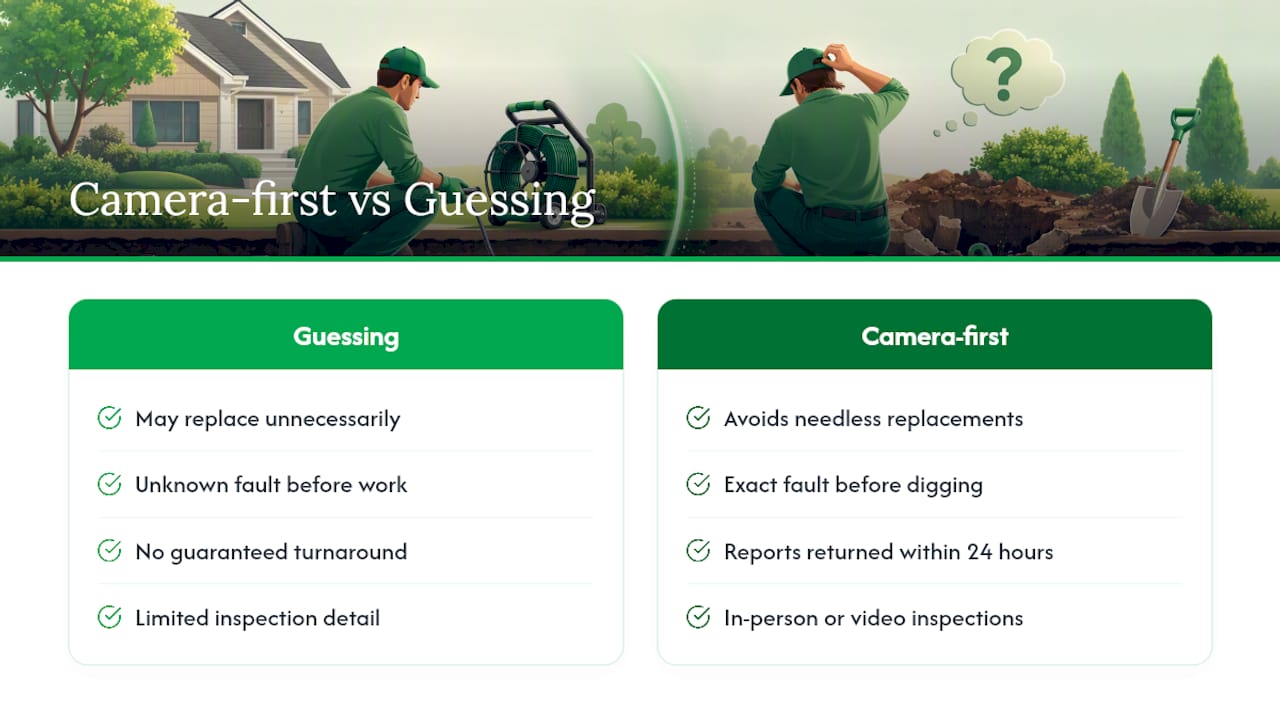
Why Camera-First Inspection Beats Guessing
Replacing a line that only needed descaling wastes thousands of dollars. That’s the entire case for camera-first diagnostics: it tells you exactly what’s wrong before anyone starts digging or quoting. Reports are built around this principle, with findings returned within 24 hours and offering both in-person and video inspection options, including tools that help buyers and agents coordinate repairs based on the report.
Monitor or Replace? An Editorial Take
Most homeowners overcorrect in one direction or the other, either ignoring an aging line until it fails or replacing pipe that had years of service left. The camera footage should make that call, not the pipe’s birth year. If the walls are sound, monitor and maintain. If you see channeling or graphitization, stop deferring and get quotes for replacement before a collapse forces the decision at the worst possible time.
— JOHN
Get a Sewer Camera Inspection Before You Guess
This service provides a video record of the line’s condition, along with a written report typically delivered within 24 hours, which can be helpful when comparing repair quotes or negotiating during a home purchase.

If you’re buying a home with an older cast iron system, add a sewer scope inspection to your standard inspection package rather than treating it as an afterthought. The service caters to buyers, sellers, and investors in the St. Louis Metro area and Southern Illinois, offering evening and video-inspection scheduling options to accommodate various schedules. Visit the inspection services page to see what’s included and book your sewer camera inspection before your next closing date locks in.
Sources
CISPI 301 and ASTM standards cover cast iron manufacturing; camera inspection and PACP guides explain grading and trenchless repair options.
- The 5 Types of Plumbing Pipes (NEIT blog)
- Sewer inspection: when buying a house — what you need to know (USA Borescopes)
- CISPI 301-18: Standard Specification for Hubless Cast Iron Soil Pipe and Fittings
- How long do cast iron sewer pipes last? (NW Sewer)
- Pipe relining benefits for old cast iron pipes (NuFlow)
FAQ
Should Cast Iron Drain Pipes Be Replaced?
Not automatically. Replacement makes sense when a camera inspection shows channeling, graphitization, or structural cracking, but pipe with intact walls and only mineral buildup often just needs cleaning.
How Long Will a Cast Iron Drain Pipe Last Underground?
Cast iron sewer pipe typically lasts 50 to 100 years depending on soil conditions, water table, and installation quality. Aggressive soil or poor drainage can push failure toward the lower end of that range.
What Are the Downsides of Cast Iron Plumbing?
Cast iron is heavier and harder to work with than PVC or ABS, and it’s more vulnerable to internal corrosion over time, which is why modern construction favors plastic for new drain, waste, and vent lines. Repairs also tend to cost more since fewer plumbers regularly work with it.
Can You Still Buy Cast Iron Pipes?
Yes. Cast iron soil pipe is still manufactured under CISPI 301 and ASTM A888/A74 standards and remains code approved, mainly used where sound dampening or fire resistance is a priority.
How Much Does a Sewer Camera Inspection Cost?
Camera inspections generally run in the low hundreds of dollars depending on line length and access difficulty. Current pricing details are available on the Jhunthomeinspections sewer camera page.
Recent Comments