
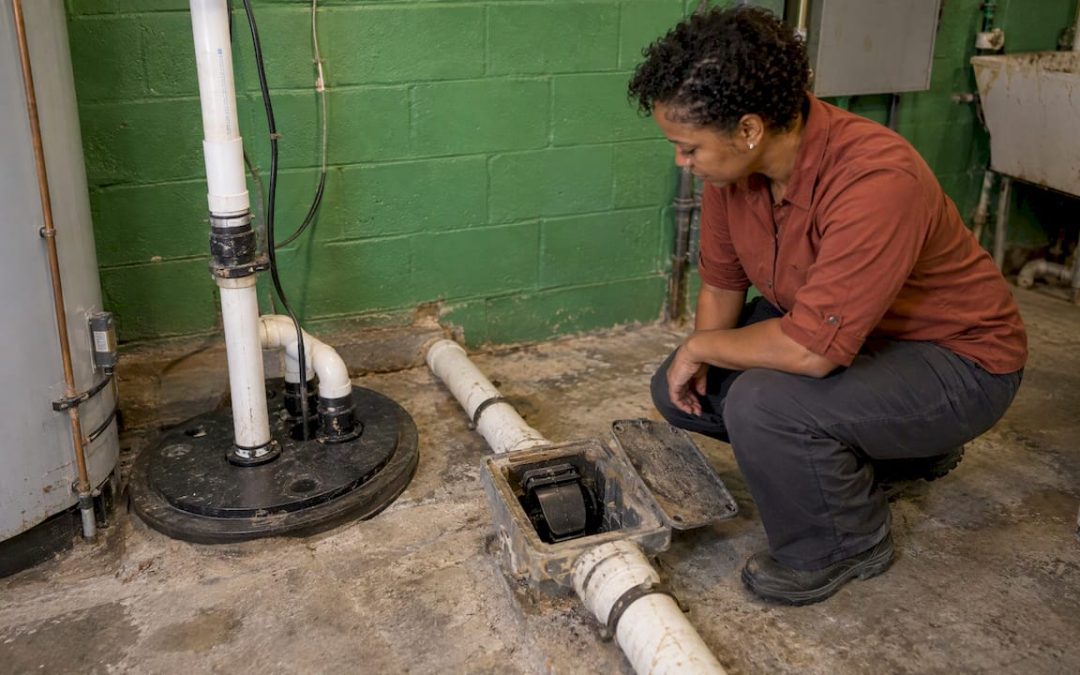
A sump pump and a backwater valve guard a basement against two different kinds of water. A sump pump removes groundwater that collects under or around the foundation. A backwater valve keeps sewage from flowing back up through your drains when the city sewer overloads. One does not replace the other, and many basements need both. If you are buying a home, a buyer’s home inspection is where you find out which of these devices the house has and whether they work.
TL;DR
- A sump pump handles groundwater from footing drains and soil. A backwater valve handles sewage pushed back from a surcharged sewer line.
- A check valve on the sump pump discharge line is a different part from a backwater valve. The first protects the pump, the second protects the house drains.
- If a basement has floor drains, a toilet or a shower below street level, ask whether a backwater valve is present and accessible.
- Both devices need maintenance: test the pump a couple of times a year and keep the valve reachable for cleaning.
- Local code decides what is required, so confirm details with your inspector and a licensed plumber.
Table of Contents
- Two kinds of basement water, two different fixes
- What a sump pump does
- What a backwater valve does
- Check valve vs. backwater valve
- Which one does your house need?
- What codes generally require
- Signs of trouble to look for
- Keeping the pump running in a storm
- Checking both devices before you buy
- Our approach to inspecting these systems
- Book an inspection that covers both
- Perspective
- FAQ
- Sources
Two kinds of basement water, two different fixes
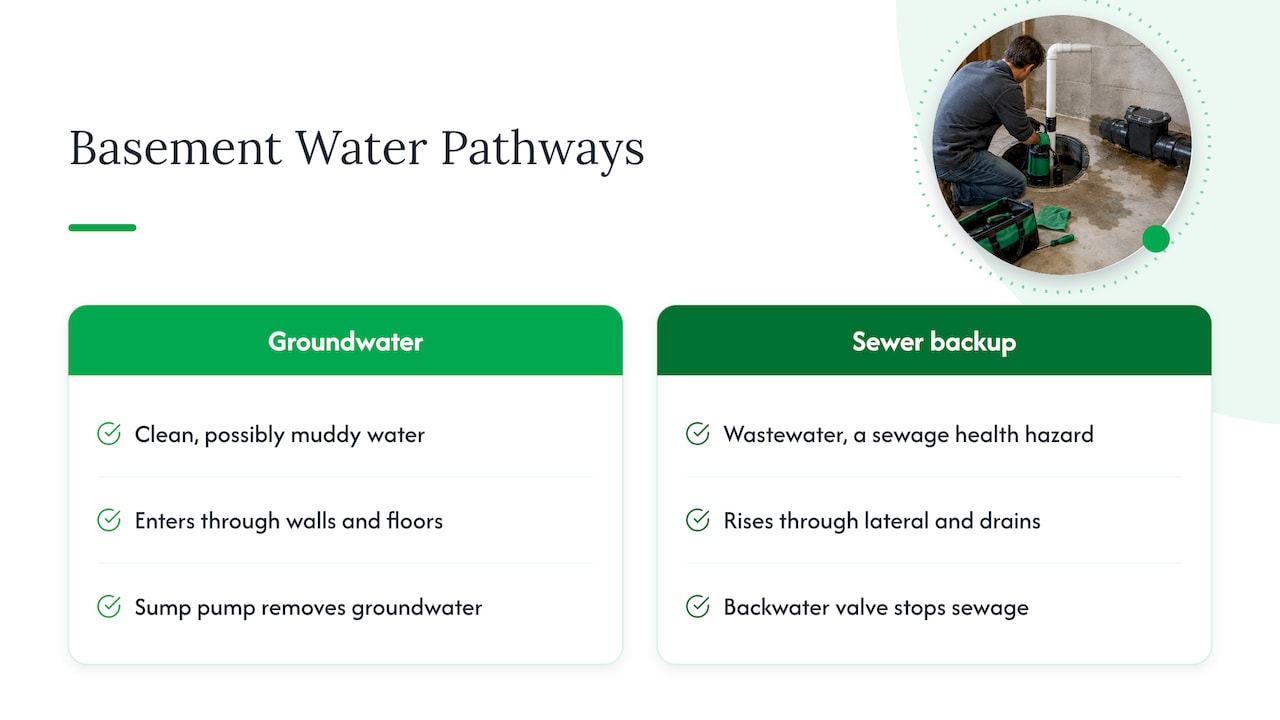
Basement flooding comes in two forms. One is groundwater or surface water seeping in. The other is sewer backup, when the municipal sewer cannot carry the flow during heavy rain and wastewater comes up the lateral and out of the lowest drain. A plumbing training course describes the difference this way: the first is clean, if muddy, water, and the second is a sewage health hazard.
That is why the two devices are not substitutes. A sump pump does nothing to stop sewer water entering through drains, and a backwater valve does nothing about groundwater coming through walls and floors. The same heavy storm can cause both problems at once, which is why many homes need both.
What a sump pump does
A sump pump sits in a pit, called a sump or crock, in the lowest part of the basement or crawl space. Foundation drains (footing drains or weeping tile) feed groundwater into that pit. When the water reaches the switch’s on level, the pump starts and sends it out through a discharge pipe. The American Society of Home Inspectors describes the setup as a pit, a pump, pipes that carry the water away from the foundation and a one-way check valve that keeps it from returning.
A few details matter in a well-built system:
- The discharge should go to a storm sewer where the municipality permits it, or to a dry well away from the foundation, according to the Building America Solution Center.
- The pit should have an airtight cover so soil gases such as radon do not enter the home. If radon is a worry, our guide to the dangers of radon in the home explains why testing matters.
- Most areas do not allow sump discharge into the sanitary sewer, since clean groundwater overwhelms treatment plants during storms.
What a backwater valve does
A backwater valve is a one-way valve in the building drain or sewer line. Wastewater flows out normally. When sewage tries to flow back from a surcharged public sewer, the valve closes. Most designs use a hinged flap that floats shut on rising water, and the unit has an access cover at the floor or outside the structure, as the plumbing course notes.
While the valve is closed, nothing downstream of it can drain. Everything upstream, including sinks and toilets served by that line, backs up if used. Some installations put the valve only on the branch serving basement fixtures, so upper floors keep draining by gravity. The right layout depends on the building and local code.
Check valve vs. backwater valve
The two names get mixed up because both are one-way valves. They sit in different places and protect different things.
| Sump pump check valve | Backwater valve | |
|---|---|---|
| Location | On the pump’s discharge pipe | On the building drain or sewer line |
| Protects against | Water falling back into the pit when the pump stops | Sewage flowing back into the house |
| Water it handles | Groundwater | Wastewater |
| What happens if missing | Pump short-cycles and wears out | Sewage can come up basement drains |
Without a discharge check valve, water in the pipe drains back into the pit and re-triggers the pump within seconds. The Institute for Catastrophic Loss Reduction calls the check valve imperative and says it should be clamped, not glued, because it fails over time and needs replacing.
The federal Reduce Flood Risk guide uses the broader term backflow prevention device for valves that stop sewage or stormwater entering through toilets, sinks and other drains. It lists check valves, gate valves and flap valves, and notes that dual valves, which combine a check and a gate valve, are the most expensive option but the one most often recommended for buildings with repeated backflow flooding.
Which one does your house need?
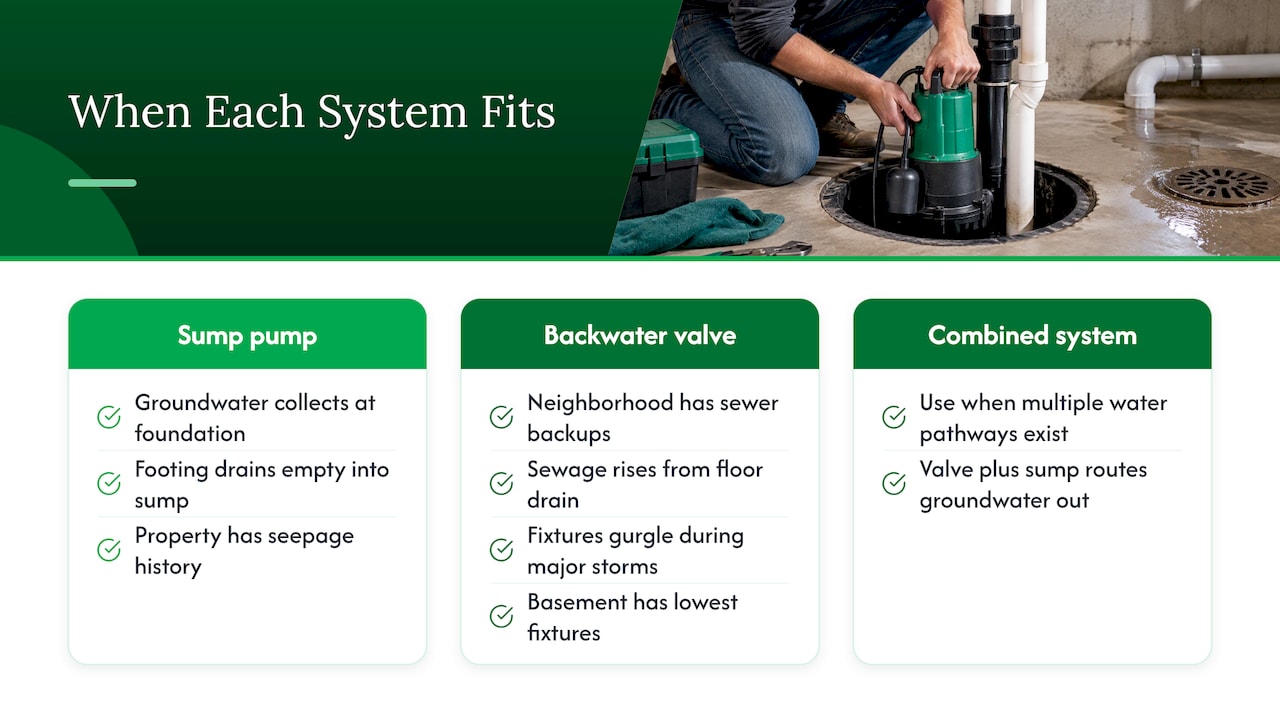
A sump pump fits when groundwater collects around the foundation, when footing drains empty to a sump basin, or when the property has a history of seepage. A backwater valve fits when the neighborhood has had sewer backups, when sewage has risen from a floor drain, when fixtures gurgle during major storms, or when the lowest fixtures are in the basement. These signs are laid out in one guide that also recommends combined systems where more than one water pathway exists.
There is one design trap. If the footing drains tie into the building drain upstream of a backwater valve, closing the valve traps groundwater and it can come up through the floor drain anyway. The usual fix is a valve on the building drain plus a sump that gives groundwater its own route out.
For a wider look at how water risk affects a purchase, this piece on checking flood risk before you buy covers the same principle: know every way water can reach the property before you commit.
What codes generally require
Codes vary by state and city, so treat these as examples, not a universal rule.
- Michigan’s residential code requires an accessibly located backwater valve for subsoil drains where a building is subject to backwater, and an accessible full-flow check valve on sump discharge piping.
- Nashville’s 2024 residential code has similar language.
- Ohio’s rule, effective March 1, 2024, requires a full-flow check valve on sump discharge, with a gate valve too in some buildings, and allows water-powered sump pumps only as a secondary backup.
- ASHI notes that building codes call for a GFCI outlet for the sump pump and that most areas require backflow preventers.
If you are in the St. Louis metro or Southern Illinois, ask your inspector what the local municipality expects and whether a plumber’s permit was pulled for any existing valve.
Signs of trouble to look for
Sump pump warning signs include a float that is stuck or water-filled, odd noises from a damaged impeller, oil in the pit from a broken seal, and debris blocking the intake screen, according to the ICLR booklet. Consumer Reports adds frequent cycling, excess vibration and constant running as signs the pump is undersized or worn, and notes that every sump pump eventually fails.
ASHI’s inspector guidance says to lift the float to confirm the pump switches on, which should happen when the float is eight to 12 inches from the top of the crock. A stuck check valve in the drain line can leave water backing up in the basement.
For backwater valves, the concerns are access and debris. Wipes and grease can hold the flapper open, which means no protection, and a valve buried under a slab with no access cover becomes a future excavation. Reduce Flood Risk says these devices should be installed by a licensed plumber and inspected regularly, and a sewer backup alarm can warn you when the valve closes.
If you want a sump pump look every year, see our post on whether you need a sump pump inspection annually.
Keeping the pump running in a storm
Storms often bring power outages, exactly when the pump is needed most. Backup options include:
- Battery backup. Consumer Reports calls it the most common choice. A 75 to 120 Ah battery allows several hours of intermittent pumping. North Dakota State University Extension advises checking the battery voltage every six months.
- Water-powered backup. It runs on municipal water pressure and needs no battery. One plumbing company reports about one gallon pumped for every two gallons of supply water.
- High-water alarm. It warns you when the pit rises faster than the pump can empty it.
The same Consumer Reports guide suggests testing the backup a few times a year by unplugging the main pump and filling the pit. The Village of River Forest, Illinois also recommends checking for obstructions and keeping a spare pump on hand.
Checking both devices before you buy
When you tour a house, look for a covered pit in the basement floor with a pipe running up and out. That is the sump. Then look for a capped access cover on the floor near a main drain or outside near where the sewer line leaves the house. That may be a backwater valve. Do not assume a round cover is one or the other, and do not assume a pump means the sewer is protected.
A sewer problem can also sit below the floor where you cannot see it. Our guides on sewer scope inspections and sewer cleanout locations explain how the line is checked and where access points usually are.
Our approach to inspecting these systems
We offer buyer’s inspections, sewer camera lateral inspections and re-inspections, with reports returned within 24 hours. That gives you time to put sump or sewer questions on your request list before your contingency window closes. Our inspection contingency guide explains how that deadline works.
Book an inspection that covers both
Hunt Home Inspection, LLC serves the St. Louis Metro area and Southern Illinois. We offer in-person and video inspections, evening and weekend scheduling, and discounts for veterans and first-time buyers. Our Create Request List™ tool helps buyers and agents stay on the same page about what to ask the seller to fix. You can add a sewer camera lateral inspection to a buyer’s inspection to see the drain line as well as the basement.

See all inspection services or visit our home page to schedule.
Perspective
Most buyers ask us about water in the basement as if it were one problem. It is two. We walk the house with that in mind: where does groundwater go, and where does sewage go if the city line backs up?
A sump pump with a healthy float and a clean discharge line is only half of the answer. If the lowest floor drain ties into a sewer with no backwater protection, that pump will not save the basement in a sewer surcharge. And a valve with no access cover or a footing drain tied in upstream of it can fail the same way.
That is why we offer sewer camera lateral inspections and re-inspections alongside the buyer’s inspection, and why we build the request list around what we find. A first-time buyer or a veteran on a tight budget should know about these items before closing, not after the first big storm.
JOHN
FAQ
Do I need a backflow preventer on a sump pump?
You need a check valve on the discharge line, and most codes require it. It stops water from falling back into the pit when the pump shuts off. This is separate from a backwater valve on the sewer line.
Can a sump pump discharge into the sewer?
In most U.S. jurisdictions, no. Clean groundwater can overwhelm sewage treatment during storms, so discharge usually goes outdoors or to a storm system where permitted. Confirm local rules with your municipality or a licensed plumber.
Is a check valve the same as a backwater valve?
No. A check valve is a simple one-way valve, often on the sump pump discharge pipe. A backwater valve is installed in the building sewer line and closes when sewage flows backward. Both are one-way valves, but they protect different things.
Can I use a house with a backwater valve during a sewer backup?
Not on the protected line. While the valve is closed, fixtures upstream cannot drain, so stop using water until the surcharge passes. Some layouts let upper floors drain separately.
Sources
- Sump pumps, sewage ejectors and backwater valves, HSM University
- Sump Pump Systems: Practical Information and Tips for Inspections, ASHI
- Keeping Basements Dry, ASHI
- Drain or Sump Pump Installed in Basements or Crawlspaces, Building America Solution Center
- Sump Pump Drain: Discharge Lines, Codes & Fixes
- Sump Pump vs Backwater Valve: Which Do You Need
- Sump Pumps, Check Valves and Backwater Valves
- Backwater Valve vs Sump Pump
- Install a backflow prevention device, Reduce Flood Risk
- Sump pump systems, ICLR
- Sump Pump Backup System Buying Guide, Consumer Reports
- Electric Backup Sump Pumps for Houses, NDSU Extension
- Sump Pumps, Dor Mar Plumbing
- Groundwater Seepage, Village of River Forest
- Ohio Administrative Code 4101:3-11-01
- Michigan Residential Code 2015, Chapter 33
- Nashville and Davidson County Residential Code 2024, Chapter 33
- Flood Risk and Brisbane Property: How to Check Before You Buy
Recent Comments