
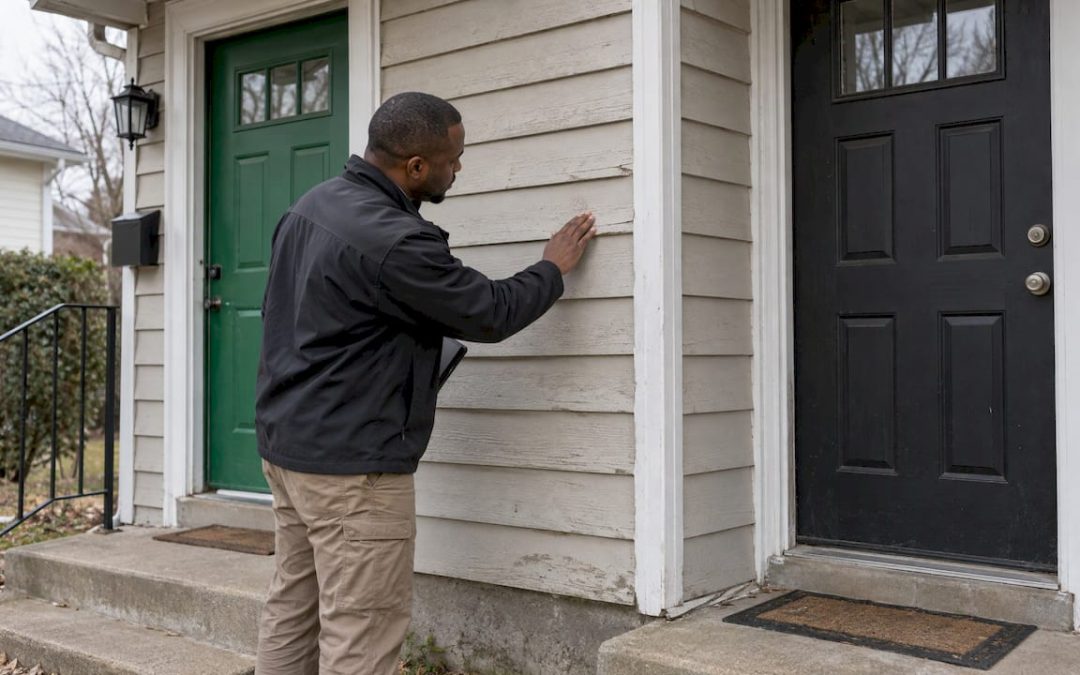
A duplex inspection is a home inspection that looks at both units and everything they share: the roof, foundation, shared wall, and often the sewer line, electrical service and utilities. You are buying two kitchens, two sets of mechanicals and one structure that ties them together, so the inspection needs more time and a sharper eye than a single-family visit. At Hunt Home Inspection, we serve the St. Louis Metro area and Southern Illinois, and we return reports within 24 hours so you can act inside your contingency window.
TL;DR
- A duplex inspection checks both units plus shared structure and systems. Expect a longer visit and a higher fee than for a single-family home, because each unit has its own equipment.
- One estimator puts a 2,400 sq ft duplex at about $592, with an extra fee for the second unit. Your local price depends on size, age and add-ons.
- Sewer scope, radon, termite and mold testing are separate services. Decide on them before the inspection, not after.
- Walk the inspection with the inspector, and plan for access to both units if one is tenant-occupied.
- Use the report as a negotiation tool: safety and structural items first, cosmetic items on your own budget.
Table of Contents
- What a duplex inspection covers
- How long it takes and when you get the report
- What a duplex inspection costs
- Add-ons that matter in a duplex
- Duplex red flags to watch for
- How to prepare for the inspection day
- Using the report before closing
- Our approach to duplex buyers
- Book a duplex inspection with Hunt Home Inspection
- FAQ
- Sources
What a duplex inspection covers
A duplex is one building with two dwelling units, side by side or stacked. A standard inspection looks at the visible, accessible parts of the home: roof, exterior, foundation, attic, plumbing fixtures, electrical panels, heating and cooling, and interior surfaces. In a duplex that list repeats for each unit, then adds the shared elements.
In each unit: kitchen and bathroom plumbing, water heater, furnace or HVAC, electrical panel, outlets, windows, doors, flooring, smoke and carbon monoxide alarms.
Shared by both: roof and gutters, exterior walls, foundation or crawl space, the wall between the units, any common attic, the driveway and grading around the building, and often a single sewer lateral (the pipe that carries waste from the building to the street).
The shared wall deserves attention. It affects fire separation, noise, and where moisture or pests can travel from one unit to the other. If a defect in your unit seems to come from the neighbor’s side, an ASHI Reporter article quotes an Illinois inspector explaining that inspectors are not responsible for investigating the adjacent unit. When a defect is visible, the client should be told to bring in a specialist to investigate it fully. That is the right approach, and it is why a duplex buyer should have access to both sides.
For a closer look at the basics, see our guide to what inspectors look for in a home.
How long it takes and when you get the report
A standard inspection of a single-family home takes three to four hours, according to Zillow’s guide. A duplex adds time, because the inspector repeats the interior and mechanical checks for the second unit. A 2026 process guide puts on-site inspections at two to four hours for a typical home, and a duplex will run toward the long end or beyond. Plan your day around it.
The report matters as much as the visit. Your inspection contingency, the clause in your contract that lets you negotiate or walk away after the inspection, is short. Zillow describes a typical 5 to 10 days to inspect and request repairs in writing. Every day you wait for a report is a day you do not have for contractor quotes.
We deliver reports within 24 hours. Our guide to the home inspection report timeline explains how that protects your contingency, and the page on the information in your home inspection report shows what you receive.
What a duplex inspection costs
Prices differ by market, size and age, so treat any national number as a frame, not a quote. Zillow’s guide says a standard home inspection costs between $250 and $700 depending on location and home size. For multi-unit buildings, inspectors commonly add a fee for each additional unit. One 2026 estimator shows a 2,400 sq ft duplex at about $592, built from a base fee plus $135 for the second unit. Each unit has its own kitchen, furnace, water heater and panel, which is why the fee rises.
What moves the price of your duplex inspection:
- Square footage and age. Larger and older buildings take longer.
- Foundation type. A crawl space or unfinished basement means more to inspect.
- Number of units. Duplex pricing rises over a single-family rate, and triplexes and fourplexes rise further.
- Add-on services. Radon, sewer scope, termite and mold are priced separately.
The buyer typically pays the inspector at the time of service. Zillow notes that it is not part of closing costs and cannot be rolled into the loan. For some services we offer payment at closing, which fits the timing of a real estate transaction. Ask us when you book. We also offer discounts for veterans and first-time buyers.
Add-ons that matter in a duplex
A standard inspection is visual and non-invasive. Zillow’s guide says the inspector will not look inside walls, chimneys, pipes or sewer lines, or behind electrical panels. iBuyer’s guide lists what typically calls for separate testing: sewer line camera scope, radon, mold air-quality testing, asbestos, termite and wood-destroying organism inspection, and structural engineering. In a duplex, several of these carry more weight.
| Add-on | Why it matters in a duplex | Typical cost range (2026 sources) |
|---|---|---|
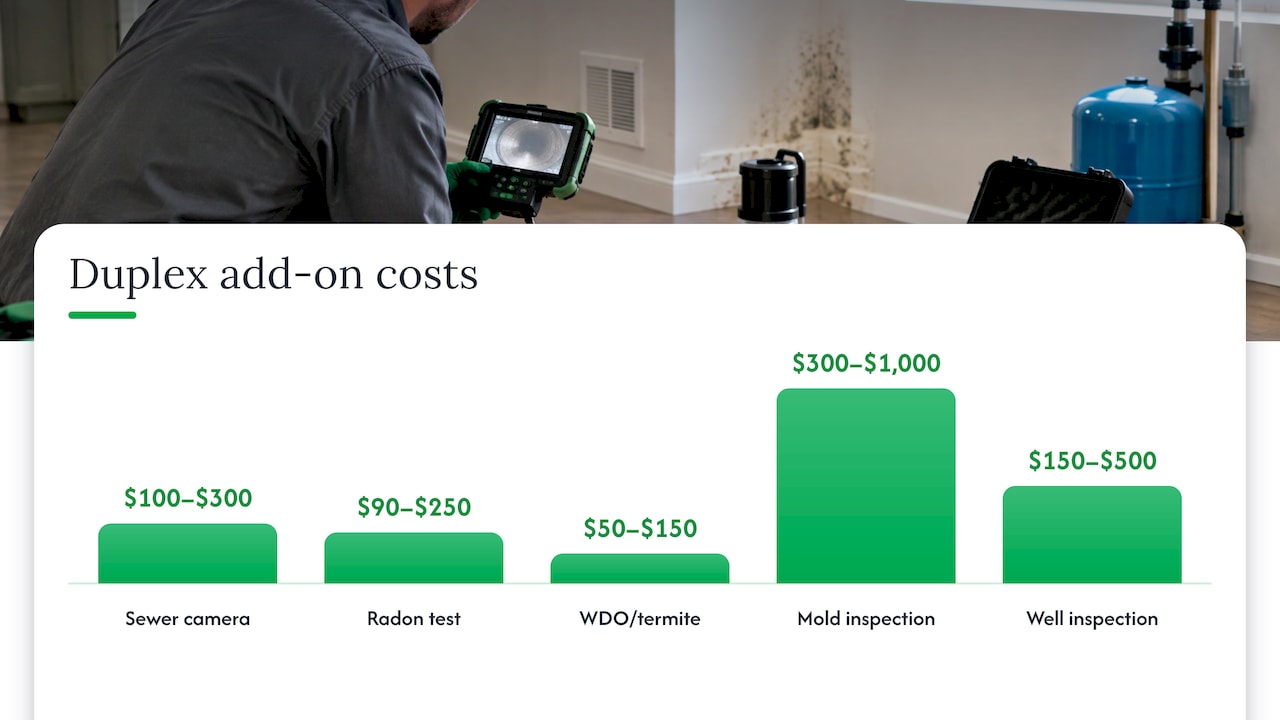
| Sewer camera lateral inspection | Two households usually share one lateral, so a failure affects both units | $100 to $300, with a failed lateral costing $3,000 to $25,000 to replace |
| Radon testing | Lower-level units sit closest to the soil | $90 to $250 professionally, EPA action level 4 pCi/L |
| WDO/termite inspection | Pests can cross the shared wall and structure | $50 to $150 |
| Mold inspection | Moisture in one unit can spread through shared walls and crawl spaces | $300 to $1,000 |
| Septic or well inspection | Rural and Southern Illinois duplexes may not be on city services | $150 to $500 for a well |
We perform each of these: sewer camera lateral inspections, radon testing, WDO/termite inspections, mold inspections, septic and well inspections, and environmental testing for lead, water and asbestos. Bundling them with the main inspection means one scheduling conversation and one set of reports. Our guides on sewer scope inspections, radon test duration and crawl space mold before closing help you decide which ones fit your building.
If the building has an old cast iron drain, the camera-first approach to cast iron drain pipes is worth reading before you commit.
Duplex red flags to watch for
Some problems matter more in a two-unit building because they affect both households and your income if you rent one side.
- Separate, mismatched systems. One unit has a new furnace and the other a 20-year-old unit. Each is a separate replacement bill.
- A single shared water heater or panel. This can cause disputes between units and may limit how you meter utilities.
- Moisture stains along the shared wall or ceiling. The source may be on the other side.
- Foundation cracks or uneven floors. A shared foundation turns one unit’s problem into both.
- Unpermitted conversions. An extra bedroom or kitchen added to one unit can bring electrical and egress problems.
- Sewer lateral problems. One camera pass can reveal roots, belly sections or cracked pipe that serve both units.
Our home inspection red flags list goes through the items that most often change a buyer’s decision.
How to prepare for the inspection day
A duplex adds logistics. These steps keep the day efficient.
- Book early. Zillow suggests scheduling the inspection within a week of going pending. Our fast scheduling guide shows how. We offer evening and weekend appointments for busy professionals, and video inspections when you cannot attend in person.
- Confirm access to both units. If one side is rented, your contract should allow entry, and tenants usually need advance notice. Build that lead time into your inspection window.
- Ask for paperwork on the rented side. For an occupied duplex, request leases, the rent roll, security deposit amounts and utility agreements.
- Decide on add-ons beforehand. Choose radon, sewer scope, termite and mold before the visit so everything happens in one day.
- Attend and ask questions. Zillow advises buyers to attend in person and call out anything they notice. Ask which items are safety issues, which are near the end of their life, and which are routine maintenance.
- Send your agent your list. Our Create Request List™ tool is built to streamline communication between buyers and agents after the inspection.
Our page on what to expect on inspection day walks through the visit step by step.
Using the report before closing
A report is not a pass or fail. It is the basis for your next decision. When a contract is contingent on inspection, the buyer can terminate if problems are found, or negotiate a price reduction, a seller credit or repairs before settlement, according to the Pennsylvania Association of Realtors. Your state’s forms and rules differ, so lean on your agent for the exact paperwork.
A practical way to sort the findings:
- Safety and structural items. One buyer guide treats these as non-negotiable: get them fixed or walk away.
- Major systems. Note each unit’s roof, furnace, water heater and panel by age and remaining life. Price replacements for both units, not one.
- Cosmetic and deferred maintenance. Budget for these yourself. The same guide warns that pushing on cosmetic items can lead the seller to refuse the significant ones.
For larger repairs, a California buyer guide recommends one or two written licensed-contractor estimates and a single organized request with the inspection pages and bids attached. A credit is often the strongest option, because you keep control of the repair.
If you are an investor, price the repairs against rent. A duplex where one unit needs a new furnace and the other needs a roof section has a very different cash flow than the listing suggests. We offer investor and mortgage consultations to help you read the numbers.
Our approach to duplex buyers
We see first-time buyers fall for a duplex because one unit’s rent can help pay the mortgage. That logic is sound, and it makes the inspection more important, not less. You are not only buying a house. You are buying a small rental business with a shared roof.
Our inspections come with a report within 24 hours, so you keep the time your contingency gives you. We hold NACA, ASHI and HUD 203k credentials, which matters for buyers using low-down-payment and renovation financing. We offer discounts to veterans and first-time buyers, because the buyers who most need a thorough look are often the ones with the least cushion for a surprise.
Our advice for a duplex: inspect both units, add the sewer scope and radon test, and send us your questions before the visit. We will walk you through what is urgent and what can wait.
JOHN
Book a duplex inspection with Hunt Home Inspection
We provide buyer’s inspections, sewer camera lateral inspections, radon testing, WDO/termite inspections, mold inspections, septic and well inspections, and environmental testing across the St. Louis Metro area and Southern Illinois. You can attend in person or join by video, and reports arrive within 24 hours. See all inspection services or start with the buyer protection inspection page.
If you are a lender or an agent working on a larger building, our multifamily inspection checklist lists the five areas we cover, and our commercial inspection page covers bigger properties.
FAQ
Is a duplex inspection different from a regular home inspection?
Yes. The inspector covers the same systems, but for two units, and adds the shared structure, the shared wall and common utilities. That means a longer visit and, in most markets, a higher fee.
How much should I budget for a duplex inspection?
Budget more than for a single-family home of the same size. One 2026 estimator shows about $592 for a 2,400 sq ft duplex. Add the cost of any sewer, radon, termite or mold services you choose. Contact us for a quote for your property.
Do I need to be there?
You are not required to attend, but it is worth it. You can ask questions, see problems yourself, and learn where each unit’s shutoffs and panels are. If you cannot be there, we can arrange a video walkthrough.
What if one unit is occupied by tenants?
Confirm that your contract gives access to both units and allow time for tenant notice. Ask the seller for leases and the rent roll, so your inspection and your financial review match up.
What should I do if the report shows major defects?
Sort them into safety, major systems and cosmetic items. Get written estimates for the big ones, then use your contingency to ask for a credit, a price reduction or repairs, or to walk away if the problems are too large.
Sources
- Apartment and Condo Inspections, American Society of Home Inspectors
- Home Inspections and Why They Matter, Zillow
- What Do Home Inspectors Look For?, iBuyer.com
- What Are Home Inspectors Not Allowed to Do?, iBuyer.com
- The Home Inspection Process: Step-by-Step Guide (2026)
- Home Inspection Cost Calculator: 2026 Price Estimate
- Negotiating the Change in Terms Addendum, Pennsylvania Association of Realtors
- Home Inspection in NC 2026: Buyers Due Diligence Guide
- Credit, Price Cut, or Repairs? How to Negotiate After a Home Inspection in California
Recent Comments