
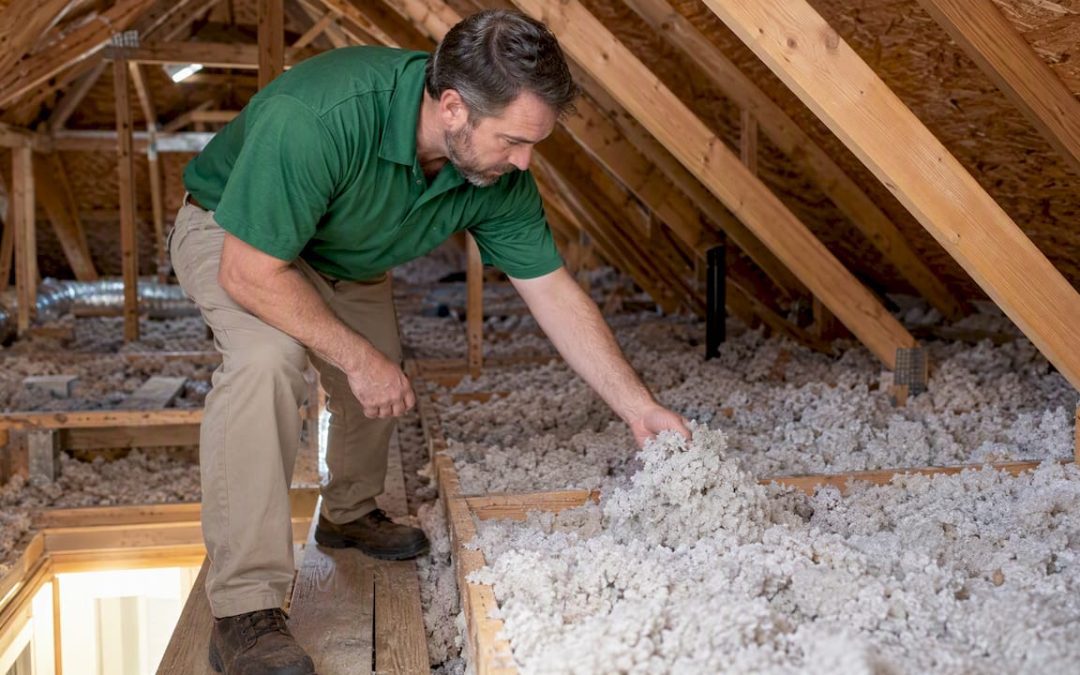
A quick look at your attic insulation tells you most of what you need to know: if the insulation sits at or below the top of the floor joists, you likely need more. Immediate red flags, high moisture readings, suspected vermiculite, exposed wiring, or visible structural damage, mean you should stop and call a qualified inspector rather than keep digging around up there. Measure depth in several spots, compare it to recommended levels, and act on what you find.
TL;DR:
- Measure insulation at several points, including eaves and knee walls; multiply inches by about three for a rough R value, then check your climate zone’s target.
- Compare wood moisture readings with a dry area; levels above roughly 17% to 20% suggest active moisture that should be addressed before adding insulation.
- Stop exploring and call a qualified professional if you find suspected vermiculite, exposed wiring, structural damage, heavy moisture, or unsafe access.
- Fix leaks, pest damage, structural problems, and air leaks before adding insulation; otherwise, new material can hide defects without correcting their cause.
Table of Contents
- Tools, Safety, and Prep Before You Climb Into the Attic
- What to Look for From the Hatch or a Shallow Entry
- Measuring Insulation Depth and Estimating Your R-Value
- Common Defects Behind Most Attic Insulation Problems
- When to Hire a Professional and What the Inspection Covers
- Inspector’s View: What Gets Missed and How to Prevent It
- How Hunt Home Inspection, LLC Can Help With Your Attic Insulation Inspection
- FAQ
- Sources
Tools, Safety, and Prep Before You Climb Into the Attic
A proper attic check takes a handful of tools and a few safety habits. Skip either one and you risk a bad reading or a twisted ankle through drywall.
- Bring a flashlight or headlamp, a tape measure or ruler, and your phone camera for documentation.
- An optional moisture meter helps you catch wet insulation before it becomes a mold problem.
- Wear an N95 or respirator if the space is dusty, plus gloves and head protection for low rafters.
- Stay on framing or attic platforms only, never on exposed drywall between joists.
- Shut off the breaker to any wiring that looks damaged or exposed before you get close to it.
- Bring a spotter if the attic access is tight or the footing looks unreliable.
If you suspect vermiculite, asbestos, heavy moisture, or a compromised structure, do not go further in. Document what you can see from the hatch and bring in a professional instead.
Pro Tip: Snap a photo of every spot you measure or flag. A professional can act on your findings faster when they already have the locations and images.
What to Look for From the Hatch or a Shallow Entry
Before you commit to crawling the full attic, a short visual pass from the access point often tells you whether you need to go further or call someone in.
- Check whether insulation fully covers the joists or sits below them, a sign of thin coverage.
- Look for dust streaks or dirty, flattened insulation, which usually points to air leaking through from below.
- Scan the eaves for gaps where insulation has pulled away or was never installed to the edge.
- Note any compressed or uneven patches, especially near storage platforms or walkways.
- Watch for droppings, chewed material, or nesting, which signal pest activity.
- Look for dark or wet stains on the insulation, roof deck, or rafters.
- Check that baffles at the eaves are not blocked and that soffit or ridge vents are clear, or consider installing a controlled ventilation fan like the AC Infinity AirTitan T7 to improve airflow.
- Note any roof deck staining that suggests long-term poor ventilation.
Photograph each issue and jot down where it is relative to the hatch, a vent, or a known joist line. That record is what a professional inspection will build on.
Measuring Insulation Depth and Estimating Your R-Value
Depth tells you almost everything about whether your attic meets current recommendations. Measure in several places, mid-span, near the eaves, and over any knee walls, since depth often varies across the same attic.
- Record the depth in inches at each spot, not just one average guess.
- For common materials like fiberglass, cellulose, or mineral wool, a rough rule of thumb is depth in inches multiplied by about 3 to estimate R-value, a method ENERGY STAR uses as a starting point for homeowners.
- Treat that number as an estimate only. Compressed or settled insulation won’t perform at its rated R-value even at the same depth.
Depth × 3 ≈ estimated R-value for common insulation types, according to ENERGY STAR. If your attic insulation sits at or below the level of the floor joists, that’s a visual cue you likely need more. Once you have your estimate, check it against the recommended attic R-value for your climate zone before deciding whether to top it off.
Common Defects Behind Most Attic Insulation Problems
Most attic insulation issues fall into a short list of repeat offenders, and each one changes what you should do next.
- Settling and compression cut effective R-value even when the material looks intact. Check back corners and areas behind storage platforms first, since these spots are often skipped during the original installation.
- Dirty or discolored insulation is a strong sign of air leakage. Insulation acts like a filter, trapping dust from air moving through gaps, according to a Building America air sealing report, and that leakage drives both energy loss and indoor air quality problems.
- Moisture needs a baseline reading in a dry area for comparison. Wood readings typically run 7 to 12% when dry; readings above roughly 17 to 20% point to active moisture that needs attention, per Building America guidance.
- Vermiculite insulation should be treated as a possible asbestos risk. The EPA advises against disturbing it and recommends hiring trained abatement professionals if removal becomes necessary.
Settling and compression are easy to miss because the insulation still looks like a continuous layer from the hatch. The thin spots are usually behind something, not out in the open.
Structural, pest, or water issues should be resolved before adding new insulation on top of them. Covering a problem doesn’t fix it.
When to Hire a Professional and What the Inspection Covers
Some situations call for a professional rather than a flashlight and a tape measure. Suspected asbestos or vermiculite, elevated moisture readings, visible rot, a buyer’s inspection ahead of closing, attics that are difficult to access safely, or any hint of electrical or combustion issues all belong on that list.
A professional attic inspection typically includes:
- Insulation depth measurements across multiple zones, not just one spot check.
- A ventilation evaluation covering soffit and ridge vents, baffles, and airflow patterns.
- An air-sealing review at penetrations like recessed lights, plumbing chases, and the attic hatch itself.
- Moisture testing with a calibrated meter and documented baseline readings.
- Observations on pest activity, structural framing, and combustion safety where relevant.
Deliverables should include a written report with photos, a prioritized list of what to fix first, and documentation such as an attic card or installer record if insulation work follows. Our inspection reports are returned within 24 hours, which matters when a closing date or repair decision is waiting on the findings.
Pro Tip: Ask any inspector whether their scope includes a moisture baseline reading, not just a visual pass. That one detail separates a thorough attic inspection from a quick glance.
Inspector’s View: What Gets Missed and How to Prevent It
The misses that come up again and again are quiet ones: insulation compressed flat under an attic platform, or a void hiding behind a knee wall where nobody thought to check. Sealing penetrations around the hatch and wiring chases before adding insulation prevents a lot of this. Insulating the attic hatch itself is one of the most skipped steps, and it’s an easy fix. Avoid stacking boxes directly on insulation where you can help it, and always document a problem with a photo before any repair work covers it up.
For readers who want a professional set of eyes on all of this, proprietary tools, video inspection options, and rapid report turnaround make it straightforward to get documented answers fast.
— JOHN
How Hunt Home Inspection, LLC Can Help With Your Attic Insulation Inspection
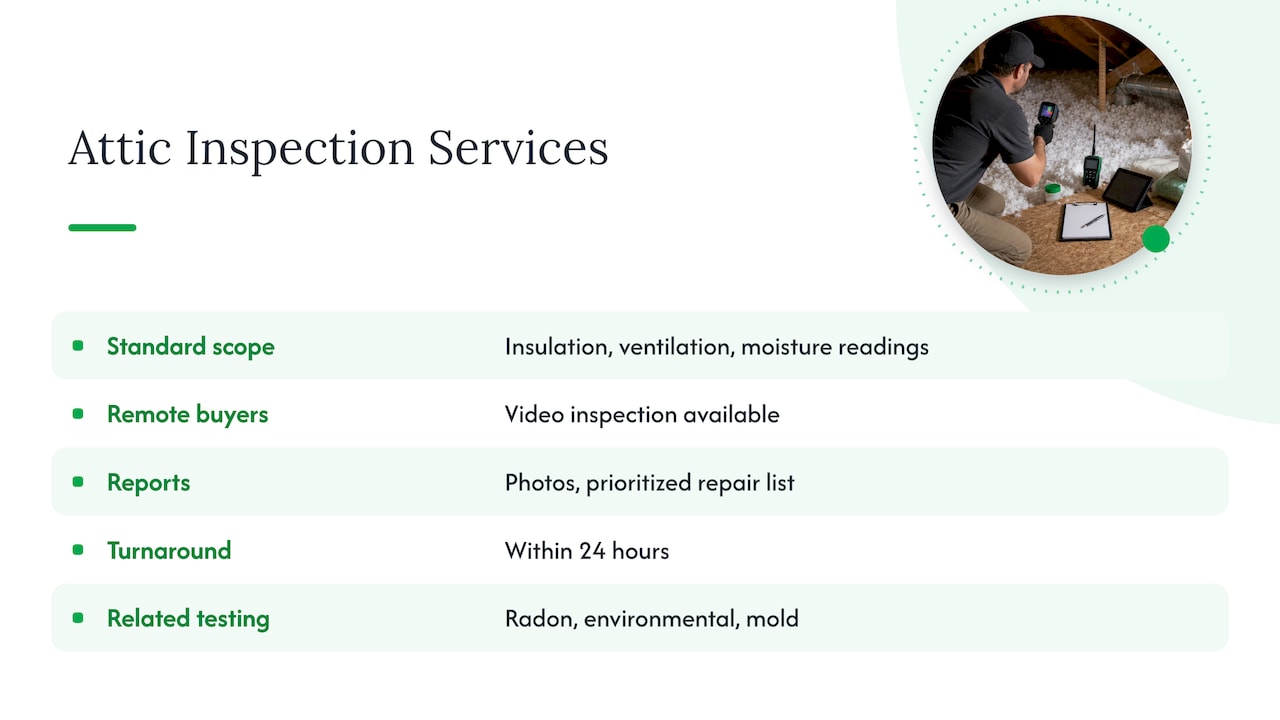
An attic that fails a quick visual check doesn’t need guesswork, it needs documentation you can act on. Our Buyer’s Home Inspection and Home Maintenance Inspection both cover attic insulation, ventilation, and moisture readings as part of the standard scope, and we flag vermiculite and mold concerns the same way we’d want them flagged for our own homes.

Before your appointment, it helps to send photos of anything you’ve already spotted, stains, gaps, or compressed areas, so we know where to focus. Video inspection options are available for buyers who can’t be on site, and reports come back quickly with photos and a prioritized repair list. If moisture or air quality concerns come up during the attic check, our radon and environmental testing and mold inspection services can run alongside the same visit. Discounts are sometimes offered for first-time buyers and veterans.
Ready to get a documented answer on your attic? Schedule an inspection with our team and get your report within 24 hours.
FAQ
How to tell if your attic is properly insulated?
Measure the insulation depth and compare it to the top of your floor joists. If insulation sits at or below joist level, it’s likely under the recommended amount, according to ENERGY STAR.
What do they do for a roof inspection?
A roof inspection typically checks shingles, flashing, and drainage from the exterior, while an attic inspection looks at the underside: insulation, ventilation, moisture, and structural framing, per Building America guidance. Many home inspections cover both as part of a single visit.
What is the biggest red flag in a home inspection?
Active moisture intrusion is one of the most serious findings, since wood moisture readings above roughly 17 to 20% point to ongoing water damage risk, according to Building America guidance. Structural damage and suspected asbestos-containing materials like vermiculite are treated with similar urgency.
Does homeowners insurance cover attic insulation?
Coverage depends on your policy and the cause of damage; insulation ruined by a covered event like a roof leak is often included, while gradual wear or poor installation usually isn’t. Check your specific policy terms or ask your agent, since this varies by insurer and plan.
Sources
- EPA — My attic has vermiculite insulation. Am I at risk? Should I take it out?
- Building America — Air Sealing Report
Recent Comments