
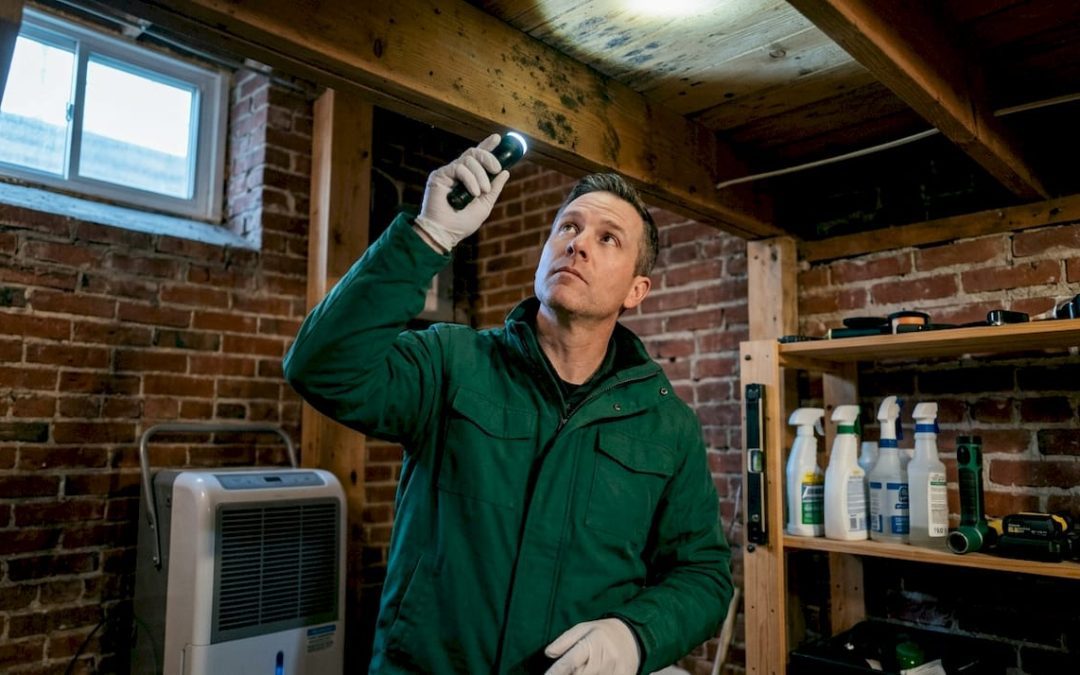
A mold inspection is a professional assessment where a licensed inspector evaluates your home for visible mold growth, moisture problems, and conditions that allow contamination to spread. Unlike a general home inspection, this process focuses specifically on identifying where mold exists, how far it has spread, and what moisture sources are feeding it. For homeowners, prospective buyers, and renters, understanding this process means the difference between catching a problem early and facing a costly remediation bill later. The mold inspection process typically concludes with a written report outlining findings and recommended next steps.
What does a typical mold inspection process involve?
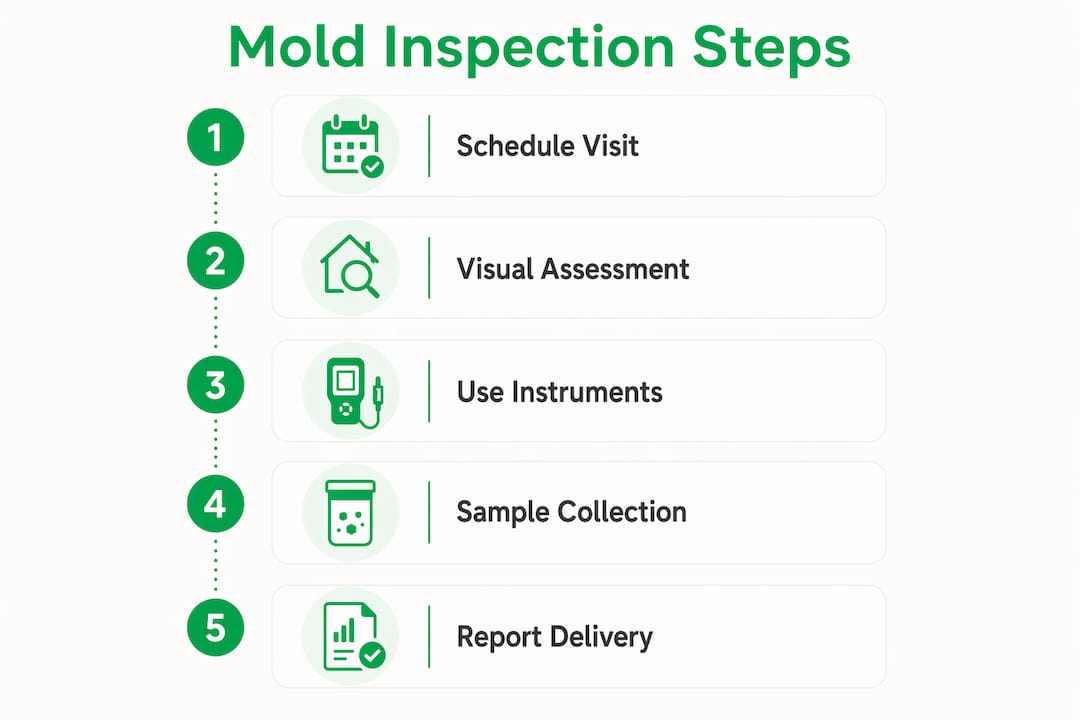
A mold inspection follows a structured sequence that begins the moment the inspector walks through your front door. The inspector starts with a full visual walkthrough, focusing on moisture-prone areas like basements, attics, bathrooms, crawl spaces, and areas around HVAC systems. These zones are the most likely sites for hidden water intrusion and mold colonization.
From there, the inspector uses specialized tools to detect what the naked eye cannot see. Moisture meters and infrared cameras identify elevated moisture levels behind walls and under flooring. Moisture meter readings above 17% for wood or above 1.5% for drywall signal abnormal moisture that warrants closer attention. Thermal imaging adds another layer by revealing temperature differentials that indicate water infiltration.
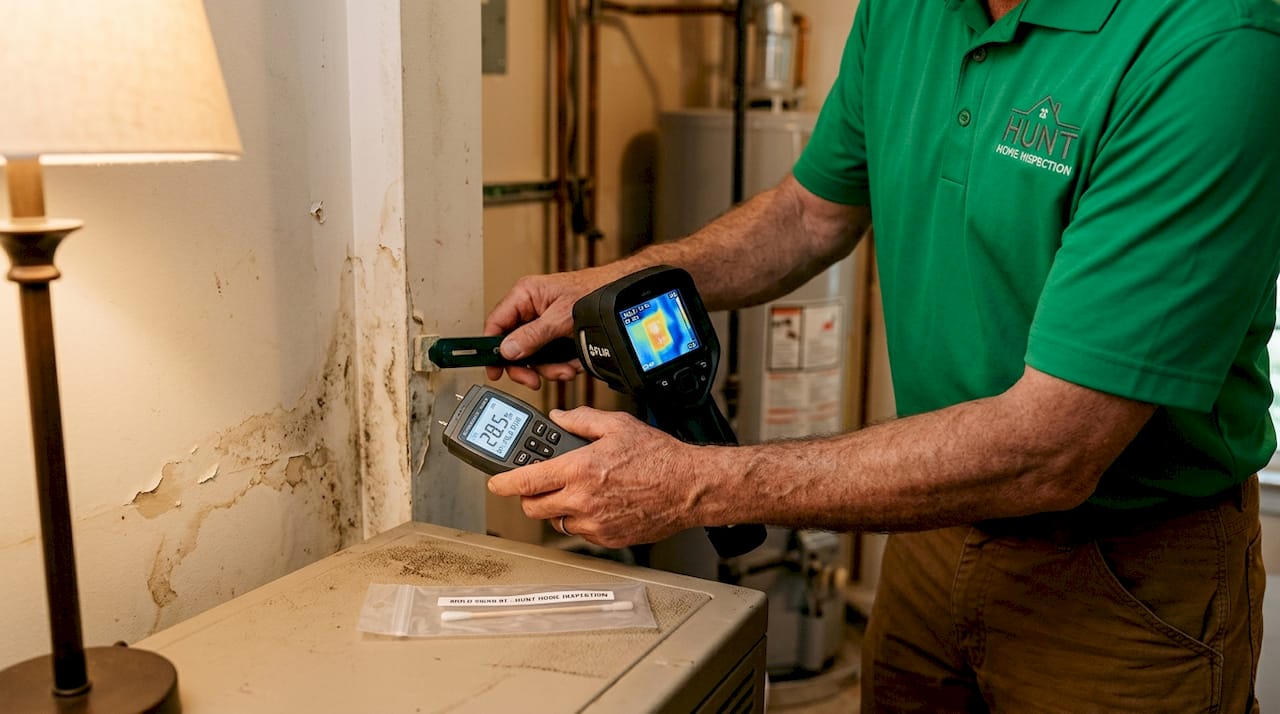
When visual and instrument findings suggest a mold problem, the inspector may collect samples for laboratory analysis. Air sampling captures airborne spore counts, while surface sampling lifts mold directly from materials. A critical step that many homeowners overlook is the outdoor baseline sample. Outdoor baseline samples give the lab a reference point so indoor results can be interpreted accurately against the natural mold environment outside your home.
The inspection typically takes two to four hours for an average-sized home. You receive a written report within 24 to 48 hours that summarizes moisture readings, mold locations, contamination severity, and recommended remediation steps.
Pro Tip: Schedule your inspection on a dry day. Rain inflates outdoor mold spore counts and can distort the baseline comparison that makes lab results meaningful.
How much does mold inspection cost?
Mold inspection costs nationally range from $303 to $1,043, with the national average sitting near $670. That range reflects a wide spectrum of service types, home sizes, and geographic markets.
| Service type | Typical cost range |
|---|---|
| Visual inspection only | $150 to $300 |
| Air sampling | $338 to $450 |
| Full inspection and testing package | $400 to $700 |
| Post-remediation clearance testing | $350 to $500 |
A basic visual inspection covers the walkthrough and moisture readings without any lab work. It works well when the inspector finds no visible mold and moisture readings are within normal range. Air and surface sampling add laboratory fees on top of the inspection cost, which is why bundled packages often deliver better value than ordering each service separately.
Home size is the single biggest pricing variable. A 1,000-square-foot condo costs significantly less to inspect than a 3,500-square-foot house with a finished basement and attic. Geographic location also matters. Inspectors in high-cost metro areas like Chicago or San Francisco charge more than those in mid-sized markets like St. Louis.
Post-remediation clearance testing is a separate cost that many homeowners forget to budget for. After a remediation contractor cleans up mold, an independent inspector verifies the work is complete. This step costs $350 to $500 and is worth every dollar because it gives you documented proof that the problem is resolved.
Pro Tip: Never hire the same company to both remediate and clear the remediation. Independent clearance testing removes the conflict of interest and gives you an unbiased result.
What is the difference between mold inspection and mold testing?
These two terms are used interchangeably in casual conversation, but they describe distinct services with different purposes.
Mold inspection is the on-site, physical evaluation. A certified professional examines your property using visual assessment and instruments to locate mold, identify moisture sources, and determine the scope of contamination. The inspector tells you where the problem is and how serious it appears.
Mold testing is the laboratory component. Samples collected during an inspection are sent to a certified lab that identifies the mold species present and quantifies spore counts. Testing answers the questions inspection cannot: What type of mold is this? How concentrated is it? Is Stachybotrys chartarum (commonly called black mold) present?
The critical distinction is that testing without inspection lacks the context needed to interpret results accurately. A high spore count in a lab report means very little if you do not know whether the sample came from a finished living room or a damp crawl space. Inspection provides that context and tells the lab where to focus its analysis.
| Feature | Mold inspection | Mold testing |
|---|---|---|
| Method | Visual and instrument-based | Laboratory sample analysis |
| Output | Written report with findings | Species ID and spore counts |
| Best for | Locating mold and moisture | Confirming type and severity |
| Legal documentation | Limited | Yes, supports legal claims |
| Typically bundled | Yes, often paired with testing | Yes, often paired with inspection |
Many mold inspection services bundle both into a single appointment. This combination delivers the most accurate picture of your home’s mold situation and is the standard recommendation for anyone dealing with a suspected mold problem.
Why is mold inspection necessary and when should you schedule one?
Scheduling a mold inspection makes sense in specific situations, and knowing those triggers saves you from either ignoring a real problem or spending money unnecessarily.
Schedule an inspection when you notice any of the following:
- A persistent musty odor that does not go away after cleaning or airing out the space
- Visible dark stains or discoloration on walls, ceilings, or grout lines
- A history of flooding, roof leaks, or plumbing failures in the home
- Unexplained respiratory symptoms, chronic headaches, or allergy-like reactions among occupants
- Condensation regularly forming on windows, pipes, or interior walls
- You are buying or selling a home and want documented evidence of the property’s condition
Older homes and properties with high indoor humidity are at elevated risk. A house built before 1980 with original plumbing, poor attic ventilation, or a dirt crawl space carries more mold risk than a newer construction with modern moisture barriers.
Not every home needs an inspection. A newer home without any history of leaks, flooding, or moisture complaints is a lower-risk candidate. But early detection prevents the kind of structural damage and health consequences that turn a $500 inspection into a $10,000 remediation project. Treating mold inspection as routine maintenance rather than an emergency response is the smarter financial position.
For buyers, a mold inspection during the due diligence period protects you from inheriting a problem the seller may not have disclosed. The home inspection process for buyers should include mold evaluation whenever the property shows any of the risk factors listed above.
How to prepare your home for a mold inspection
Preparation directly affects the accuracy of your results. Skipping these steps can bias both air sampling and moisture readings, leading to results that do not reflect your home’s actual condition.
- Close all windows and doors 48 hours before the inspection. This stabilizes the indoor air environment and prevents outdoor spores from artificially inflating indoor counts.
- Shut off air purifiers and humidifiers 24 hours before the inspection. Air purifiers filter out spores that the inspector needs to detect. Humidifiers alter moisture readings.
- Turn off the HVAC system two hours before the inspector arrives. Running the system redistributes air and spores throughout the home, which can mask localized contamination.
- Avoid cleaning with disinfectants or chemical sprays for 48 hours prior. Bleach and antimicrobial products kill surface mold temporarily and can suppress spore counts in air samples.
- Do not shower or run the dishwasher for 12 hours before the inspection. These activities generate moisture and steam that distort humidity readings in bathrooms and kitchens.
- Clear access to inspection areas. Move boxes away from basement walls, pull furniture away from exterior walls, and make sure attic hatches and crawl space entries are accessible.
Pre-visit controls like these are not optional courtesies. Neglecting them can produce misleading results that complicate remediation decisions and potentially require a second inspection at additional cost.
Key takeaways
A mold inspection is the most reliable way to detect hidden moisture problems and mold growth before they damage your health or your home’s structure.
| Point | Details |
|---|---|
| Inspection vs. testing | Inspection locates mold on-site; testing identifies species and spore counts in a lab. |
| Cost range | National costs run $303 to $1,043, averaging $670 depending on scope and home size. |
| When to schedule | Musty odors, visible stains, flooding history, or a home purchase all justify an inspection. |
| Preparation matters | Close windows 48 hours prior and shut off HVAC two hours before for accurate results. |
| Bundle for accuracy | Combining inspection and testing delivers the most complete picture of mold conditions. |
Why I think most homeowners misunderstand what they’re actually paying for
Most people who call about a mold inspection think they are buying certainty. They want someone to tell them definitively whether their home has mold. What they are actually buying is professional context, and that distinction matters more than most inspectors bother to explain.
Air sampling alone is one of the most misused tools in this industry. A single air sample from one room on one afternoon tells you almost nothing without knowing the outdoor baseline, the HVAC status, the season, and whether the occupants cleaned the day before. I have seen homeowners dismiss a real mold problem because a bare air test came back within “acceptable” ranges, when a thorough visual inspection would have found active growth behind a bathroom wall.
The inspectors worth hiring are the ones who treat the visual walkthrough as the foundation and use sampling to confirm what they already suspect. Thorough inspections that combine visual assessment with technology consistently outperform sampling-only approaches. That is not a marketing claim. It is the difference between finding a problem and missing it.
My practical advice: ask any inspector you are considering how they interpret results when indoor and outdoor spore counts are similar. If they cannot explain the role of baseline comparison, keep looking. The home inspection report you receive should reflect that level of analytical thinking, not just a list of numbers.
View mold inspection as a maintenance tool, not a crisis response. The homeowners who schedule inspections proactively, especially after any water event, spend far less over time than those who wait for visible mold to force their hand.
— JOHN
Schedule a mold inspection with Jhunthomeinspections
Jhunthomeinspections serves homeowners, buyers, and renters across the St. Louis Metro area and Southern Illinois with licensed mold inspection services backed by detailed 24-hour reports. Whether you are buying your first home, dealing with a musty basement, or recovering from a water event, their team combines visual assessment and moisture detection technology to give you a clear, documented picture of your property’s condition. Mold inspections can be bundled with a full home inspection service for buyers who want complete coverage in a single appointment. Flexible payment options, including Pay at Close, make it easy to schedule without delaying your closing timeline.
FAQ
What is a mold inspection exactly?
A mold inspection is a professional, on-site evaluation where a licensed inspector uses visual assessment, moisture meters, and infrared tools to detect mold growth and moisture problems in a property. The process typically ends with a written report summarizing findings and remediation recommendations.
How long does a mold inspection take?
Most mold inspections take two to four hours for an average-sized home, depending on the number of rooms, accessibility of crawl spaces and attics, and whether sampling is included.
Does a mold inspection include testing?
Not always. A standard mold inspection covers the visual and instrument-based walkthrough, while mold testing involves collecting air or surface samples for laboratory analysis. Many providers offer bundled packages that include both services.
Can I do a mold inspection myself?
You can check visible surfaces and use a consumer moisture meter, but a professional inspection detects hidden mold behind walls and under flooring that DIY methods miss. For real estate transactions or health concerns, a certified inspector’s report carries the documentation weight that a self-check cannot provide.
How often should a home be inspected for mold?
Homes with a history of water damage, high humidity, or older plumbing benefit from an inspection every two to three years. Any flooding event or new roof leak justifies an immediate inspection regardless of when the last one occurred.
Recent Comments