
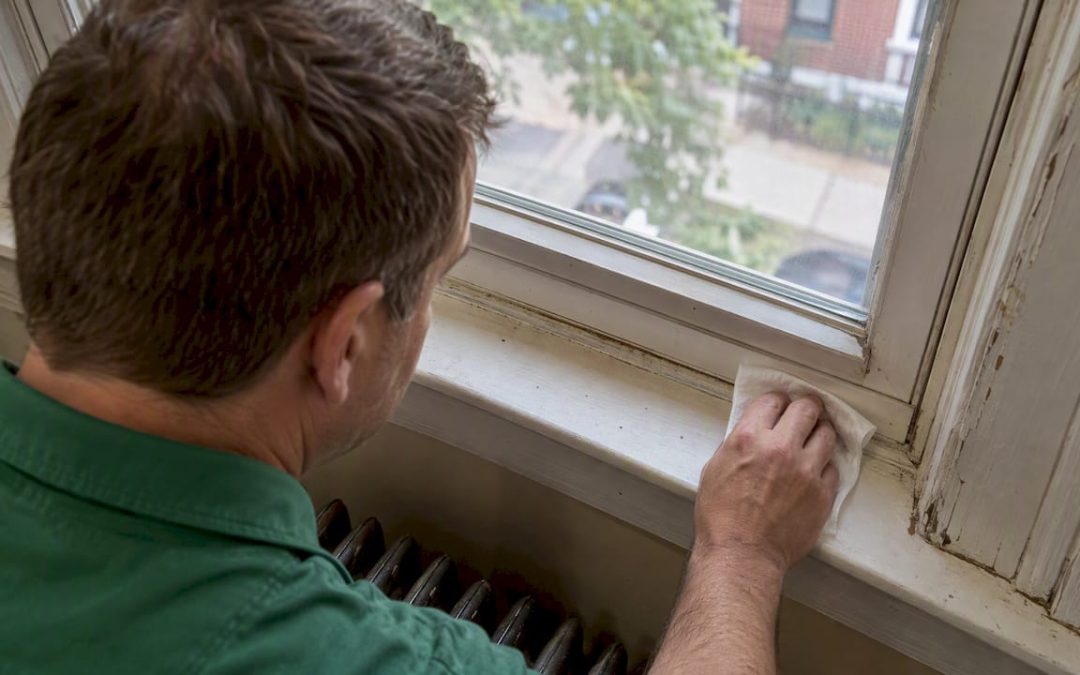
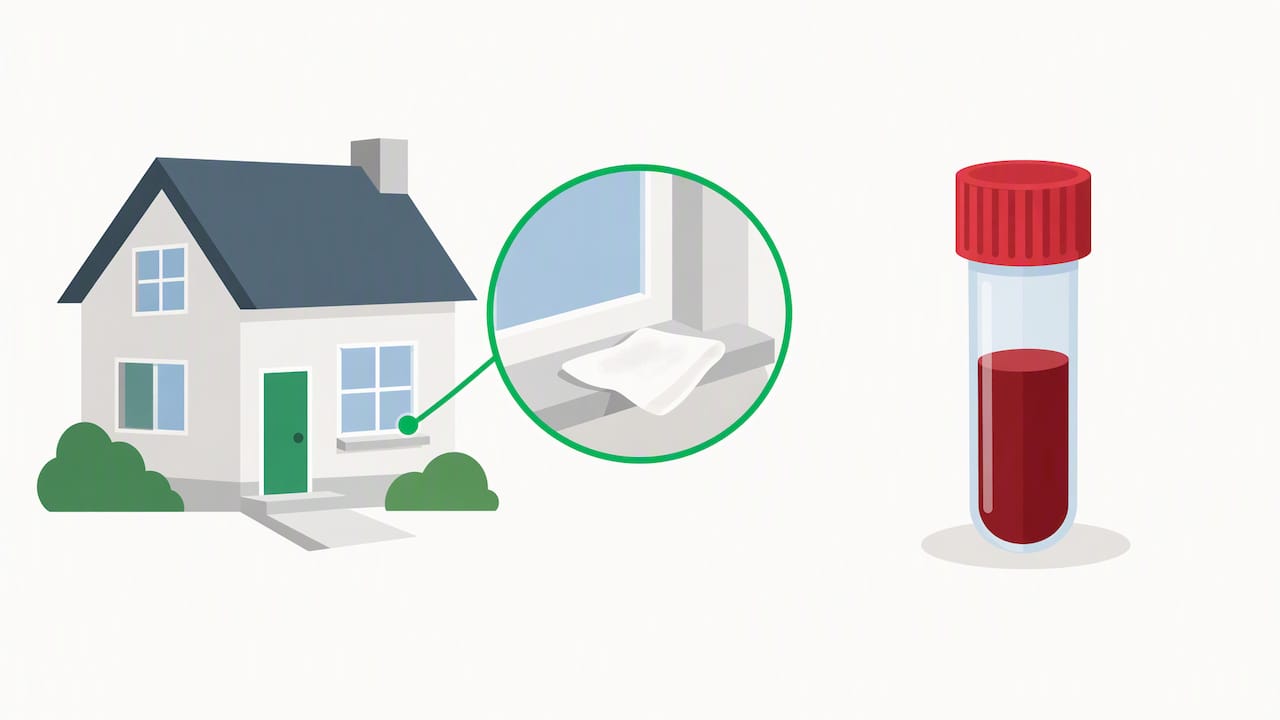
A strong way to test household dust for lead is wipe sampling analyzed by an NLLAP-recognized laboratory. Consumer spot kits have known limits and should not be treated as definitive. Your next step is to collect a lab-ready wipe sample or hire a certified sampler. If a child may have been exposed, ask a clinician about a blood lead test too.
TL;DR:
- Consumer spot kits can miss household lead dust, so a negative swab is not proof of safety; use it only to decide whether to investigate.
- Call the lab first; measure 1 square foot of floor or 0.1 square foot of sill, and use fresh wipes and gloves for each sample.
- EPA and HUD require NLLAP recognized labs for regulatory testing; a result below the reporting limit does not mean zero, and applicable standards vary by program.
- Hire a certified sampler for post abatement clearance, federally assisted housing, or disputes requiring chain of custody and a report others will accept.
- After high results, keep children away, stop dry sanding, HEPA vacuum and wet clean, then retest; ask a clinician whether children need blood testing.
Table of Contents
- 1. Why test household dust for lead, and who is most at risk
- 2. Which lead dust test methods work, and where do kits fall short?
- 3. How do you collect a valid dust wipe sample?
- 4. How do labs analyze wipe samples, and what does the report show?
- 5. How do you interpret results against EPA and HUD levels?
- 6. When should you hire a certified sampler?
- 7. What should you do if dust lead results come back high?
- 8. Why defensible testing matters: our perspective
- 9. How we can help with defensible lead dust testing
- FAQ
- Sources
1. Why test household dust for lead, and who is most at risk
Dust is how most households meet lead. Old paint chalks, chips and grinds into fine particles that settle on floors and window sills, and small hands carry them straight to small mouths. Young children under age 6 are at highest risk because they are still developing and tend to put contaminated hands and objects in their mouths. Stopping exposure is the only way to prevent further buildup.
Age of the home matters too. About three-quarters of homes built before 1978 contain some lead-based paint. Those homes can be lived in safely when paint is intact and surfaces stay free of dust, but professional testing helps you make informed decisions.
Common reasons people test:
- After renovation or repair work. Sanding, scraping or demolition in a pre-1978 home can spread lead dust, and EPA renovation guidance describes when cleaning verification or clearance testing is required.
- Before moving in or before a child’s first crawling stage. A baseline dust result tells you whether to clean harder or wait.
- After a child’s elevated blood lead result. Dust testing helps find the source in the home.
- Peeling or chalky paint near windows and doors. Friction surfaces can shed dust.
If you are weighing broader lead questions, our guide on what homeowners and caregivers must do about lead paint covers the paint side of the problem. And if you are babyproofing, this two phase babyproofing checklist can help you plan safer child spaces alongside any testing.
One point to keep straight: dust testing measures the home, not the person. The only definitive test for human lead exposure is a blood lead test.
2. Which lead dust test methods work, and where do kits fall short?
Two families of tests compete for your attention: consumer spot kits and laboratory wipe sampling. They answer different questions.
Spot kits are swabs that change color on contact with lead. They are cheap and instant, which is their appeal. But a peer-reviewed 2007 study of spot test kits found that LeadCheck swabs did not reliably detect lead in household dust above certain thresholds under field conditions. A National Center for Healthy Housing study, funded in part by EPA, also compared trained and untrained users of field dust-lead kits and looked at performance differences between them. The practical lesson is that a negative swab does not prove a surface is safe.
Wipe sampling works differently. A person wipes a measured area with a moist disposable wipe, seals it in a hard-walled container and sends it to a lab. HUD’s dust sampling guidance lays out the template sizes, wiping pattern, handling and quality control. Because the wiped area is known, the lab can report lead per square foot and a risk assessor can compare it to a standard.
Reliability finding: A peer-reviewed field study found that LeadCheck swabs did not reliably detect household dust lead above certain thresholds, which is why we treat kits as a screen at best.
How to choose:
- Use a kit only as a rough screen to decide whether to investigate further, never as proof of safety.
- Use lab wipes for clearance after renovation or abatement, for rental or real-estate disputes, and any time a child’s health is in question.
- Use a certified sampler when you need results someone else will accept.
Single-surface samples tell you about one spot. Composite samples combine several wipes into one analysis, which can lower cost but blur where the hazard sits. That tradeoff is why compositing is usually left to professionals working with their lab.
3. How do you collect a valid dust wipe sample?
Whether you collect samples yourself or want to judge a professional’s work, the protocol is the same. It follows HUD’s wipe sampling guidance and the EPA Lead Dust Sampling Technician Field Guide.
- Call the lab first. Ask which wipes, containers and forms it requires, and whether it accepts composites.
- Suit up. Wear disposable gloves and shoe covers, and put on a fresh pair of gloves for every sample.
- Mark the area. Use a template of about 1 square foot for floors and at least 0.1 square foot for window sills and troughs. Measure and record the wiped area, because the lab needs it to calculate results.
- Wipe in an overlapping “S” pattern. Cover the whole template, fold the wipe in half with the dirty side in, and wipe again at a right angle.
- Seal and label. Fold the wipe, drop it into a labeled hard-walled tube and write the location, date and area on the label and the chain-of-custody form.
- Add field blanks. Include field blanks so the lab can detect contamination from the wipes themselves.
- Ship promptly with the paperwork.
Use a new wipe for every sample, never reuse a template without cleaning it, and do not composite wipes unless the lab agrees. The field guide also calls for one window sill and one floor per room, up to four rooms, when verifying post-renovation cleaning.
Pro Tip: Read the lab’s sample submission requirements before you buy supplies, and label every tube before you start wiping so nothing gets mixed up.
4. How do labs analyze wipe samples, and what does the report show?
Once your tubes arrive, the lab digests each wipe and measures lead with instruments such as ICP, flame atomic absorption spectrometry or graphite furnace atomic absorption. Each method has its own limit of detection. NIOSH’s surface wipe method 9100 gives an example: 2 µg of lead per sample by flame AAS over a 100 cm² area works out to 0.02 µg/cm².
Detection limit example: NIOSH reports that flame AAS can detect 2 µg of lead per sample, equal to 0.02 µg/cm² for a 100 cm² wipe.
Why the lab’s credentials matter: only NLLAP-recognized laboratories are authorized to perform analysis for EPA and HUD lead programs. The EPA final rule also requires NLLAP analysis for regulated activities. If your result may be used for a sale, a lease dispute or a clearance decision, an unrecognized lab undermines it.
What a good report includes:
- Results in µg/ft², or micrograms per sample with the wiped area converted for you.
- The detection or reporting limit, so you know the smallest value the lab could confidently measure.
- Flags for results below that limit, which matter when you read low numbers.
- Sample IDs that match your chain-of-custody form, including any blanks.
Read the low end carefully. A result listed as “less than” a reporting limit does not mean zero. It means the instrument could not measure lower, and that distinction becomes important when the applicable standard is very low.
5. How do you interpret results against EPA and HUD levels?
Two kinds of numbers appear in EPA’s framework, and they do different jobs. Dust-lead reportable levels are used in hazard identification. Dust-lead action levels are used for post-abatement clearance. A risk assessor compares your wipe results to the applicable standard, and samples must come from an NLLAP lab for regulatory use.
The recent change is significant. The EPA final rule reconsideration lowered the post-abatement clearance levels for floors, sills and troughs, and it separated reportable levels from action levels, so a reportable level applies to any level an NLLAP lab can report. Check EPA’s rule page for the exact current numbers for your surface type rather than relying on an older table.
| Your result | What it usually means | Practical next step |
|---|---|---|
| Below the reportable level | No reportable lead found | Routine wet cleaning |
| At or above reportable, below action | Lead present but under the clearance threshold | Enhanced cleaning, then retest |
| At or above the action level | Hazard under the applicable standard | Consider abatement with certified professionals |
These tiers are a practical reading of EPA’s framework, not a substitute for a risk assessor’s judgment. Rules differ for federally assisted housing, so if HUD funding is involved, confirm which standard applies before you act.
6. When should you hire a certified sampler?
Do-it-yourself sampling is fine for curiosity and for a first look. Hire a professional when the result has to stand up to scrutiny or when the stakes are high.
Bring in a certified sampler when:
- You need post-abatement clearance, where EPA and HUD procedures specify who samples and how.
- The home is federally assisted housing, since HUD requires clearance testing there with specified sample locations and lab requirements.
- A sale, lease or legal dispute is involved, and you need chain-of-custody paperwork and a defensible report.
- A child already has an elevated blood lead level, and you want the source pinned down fast.
What to look for in a provider: training through EPA’s Model Lead Dust Sampling Technician course, which covers visual inspection, sample collection, interpreting results and explaining them; analysis by an NLLAP-recognized lab; and a documented chain of custody.
A professional’s package typically includes the visual inspection, the sampling itself, lab coordination, a written interpretation of the numbers and recommendations for cleaning or abatement. If you want to know what to ask before you book, our checklist on what to know before you test your home for lead walks through preparation step by step.
7. What should you do if dust lead results come back high?
A high result is fixable. Work through these steps in order.
- Limit exposure now. Keep children and pregnant family members away from the affected rooms, and stop any dry sanding or scraping.
- Clean the right way. Use a HEPA vacuum, then wet-wipe surfaces with detergent and water, and repeat as EPA recommends in its renovation guidance. Regular household vacuums can blow fine lead dust back into the air.
- Retest after cleaning. Use the same sampling locations so your numbers are comparable.
- Follow clearance procedures where they apply. For post-abatement work, follow HUD and EPA requirements and certified sampling timelines.
- Consider abatement. If results stay at or above the action level, bring in certified professionals rather than repeating the same cleaning.
- Arrange a blood lead test for at-risk children. Dust results describe the home only. CDC guidance says blood tests are the best way to find out whether a child has lead poisoning, that fingerstick results may need venous confirmation, and that CDC uses a blood lead reference value of 3.5 µg/dL to identify children with high exposure.
Ask your child’s clinician about follow-up timing. CDC’s pages explain confirmation and repeat testing.
8. Why defensible testing matters: our perspective
A lead result is only useful if someone else will trust it. The firms that do this well treat sampling as part of a larger environmental inspection: measured areas, labeled tubes, a chain-of-custody form, an NLLAP lab and a report that explains the numbers instead of just listing them. The testing is rarely the hard part. Interpreting a low number correctly, and knowing when to stop cleaning and call for abatement, is where homeowners lose time and money. Spot kits tempt people with speed, but speed without a defensible result just moves the worry down the road.
— JOHN
9. How we can help with defensible lead dust testing
We offer environmental inspection and testing. You get clear next-step recommendations, not a pile of raw numbers.
What you can expect from us:
- Environmental inspection and testing to help you assess your home.
- Reports after inspection, with help understanding what your results mean.
- Flexible scheduling, including in-person or video walkthroughs.
- Add-on convenience, so lead testing can ride along with a home inspection.
Want to see how it fits your situation? Read about our environmental home testing and our full inspection services, then schedule testing or add it to your next inspection.
FAQ
Can household dust have lead in it?
Yes. Dust picks up lead from deteriorating or disturbed paint, especially in homes built before 1978. Young children are most exposed because they put hands and objects in their mouths, per CDC.
Is there a test for lead poisoning?
Yes, a blood lead test. CDC calls it the best way to find out if a child has lead poisoning, and a fingerstick result may need confirmation with a venous sample. Dust tests only measure the home.
Do all homes built before 1978 have lead paint?
No, but it is common. About three-quarters of homes built before 1978 contain some lead-based paint, according to available information. Testing, not the build year alone, tells you what your home has.
Is a lead dust wipe test better than a swab kit?
Wipe sampling analyzed by an NLLAP-recognized lab is the stronger choice. A peer-reviewed study found that LeadCheck swabs did not reliably detect lead in household dust above certain thresholds in the field.
Recent Comments