
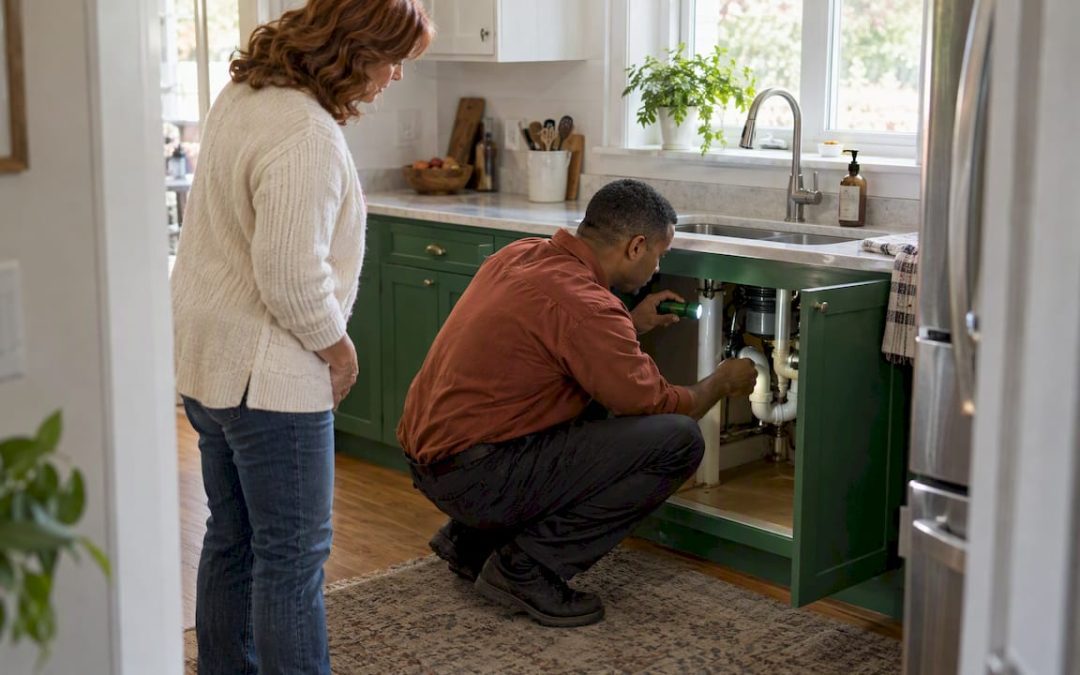
You can legally be at your home during the buyer’s inspection, but in most sales you should not be. Inspectors and agents generally want the buyer to move through the house freely, ask blunt questions and form their own opinion. Your best contribution is a prepared, accessible house, a short list of notes for your agent, and a few hours somewhere else.
This guide covers who actually attends, why hovering tends to backfire, the rare cases where showing up makes sense, and exactly what to do before the inspector arrives.
TL;DR
- Sellers may attend a buyer’s inspection, but most real estate professionals advise against it because it can make buyers feel pressured.
- Plan for two to four hours away from the house, and leave pets with you.
- Your real work happens beforehand: clear access to the attic hatch, electrical panel and water heater, turn on all utilities, and gather repair records.
- An inspection finding is not an automatic repair demand. Respond through your agent, in writing, and know your contract’s deadlines.
- A pre-listing inspection lets you find problems on your own schedule instead of the buyer’s.
Table of Contents
- Can the seller be at the home inspection?
- Why staying usually backfires
- When it can make sense to be there
- What the inspection actually covers
- Your inspection-day checklist
- After the report: you are not obliged to fix everything
- Earnest money and failed inspections
- Get ahead of it with a pre-listing inspection
- Perspective: what we tell sellers
- Hire us before you list
- FAQ
- Sources
Can the seller be at the home inspection?
Yes. Sellers can attend a buyer’s inspection, and no law prohibits it. Unless your purchase contract says otherwise, you remain the owner, and it is your house.
Who is usually there instead? The only person who has to be present is the inspector. The buyer’s agent commonly shows up to provide access, and the buyer is encouraged to come, at least for the final walkthrough of findings. Your agent may or may not attend. Many listing agents skip it and let the buyer’s side run the visit.
The practical answer to “should I attend” is therefore not about permission. It is about what your presence does to the buyer’s experience and, by extension, to your sale.
Why staying usually backfires
The inspection exists so a stranger can learn what they are about to buy. A buyer who feels watched stops asking questions. An inspector who feels watched may talk less freely, and that is the opposite of what you want, because a buyer who trusts the process is a buyer who closes.
Agents describe the same pattern. Sellers who stay often want to point out features or explain old repairs. That impulse often reads as defensiveness or pressure, and it can strain the relationship between the parties. A few specific ways it goes wrong:
- Explaining a repair. You mean to reassure. The buyer hears “there was a problem here.”
- Reacting to a finding. A sigh or a quick “that’s never been an issue” turns a neutral note into a debate.
- Following the inspector. The inspector’s duty runs to the client who hired them. Trying to steer what gets noted undermines the whole point of the report.
- Crowding the buyer. Buyers imagine their furniture in your rooms. They cannot do that with you in the kitchen.
Your agent can answer factual questions about the house. If the buyer has a question only you can answer, such as when the roof was replaced, let it travel through the agents.
When it can make sense to be there
Staying away is the default, not a rule. A few situations are different.
- Access problems. If something is locked, hard to reach or unusual (a crawl space hatch behind a closet, a gate with a code), a quick handoff of instructions at the start can save the inspector time. Do it in five minutes, then leave.
- Occupied homes with tenants or medical needs. If you cannot leave for health or caregiving reasons, tell your agent in advance so the buyer’s side knows to be discreet.
- Your contract requires it. Some agreements spell out access conditions. Read yours.
- A remote or rural property with wells, septic or outbuildings where the inspector may need guidance on what is where.
In each case, the rule of thumb holds: arrive early, hand over what is needed, step out, and let the buyer own the day.
What the inspection actually covers
It helps to know what the inspector is and is not doing. The standard of practice published by the American Society of Home Inspectors describes a limited visual, non-invasive examination of readily accessible systems. It is not designed to catch every cosmetic flaw or hidden defect. Its job is to educate the buyer about the home’s current condition and major maintenance needs.
Expect the inspector to look at the HVAC system, plumbing, electrical, windows, doors, floors and attic. Sources vary on duration, but two to four hours is a reasonable expectation for an average house, and bigger or older homes take longer. For a detailed rundown of what gets examined, our guide to what inspectors look for in a home walks through it system by system.
Buyers often add specialty tests. In Missouri, for example, common add-ons are radon, sewer scope and termite inspections, and each can add time or require separate visits. Radon tests in particular run over a period of days, so the house may need to stay closed up. If you want to understand what that means, read about the dangers of radon in the home.
Your inspection-day checklist
This is where a seller earns goodwill. Inspectors note areas they could not fully inspect because of clutter, locked doors or stored belongings, and ASHI-affiliated inspectors point to attic hatches, electrical panels and water heaters as the access points sellers can most improve. Every limitation written into the report gives the buyer a reason to worry or to request more testing.
The day before
- Clear the panel. Nothing should block the electrical panel, and the door should open fully.
- Free the attic hatch and crawl space access. Remove boxes, hanging clothes and anything stacked underneath.
- Clear around the water heater and furnace. Leave a working path to both.
- Unlock everything. Sheds, gates, garages, utility rooms and fence latches.
- Replace burnt-out bulbs. A dark fixture can be reported as a possible electrical fault when it is only a bulb.
- Gather paperwork. Permits, receipts for roof, HVAC and plumbing work, warranties and service records belong on the kitchen counter.
If the house needs a bigger clear-out before listing, a preparing a house for sale checklist can help you plan timing and paperwork over the weeks before you list.
The morning of
- Make sure electricity, gas and water are on, and pilot lights are lit. Inspectors cannot test what is off.
- Leave a clear path to windows and exterior doors.
- Take pets with you or arrange a sitter. A barking dog slows everyone down, and some buyers are allergic or nervous.
- Keep the house tidy and neutral. The inspector may not care about the dishes, but the buyer does.
- Leave your cell number with your agent in case the inspector needs a gate code or a shut-off location.
Where to go
Plan on at least four hours. Run errands, see a movie, visit family. Do not park down the street and watch. The buyer’s agent notices.
After the report: you are not obliged to fix everything
The report is the buyer’s. When a buyer pays for an inspection, the report belongs to them and the inspector’s duty of care is to them. Do not try to control it. Your leverage lies in how you respond.
Two things to hold on to:
- A finding is not a demand. The ASHI standard frames the inspection as education about condition, so an item in the report does not by itself mean you must repair it. A request for repairs, credits or a price change arrives separately, through the agents, under the terms of your contract.
- Deadlines matter. In Missouri, the standard Missouri sale contract works like this: the buyer sends one inspection notice, and then a resolution period starts, with a default of 10 days if the contract does not specify, to agree in writing on repairs or credits. If the sides cannot agree, the contract can terminate. Contracts differ by state and by form, so have your agent or attorney confirm the dates in yours.
Can you refuse to fix things? Generally you can decline or counter, but the buyer may then walk away within their contingency. Missouri’s seller’s disclosure rules also matter: sellers there must disclose known material defects, and an “as-is” clause does not protect against fraudulent misrepresentation or active concealment. Whatever state you are in, do not hide a known problem hoping the inspector misses it.
To see how the buyer’s side handles this step, our post-inspection consultation guide explains how notes become a repair request. The timelines are covered in our piece on the inspection report timeline.
Earnest money and failed inspections
Sellers often ask whether the buyer loses the deposit if the inspection goes badly. Earnest money is typically 1 to 3 percent of the purchase price, and it is generally returned to the buyer when the deal ends because of a failed inspection contingency, provided the buyer follows the contract’s notice steps. Disputes arise when notice is late or in the wrong form. If a deposit is contested, funds often sit in escrow, and a clear written release is usually cheaper than litigation.
The takeaway for you: a buyer who terminates properly gets their money back, so your goal is a deal that survives the inspection, not a technicality that keeps the deposit.
Get ahead of it with a pre-listing inspection
The surest way to avoid inspection-day surprises is to see the problems first. A seller’s inspection, also called a pre-listing inspection, happens before the home goes on the market. Because you commission and pay for it, you own the report and decide whether and how to share it.
What you gain:
- Time to get repair quotes and choose your own contractors, rather than negotiating under a contract clock.
- Fewer unpleasant surprises for the buyer’s inspector to find.
- A chance to fix safety items, like a failed GFCI outlet or a missing smoke detector, cheaply.
- A more confident list price.
What to remember: once you know about a defect, you will likely need to disclose it. Plan for that before you order.
Perspective: what we tell sellers
We do inspections for buyers, sellers, investors and agents across the St. Louis metro area and Southern Illinois, so we see both sides of the front door. Our honest view is that the inspection goes best when the seller has done their work before we pull up. A clear panel, an open attic hatch, working utilities and a folder of service records make a faster, more accurate report, and that serves everyone, including you.
We also see how much a calm buyer matters. When a buyer feels free to ask questions and walk every room, the conversation after the report is usually more practical. We would rather see a seller spend the morning getting the house ready than standing in the hallway.
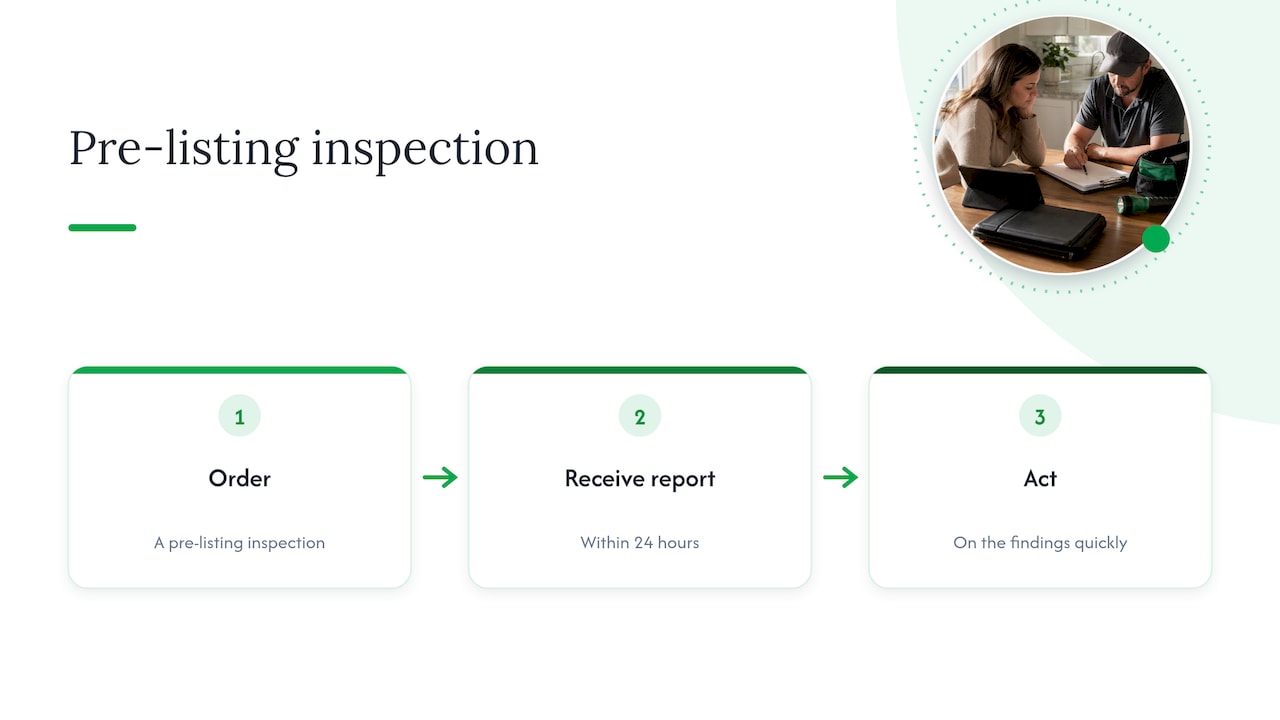
If you are worried about what we might find, order a pre-listing inspection first. Reports come back within 24 hours, so you can act on them quickly.
— JOHN
Hire us before you list
Hunt Home Inspection offers pre-listing and seller’s inspections, along with re-inspections once repairs are done, radon testing, mold and sewer camera inspections, and more. You get a report within 24 hours, and we offer in-person or video walkthroughs. Evening and weekend appointments are available for busy schedules. See the full list of inspection services to find the right fit.
FAQ
Should the seller attend the home inspection?
Usually not. The buyer needs room to ask questions and see the house without pressure, and a seller nearby can make that harder. Give access instructions to your agent, leave, and handle any follow-up through the agents.
Who pays for a home inspection, the buyer or the seller?
The buyer typically pays for the inspection and owns the resulting report. A seller pays only if they order their own pre-listing inspection. Inspections are not legally required, but they are a standard contingency in most sales.
Can I refuse to make repairs the buyer asks for?
Yes, you can decline or counter, but the buyer may then use their contingency to cancel or renegotiate. Check your contract’s response deadlines with your agent or a real estate attorney before replying.
How long should I stay away?
Plan on two to four hours for an average home, longer if the buyer adds radon, sewer or termite work, or if the property is large or old. Ask your agent for the scheduled start time and add a buffer.
Does a bad inspection mean the buyer loses their earnest money?
Not if they terminate correctly under the inspection contingency. The deposit is generally returned in that case. Disputes usually turn on missed deadlines or improper notice, so both sides should follow the contract’s steps exactly.
Sources
- Should Sellers Be Present at Home Inspections, Squarefoot Homes
- Should Sellers Attend the Home Inspection, Home Inspection Insider
- Who Should Attend a Home Inspection, Angi
- ASHI Standard of Practice, 2026
- Reducing Liability Through Accurate Reporting, ASHI
- Understanding the Home Closing Process in Missouri, Ryan Patton Group
- How a Home Inspection Works, HomeLight
- Missouri Purchase Contract Explained
- Missouri Real Estate Contract Disputes, LegalGPS
- Consumer Guide: Home Inspections, NAR
Recent Comments