
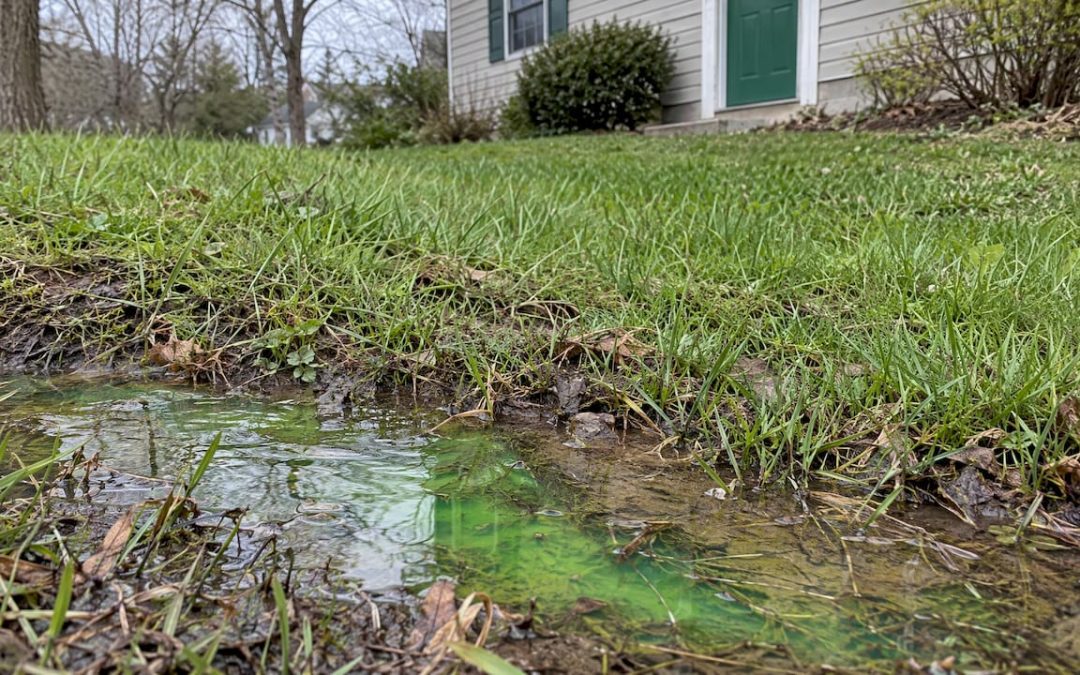
A septic dye test adds tracing dye to a home’s plumbing, flushes water through the system, and then checks whether the dye shows up where it should not, such as on the lawn, in a ditch or in a stream. It answers one narrow question: is wastewater reaching the surface? It does not tell you the condition of the tank or the drainfield. If you are buying or selling a home with a septic system, treat the dye test as one step inside a fuller septic inspection.
TL;DR
- A dye test sends colored dye down an indoor drain, runs water, then looks for dye surfacing on the property or in nearby waterways.
- Dye that appears is a clear sign of a surface discharge. Dye that does not appear is not proof the system is healthy.
- Results can show up within minutes or take hours. If nothing surfaces, testers commonly recheck after 8 to 24 hours.
- Do not pump the tank right before the test. It can hide problems.
- For a home purchase, pair the dye test with a full septic inspection that opens the tank and evaluates the whole system.
Table of Contents
- What a septic dye test is
- How the test is done, step by step
- How long a septic dye test takes
- How long septic dye lasts
- What a dye test can tell you
- What a dye test can miss
- Dye test versus full septic inspection
- Signs your drainfield may be failing
- Septic dye test versus a perc test
- Preparing for the test as a buyer or seller
- Where the sewer line fits in
- Perspective
- Get your septic system inspected before you close
- FAQ
- Sources
What a septic dye test is
The test is simple in concept. A tester introduces a colored tracing dye into the system, most often through a verified indoor drain such as a toilet or a sink, and then runs water behind it. The Pennsylvania Department of Environmental Protection describes it as a way to identify a surface malfunction by introducing tracing dye through an indoor drain and then running water. The EPA frames it the same way: a dye test establishes a link between two points and verifies a surface discharge.
In plain terms, you are asking: if water goes down this drain, does any of it come out somewhere it should not?
The dye is typically green or red, and the colors are chosen so they are easy to spot against grass, soil or water. Inspectors also use dye to confirm that a particular fixture or drain is connected to the septic system at all, which matters in older homes where the plumbing has been altered over the years.
How the test is done, step by step
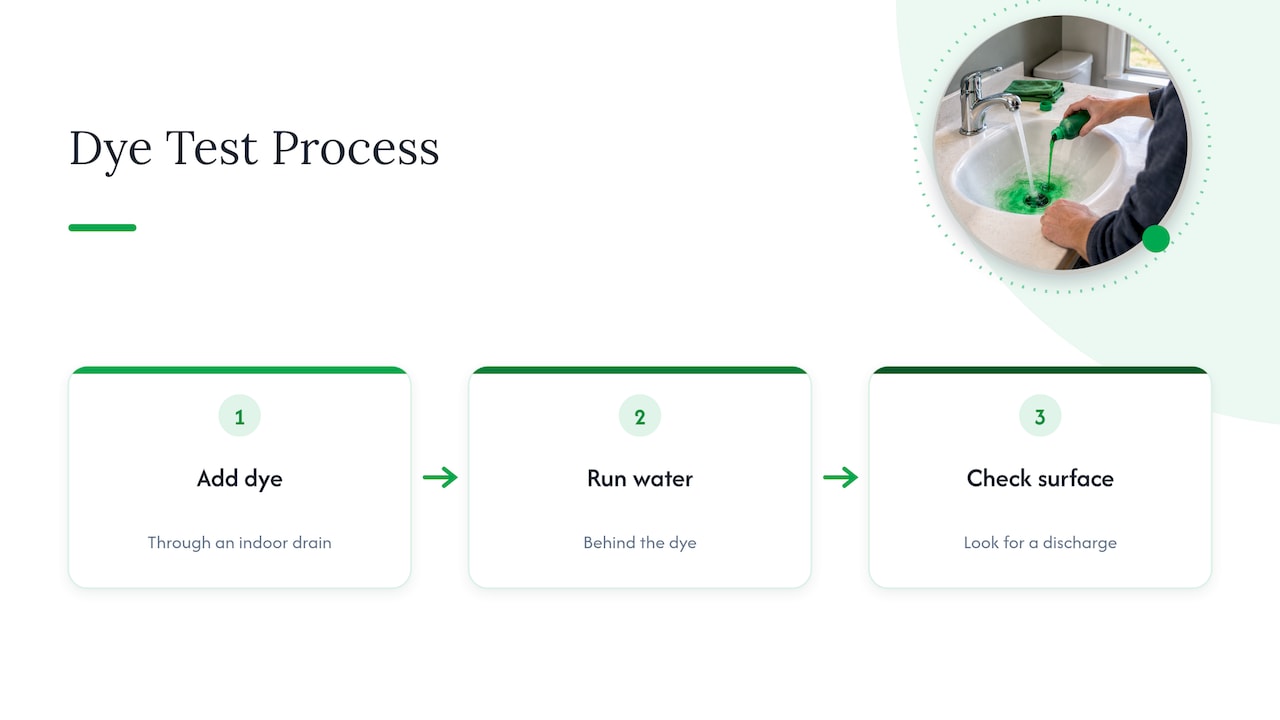
Procedures vary by inspector and by local rules, but a typical dye test follows this order:
- Confirm which drain you are using. The tester identifies a drain that is known to feed the septic system.
- Walk the property first. Wet spots, odors, lush patches of grass or pooled water get noted before anything goes down the drain, so the baseline is clear.
- Load the system. The system should be in its normal state. Inspectors warn against pumping the tank right before a dye test, because it keeps the system from being properly loaded and can produce misleading results by simply filling an empty tank rather than testing the absorption field.
- Add the dye and run water. Dye goes in through the indoor drain, followed by a measured amount of running water so the dye is pushed through the tank and out toward the drainfield.
- Check for dye. The tester walks the property, and sometimes neighboring land, looking at surface malfunctions, storm drains, culverts and streams.
- Recheck if needed. Dye may not appear right away. The Pennsylvania guidance says that if it has not surfaced, wait 8 to 24 hours and check again.
Some public health agencies add a step for sites where dye could travel unseen. Thurston County, Washington, environmental health staff, for example, place charcoal packets downhill of the septic system to collect dyed sewage. The packets are processed in a county lab, and suspected dye goes to an outside lab for confirmation. A routine home-sale test is usually much simpler than that.
How long a septic dye test takes
The active part is short. Setting up the dye and running the water usually takes a fraction of the inspection visit. The waiting is what varies.
Inspectapedia reports that dye has broken out in as little as 15 to 30 minutes where a system was damaged or failing, and that in unusual cases it can appear at nearby waterways as much as five days later. That wide range is why a single quick walk-around is not always the end of the story. If your inspector rechecks the next day, that is normal practice, not a sign something is wrong.
For a buyer working to an inspection deadline, this matters. Ask about timing early so the test, any recheck and the written report all fit inside your option period.
How long septic dye lasts
The dye is made to be seen for a while and then fade. Commercial tracing dyes are sold as non-toxic and the color gradually disappears as it is diluted by water and soil. How long it stays visible depends on how much dye was used, how much water moved through, the weather and the soil. We would not promise a fixed number of days. If you see color on the lawn or in a ditch after a test, tell your inspector right away so the location can be documented while it is fresh.
What a dye test can tell you
When dye appears, the result is useful and hard to argue with:
- Effluent is reaching the surface. That points to a failing or overloaded drainfield, a broken pipe or an installation problem.
- Wastewater is leaving the property. Dye in a ditch, storm drain or stream is a serious finding that usually needs a repair plan.
- A fixture is connected where you think it is. The test can confirm whether a drain, appliance or sump discharges to the septic system.
The dye test is quick, inexpensive compared with excavation, and it often catches the most visible failures. That is why lenders, counties and agents still ask for it.
What a dye test can miss
Here is where buyers get misled. A clean result means only that no dye was seen. The Pennsylvania guidance lists several reasons for false negatives: too little dye, a long path through the soil, an inactive well pump, dissolved chemicals or biological contaminants, fractured rock, large groundwater infiltration, or a system that works only partly or intermittently.
The EPA makes the same point from the other side: a dye test does not identify the condition of a tank, decayed baffles, or a soil treatment area that has not yet surfaced. The Pumper and Septic Maintenance Association goes further, stating that relying on a dye test alone yields no valid conclusions about the size, type or condition of the tank or absorption area, or about where that absorption area is.
In practice, that means a dye test cannot tell you:
- Whether the tank is the right size for the house and its bedroom count.
- Whether baffles are intact.
- How much sludge has built up.
- How much life is left in the drainfield.
- Where the drainfield is, or whether it has been paved or built over.
Those are the things that turn into four- and five-figure repairs. This is why we treat the dye test as a screening step, not the verdict.
Dye test versus full septic inspection
| Dye test | Full septic inspection | |
|---|---|---|
| Main question | Is wastewater surfacing? | What is the condition of the whole system? |
| Tank opened and checked | No | Yes |
| Baffles, inlet and outlet | Not evaluated | Evaluated |
| Sludge and liquid levels | Not measured | Measured |
| Drainfield condition | Only if it has already surfaced | Assessed, with surface signs noted |
| Best use | Quick screen for visible failure | Home purchase decisions |
A professional inspection, according to the EPA, should research documentation, evaluate waste flow, test system operation, inspect the tank, assess the site and report findings. A full inspection typically opens the system, checks its structure, measures sludge and liquid levels, looks at the inlet and drainage, and notes signs at the surface, as one detailed buyer’s guide lays out.
If you are weighing what that costs, our page on septic inspection cost walks through what drives the price and which fees to question.
Signs your drainfield may be failing
You do not need a dye to spot warning signs. The Washington State Department of Health field guide tells owners to look for mushy or swampy areas, surfacing effluent and strong odors over the drainfield, and to inspect the tank, baffles and other components.
On a showing or walk-through, watch for:
- Soggy ground or standing water over the drainfield when the weather has been dry.
- Unusually green, fast-growing grass in one strip of the yard.
- Sewage smells outdoors, or slow drains and gurgling indoors.
- Signs the tank was pumped very recently, which can mask a problem.
If you notice any of these, tell your inspector before the appointment. It changes where they look first. Our home inspection red flags list covers the other items worth watching for during a showing.
Septic dye test versus a perc test
People mix these up because both involve soil and water. They answer different questions. A percolation, or perc, test measures how well the soil drains, and it is used when a lot is being evaluated for a new system or a new house. A dye test looks for wastewater surfacing from a system that already exists. If you are buying a home with a working septic system, the dye test and full inspection are the relevant tools. A perc test is for land that is being developed.
Preparing for the test as a buyer or seller
If you are buying:
- Put the septic inspection in your contract timeline as a separate item, not an afterthought.
- Ask the seller when the tank was last pumped and whether records exist. Do not ask them to pump it right before the test.
- Attend the inspection if you can. Seeing the tank lid open and the property walk is the quickest way to understand the system.
If you are selling:
- Gather pumping receipts, permits and any past inspection reports.
- Keep the area over the drainfield clear and mowed so surface signs are easy to read.
- Spread out heavy laundry and water use in the day or two before the test so the system is not overloaded. Normal use is the goal.
- Consider a pre-listing inspection so you know what a buyer’s inspector will find. Our pre-listing inspection guide for sellers explains how it works.
In some jurisdictions a dye test or septic inspection is required by the county or lender at sale. Rules differ by state and county, so check with your local health department and your agent.
Where the sewer line fits in
A septic dye test covers the system on your property. If a home is on a municipal sewer instead, the equivalent question is about the lateral line between the house and the street. In that case a camera is the right tool. See our guides on sewer scope inspections and what a sewer camera inspection costs. Older homes with cast iron drain pipes have their own considerations, covered in our page on cast iron drain pipes.
Perspective
We get asked for “just the dye test” fairly often, usually because someone wants the cheapest line item on the contract. We understand that, especially for first-time buyers watching every dollar. But the dye test shows you only the failures that have already surfaced.
Our approach is to treat the dye test as the first look and the full septic inspection as the real answer. A buyer is about to take on a system that can be expensive to replace, and the tank, the baffles and the drainfield are where that cost sits. We would rather you know before closing than find out in your first spring.
That is also why we offer septic and well inspections as part of our service list, alongside radon, mold, termite and sewer camera work, and why we return reports within 24 hours. Fast reports let you and your agent decide what to ask the seller for while there is still time to negotiate. Our Create Request List™ tool is built to make that conversation between buyer and agent simpler.
If you are a veteran or a first-time buyer, ask us about our discounts when you schedule.
JOHN
Get your septic system inspected before you close
If you are buying in the St. Louis Metro area or Southern Illinois, we can inspect the septic system along with the rest of the house. We offer in-person and video walkthroughs, evening and weekend scheduling, and reports within 24 hours.

See everything we inspect on our inspection services page, or start at Hunt Home Inspection to schedule. If a home also has a well, our guide to water tests to order before closing is worth a read.
FAQ
Is septic dye harmful to people, pets or plumbing?
Testing dyes are sold as non-toxic and are designed not to stain or harm plumbing. The color fades over time as it dilutes. Still, avoid drinking water from any well or surface source where dye has appeared, and tell your inspector so the finding is documented.
What does it mean if no dye appears?
It means no surface discharge was seen during the test window. It does not prove the tank is sound or the drainfield has years left. Many failure causes, such as damaged baffles or a drainfield about to surface, can pass a dye test unnoticed, which is why a full inspection matters.
Should the tank be pumped before the test?
No. Pumping immediately before can leave the system unloaded and give a misleading result. Pump on a normal maintenance schedule, and tell your inspector when it was last done.
Can I do a dye test myself?
Dye tablets and powders are sold to homeowners, but reading the result correctly is the hard part. Where you look, how long you wait and what the dye means all affect the conclusion. For a home sale, an inspector’s written report is what buyers, lenders and agents rely on.
Sources
- Pennsylvania DEP: Dye Test (enforcement course)
- Pennsylvania DEP: Dye Test, false negatives
- EPA: Decentralized Wastewater MOU webinar
- Thurston County Environmental Health: dye tracing
- PSMA: The Dye Test Myth
- Inspectapedia: Septic loading and dye test for home buyers
- Washington State Department of Health: Septic System Inspection Field Guide
- Upgraded Home: What is a dye test when selling a house
Recent Comments