
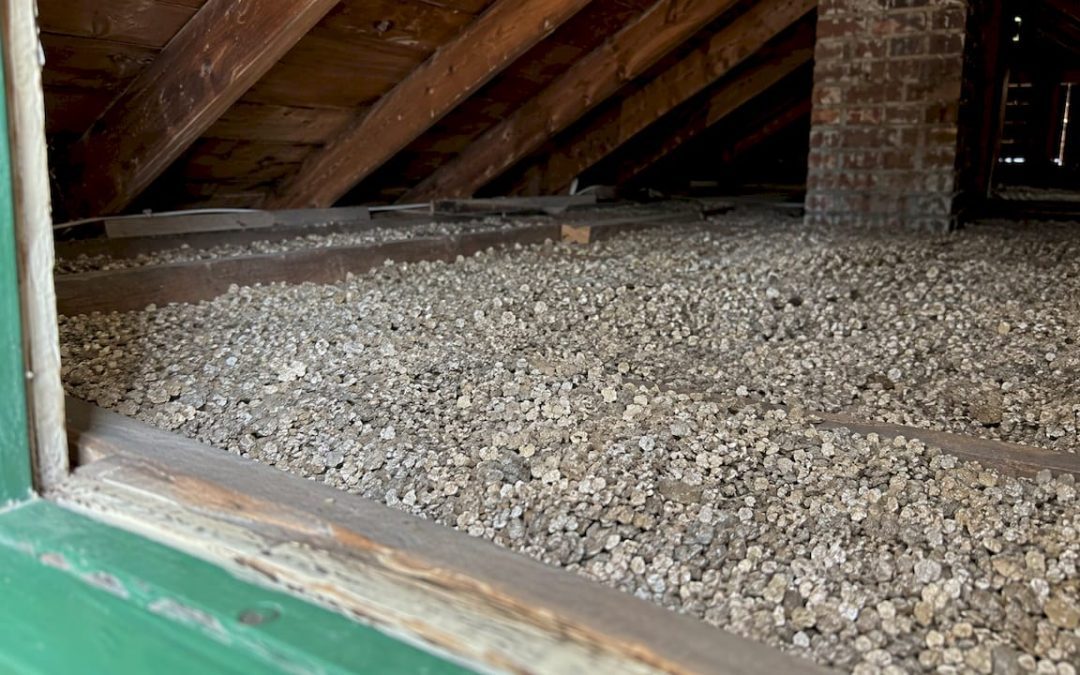
Vermiculite itself is a natural mineral, but the vermiculite insulation found in many older attics may contain asbestos, and you cannot tell by looking. The EPA’s advice is to treat attic vermiculite as asbestos-contaminated unless it has been shown otherwise, leave it undisturbed, and bring in a trained professional before any work that could stir it up. If you are buying a home in the St. Louis area or Southern Illinois and the attic holds pebbly gray-brown or gold insulation, that finding should shape your inspection plan, not end your deal.
TL;DR
- Vermiculite is a mica-like mineral. Asbestos is not part of it by nature, but some mined ore contained asbestos, and the EPA says to assume attic vermiculite may be contaminated.
- Zonolite is the best-known brand. Most U.S. vermiculite came from one mine in Libby, Montana, whose ore was asbestos-contaminated.
- The danger is airborne fibers. Insulation that stays sealed and untouched is not expected to expose you, but disturbing it can.
- Do not dig, sample or vacuum it yourself. Have an asbestos professional assess it before a purchase decision or renovation.
- A floor-tile asbestos test is a different test. It tells you nothing about the attic.
Table of Contents
- What vermiculite is, and why asbestos comes up
- How to recognize vermiculite insulation
- What the health risk actually is
- What to do if you find vermiculite while buying
- A note on Illinois and Missouri homes
- Asbestos tile testing is a different question
- Quick reference: look, test or leave
- How we can help
- Our perspective
- FAQ
- Sources
What vermiculite is, and why asbestos comes up
The EPA describes vermiculite as a mica-like mineral, and says asbestos is not intrinsic to it. Only some ore bodies sit alongside asbestos minerals. When vermiculite is heated at a processing plant, it expands into light, pebble-like pieces that pour easily, resist fire and insulate well. That is why it went into attics and, in some homes, wall cavities.
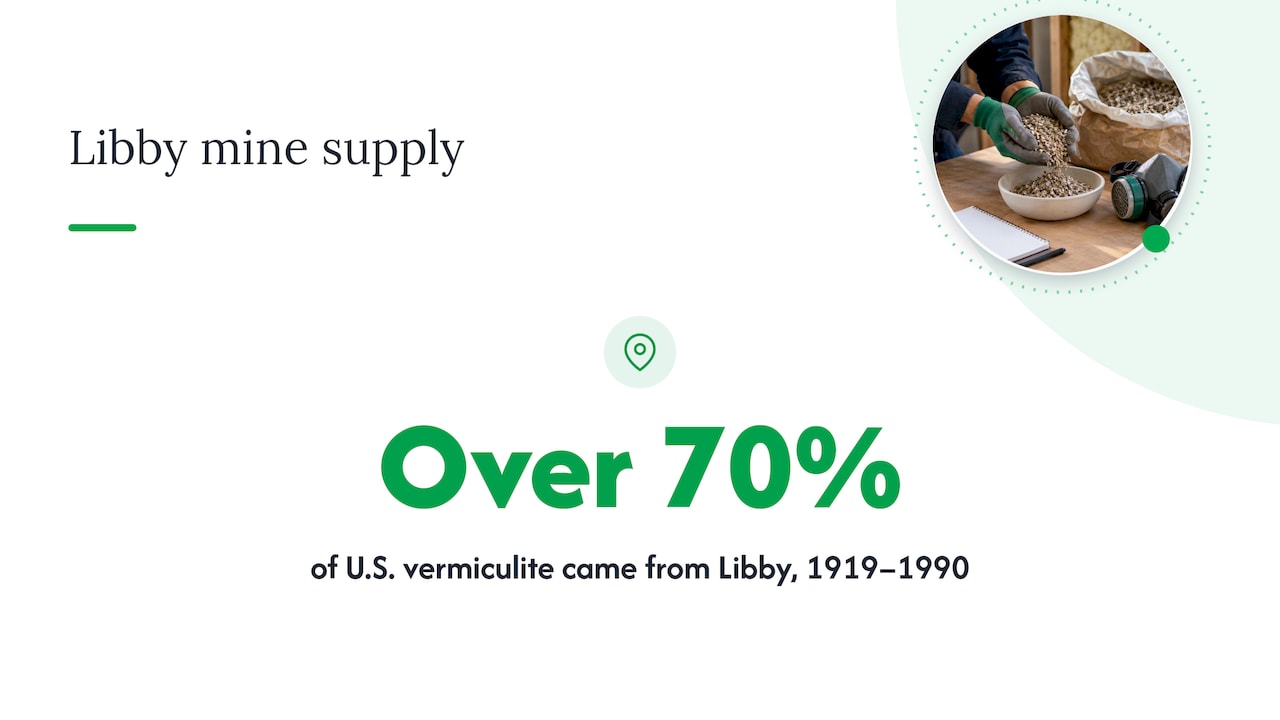
The problem is where much of it came from. According to the EPA, a mine near Libby, Montana, supplied more than 70% of U.S. vermiculite between 1919 and 1990, and the Libby material was contaminated with asbestos. A lot of it was sold under the Zonolite name. So when people search for Zonolite insulation, they are really asking whether their attic holds Libby-origin material.
That is the logic behind the EPA’s cautious stance. Nobody can say from the pebbles alone which mine they came from, so the safe assumption is that attic vermiculite may contain asbestos.
How to recognize vermiculite insulation
You will usually find it in the attic floor, poured between joists. It is loose-fill, not rolled batts. Typical clues from public health agencies:
- Color and form: the EPA says it is pebble-like and commonly gray-brown or silver-gold.
- Size: Wisconsin’s health department says it ranges from fine particles to pieces nearly an inch long.
- Texture: the Minnesota Department of Health lists shiny flakes, accordion-like pieces and Zonolite markings on bags or boxes as common clues.
The same sources make an important point: none of this confirms asbestos. The fibers are too small to see, and the EPA states that appearance cannot establish whether the insulation contains asbestos. Look is a reason to act carefully, not a result.
In a house built before 1990, that is worth noticing during a showing. Look from the attic hatch with a flashlight, and do not step into it, scoop it, or poke it. Do not open walls to check either. Our guide to an attic insulation inspection covers how a safe visual check works for buyers.
What the health risk actually is
Asbestos harms people when the fibers are in the air and get breathed in. The EPA lists asbestosis, lung cancer and mesothelioma as the diseases linked to inhaled asbestos, and says risk rises with the level, length and frequency of exposure.
Two points matter most for a buyer:
- Presence is not the same as exposure. The EPA says that if vermiculite is not entered, handled or disturbed, exposure from it is likely not occurring. Illinois public health guidance, from the Illinois Department of Public Health, likewise describes it as mainly a breathing hazard when disturbance releases fibers into the air.
- Disturbance is how fibers travel. Moving the insulation, storing boxes on it, running a bathroom fan duct through it or remodeling nearby can release fibers that reach other parts of the house.
Individual risk varies. The federal ATSDR notes that it depends on how often, how long and how intensely someone is exposed, the type and size of the fibers, smoking, existing lung disease and age.
What happened in Libby
The starkest evidence comes from the town beside the mine, where workers and residents were exposed heavily and for years. ATSDR reports that asbestosis deaths there ran 40 to 80 times higher than expected in its 2002 assessment, and a later NIOSH study of 1,672 workers found asbestosis mortality 165 times higher than expected (same ATSDR summary). Those are occupational and community exposures far beyond what an untouched attic produces. They explain why agencies take the material seriously, not what a household should expect.
What a study of real homes found
A CDC-hosted study of homes with vermiculite attic insulation found amphibole asbestos in bulk samples from all 40 homes tested. Amphibole fibers turned up in the living spaces of 12 homes (26%), and chrysotile, another asbestos type, in 45 homes (98%). The authors caution that living-space fibers can also come from other historical asbestos materials, so the insulation is not necessarily the sole source.
Takeaway: homes with this insulation deserve a careful, professional look, and the attic should not be treated as a storage room.
What to do if you find vermiculite while buying
A home with vermiculite is not automatically a bad purchase. It is a known condition you can plan for, price and manage. Here is a sensible sequence.
1. Note it and leave it alone
If you spot it at a showing or during the inspection, stop at the hatch. Keep children and pets out of the attic and don’t store anything up there. The EPA’s guidance is to limit trips into the attic and leave the material undisturbed.
2. Tell your inspector and agent early
The sooner it is on the table, the more room you have in your inspection period. Put it in writing, so it is part of the negotiation record. Our home inspection red flags list shows where attic and insulation findings fit among other items buyers weigh.
3. Decide what you need to know
The EPA says further testing is not necessary just to take precautions. You need testing or professional assessment when you plan renovations, an attic conversion, new wiring, a roof or HVAC job that will disturb the material, or when the insulation is damaged. The EPA’s general asbestos guidance says suspect materials should generally be sampled only when damaged or about to be disturbed, and that sampling should be done by a trained, accredited asbestos professional.
The Washington State Department of Health gives the same direction: asbestos cannot be reliably identified by sight, do-it-yourself sampling is not recommended, and intact material that will not be disturbed should generally be left alone. Taking a scoop home in a bag is how a manageable condition becomes an exposure.
4. Price the next steps before closing
What you do with the finding shapes your negotiation. If you plan to leave it in place, the cost may be minimal. If your plans require removal, get quotes. The EPA advises that when removal is necessary, you use a trained and accredited asbestos-abatement contractor independent from the assessor. Abatement is a separate trade from inspection and testing, and that independence keeps the assessment objective. Our page on asbestos testing cost explains what drives testing prices so you can budget.
5. Plan your renovations around it
If you want to finish the attic, replace the roof, or add recessed lights, tell every contractor about the vermiculite before they bid. Work that disturbs the insulation needs an asbestos professional first. This is the single most common way a quiet attic condition becomes a health problem.
A note on Illinois and Missouri homes
St. Louis and the Metro East have a large stock of homes built before 1990, the era when loose-fill vermiculite was in common use. Mid-century ranches, bungalows and brick two-story homes with accessible attics are where we would expect buyers to bump into it. Older homes also bring other age-related materials, from lead paint to old floor tile, so this one finding should be read alongside the rest of the house. Our guide to environmental hazard inspections lays out how those items fit together, and the historic home inspection page covers what else to check in older properties.
Asbestos tile testing is a different question
Many buyers who search for vermiculite also search for asbestos tile testing, because old 9-inch vinyl floor tiles and their adhesive come up in the same older homes. Keep the two separate.
The EPA’s FAQ explains that under the school-focused AHERA rules, floor tile can be analyzed by polarized light microscopy, but EPA recommends the more precise TEM method because it is better at low concentrations and helps avoid false negatives. By either method, a result above 1% asbestos makes the tile asbestos-containing material.
Two things that result does not do. It classifies only the tile sampled, and it says nothing about the attic insulation. And the school-inspection method is not a recipe for deciding how to treat vermiculite at home.
The practical rule for tile is the same as for insulation: intact tile that stays put is generally left alone, and you test before you sand, rip up or demolish it. A floor you plan to replace should be sampled by a professional first.
What a lab result below 1% means
The 1% line comes from the regulatory definition. The EPA says that under AHERA, vermiculite with less than 1% asbestos is not classed as asbestos-containing material when compliant bulk sampling and analysis show it. Even so, EPA says schools may prudently treat vermiculite as asbestos-containing before disturbing it. For a homeowner, that means a low number does not make careless handling acceptable. Keep the same cautious habits until a professional tells you what applies to your plans.
Quick reference: look, test or leave
| Situation | What to do |
|---|---|
| Pebbly insulation spotted at a showing | Look from the hatch only, tell your inspector and agent |
| Attic stays as is, no work planned | Leave undisturbed, limit visits, no storage |
| Renovation, attic conversion or roof work planned | Have an asbestos professional assess before work starts |
| Insulation is damaged or has spilled into living space | Keep people out of the area and call an asbestos professional |
| Removal is needed | Hire an accredited abatement contractor independent of the assessor |
| Old floor tile you plan to remove | Have it sampled by a professional first, separate from the attic |
How we can help
We offer buyer’s home inspections and environmental inspections and testing, which includes asbestos, across the St. Louis Metro area and Southern Illinois. We return reports within 24 hours, which helps when an attic finding has to be weighed against an inspection deadline. We also offer evening and weekend scheduling, and discounts for veterans and first-time buyers. Video and in-person walkthroughs are both available, so a busy buyer or agent can follow the findings without rearranging the week.
If you are buying an older home and want the attic assessed before you commit, start with our inspection services.
If you are comparing environmental tests, our overview of environmental home testing explains which ones matter first for buyers, including radon and lead.
Our perspective
Most buyers we meet hear the word asbestos and picture a deal falling apart. In practice, the first step is simply knowing what is in the attic and what you intend to do with the house. Undisturbed insulation and a clear plan are a very different situation from a remodel that opens up the ceiling without anyone checking.
We built our process around making that decision easier. Reports come back within 24 hours, so you are not guessing for days with an inspection clock running. Our Create Request List™ helps buyers and agents turn findings into a clear repair and negotiation request. For first-time buyers, veterans and families on a tight budget, we offer discounts and scheduling that fit around work, including evenings and weekends.
Our advice is to bring us in early. If the attic holds vermiculite, tell us before the inspection so we can plan the environmental testing that fits your purchase and your renovation plans.
JOHN
FAQ
Is vermiculite an asbestos product?
No. Vermiculite is a natural mineral, and the EPA says asbestos is not intrinsic to it. The concern is that ore from some mines, notably Libby, Montana, was contaminated, and much of it was sold as insulation. Because you cannot tell by sight, the EPA advises assuming attic vermiculite may contain asbestos.
Is Zonolite insulation always asbestos?
Not every bag was contaminated, but Zonolite is the brand most associated with the Libby ore, which the EPA says was asbestos-contaminated. Laboratory analysis is the only way to know what a given sample contains, and sampling should be done by an accredited professional, not by the homeowner.
Will brief exposure hurt me?
Risk depends on how much asbestos is in the air, how long and how often you are exposed. The EPA says disturbed insulation can release fibers, so avoid entering the attic or handling the material. If you have disturbed it, keep people out of the area and talk to your doctor about your specific situation and an asbestos professional about cleanup.
Should I buy a house with vermiculite in the attic?
Many people do. Leaving it sealed and undisturbed is the EPA’s baseline advice. Decide based on your renovation plans, since work that disturbs it needs an asbestos professional first, and factor any assessment or removal cost into your offer.
Does a positive tile test mean the attic has asbestos too?
No. A tile result applies only to the tile sampled. Attic insulation is a separate material and needs its own assessment by a qualified professional.
Sources
- EPA: Protect Your Family from Asbestos-Contaminated Vermiculite Insulation
- EPA: What is Vermiculite?
- Wisconsin DHS: Asbestos in Vermiculite Insulation
- Minnesota Department of Health: Vermiculite Insulation
- ATSDR: Summary Report, Exposure to Asbestos-Containing Vermiculite
- Illinois Department of Public Health: Asbestos in Vermiculite
- CDC-hosted study: Asbestos-Contaminated Vermiculite Attic Insulation in Homes
- EPA: Asbestos Frequently Asked Questions
- EPA: Vermiculite insulation and polarized light microscopy results
- EPA: My attic has vermiculite insulation, am I at risk?
- Washington State Department of Health: Asbestos
Recent Comments