
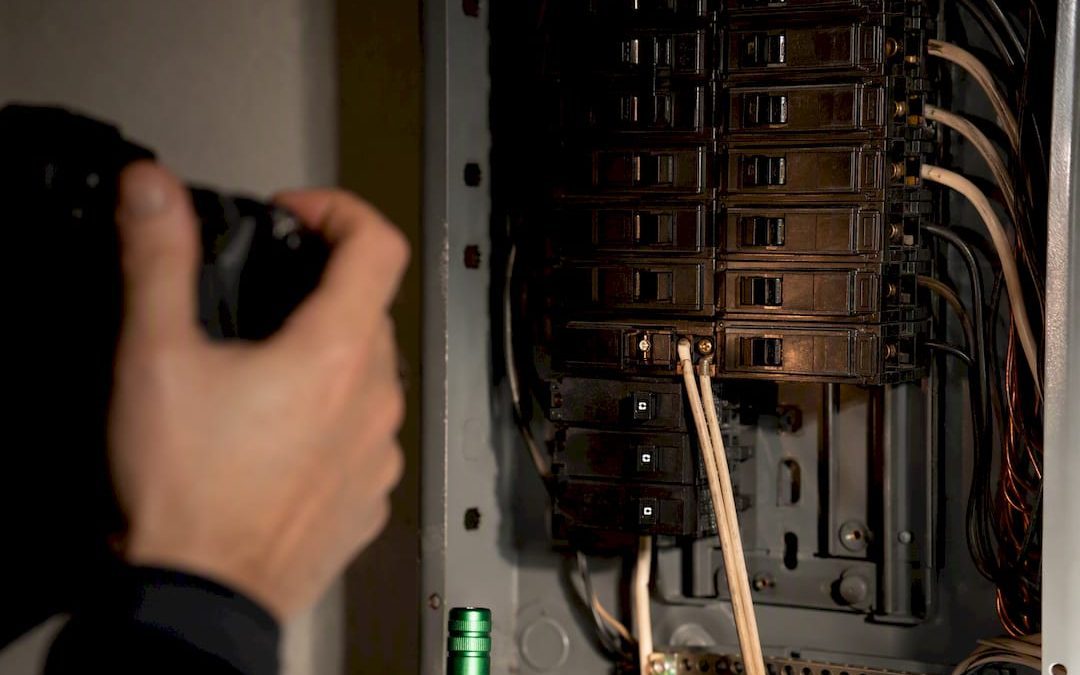
A double-tapped breaker is two separate wires crammed under one breaker terminal built for a single conductor. It’s not automatically an emergency, but it’s a recognized code violation in most cases, and a genuine fire risk if the connection loosens over time. Don’t touch or reset the breaker. Photograph the panel and get a licensed electrician or a home inspection scheduled soon.
TL;DR:
- Double taps are often caused by panels running out of slots, outdated wiring, or homeowner shortcuts, and are visible with a flashlight and camera inspection.
- Breakers rated for two conductors allow safe installation of two wires; absence of such labels indicates only single-conductor use is permitted.
- Fixing a double tap typically involves a pigtail splice or replacing with a listed tandem breaker, but more extensive work may require a panel upgrade or replacement.
- Costs for repairs range from under an hour’s labor for pigtails to thousands for full panel replacement, often requiring permits and inspections.
- Homeowners should inspect their panels annually and avoid touching or modifying live components; professional evaluation is necessary if signs of damage or burning are present.
Table of Contents
- Understanding Double Tap Circuit Breakers and Double Lugging
- Why Double-Tapped Breakers Worry Electricians and Inspectors
- How to Spot a Double Tap Without Touching a Live Wire
- Fixing a Double Tap: Pigtails, New Breakers, and Panel Upgrades
- What Repairing a Double Tap Actually Costs
- When to Handle It Yourself and When to Call an Electrician
- How Often You Should Check Your Panel for Double Taps
- How Enforcement of Double Tap Rules Varies by Location
- Inspector’s View: Turning a Report Finding Into a Buyer’s Next Move
- How Hunt Home Inspection Handles Electrical Panel Findings
- Sources
Understanding Double Tap Circuit Breakers and Double Lugging
A double tap happens when two conductors are forced under a single screw terminal designed to grip one wire. Double-lugging describes the same problem at a bigger scale, usually at the main service lugs or a large feeder terminal, where multiple large conductors get bundled onto a lug rated for one. A tandem breaker is different from both. It’s a manufacturer-approved device built with two separate terminals in one slot, sized specifically to fit two circuits safely. Confusing a tandem breaker with an illegal double tap is one of the most common mistakes homeowners make when reading their own panel.
Double taps show up for a few predictable reasons:
- The panel ran out of open slots, and someone needed to add a circuit without adding a breaker
- A DIY electrical project skipped a permit and an inspection that would have caught the shortcut
- An older panel was never designed for the electrical load a modern household demands
- A previous owner or handyman assumed “it fits” meant “it’s allowed”
Checking whether a connection is legitimate starts with the breaker’s own label. Manufacturers stamp breakers rated for two conductors right on the housing, often near the terminal screw. No label means no double conductors, full stop.
Why Double-Tapped Breakers Worry Electricians and Inspectors
The danger isn’t theoretical. Two wires under one screw rarely get equal, even pressure. One wire ends up loose, and a loose connection generates resistance. Resistance generates heat. Heat breaks down insulation, and a hot enough connection can arc, which is how electrical fires start inside a wall or panel where nobody sees it coming until it’s too late.
NEC 110.14(A) governs this directly. The National Electrical Code requires that conductors be terminated only in terminals identified for the number of conductors actually being used. If a breaker isn’t listed for two wires, putting two wires on it violates the standard, regardless of how tight the connection looks on installation day.
There’s a manufacturer-labeling exception worth knowing: some breakers are genuinely built and rated for two conductors, and those are legal to use exactly as labeled. The code doesn’t ban multiple conductors outright. It bans doing so on hardware never designed for the load.
Service-lug double-lugging is arguably worse than a double-tapped branch breaker. When two large conductors share a main lug, they can bypass the kind of individual overcurrent protection a properly split circuit would have, which means a fault has fewer safeguards standing between it and a serious event. That’s part of why inspectors treat double-lugging at the service entrance as a higher-priority finding than a single double-tapped 15-amp circuit deep in the panel.
How to Spot a Double Tap Without Touching a Live Wire
You can identify most double taps with your eyes, a flashlight, and a camera, without ever removing the panel’s dead front or touching a live terminal.
Before you open anything:
- Never remove the panel cover if you smell burning, see smoke, or notice visible damage. Call an electrician instead.
- Keep hands and tools away from the exposed terminals once the dead front is off. Looking costs nothing; touching does.
- Use a flashlight and your phone camera rather than reaching into the panel to get a closer look.
- A non-contact voltage tester adds a layer of confidence, letting you confirm a circuit is live without contact, though it’s not a substitute for professional judgment.
What to look for:
- Two separate wires entering the same screw terminal, sometimes twisted together to look like one connection.
- Mismatched wire gauges or colors sharing a single terminal, a sign the connection was likely added after the fact.
- Discoloration, scorch marks, or a slightly melted look around any terminal or breaker face.
- A panel directory that lists more circuits than the panel appears to have slots for.
Pro Tip: Snap a wide shot of the whole panel interior first, then close-up photos of anything suspicious. Electricians can often diagnose a lot from photos alone before they even arrive, which saves your first visit for the fix instead of the discovery.
To check if a breaker legitimately allows two conductors, look for stamped labeling on the breaker body itself, per Northwest Electric Pros. No label means treat it as single-conductor only.
Fixing a Double Tap: Pigtails, New Breakers, and Panel Upgrades
Electricians reach for a handful of standard fixes, and which one applies depends on how much room and life the panel has left.
- Pigtail splice: Two conductors get joined with a wire nut and a short third wire, called a pigtail, that runs to the terminal. Since only one wire lands under the screw, the connection meets code. This is usually the fastest and cheapest repair, and it works well when the panel has healthy, up-to-date wiring and no capacity problems.
- Add a new breaker: If there’s an open slot, the electrician can split the double-tapped circuit onto its own dedicated breaker, eliminating the shared terminal entirely.
- Install a listed tandem or two-conductor breaker: When the panel is full but the manufacturer makes a listed tandem breaker compatible with that specific panel, swapping in the correct device restores code compliance without adding a new slot. This only works if the panel brand supports tandem breakers in that position, which isn’t universal.
- Subpanel installation: A cluster of double taps, not just one, often signals a panel that’s genuinely out of room. Adding a subpanel gives new circuits somewhere legitimate to go instead of forcing more shortcuts.
- Full panel replacement: Old, deteriorated, or recalled panels sometimes make a targeted repair pointless. If the panel itself is the underlying problem, fixing one double tap and leaving the rest of the panel’s issues in place doesn’t solve much.
Most of these repair paths trace back to the same decision: is this panel worth saving, or does the double tap point to a bigger capacity problem underneath?
What Repairing a Double Tap Actually Costs
Costs scale with how much of the panel needs to change, not just how many wires are involved.
- A single pigtail repair is typically the least expensive fix, often a modest flat labor charge since the job takes an electrician well under an hour once they’re on site.
- Swapping in a listed tandem breaker or adding a breaker to an open slot costs a bit more but still stays a same-visit job in most cases.
- Subpanel installation runs meaningfully higher, since it involves new wiring runs, a new enclosure, and often a permit.
- Full panel replacement is the biggest jump. Labor and parts for panel replacement can climb into the low thousands, especially once permit fees and inspection scheduling get added in.
Permits and follow-up inspections are common for anything beyond a simple pigtail, particularly subpanel and full panel work, since utilities and code officials want documentation for anything touching the service equipment. If an electrician quotes a number far above a simple repair, ask directly whether they’re seeing additional double taps, outdated wiring, or a panel brand with a known failure history. That’s usually the real reason costs jump, not the original single breaker you called about.
When to Handle It Yourself and When to Call an Electrician
You can safely do a few things on your own. Beyond that, step back and call a professional.
- Photograph the panel, note the breaker’s amperage and any visible labeling, and write down what circuit it controls.
- If you smell something burning or see visible melting, shut off the main breaker as an emergency measure and call an electrician immediately.
- Never remove a live termination, add or replace a breaker, or work inside the panel unless you’re a licensed electrician. This isn’t a gatekeeping rule. It’s the difference between a $150 pigtail and a house fire.
- Basic wiring knowledge doesn’t substitute for licensing here. Panels carry enough current to kill, and a wrong move can also void your homeowner’s insurance if damage follows.
Certain signs mean stop reading and start dialing: a burning smell near the panel, visible scorch marks, a breaker that trips repeatedly no matter what’s plugged in, or a panel brand you don’t recognize paired with obvious age. Aluminum branch wiring adds another layer of risk that a general handyman shouldn’t touch without specific aluminum-wiring experience.
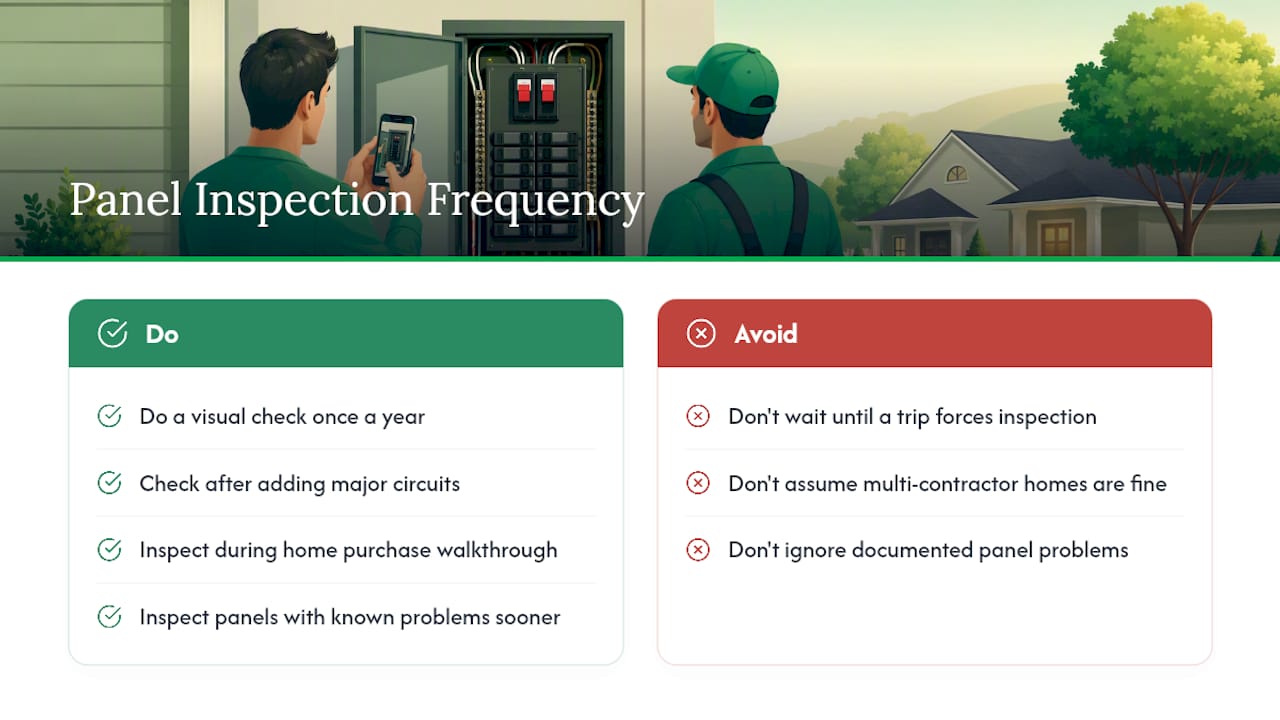
How Often You Should Check Your Panel for Double Taps
Most homeowners never look inside their own panel until something forces the issue, a home sale, a renovation, or a tripped breaker that won’t stay reset. That’s later than it should be.
A visual check once a year is a reasonable habit, especially if your home is older than 20 years or has had electrical work done by more than one contractor over its life. Every time you add a major appliance circuit, a hot tub, an EV charger, a finished basement, it’s worth a quick look afterward to confirm nothing got squeezed onto an existing breaker instead of given its own slot.
Home purchases are the moment double taps get found most often, simply because a licensed inspector is finally looking with trained eyes. If you’re buying a home built before the 1990s, or one that’s changed hands multiple times with visible DIY additions, budget extra attention for the panel during your inspection walkthrough.
Panels with a documented history of problems deserve a lower threshold for concern. If a panel brand is known for broader failures, finding even one double tap on it often shifts the conversation from “fix this one wire” to “this panel needs to go,” because the double tap may be a symptom of a panel that was never reliable to begin with.
How Enforcement of Double Tap Rules Varies by Location
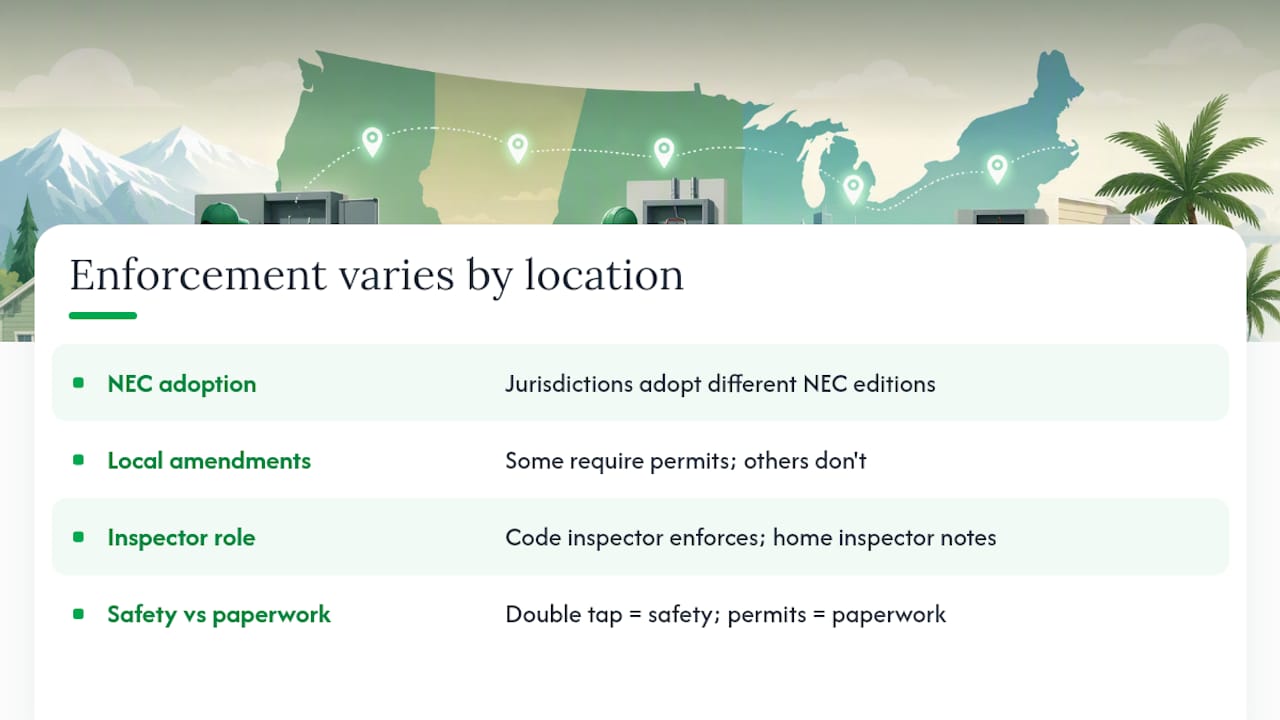
The National Electrical Code sets the baseline, but it’s a model code, not a federal law. States and municipalities adopt NEC editions on their own schedule, and some lag years behind the latest version. That means a double tap flagged as a clear violation in one jurisdiction might get evaluated under a slightly older code cycle a county away, even though the underlying safety principle in NEC 110.14(A) hasn’t changed edition to edition.
Local amendments add another layer. Some jurisdictions require a licensed electrician to pull a permit for any panel work, including a simple pigtail repair, while others allow more routine fixes without one. Enforcement also depends heavily on who’s looking. A code inspector doing new construction sign-off applies a different standard than a home inspector doing a pre-purchase visual review, who typically documents the double tap as a recommendation for professional evaluation rather than issuing any kind of citation.
None of this changes the physics. A loose terminal generates heat regardless of which code cycle your city has adopted. Treat local permit rules as a paperwork question and treat the double tap itself as a safety question, because those two things run on separate tracks even when they overlap.
Inspector’s View: Turning a Report Finding Into a Buyer’s Next Move
When a double tap shows up in an inspection report, the wording matters. A well-written finding doesn’t just say “double tap present.” It names the location, describes what was visually confirmed, and recommends evaluation by a licensed electrician rather than guessing at a fix. That distinction lets a buyer act instead of just worrying.
If you’re the buyer, the move is straightforward: get a written estimate from a licensed electrician before you close, and use that number to request a repair credit or a repair contingency rather than letting it slide. Ask for photo documentation of the completed fix, not just a verbal confirmation, so you have a record if the same panel shows problems again later. Reading inspection report terminology ahead of time helps you understand exactly what an inspector means when a finding uses words like “deferred” or “recommend further evaluation.”
Documentation is what turns a scary-sounding finding into a negotiable line item instead of a deal breaker.
— JOHN
How Hunt Home Inspection Handles Electrical Panel Findings
Finding a double tap during a walkthrough is exactly the kind of issue that benefits from a documented, same-day report instead of a vague verbal warning you have to remember correctly later. Full inspection reports are delivered within 24 hours, with options for attending in person or using video inspection to walk the property remotely with an inspector live on the call.

Every panel finding, double tap included, gets photographed and written into your report in plain language, then organized through the Create Request List™ tool so you and your agent can turn it into a specific repair request instead of a back-and-forth guessing game. That documentation is what gives you leverage to ask for an electrician’s estimate or a repair credit before closing, rather than discovering the problem after you already own it. If you’re a first-time buyer, veteran, or working with a tight timeline, Jhunthomeinspections also offers pay-at-close options to keep costs off your plate until settlement. Schedule your inspection service today and get panel issues like this one documented before they become your problem to solve alone.
Sources
A few sources back up everything covered here, worth bookmarking if you want to go deeper on the code or the repair process:
- What is Double Tapped Breaker and Double Lug in Main Panel
- Fix a double-tapped circuit breaker
- Double Tapped Breaker How to Fix It Safely – Northwest Electric Pros
Recent Comments