
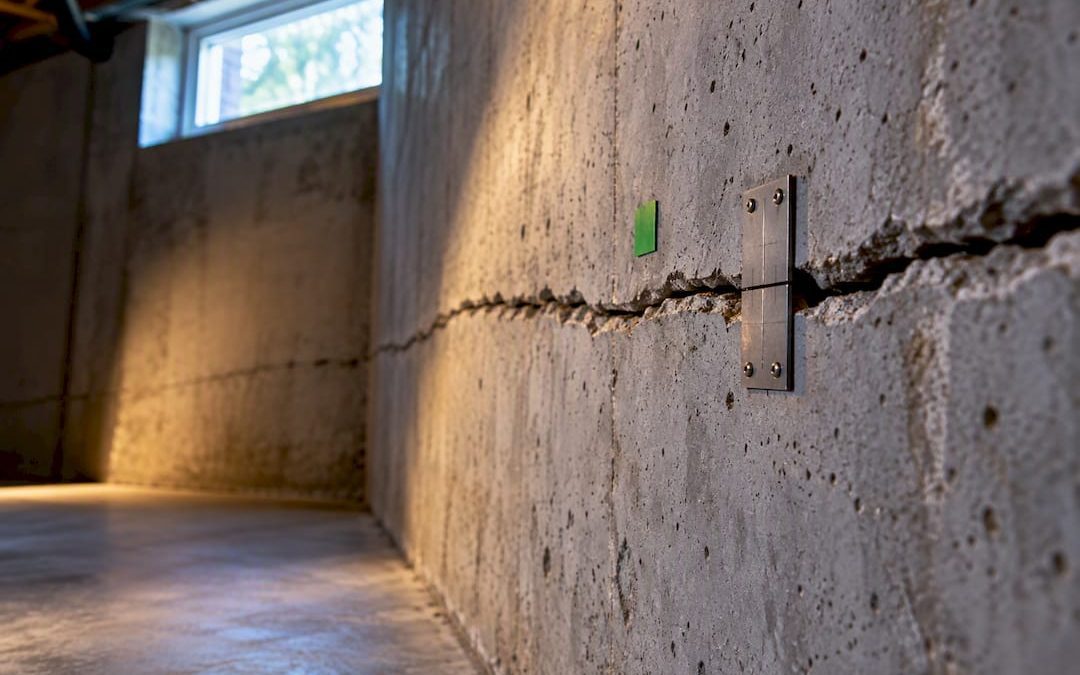
Foundation cracks fall into five main categories: horizontal, vertical, diagonal or stair-step, hairline/shrinkage, and slab or footing cracks. Horizontal and diagonal cracks tend to signal the most serious problems, while thin vertical and hairline cracks are usually cosmetic. The immediate move for any crack: measure it, photograph it with a date, and watch it. If it’s actively widening, shows displacement, lets in water, or measures over a small threshold generally regarded as significant, get a licensed inspection or structural engineer involved.
TL;DR:
- Horizontal cracks are often signs of serious issues related to soil and water pressure, especially if combined with wall bowing or displacement.
- Vertical cracks in the basement wall are usually low risk unless they are growing, displaced, or associated with other structural movement signs.
- Monitoring crack width over a 90-day period, especially for cracks wider than 1/8 inch, helps determine whether immediate professional inspection is necessary.
- Cracks resulting from shrinkage or minor settling are generally cosmetic, but any crack that allows water or gas entry should be sealed promptly.
- Structural repairs should address underlying causes like water drainage or foundation movement; simply sealing cracks without fixing the root issue leads to recurring problems.
Table of Contents
- Types of Foundation Cracks and What They’re Telling You
- How to Measure a Crack and Know When It’s Getting Worse
- Repair Options and What They Say About the Underlying Problem
- What a Home Inspector Documents (and When They Call in an Engineer)
- What Actually Matters When You’re Staring at a Crack
- Get a Documented Foundation Assessment Before You Guess
- Sources
- FAQ
Types of Foundation Cracks and What They’re Telling You
Not all cracks are created equal, and the shape a crack takes usually tells you more than its size does. A hairline vertical crack and a horizontal crack of the same width carry completely different risk levels, because they come from different forces acting on your foundation.
Horizontal cracks run parallel to the ground, usually in a basement or crawlspace wall. These are the ones to watch. They typically form when lateral soil pressure or hydrostatic pressure, water-saturated soil pushing against a wall from the outside, exceeds what the wall can resist. If you see a horizontal crack combined with a wall that bows inward, that’s a sign of ongoing structural movement, not a one-time settling event. InspectApedia’s crack pattern catalog treats horizontal cracking as one of the higher-priority patterns to document and monitor closely.
Vertical cracks run up and down, often near the middle of a wall or a poured-concrete panel. Most come from ordinary concrete shrinkage as it cures, or minor settling as the ground beneath the footing compresses under the weight of the house. On their own, vertical cracks are usually the least worrying type. They become a concern only when one side of the crack sits higher than the other, a sign called displacement, or when the gap keeps growing over time.
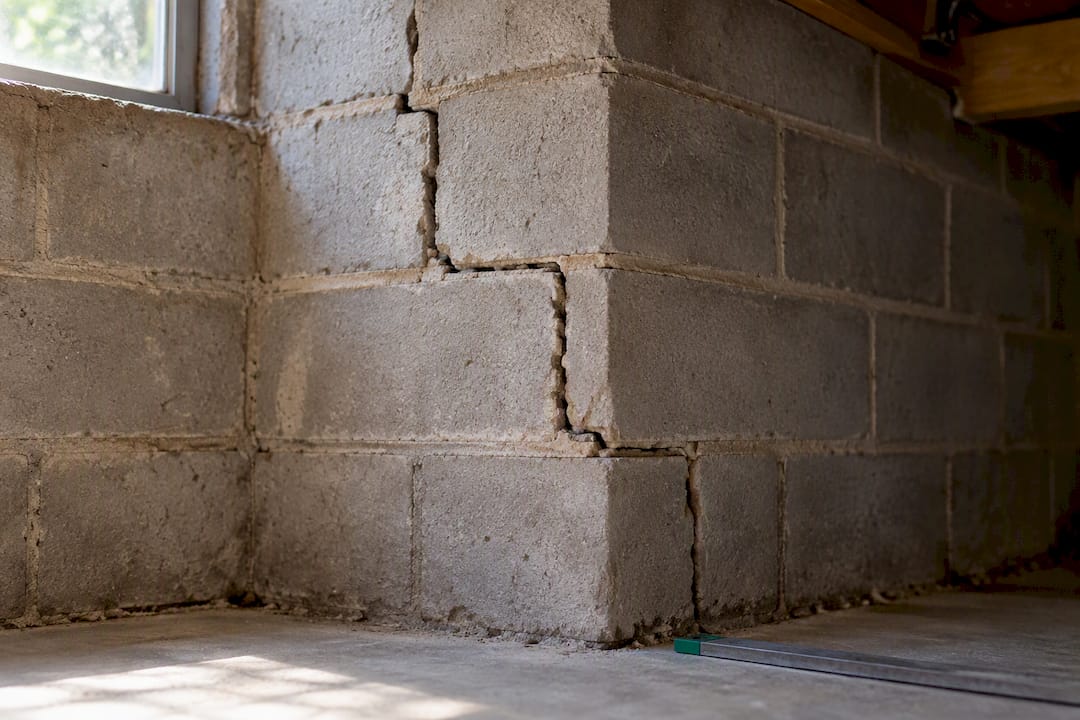
Diagonal and stair-step cracks show up most often in concrete block or brick foundations, following the mortar joints in a jagged, step-like pattern. These usually point to differential settlement, meaning one section of the foundation is sinking faster than another. Research on foundation movement patterns links this uneven sinking directly to angular distortion in the structure above, which is why stair-step cracks near a corner deserve a closer look than one running through the middle of a long wall.
Hairline and shrinkage cracks are thin, often appearing within the first year after a concrete pour as the material cures and loses moisture. Most are harmless. The concern isn’t the crack itself but what it lets through: even a hairline gap can become an entry point for water or radon gas over time if it’s left unsealed.
Slab, footing, and re-entrant cracks deserve their own category because location changes everything. Cracks radiating from the corner of a window or door opening (re-entrant cracks) are common and rarely structural, since those corners naturally concentrate stress. Cracks running through a slab floor or along a footing are worth flagging to a professional, especially if the floor above shows sloping.
The line between structural and non-structural usually comes down to a simple test: does the crack affect the house’s ability to carry its own weight and resist lateral forces? A vertical hairline crack in a basement wall almost never does. A widening horizontal crack with visible wall bowing almost always does.
Quick reference by pattern:
- Horizontal: often serious, linked to soil pressure, watch for bowing
- Vertical: usually low risk unless growing or displaced
- Diagonal/stair-step: linked to differential settlement, worth an engineer’s opinion if near a corner
- Hairline/shrinkage: typically cosmetic, seal to block moisture
- Slab/footing: location dependent, pair with floor-level checks
ACI’s technical guidance on concrete cracking notes that cracking is common in nearly all concrete structures and traces most cases back to shrinkage, thermal movement, or restraint rather than a single dramatic failure. That’s a useful reset for anxious homeowners: a crack existing doesn’t mean something went wrong during construction. It means concrete is doing what concrete does.
How to Measure a Crack and Know When It’s Getting Worse
A crack you can’t quantify is a crack you can’t make decisions about. Start with a simple ruler or a purpose-made crack comparator card, and record the width in both millimeters and inches, since contractors and engineers use both interchangeably.
Here’s the practical process:
- Find the widest point. Cracks rarely have a uniform width, so measure at three or four spots and log the largest one.
- Photograph with a reference object next to the crack, a coin or ruler works, and note the date directly on the photo file name.
- Sort by width category. Hairline cracks (barely visible, often under 1/16 inch) are usually cosmetic. Consumer guidance from BobVila puts cracks under 1/8 inch in the “likely cosmetic” range, 1/8 to 1/4 inch as “monitor or seal,” and anything past 1/4 inch as “call a professional.” Separately, engineering-adapted thresholds tied to severity assessment flag cracks over roughly 2.0 mm as associated with meaningful movement, while ACI-based environmental thresholds treat cracks near 0.3 mm as the point where moisture and gas can start working their way in.
- Mark the ends of the crack with a pencil line and date so you can see at a glance if it’s extending.
- Recheck every few weeks for the first three months. This 90-day window is the standard rule of thumb professionals use to separate an active crack from a dormant one, since seasonal ground movement can create false alarms in a single snapshot.
Pro Tip: Take your monitoring photos at the same time of day and season if possible. Soil moisture swells and shrinks with temperature, and a crack that looks stable in July can widen slightly by February simply from frost heave, not new structural failure.
Watch for these red flags regardless of crack width: water actively seeping through, doors or windows that suddenly stick, floors that visibly slope, or several new cracks appearing near each other within weeks. Any one of these justifies calling in help sooner than the 90-day monitoring period would otherwise suggest.
Repair Options and What They Say About the Underlying Problem
The right fix depends entirely on whether the crack is dormant or still moving, and whether the cause is inside the wall or in the soil around it.
- Cosmetic sealants and epoxy injection work for dormant, non-structural cracks, mainly hairline and stable vertical ones, where the goal is just blocking moisture and gas.
- Polyurethane injection handles active water infiltration better than epoxy because it flexes slightly and expands to fill a crack even in damp conditions.
- Wall anchors, carbon fiber strips, and underpinning come into play when a crack signals real structural movement, bowing walls, differential settlement, or a footing that’s lost bearing capacity. These are engineered solutions, not weekend fixes.
- Grading, gutter extensions, and French drains address the root cause behind a huge share of foundation cracking: water pooling against the foundation. ACI 224.1R is direct about this: repairing a crack without fixing what caused it usually means watching the same problem come back.
A sealed crack on a foundation with poor drainage is a temporary patch, not a solution. If your contractor recommends injection without mentioning grading or drainage, ask why. Get at least two opinions on any structural repair, one from a foundation repair contractor and, for anything involving wall anchors or underpinning, one from a licensed structural engineer who has no financial stake in selling you the repair.
What a Home Inspector Documents (and When They Call in an Engineer)
A home inspection isn’t a structural engineering evaluation, but it’s usually the first professional set of eyes a crack ever gets. During a standard inspection, cracks get photographed, measured where practical, and prioritized by likely cause and urgency in the final report.
What that typically includes:
- Photo documentation of each visible crack, with location noted (wall, slab, corner, near openings)
- A plain-language note on whether the pattern looks consistent with settlement, shrinkage, or water pressure
- A referral recommendation when a crack shows signs beyond a general inspector’s scope, active widening, displacement, or bowing
Bring photos of past changes, any recent flooding or heavy rain events, and notes on when you first noticed the crack. That history often matters more than the crack’s current width.
What Actually Matters When You’re Staring at a Crack
Stop water intrusion before anything else. Document, measure, and monitor every crack you find, and schedule a professional look the moment you see movement or displacement. An inspection reduces risk before you buy; an engineer resolves the uncertainty an inspection can’t. Keep your photos and notes. They matter for contractor bids and insurance conversations later.
— JOHN
Get a Documented Foundation Assessment Before You Guess
Guessing whether a crack is cosmetic or serious usually costs more than finding out. You can get a documented, photo-backed answer within 24 hours instead of leaving yourself to compare crack widths against articles at midnight.

A buyer’s home inspection or maintenance inspection covers foundation cracks as a standard part of the walkthrough, with prioritized findings, photos, and referral advice built into the report. Both in-person and video-enabled inspections are offered, so you’re not stuck waiting for a single available time slot, and a proprietary tool helps keep your follow-up items organized when you’re negotiating repairs with a seller or contractor. Need more than a foundation check? Add sewer camera or radon testing to the same visit. Request an inspection through the inspection services page and get a report with clear next steps within a day.
Sources
For technical depth beyond this guide, ACI’s 224R report on crack control and 224.1R on causes and repair cover the engineering fundamentals. InspectApedia’s crack dictionary and This Old House offer homeowner-level detail. Always confirm site-specific judgments with a licensed professional.
FAQ
What Does a Concerning Foundation Crack Look Like?
A concerning crack is usually horizontal, diagonal, or wider than about 1/4 inch, especially if it’s paired with a bowing wall, water seepage, or a door that suddenly sticks. This Old House points out that horizontal cracks are consistently among the most serious patterns homeowners encounter.
Are Foundation Cracks Covered by Homeowners Insurance?
Standard homeowners policies generally exclude damage from gradual settling, soil movement, or long-term wear, since insurance covers sudden and accidental events, not slow structural change. Coverage sometimes applies if the crack resulted from a covered peril, like a plumbing leak or storm event, so review your specific policy language or ask your agent directly.
How Can You Tell if a Foundation Crack Is Structural?
Structural cracks tend to be horizontal, diagonal near corners, wider than roughly 2.0 mm, or accompanied by visible displacement where one side sits higher than the other. Non-structural cracks are usually thin, vertical, and stable over a 90-day monitoring period with no new widening.
How Big Is Too Big for a Foundation Crack?
Consumer guidance generally treats cracks under 1/8 inch as low risk, cracks between 1/8 and 1/4 inch as worth sealing and monitoring, and anything beyond 1/4 inch as a signal to call a professional. Width alone isn’t the full picture though. A hairline crack that’s actively growing needs the same attention as a wider, stable one.
Recent Comments