
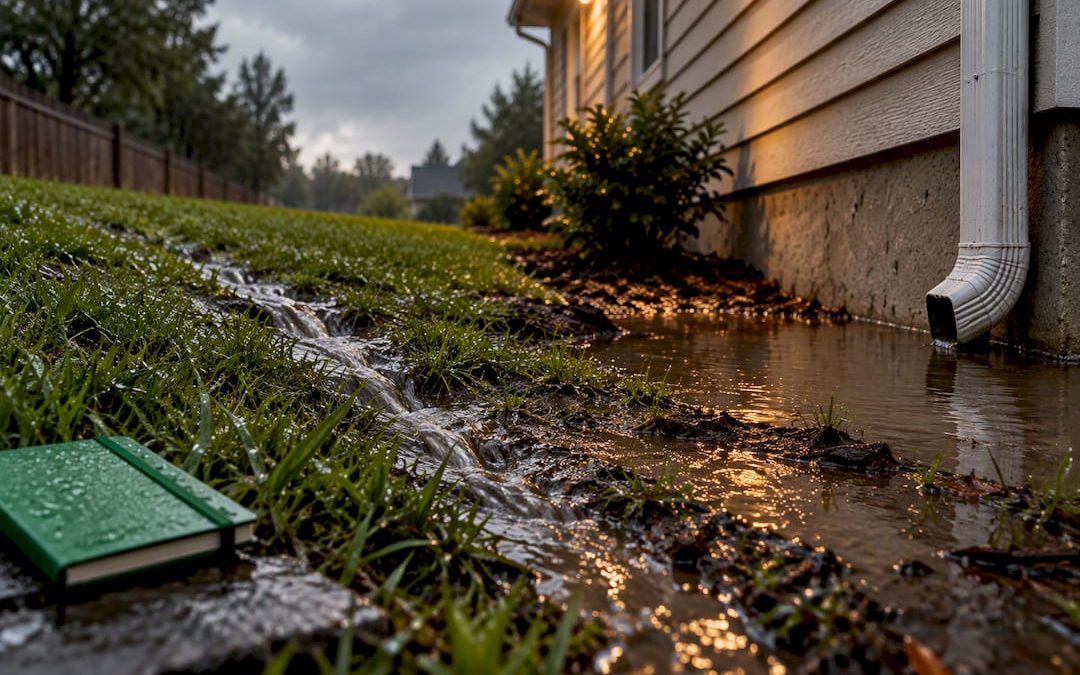
If you have persistent pooling next to your foundation or a damp basement after storms, you likely have a grading or drainage problem. First, extend your downspouts away from the house, clear your gutters, and photograph the standing water with a timestamp. If the pooling returns after the next rain, treat it as a pattern worth measuring, not a one-time fluke.
TL;DR:
- Proper grading requires at least a 0.5 inch per foot slope for the first 10 feet away from the foundation, with alternative solutions like swales or perimeter drains if space is limited.
- Most regrading jobs cost between $1,000 and $3,300, depending on soil type, slope severity, and excavation needs, with drainage add-ons increasing the total.
- Fixing surface drainage issues involves simple steps first, such as clearing gutters and extending downspouts, before progressing to regrading or installing drains for persistent pooling.
- Professional inspections are necessary when structural cracks or basement flooding occur despite repairs, as they provide accurate measurements and documentation for contractor estimates.
- Layered solutions, combining surface grading with subsurface drains or dry wells, are often more effective in urban or complex settings with compacted soil or narrow spaces.
Table of Contents
- Common signs and where to look on your property
- How to diagnose and measure the problem
- Fixes and durable solutions
- Typical cost and timeline expectations
- When to call a pro and the role of an inspection
- Practical priorities that lower risk fast
- How an inspection helps you fix drainage problems faster
- Sources
- FAQ
Common signs and where to look on your property
Grading and drainage problems rarely announce themselves with one dramatic event. They show up as small, repeated clues around the house.
- Standing water or a soggy lawn that stays wet for a day or more after rain
- Pooling under decks, patios, or against retaining walls
- Damp basements, musty crawlspaces, or visible efflorescence (white mineral staining) on foundation walls
- New or widening cracks in the foundation, driveway, or walkway
- Soil slumping, small gullies, or bare patches where topsoil has washed away
- Water sitting in window wells or backing up near the sill
Check the perimeter of the house first, especially low spots, the base of downspouts, and anywhere hardscape meets soil. Roof runoff paths deserve extra attention since a single disconnected downspout can flood one corner of a foundation while the rest of the yard drains fine.
Pro Tip: Photograph problem areas during and right after a rainstorm, not days later. Wet-weather photos with a visible date and time are the evidence contractors and inspectors actually use.
How to diagnose and measure the problem
Before calling anyone, you can gather real measurements that make the problem provable.
- Watch the timing: note how long after rain water appears and how long it takes to disappear
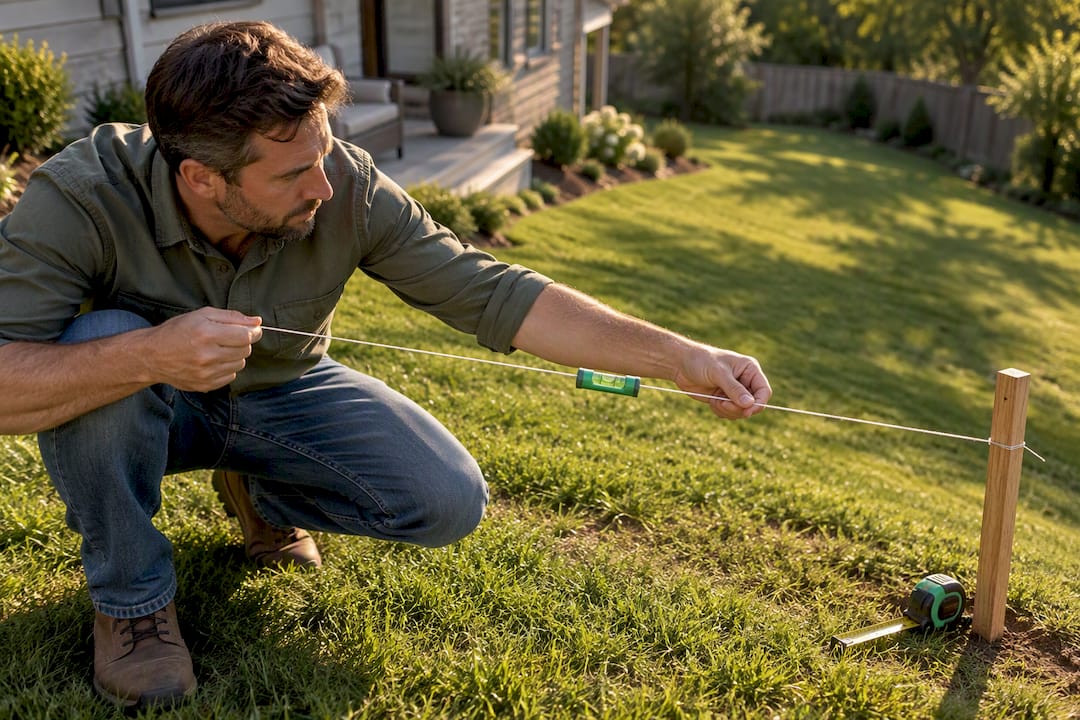
- Measure slope with a string, a line level, or a phone level app across the first 5 to 10 feet from the foundation
- Probe the soil with a screwdriver or rod; if it sinks easily into saturated ground days after rain, drainage is poor
- Check window wells and downspout discharge points for standing water or erosion
- Try a simple infiltration hint test: dig a small hole, fill it with water, and time how long it takes to drain, keeping in mind that recently compacted or wet soil will skew results
Professionals measure the same things more precisely: finished grade slope, soil type and permeability, the presence and pitch of subsurface drains, and whether the outlet (storm drain, daylight point, or dry well) can actually handle the volume. Building America Solution Center guidance recommends sloping permeable surfaces away from the house at least 0.5 inch per foot for the first 10 feet. A flat or negative slope in that zone is a clear trigger for corrective work.
Pro Tip: A $10 line level and a ball of string will tell you more about your yard’s slope in ten minutes than guessing ever will.
Fixes and durable solutions
The right fix depends on how much space you have and how far the problem has progressed.
- Downspout extensions, cleared gutters, and temporary fill can reduce risk within a weekend
- Raising or resealing a sunken window well stops a common entry point for water
- Surface regrading aims for a positive slope in the first 5 to 10 feet, using screened topsoil rather than loose bagged mixes that wash out
- Swales, French drains (perforated pipe wrapped in fabric and set in gravel), catch basins, and dry wells intercept water that surface grading alone cannot handle
- Trench or channel drains, along with re-sloped patios or driveways, correct hardscape that pitches the wrong way
- Pervious paving reduces runoff volume on driveways and walkways where full regrading is not practical
When space near the foundation is tight, a full 10-foot slope run is not always possible. In that case, Building America’s guidance points to swales or perimeter drains as the practical substitute. Urban lots with combined problems, mixed soil types, uneven grading, and dense vegetation often need more than one solution layered together, an approach Oklahoma State Extension describes as common in built-up neighborhoods. A French drain works well for intercepting subsurface flow but does nothing for a downspout dumping water two feet from the foundation, so match the fix to the actual water source.
| Fix | Best for | Typical scope |
|---|---|---|
| Downspout extension | Roof runoff at foundation | DIY, hours |
| Surface regrading | Negative slope near house | Contractor, 1 to 2 days |
| French drain | Subsurface saturation | Contractor, 1 to 3 days |
| Dry well | Isolated pooling with no outlet | Contractor, 1 to 2 days |
| Pervious paving | Driveway or walkway runoff | Contractor, multi-day |
Typical cost and timeline expectations
Costs vary widely based on soil type, slope severity, and how much excavation is involved. Industry cost guidance puts most residential grading jobs at roughly $1,000 to $3,300 as a base, with drainage add-ons like French drains or catch basins adding to that total. Soil hauling and outlet work tend to swing quotes the most.
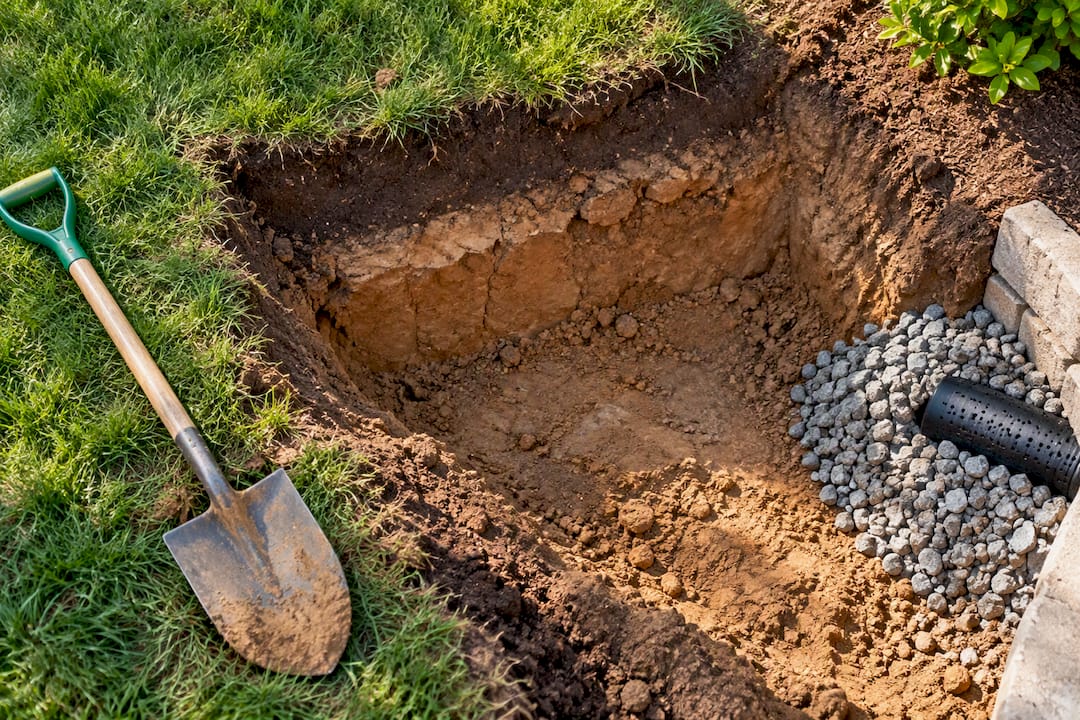
A downspout fix or window well repair is often a same-day job. Surface regrading typically runs one to two days, while a full drainage system with trenching and pipe can stretch across several days, especially where permits or utility locates are required.
When comparing contractor quotes, look for:
- Itemized line items for excavation, fill material, and disposal
- A stated grade target, not just “regrade the yard”
- A clear outlet plan, showing exactly where water ends up
- A written warranty or guarantee period
When to call a pro and the role of an inspection
Some situations move beyond a weekend project. Structural cracks, repeated basement flooding, water pooling despite your mitigation attempts, or soil that stays saturated for days near the foundation all call for professional evaluation.
An inspection documents the details that make contractor quotes accurate instead of guesswork:
- Dated photos of pooling, staining, or erosion
- Grade and slope notes at the foundation perimeter
- Downspout routing and discharge points
- Any secondary hazards found, such as mold or wood rot, flagged for follow-up
That documentation gives you leverage whether you are hiring a contractor, negotiating a home sale, or pulling permits, since it replaces a verbal description with a measured, timestamped record.
Practical priorities that lower risk fast
Inspectors tend to see the same pattern: a disconnected downspout or a two-year buildup of settled backfill causing most of the moisture complaint. Fixing those costs little and prevents most short-term damage. Document with dated photos, rough slope notes, and a simple marked sketch for any contractor you call. Prevention, meaning working gutters and correct grade, is cheaper than repair every time.
— JOHN
How an inspection helps you fix drainage problems faster
An inspection will not regrade your yard, but it gives you the measurements and photos a contractor needs to quote accurately instead of guessing at scope. A home inspection company offers in-person and video inspections with reports returned within 24 hours, and has a tool to keep communication with agents and contractors organized in one place.

If drainage issues showed up during a home purchase or sale, or you just want a documented baseline before calling a contractor, you can schedule an inspection through Hunt Home Inspection’s services page. For an ongoing checklist you can reuse each season, the maintenance inspection checklist covers grading and drainage alongside other upkeep points.
Sources
Most drainage failures trace back to a small set of causes, often stacked together.
- Final Grade Slopes Away from Foundation | Building America Solution Center
- Yard Grading Cost: 2026 Pricing Guide for Property Managers | Breasy
A patch fix, like tossing a few bags of soil against the foundation, often fails within a season because it ignores the underlying cause. If the soil beneath is still compacted or the outlet pipe still lacks proper slope, water finds the same path back.
FAQ
How should I grade my property for drainage?
Aim for a positive slope away from the foundation, with Building America guidance recommending at least 0.5 inch per foot for the first 10 feet on permeable surfaces. Where space is tight, a swale or perimeter drain can substitute for the full run. Use screened topsoil rather than loose fill so the grade holds up over time.
How much does it cost to have your yard regraded?
Most residential regrading jobs run roughly $1,000 to $3,300 as a base, according to industry cost data, with drainage add-ons like French drains or catch basins increasing the total. Soil type, slope severity, and haul-off needs are the biggest cost drivers.
What are the downsides of slope drainage?
Regrading alone will not fix water problems caused by clogged gutters, misrouted downspouts, or compacted subsoil that will not absorb water. Steep regrades near property lines can also shift runoff onto a neighbor’s yard, which is why combining surface grading with a drain or swale is often the more reliable approach.
How do I fix grading issues in my yard?
Start with the cheap fixes: clear gutters, extend downspouts, and reseat sunken window wells. If pooling persists, measure the slope near the foundation and consider surface regrading, a French drain, or a dry well depending on whether the water is coming from the surface or the subsoil.
When should I get a professional inspection for drainage problems?
Call a professional when you see structural cracks, repeated basement flooding, or soil that stays saturated for days despite your own fixes. An inspection documents grade measurements, downspout routing, and any related hazards, giving you a record to use when getting contractor quotes.
Recent Comments