
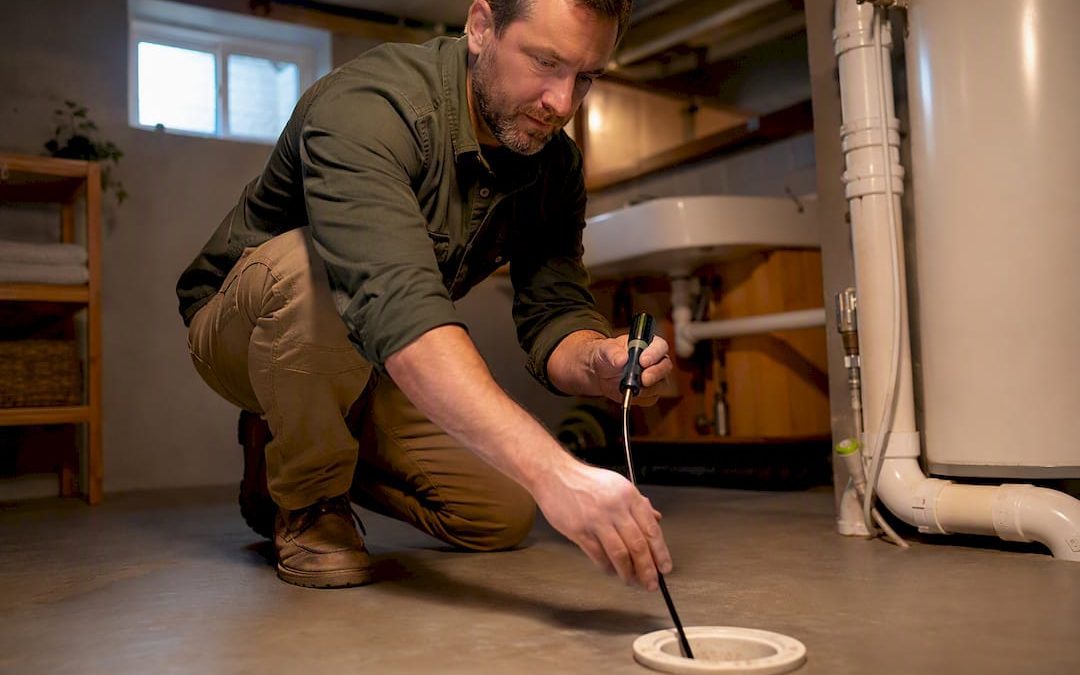
That rotten-egg odor in your house is almost always sewer gas, and the most common cause by far is a dry P-trap. Ventilate the area right away, run water in every drain and toilet you rarely use, and open a window. If you feel dizzy, nauseated, or the smell is coming from more than one fixture, get everyone outside and call a plumber.
TL;DR:
- The most common cause of sewer gas odors is dry P-traps in rarely used drains, which can be fixed by pouring water into the affected fixtures.
- Signs of dangerous sewer gas levels include persistent headaches, dizziness, or eye irritation that do not improve after leaving the area and may require urgent medical attention.
- Blocked or damaged vents, sewer line backups, and faulty toilet seals also contribute to odors and often need professional inspection and repair.
- Running water in all drains monthly, adding mineral oil to seldom-used traps, and inspecting toilet seals prevent recurring odors effectively.
- A sewer camera inspection provides crucial information on pipe damage or blockages that DIY fixes cannot identify, especially when odors persist after basic troubleshooting.
Table of Contents
- What Does Sewer Gas Smell Like and Is It Dangerous?
- What Causes Sewer Gas Smell in a House?
- Fixes You Can Try Right Now
- When Should You Call a Plumber for Sewer Smell?
- How to Prevent Sewer Gas Smells From Coming Back
- What a Sewer Camera Inspection Actually Shows
- Why Inspection Beats Guesswork on Persistent Odors
- Get a Professional Sewer Camera Inspection
- Sources
- FAQ
What Does Sewer Gas Smell Like and Is It Dangerous?
Sewer gas smells like rotten eggs, and that specific stench comes from hydrogen sulfide (H2S), one of several gases produced when organic waste breaks down in your pipes. The mix usually also includes methane, ammonia, and carbon dioxide, but H2S is the one your nose notices first, since people can detect it at concentrations as low as a few parts per billion.
At low household levels, sewer gas is more of an unpleasant nuisance than a medical emergency. It can still irritate your eyes, throat, and lungs, and prolonged exposure has been linked to headaches and nausea, according to Healthline’s overview of sewer gas exposure. The real danger shows up at much higher concentrations, which is rare in a typical home but not impossible in an enclosed or poorly ventilated space like a crawlspace or basement.
Here’s the part most people don’t know: your nose can actually stop warning you. Olfactory fatigue sets in around 150 parts per million, meaning the smell seems to fade or disappear even though the gas is still there, according to toxicology research on hydrogen sulfide. Above roughly 300 ppm, exposure becomes potentially life-threatening. That’s an industrial-accident level, not a typical dry-trap scenario, but it’s exactly why you should never assume a fading smell means a fixed problem.
Watch for these signs that exposure is becoming a real health concern:
- Headache, dizziness, or nausea that gets worse the longer you’re in the room
- Eye, nose, or throat irritation that doesn’t improve after you leave the space
- Coughing, trouble breathing, or a metallic taste in your mouth
- Confusion or fatigue with no other clear cause
If you or anyone in the house has these symptoms, leave the area, get fresh air, and seek medical attention before you worry about the plumbing.
What Causes Sewer Gas Smell in a House?
Most sewer odor complaints trace back to one of five culprits, and the good news is that four of them are things you can check yourself in about fifteen minutes.
1. Dry P-traps
The P-trap is the curved section of pipe under every sink, tub, and floor drain. It holds a small reservoir of water that blocks sewer gas from rising back up through the pipe. Traps in rarely used drains—a guest bathroom, a basement floor drain, a laundry sink you don’t touch for weeks—can dry out. Water in an unused trap typically evaporates within two to four weeks, according to the South Davis Sewer District, faster in dry climates or heated basements. This is the single most common source of a dry P-trap smell in houses, and it’s the first thing to rule out before you assume anything worse.
To test it, pour a quart of water down every drain you don’t use often, including floor drains. If the smell disappears within an hour, you found your answer.
2. Blocked or damaged vents
Plumbing vents let sewer gas escape through the roof instead of your fixtures, and they let air into the system so water can drain without gurgling. A blocked vent (leaves, a bird’s nest, ice in winter) causes gurgling drains, slow draining, and smells that show up specifically when you flush or run water, according to the background on sewer gas venting. If your toilet burps air after flushing or your sink drains slower than it used to while smelling worse, suspect a vent issue rather than a simple dry trap.
3. Sewer line damage or backups
If several drains smell at once, especially the lowest fixtures in the house, or you notice gurgling across multiple rooms, you’re likely looking at a main-line problem: root intrusion, grease buildup, flushed wipes, or a pipe offset. These symptoms, according to SmartPlumbingUSA’s diagnostic guide, point past what a homeowner can fix with a bucket of water. This is where a sewer camera inspection earns its cost.
4. Toilet seal and wax ring failure
A toilet that rocks slightly, has a stain around its base, or lets odor seep from the floor rather than the bowl usually has a failed wax ring, the seal between the toilet and the drainpipe flange. Wax rings degrade over years and don’t announce themselves until sewer gas starts leaking past the seal.
5. Sulfur bacteria in the water heater
If the smell is specifically near a water heater or comes out of hot water taps only, the anode rod inside the tank may be reacting with sulfur bacteria in the water supply, producing a rotten-egg odor that has nothing to do with your drain lines. This is a common false alarm that homeowners mistake for a sewer problem.
A few other pathways worth a quick look:
- Cracks in the foundation near a sewer line can let gas seep into a basement.
- HVAC returns placed too close to a floor drain can pull odor throughout the house.
- Sink overflow holes, the small holes near the rim, can trap grime and smell like sewage even with a working trap.
Fixes You Can Try Right Now
Before you call anyone, run through this sequence. Most of it takes less than half an hour.
- Ventilate first. Open windows, run exhaust fans, and avoid lighting candles, matches, or anything with a flame until you’ve confirmed the smell isn’t strong methane buildup in an enclosed space.
- Refill every trap. Pour a quart of water into each rarely used drain, floor drains included.
- Add mineral oil to seldom-used drains. A thin layer of mineral oil on top of the trap water slows evaporation far longer than water alone. Skip cooking oil, since it goes rancid and creates its own odor problem, according to the South Davis Sewer District’s guidance on trap maintenance.
- Check the toilet. Gently rock the bowl. If it moves, the wax ring may be compromised, and tightening the base bolts is a temporary measure, not a fix.
- Skip the bleach. Pouring bleach or heavy drain chemicals down a smelly drain rarely solves anything and can damage pipes and fixtures without addressing the actual source, per Healthline’s reporting on sewer gas remedies.
- Give it 24 hours and reassess. Note whether the smell returns, gets worse when you run water, or spreads to other rooms.
Pro Tip: Keep a simple log: which drain, what time of day, and whether running water made it stronger or weaker. That log turns a vague complaint into a diagnostic tool if you end up calling a plumber or inspector.
When Should You Call a Plumber for Sewer Smell?
Call a professional when the smell hits more than one fixture, keeps coming back after you’ve refilled every trap, or shows up alongside gurgling, slow drains, or visible sewage backup. Those are signs the problem lives in the main line or venting system, not in a single dry trap.
Physical symptoms change the math entirely. Persistent headaches, dizziness, or breathing trouble tied to the odor mean you treat it as a health issue first and a plumbing issue second, according to Wisconsin’s Department of Health Services guidance.
A professional typically works through a few diagnostic steps:
- A visual inspection of accessible traps, vents, and fixtures
- A smoke test to find leaks in the vent system
- A roof-vent check for blockages
- A sewer camera scope to inspect the line itself for cracks, offsets, or root intrusion
- Hydro-jetting if grease or debris buildup is the culprit
Costs vary by region and by how much diagnostic work is needed, so treat any number as a ballpark rather than a quote. Before the visit, write down when the smell is the strongest, which fixtures are involved, and any symptoms anyone in the house has noticed. That log speeds up the diagnosis considerably.
How to Prevent Sewer Gas Smells From Coming Back
Prevention here isn’t complicated. It’s mostly about not letting traps go dry and catching small mechanical issues before they become bigger ones.
- Run water in every rarely used drain, guest bathroom, basement floor drain, laundry sink, at least once a month.
- Check your water heater’s anode rod periodically if hot water smells sulfuric; a technician can test or replace it.
- Install trap primers on floor drains that don’t get regular use, especially in basements and utility rooms.
- Add vent guards on roof vents in areas prone to leaves, snow, or nesting birds.
- Inspect toilet seals during any bathroom remodel or if you notice rocking or staining at the base.
Trap primers and a mineral-oil seal cost very little compared to a repeat service call, and they solve the most common cause of recurring odor before it starts, according to insight from the South Davis Sewer District. Building these checks into your seasonal home routine, alongside items from a broader maintenance inspection checklist, keeps small issues from turning into main-line repairs.
Pro Tip: Set a recurring phone reminder for the first of every month labeled “run the unused drains.” It takes two minutes and prevents the single most common cause of sewer smell complaints.
What a Sewer Camera Inspection Actually Shows
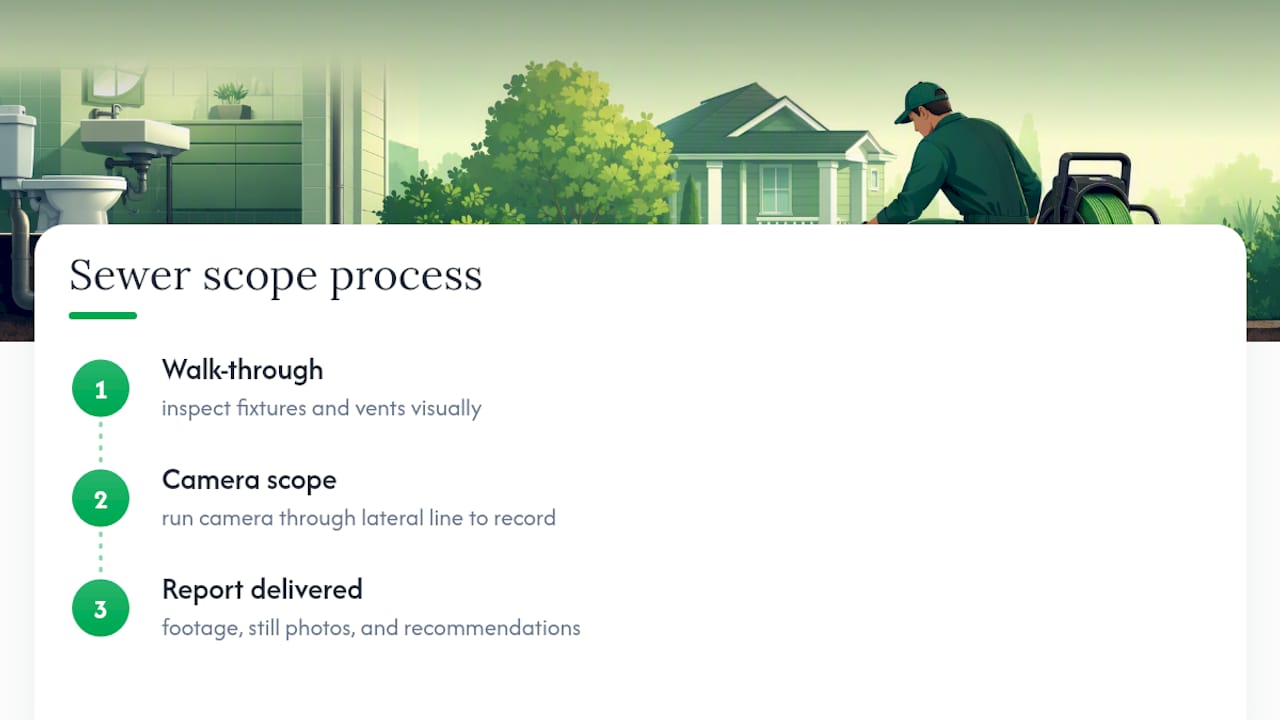
A sewer scope inspection sends a small camera through the lateral line to see what’s actually happening inside the pipe, root intrusion, hairline cracks, bellies or offsets in the pipe run, and grease or debris buildup. Some findings call for a repair; others just need a professional cleaning. The camera tells you which one you’re dealing with instead of leaving it to guesswork.
The process generally follows a straightforward sequence: a visual walk-through of accessible fixtures and vents, then the camera scope itself, followed by a written report with recommended next steps. A sewer scope inspection typically delivers recorded footage, still photos of any problem areas, and a written summary you can hand to a plumber or contractor for repair estimates.
Pairing that inspection with your own odor log, when the smell shows up, which fixtures are affected, whether it changes with water use, helps target the scope more efficiently and can shorten the time the camera needs to spend in the line.
Why Inspection Beats Guesswork on Persistent Odors
Most sewer smell complaints get solved with water and a little patience. The ones that don’t are exactly where guessing gets expensive. I’ve seen the pattern too often: someone spends months bleaching a drain that was never the problem, while a cracked lateral line keeps letting gas and moisture into the crawlspace.
If the smell touches more than one fixture, or it keeps returning after you’ve refilled every trap, get it measured instead of masked. Write down the timing and the fixtures involved before anyone shows up. That single habit, treating a persistent odor as a documentation problem rather than a mystery, saves both money and repeat visits. It’s also why services built around first-time buyers, veterans, and budget-conscious families matter: a clear, fast report turns an anxious guessing game into a plan.
— JOHN
Get a Professional Sewer Camera Inspection
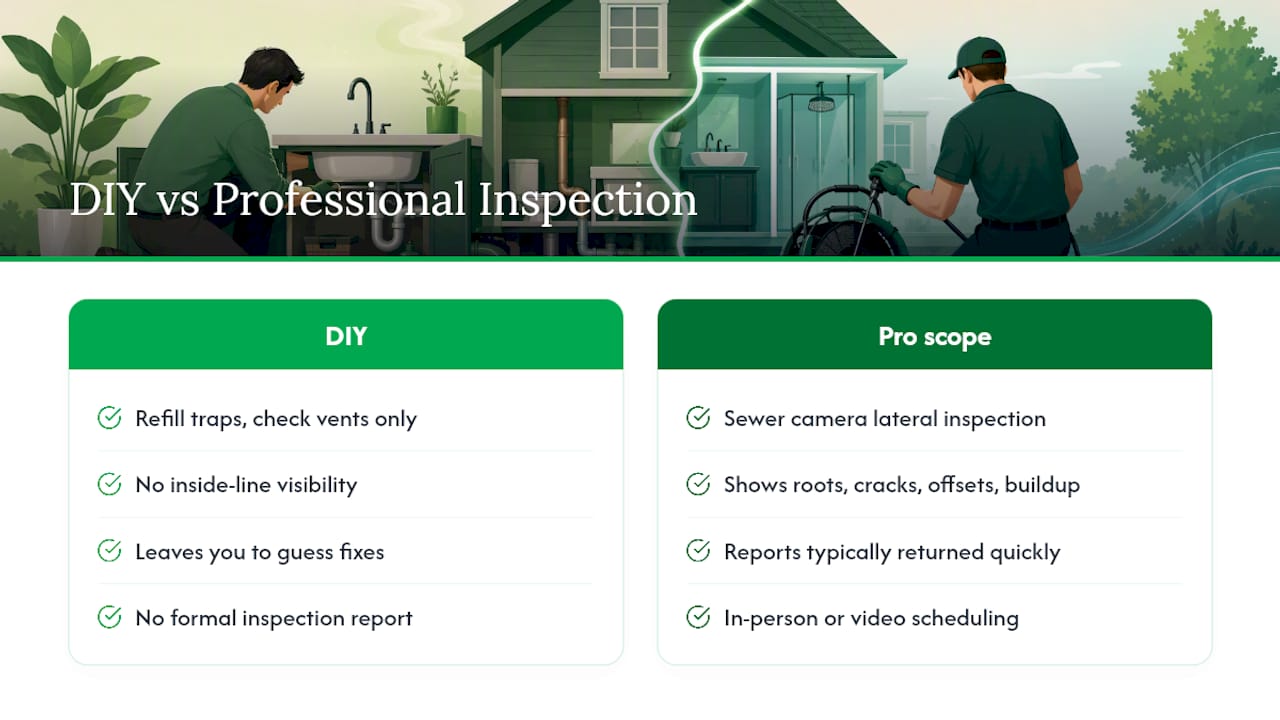
If you’ve refilled every trap, checked the vents, and the odor keeps coming back, a camera tells you what a bucket of water never will. Professional home inspection services can run sewer camera lateral inspections that show what’s happening inside your line, including roots, cracks, offsets, and buildup, instead of leaving you to guess at another round of DIY fixes.

Reports typically come back quickly, and you can schedule either an in-person visit or a video-enabled inspection depending on what fits your situation. That turnaround matters most when you’re mid-transaction on a home sale or trying to resolve a persistent odor before it becomes a bigger repair. Some inspection services offer support for first-time buyers, veterans, and budget-conscious families, with discounts available for certain groups.
Start with the sewer scope inspection page to see how the process works, or check sewer camera inspection cost guidance to budget before you call. For a full look at everything available, visit the inspection services page and schedule a time that fits your week.
This article is general information, not a substitute for advice from a qualified doctor. Consult a qualified healthcare professional about your own circumstances before acting on anything here.
Sources
- Hydrogen sulfide (toxicology) — NCBI Bookshelf
- What’s That Smell? Understanding sewer odors and P-traps — South Davis Sewer District
- All About Sewer Gas Exposure: Causes, Symptoms, Treatment & More — Healthline
FAQ
How Can You Tell If You’re Smelling Sewer Gas?
It smells distinctly like rotten eggs, is usually strongest near a specific drain or fixture, and often gets worse right after you run water or flush. If it’s coming from a rarely used drain, a dry P-trap is the likely cause.
What Are the First Signs of Sewer Gas Exposure?
Mild exposure typically causes eye, nose, or throat irritation and headaches; the smell itself is often the first warning sign, but it can fade due to olfactory fatigue even as gas levels remain, according to NCBI’s toxicology data.
How Do You Get Rid of Sewer Gas Smell?
Refill dry traps with water, add a layer of mineral oil to seldom-used drains, check toilet seals, and ventilate the area. If the smell persists across multiple fixtures, a sewer camera inspection can identify the actual source.
Is Sewer Gas Smell an Emergency?
Usually not, most cases are a dry trap or a failed seal. It becomes an emergency if you experience dizziness, breathing trouble, or confusion, in which case leave the area immediately and seek medical attention before addressing the plumbing.
Recent Comments