
Short answer: yes, some St. Louis municipal programs can help pay for structural breaks under the public right-of-way, but the sewer lateral itself is private property, so homeowners usually cover most repairs themselves. Order a sewer camera inspection before you buy or before a small clog becomes an expensive surprise, and confirm your specific municipality’s rules before assuming any program applies to you.
TL;DR:
- Municipal programs in St. Louis often cover the right-of-way section of sewer laterals but do not include repairs under private property or the foundation.
- A sewer camera inspection, costing $200 to $400, is essential before buying or repairing because it reveals cracks, roots, collapses, and other issues not visible from surface inspection.
- Homeowners are responsible for maintenance along the entire lateral, making pre-sale inspections vital as verbal assurances rarely guarantee pipe integrity.
- Costs for lateral repairs vary from a few hundred to $15,000, depending on damage severity and whether excavation under streets or sidewalks is needed.
- Confirm your municipality’s rules and fee assessments before applying for assistance, as program eligibility relies on location, fees, and repair type.
Table of Contents
- Which local sewer lateral repair programs exist and what they cover
- Ownership and responsibility: what a private lateral means for buyers
- Sewer camera inspections: what they show and what they cost
- Repair and replacement: costs, causes, and how often laterals fail
- How to check eligibility and apply for municipal help
- Buyer checklist: using a sewer scope in negotiations
- How Hunt Home Inspection supports sewer lateral inspections and claims
- Inspector’s perspective: what actually matters for St. Louis buyers
- Schedule a sewer camera inspection before you close
- Sources
- FAQ
Which local sewer lateral repair programs exist and what they cover
St. Louis City and many communities in St. Louis County run lateral repair assistance programs, but the coverage is narrower than most homeowners expect. These programs exist because sewer laterals cross both public and private land, and cities have decided to help fund the portion under the street or sidewalk since that work often requires permits, traffic control, and pavement restoration that a homeowner cannot easily manage alone.
The Sewer Lateral Repair Program run by the City of St. Louis is funded through an annual tax typically around $28 on eligible residential parcels with six or fewer units. The fund pays for structural repairs to the lateral under the public right-of-way, meaning the section between the property line and the main. It does not pay for clogs, root clearing, or any work on the section of pipe running under the yard or foundation, which stays the homeowner’s responsibility no matter how the program is funded.
St. Louis County’s residential program follows a similar model in unincorporated areas: an annual tax funds a pool of money that pays for right-of-way structural repairs, and the county may arrange the repair directly rather than reimbursing the homeowner after the fact.
Not every community runs its program the same way. Creve Coeur, for example, uses a reimbursement model rather than a county-managed repair. The Sanitary Sewer Lateral Program in Creve Coeur reimburses homeowners 70% of qualifying repair costs, up to a city maximum, and requires an inspection video plus documentation from a licensed plumber before approving a claim. Hazelwood operates its own version with different eligibility rules and contact points, laid out on the city’s sewer lateral program page.
A few things to check before assuming you qualify for help:
- Confirm whether your property sits inside St. Louis City, unincorporated St. Louis County, or an incorporated municipality with its own program, since each has different rules.
- Check whether the annual tax or fee tied to the program actually appears on your property tax bill, since unpaid fees can disqualify a claim.
- Ask whether your municipality repairs the line directly or reimburses you after the work, since that changes who hire the plumber first.
- Review the program’s written exclusions, because “structural break” almost never includes root intrusion, grease buildup, or a sagging line still functioning without a break.
The variation between municipalities is the biggest source of confusion for St. Louis homeowners. A program that pays for a neighbor’s repair in Creve Coeur may not apply at all once you cross into an unincorporated county parcel a few blocks away, so verifying your exact jurisdiction before you budget for repairs saves a lot of frustration later.
Ownership and responsibility: what a private lateral means for buyers
The sewer main runs under the street and belongs to the municipality or to MSD, the Metropolitan St. Louis Sewer District that manages the regional wastewater system. That single fact drives almost everything else in this article.
Because the lateral is private property, the homeowner is responsible for its maintenance and repair for the entire run, from the foundation to the connection at the main, unless a specific municipal program steps in to cover the right-of-way portion. MSD provides general guidance on lateral ownership but does not recommend specific plumbers or repair contractors, leaving that choice to the homeowner.
This ownership structure matters most at the point of sale, where buyers often assume a seller’s verbal assurance (“the sewer’s fine, we never had problems”) is enough. It rarely is, for a few reasons:
- A lateral can function adequately for years while slowly narrowing from root intrusion or scale buildup, so an owner may genuinely never have noticed a problem that shows up on camera.
- Location under the right-of-way versus under the yard determines whether any municipal program could ever apply, and that boundary is not visible from the surface.
- Verbal history carries no documentation value in a program application or in a future dispute, while a camera inspection video does.
Buyers should treat lateral condition the same way they treat roof age or furnace condition: something to verify with evidence, not take on faith. A camera inspection report, done before closing, is the only reliable way to know whether the private section of the pipe is sound or heading toward a five-figure repair.
Sewer camera inspections: what they show and what they cost
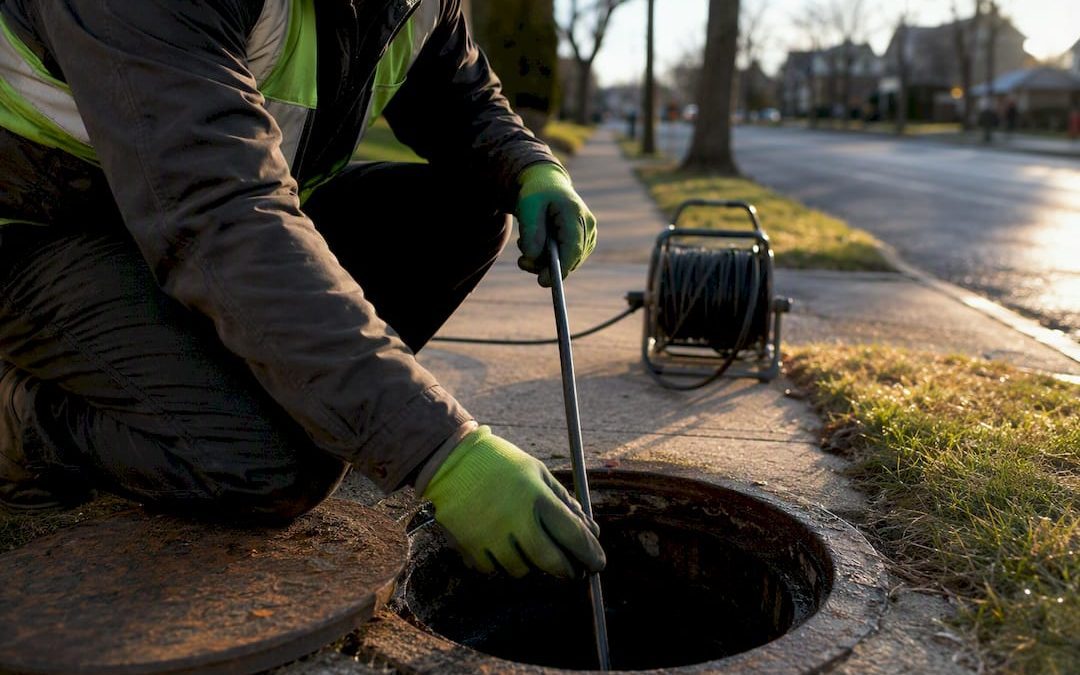
A sewer camera inspection, sometimes called a sewer scope, sends a flexible camera down the lateral from a cleanout or drain access point and records the full run of pipe on video. It is the only inspection method that actually shows the inside condition of a line buried several feet underground, and it is the reason inspectors recommend it as a standard add-on rather than an occasional extra.
What the camera typically reveals:
- Root intrusion, where tree roots have grown through joints or cracks and narrowed the pipe’s interior.
- Cracks, offsets, or sagging sections (often called “bellies”) where the pipe has settled and collects standing water or debris.
- Full collapses, usually in older clay pipe, where a section of the line has caved in and blocked flow entirely.
- Corrosion or scale buildup inside older cast iron sections, which narrows the effective diameter over time.
- Sections of lateral running directly under a garage, addition, or patio slab, which raises the cost and complexity of any future repair.
Pricing for a standalone sewer camera inspection in the St. Louis area typically runs $200 to $400, depending on the length of the line, how easy the access point is to reach, and whether the line needs a light cleaning before the camera can pass through cleanly. Longer runs, lines with multiple bends, or lines with heavy grease buildup requiring a jetting pass first will land at the higher end of that range.
Timing matters. Buyers should treat a camera inspection as a standard add-on to the general home inspection rather than an afterthought, since scheduling it after an offer is accepted but before the inspection contingency expires gives you leverage to negotiate repairs or credits. Sellers benefit from the same logic in reverse: a pre-listing scope lets you address a bad section before it becomes a point of negotiation, or at minimum lets you disclose it honestly instead of guessing.
Reading the report matters as much as ordering it. Inspectors deliver the video along with a written summary, and certain phrases carry real weight: “collapsed” means the line is blocked and needs excavation or trenchless repair soon, while “significant infiltration” means groundwater is entering through cracks, which points to a structural problem rather than a simple clog. A report that only says “some roots present” with no mention of flow restriction is a very different situation than one flagging a collapsed section near the foundation.
Pro Tip: Ask your inspector for the raw video file, not just a written summary. Municipal programs like Creve Coeur’s require the video itself as part of the application, and having it in hand saves a second trip if you decide to apply later.
Repair and replacement: costs, causes, and how often laterals fail
Sewer laterals in the St. Louis region fail for a fairly consistent set of reasons. Older homes, particularly those built before the 1960s, often still have clay pipe, which is durable but prone to cracking at the joints as tree roots seek out the moisture inside. Corrosion is common in cast iron sections. Ground shifting from the region’s clay-heavy soil can also stress joints over decades, and mature tree cover near the lateral’s path increases root intrusion risk regardless of pipe material.
Repair costs vary widely depending on how far the problem has progressed:
- A simple cleaning or augering to clear roots or debris typically runs in the low hundreds of dollars.
- A partial repair, such as replacing a single cracked or offset section, generally falls in the low thousands.
- A full lateral replacement, especially one requiring excavation under a street or sidewalk, can reach up to $15,000 once permits, traffic control, and pavement restoration are included.
Repair costs can climb fast once excavation is involved. St. Louis County’s own program page notes that full lateral repair costs can reach as high as $15,000, which is exactly why municipal cost-sharing programs exist for the right-of-way portion in the first place.
How often a lateral needs major work depends on material, age, and history. A clay lateral installed in the 1950s with mature trees overhead is a far higher risk than a PVC lateral installed during a 2010s renovation. A home with a documented history of backups is also more likely to need replacement sooner rather than another round of cleaning, since repeated root cutting weakens the pipe over time without fixing the underlying crack.
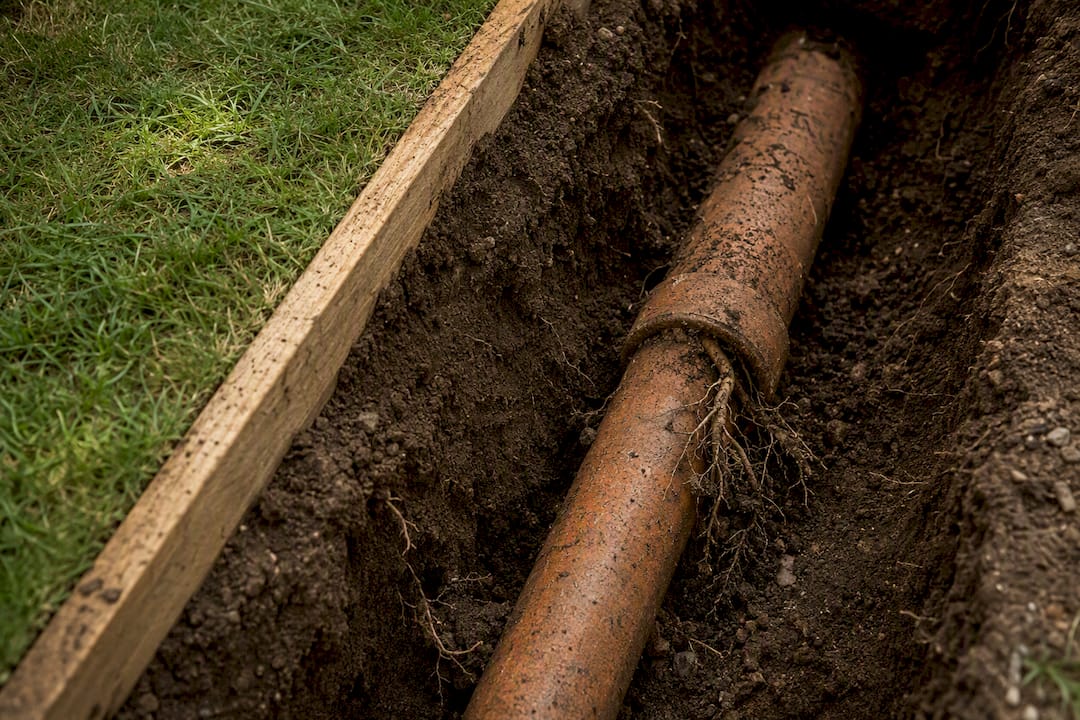
Emergency repairs cost more than planned ones almost every time, largely because emergency work often requires immediate excavation under a street or sidewalk, which triggers permit fees, traffic control costs, and rushed pavement restoration that a scheduled repair can often avoid.
How to check eligibility and apply for municipal help
If you suspect your lateral qualifies for program assistance, or you simply want to know before a problem happens, the process is straightforward but has a specific order that matters.
- Confirm your municipality first. Check your property tax bill or your city or county’s website to see whether you are charged the annual sewer lateral fee, typically around $28, since being assessed the fee is often the first sign a program applies to your address.
- Hire a licensed plumber to inspect and, if needed, clear the line. Most programs require a plumber’s diagnosis rather than a homeowner’s own assessment of the problem.
- Get the camera inspection video and a signed statement from the plumber describing the location and nature of the damage, since this documentation is what municipal reviewers actually evaluate.
- Complete your municipality’s application in full, attaching the video, the plumber’s statement, and any other required paperwork such as proof of property tax payment.
- Submit the application following your municipality’s specific instructions, whether that means an online portal, mailed paperwork, or an in-person visit to a public works office.
Sequence matters more than most homeowners expect. Some programs, including Creve Coeur’s reimbursement model, will not pay for work completed before the application is approved, so calling the office and confirming the process before you authorize any excavation can be the difference between a reimbursed repair and an unreimbursed one. If you are mid-transaction, whether buying or selling, confirm whether the seller or buyer is expected to file the claim, and whether reimbursement is likely to arrive before or after closing, since that timing affects who should front the repair cost.
Buyer checklist: using a sewer scope in negotiations
A sewer camera inspection is only useful in a transaction if you know how to turn the findings into contract language. Buyers who order a scope but never act on the results end up absorbing the cost of a bad line anyway.
Insist on a scope whenever the home is more than a few decades old, sits on a lot with mature trees, or has any history of slow drains mentioned by the seller or agent. Add a specific sewer lateral contingency to your purchase agreement rather than relying on the general inspection contingency, since a lateral defect can require a separate negotiation timeline from cosmetic repairs.
Documentation to request or collect before closing:
- The full camera inspection video, not just a written summary.
- A signed statement from the plumber or inspector describing the defect’s location and severity.
- Photos of any excavation already performed, if the seller claims prior repairs were made.
Municipal program rules can also shift who should handle the repair and when. If the defect sits under the public right-of-way and the municipality has a program, it may make more sense for the seller to file the claim before closing rather than pass the cost entirely to the buyer through a credit. If the defect sits entirely on the private portion of the line, no municipal program applies regardless of location, and a price credit or pre-closing repair becomes the only real options.
Pro Tip: If a municipal reimbursement is pending at closing, get the expected payout amount and timeline in writing from the program office and address it explicitly in escrow instructions, since a verbal promise from a seller carries no weight after the deal closes.
How Hunt Home Inspection supports sewer lateral inspections and claims
Some home inspection companies offer sewer camera lateral inspections as an add-on service, delivering the full video along with a written report within 24 hours. That turnaround can be important during a real estate transaction, where inspection contingency deadlines are often measured in days, and also for homeowners assembling documentation for municipal reimbursement claims.
Clients can often choose between in-person walkthroughs or video-enabled inspections, which helps buyers who cannot attend in person and sellers who want documentation before listing. Some inspection companies offer tools to organize inspection findings into formats that streamline communication between buyers, sellers, and agents during repair negotiations.
Homeowners preparing a municipal application benefit from having both the raw inspection video and a written summary in hand, since some programs require that combination before reviewing a claim. Some inspection services may offer discounts for first-time buyers, veterans, and low-income households, which can make adding a sewer scope to a standard inspection budget more manageable.
Inspector’s perspective: what actually matters for St. Louis buyers
After years of clay pipe and mature tree canopies in St. Louis neighborhoods, I push camera-first inspections harder than most people expect. A lateral can look fine on paper and still be a collapsed section away from a $15,000 problem. The only way to know the difference is to look inside the pipe.
If you take away three things: confirm your exact municipality before assuming any program applies, order the camera scope before your inspection contingency expires rather than after, and collect the video and plumber’s statement even if you never end up filing a claim. The most common mistake I see is a buyer skipping the scope because the house “seems fine,” then discovering the real condition of the line only after they own it.
— JOHN
Schedule a sewer camera inspection before you close

A cracked lateral does not show up on a walkthrough, and a seller’s word about “no problems” is not documentation. A sewer camera lateral inspection can be added to a buyer’s inspection or pre-listing inspection, with a full video and a written report usually returned within 24 hours, giving buyers evidence before their contingency deadline.
If applying for a municipal reimbursement program, the video and report often serve as required documentation. Video-enabled inspection options may be available for those who cannot attend in person, and some tools help keep agents and contractors coordinated on inspection findings instead of exchanging multiple emails.
Visit the inspection services page to see current offerings and schedule a sewer camera inspection alongside your buyer’s or pre-listing inspection.
Sources
- Sewer Lateral Repair Program — City of St. Louis
- Residential sewer lateral repair — St. Louis County
- Lateral line — Metropolitan St. Louis Sewer District
- Sanitary Sewer Lateral Program — City of Creve Coeur
FAQ
Does St. Louis County have a sewer lateral program?
Yes, St. Louis County runs a residential sewer lateral repair program for unincorporated areas, funded by an annual tax on eligible parcels. It generally covers structural repairs to the portion of the lateral under the public right-of-way, and repair costs handled through the program can reach up to $15,000 for major work.
How often do sewer laterals need to be replaced?
There is no fixed schedule since it depends on pipe material, age, soil conditions, and nearby tree roots. Older clay laterals near mature trees tend to fail sooner than newer PVC lines, which is why a camera inspection, rather than a calendar estimate, is the reliable way to judge a specific line’s condition.
What is the difference between a sewer line and a sewer lateral?
The sewer main is the public line running under the street, owned and maintained by the municipality or by MSD. The lateral is the connecting pipe running from your house to that main, and MSD’s own guidance states the lateral, including its connection, is private property that the homeowner is responsible for maintaining.
How much does it cost to replace laterals?
Costs range from a few hundred dollars for a simple cleaning to as much as $15,000 for a full replacement involving excavation under a street or sidewalk. Partial repairs of a single damaged section generally fall in the low thousands, well below the cost of a complete replacement.
Recent Comments