
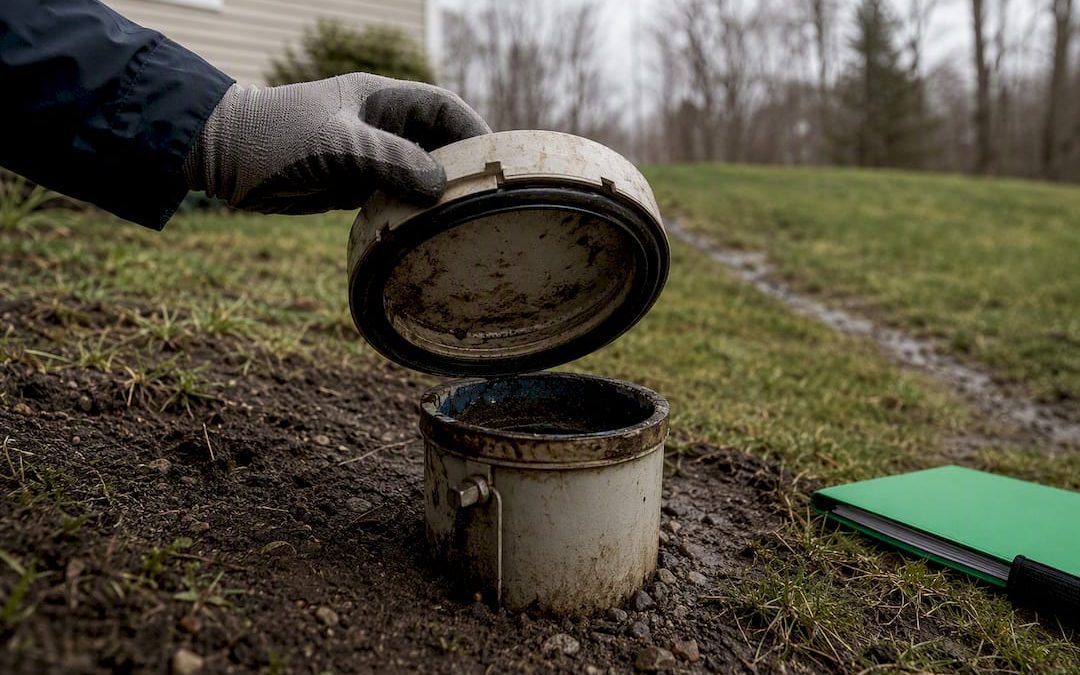
If your well tests positive for coliform bacteria, stop drinking the water immediately and switch to bottled water or a full rolling boil while you confirm the result. Collect a careful repeat sample and ask a state-certified lab to test specifically for E. coli or fecal coliform, since that distinction determines how urgently you need to act.
TL;DR:
- A positive coliform test indicates a contamination pathway, but only E. coli confirms fecal pollution requiring urgent action.
- Proper sampling, including using a sterilized container and avoiding contaminated faucets, is crucial to prevent false positives.
- Corrective measures like shock chlorination are temporary unless the physical entry points, such as well seals or caps, are fixed first.
- Retesting 10 to 14 days and then two to three months after treatment is essential to verify long-term water safety.
- A site inspection of well and surrounding land is vital to identify and repair entry points before relying on chemical treatment alone.
Table of Contents
- What Well Water Coliform Bacteria Actually Are
- What a Positive Test Means for Your Household’s Health
- How to Test Well Water for Coliform the Right Way
- What to Do Right Now if Your Well Tests Positive
- Where Contamination Gets In: The Site Inspection Checklist
- Remediation Options: Shock Chlorination, UV, and Continuous Disinfection
- Retesting Timeline: How to Confirm the Fix Actually Worked
- An Inspector’s View: What Gets Checked on Site
- Why the Standard Advice on Coliform Contamination Falls Short
- Get a Clear Diagnosis Before You Chlorinate Anything
- Sources
- FAQ
What Well Water Coliform Bacteria Actually Are
Total coliform is a broad family of bacteria found in soil, plants, and animal digestive tracts. It’s not usually dangerous on its own, but its presence signals that something is letting outside contamination into your water. Fecal coliform is a narrower subset tied specifically to warm-blooded animal waste, and E. coli is the species within that group most strongly linked to sewage or septic contamination.
Labs test for coliforms because testing for every disease-causing organism directly would be impractical and expensive. Coliforms travel the same contamination pathways as harmful pathogens, so their presence works as a proxy. A positive result doesn’t automatically mean your water made anyone sick.
- Total coliform positive: a pathway for contamination exists somewhere in your well system.
- Fecal coliform or E. coli positive: much stronger evidence that animal or human waste has reached your water.
- A negative result today is a snapshot, not a guarantee for next month.
What a Positive Test Means for Your Household’s Health
A total-coliform-positive result with no E. coli is a warning sign, not a confirmed health emergency. It tells you a crack, seal failure, or nearby contamination source is probably letting something into the well. An E. coli or fecal coliform positive is a different story entirely. That result means fecal contamination has reached your drinking water, and it demands immediate corrective action, not just monitoring.
Symptoms from contaminated water typically show up as gastrointestinal illness: nausea, diarrhea, cramping, sometimes fever. Infants, pregnant women, older adults, and anyone immunocompromised face higher risk from even low-level exposure. Until you know which type of coliform you’re dealing with, treat every faucet in the house as suspect. Switch to bottled water, or boil water for one full minute (three minutes if you’re above 6,500 feet in elevation) before drinking, cooking, or brushing teeth.
How to Test Well Water for Coliform the Right Way
Sampling mistakes cause a surprising share of false positives. Touching the inside of the sample container, sampling from a faucet with a dirty aerator, or drawing water through a carbon filter can all skew results and send you chasing a problem that doesn’t exist. Follow the lab’s instructions to the letter.
- Request a sterile sample container directly from a state-certified laboratory. Don’t substitute a random jar.
- Remove the faucet aerator before sampling, and pick a faucet that draws directly from the well line rather than through a softener or filter.
- Wash your hands, then fill the container without letting your fingers touch the inside or the rim.
- Label the sample with the date, time, and faucet location, and deliver it to the lab within the timeframe it specifies (usually within 24 to 30 hours).
- Ask specifically for total coliform testing, and if that comes back positive, request E. coli or fecal coliform testing on the same or a follow-up sample.
Your local health department can point you toward a certified lab if you don’t already have one, and annual testing for total coliform, nitrates, and pH is the baseline every private well owner should follow regardless of symptoms.
Pro Tip: Ask the lab whether they report results as presence/absence or as a colony count. A colony count gives you a rough sense of how contaminated the water is, which matters when you’re deciding between shock chlorination and a more permanent fix.
What to Do Right Now if Your Well Tests Positive
The first move is simple: stop using the water for anything that goes in your mouth. That includes ice, coffee, pet water bowls, and brushing teeth, not just drinking glasses.
- Switch to bottled water or boil water for one minute (three minutes above 6,500 feet) for all consumption.
- Collect a repeat sample immediately, following the same careful protocol, and keep your original lab report. Don’t throw it away even after remediation.
- Call your local health department right away if the result shows E. coli, or if anyone in the household is already experiencing gastrointestinal symptoms.
A licensed well professional should get involved quickly if the contamination looks serious or recurring. Waiting a few weeks “to see if it clears up” is how a fixable defect turns into a chronic problem.
Where Contamination Gets In: The Site Inspection Checklist
Coliform bacteria don’t appear in well water from nowhere. Something physical is letting it in, and finding that entry point matters more than any treatment you apply afterward.
Common culprits include a cracked or poorly sealed well casing, a loose or missing sanitary well cap, a well that’s too shallow relative to the water table, and surface runoff pooling around the wellhead after rain. Nearby failing septic systems, livestock or pet waste, and old abandoned wells on the property or next door are frequent sources too.
A proper site inspection checks:
- Casing height above ground and the condition of the seal where it meets the ground.
- Ground slope and drainage around the wellhead. Water should run away from the well, not toward it.
- Whether the cap is a sanitary, vermin-proof cap or an old, unsealed cover.
- Proximity to septic tanks, drain fields, animal enclosures, or abandoned wells.
- Recent flooding, excavation, or pump servicing that might have introduced contamination.
Pro Tip: If a well was recently serviced, pulled, or repaired, treat that as a prime suspect. Pump work that reintroduces air into the casing or disturbs sediment is one of the most overlooked causes of a sudden positive result.
Disinfecting the water without fixing these defects tends to produce a temporary negative that doesn’t last. The bacteria come right back because the pathway never closed.
Remediation Options: Shock Chlorination, UV, and Continuous Disinfection
Shock chlorination is the standard first response to a one-time bacterial contamination event. It involves flushing a strong chlorine solution through the entire well system, letting it sit for the recommended contact time, then flushing it out. Dosing depends on casing diameter and depth to water, and getting it wrong can leave live bacteria in pockets the chlorine never reached, which is why many owners hire a qualified well professional rather than eyeballing it themselves.
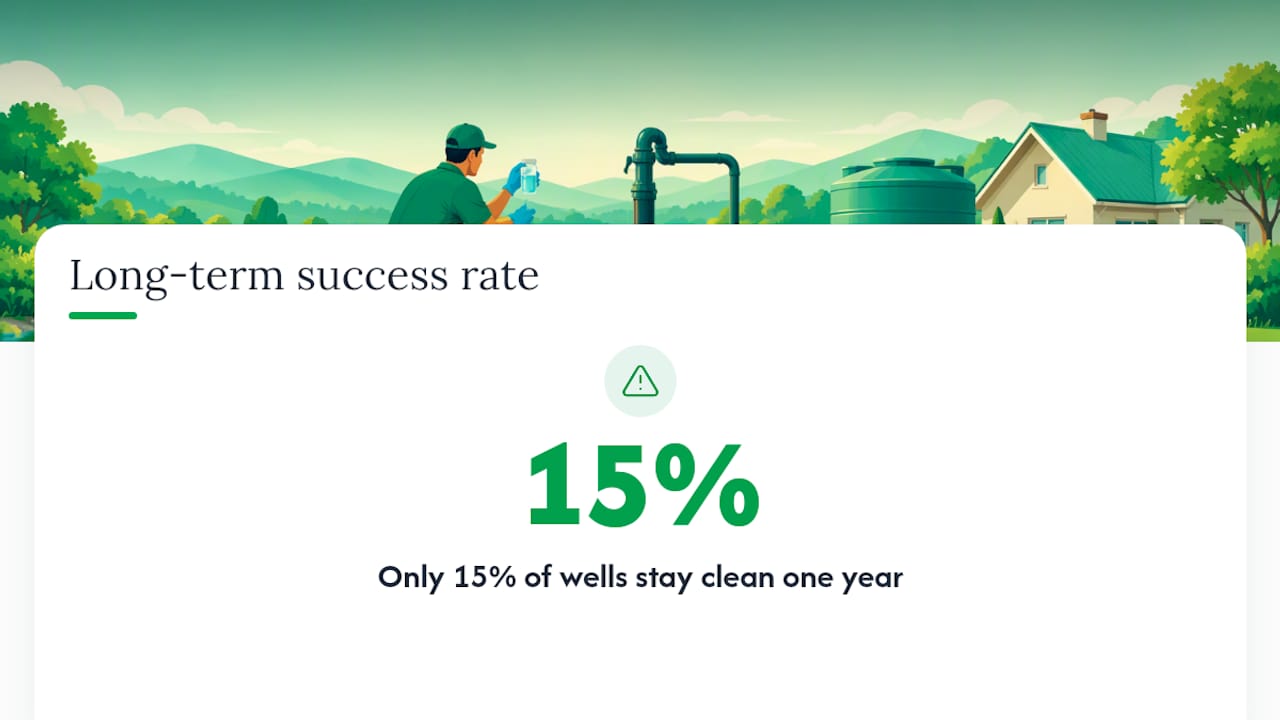
Shock chlorination alone has real limits. Penn State Extension research found that shock chlorination combined with a new sanitary well cap kept wells free of bacteria for a full year in only about 15% of previously contaminated wells. Success rates were noticeably better for wells with low colony counts and no E. coli. That number tells you plainly: chlorine kills what’s there today, but it does nothing about tomorrow’s contamination if the entry point is still open.
For persistent or recurring contamination, continuous chlorination or a point-of-entry UV system may be worth considering. Continuous chlorination injects a small ongoing dose and works well for a known, ongoing source you can’t fully eliminate right away. UV systems disinfect without adding chemicals, but they need low-turbidity water and regular maintenance to keep working.
Before choosing either, weigh these caveats:
- High turbidity can shield bacteria from UV light, so prefiltration is often required.
- UV systems need electricity and periodic bulb replacement to stay effective.
- Chlorination can leave taste and odor issues and, over time, forms trihalomethanes (THMs) as a byproduct.
- No treatment method substitutes for fixing the entry pathway itself.
Retesting Timeline: How to Confirm the Fix Actually Worked
One clean test result after shock chlorination doesn’t mean the job is finished. Extension guidance lays out a specific retesting schedule, and skipping it is how homeowners end up surprised by a positive result months later.
- Retest 10 to 14 days after shock chlorination to confirm the chlorine cleared the immediate contamination.
- Retest again after two to three months to check whether the problem stays gone once the chlorine residual is fully flushed out.
- If both tests come back negative, return to annual testing, and retest sooner after any flooding, well repairs, or unexplained illness in the household.
- If positives keep recurring, stop repeating shock chlorination and focus on the underlying defect. That might mean a new casing seal, a raised wellhead, regrading the surrounding soil, or in some cases drilling a deeper well.
Keep every lab report, contractor invoice, and repair record together. A state-certified lab used consistently over time gives you a reliable history to compare against, which matters if you’re ever selling the property or arguing with an insurer.
An Inspector’s View: What Gets Checked on Site
When a well tests positive, the on-site checklist rarely changes: casing height and seal condition, grade and drainage around the wellhead, the type of cap installed, and what’s happening on adjacent land. Nearby septic systems, livestock, and abandoned wells all get flagged. So does any recent pump work, since disturbing a well often introduces the exact contamination the homeowner is now chasing.
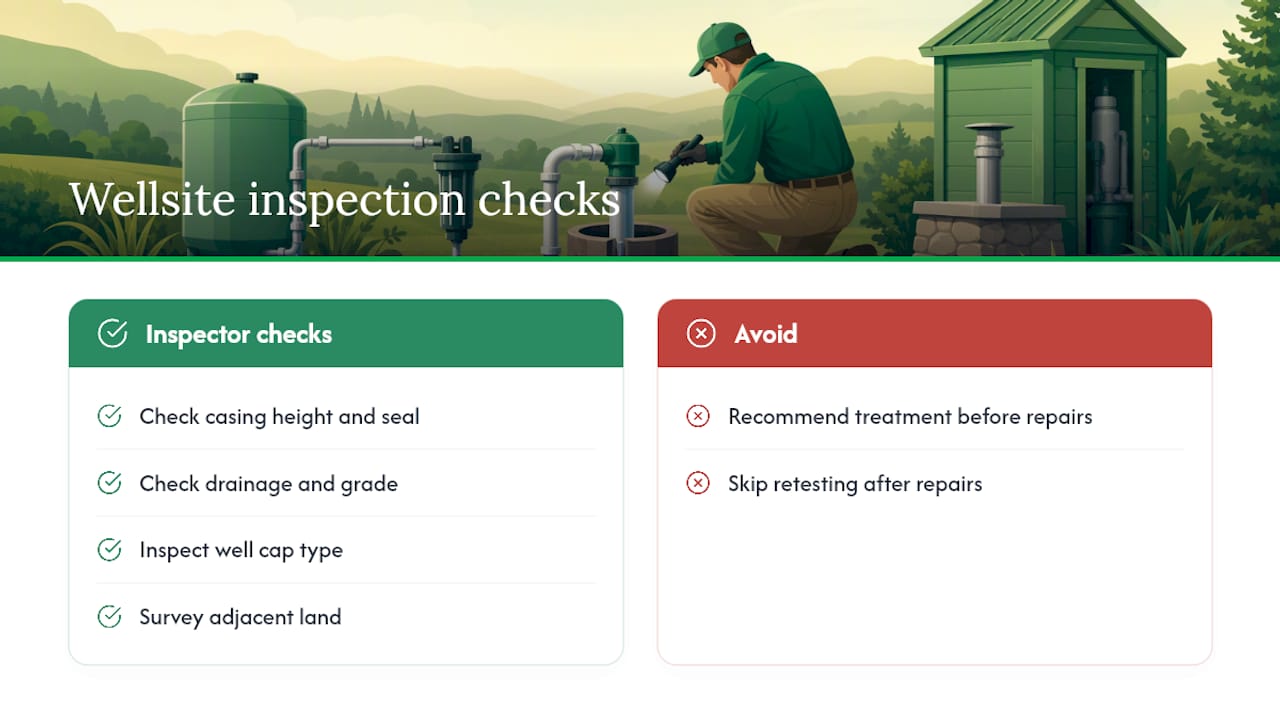
Recommending a permanent treatment system before confirming the pathway is closed is a mistake worth avoiding. Chlorination or UV installed over an unfixed defect just masks the problem temporarily, and the next heavy rain proves it. That’s why retesting after repairs isn’t optional. It’s the only way to know the fix actually held.
For homeowners weighing next steps, a septic/well inspection add-on paired with water test coordination gives you a documented diagnosis fast, typically with a report turned around within 24 hours, so repair decisions don’t sit in limbo for weeks.
Why the Standard Advice on Coliform Contamination Falls Short
Most guidance on coliform in well water stops at “shock chlorinate and retest.” That advice isn’t wrong, but it treats a symptom-and-treatment problem when the real issue is usually structural. The Penn State finding that only about 15% of wells stay clean for a year after chlorination alone should be the headline, not a footnote. It means four out of five homeowners who chlorinate without fixing the casing, cap, or grading are buying themselves a few clean months before the same test comes back positive.
The conventional playbook also underweights sampling error. A shocking number of “contaminated” wells are really just contaminated samples, caused by a dirty aerator or a rushed collection. Before anyone reaches for chlorine, the repeat sample needs to be collected correctly.
My honest read: prioritize the physical inspection over the chemical fix. Find the crack, the bad seal, the pooling water, or the failing septic system nearby first. Chlorination and testing matter, but they’re verification tools, not solutions on their own.
— JOHN
Get a Clear Diagnosis Before You Chlorinate Anything
Professional home inspection services give well owners something a lab result alone can’t: an on-site look at whether the casing, cap, and grading are actually the problem, before anyone spends money on treatment that won’t hold.

A Septic/Well Inspection checks the physical entry points, coordinates certified water testing, and pairs with environmental testing if you also want lead or radon checked at the same visit. Reports come back within 24 hours, whether you choose an in-person walkthrough or a video inspection, so you’re not waiting weeks to start repairs. If a positive coliform test has you stuck deciding between shock chlorination, a new well cap, or a full site fix, book a septic/well inspection and get a documented answer instead of a guess.
FAQ
How Serious Is Coliform in Well Water?
Total coliform alone is a warning sign of a contamination pathway, not proof of illness risk. If the follow-up test shows E. coli or fecal coliform, treat it as serious and stop drinking the water until you’ve confirmed and addressed the source.
How Do You Get Rid of Coliform Bacteria in Well Water?
Shock chlorination clears most one-time contamination events, but it only works long term if you also fix the physical defect letting contamination in, like a bad casing seal or missing sanitary cap. Retest 10 to 14 days after treatment and again after two to three months to confirm it held.
Is It Safe to Shower in Water That Has Coliform Bacteria?
Showering and bathing are generally lower risk than drinking the water, since coliform exposure through skin contact is far less concerning than ingestion. Avoid swallowing water while showering, and if the household includes infants or immunocompromised members, ask your local health department for guidance specific to your test results.
Why Does My Well Keep Testing Positive for Coliform?
Recurring positives almost always point to an unfixed entry pathway rather than a chlorination failure. A cracked casing, unsealed cap, poor drainage, or a nearby septic or waste source keeps reintroducing bacteria no matter how many times you chlorinate, which is why a physical site inspection matters as much as the lab result.
Recent Comments