

A post-inspection consultation is the inspector-led follow-up, in person or over video, that walks you through the inspection report, answers your questions, and turns raw findings into a repair or negotiation request. It usually happens right after the inspection wraps up or within a day of the written report arriving. The real value isn’t the recap itself. It’s what you do with it: prioritize what actually needs fixing before your contingency clock runs out. Firms like Hunt Home Inspection build entire workflows, including tools such as Create Request List™, around exactly this handoff between report and negotiation.
Key Takeaways
A post-inspection consultation turns a technical report into a prioritized, evidence-backed repair request before your contingency deadline expires.
| Point | Details |
|---|---|
| Definition matters | A post-inspection consultation is a verbal, inspector-led review, not a substitute for the written report. |
| Attend if possible | In-person or video walkthroughs let inspectors explain severity in ways the report alone can’t. |
| Specificity wins negotiations | Attach report pages and require licensed, permitted work instead of vague repair language. |
| Watch the clock | Contingency windows typically run 7 to 15 days, with seller responses due in 48 to 72 hours. |
| Hunt Home Inspection supports the process | Offers 24-hour reports, video walkthroughs, Create Request List™, and targeted re-inspections priced around $100 to $300. |
Table of Contents
- What Happens During a Post-Inspection Consultation
- What a Consultation Covers and What It Doesn’t
- Turning Consultation Notes Into a Repair Addendum
- Getting Ready: What to Bring and Ask
- From Consultation to Submission: Your Next Steps
- Do You Need a Re-Inspection or Just a Final Walk-Through?
- What Inspectors Wish Buyers Knew
- How Hunt Home Inspection Supports Your Next Steps
- Frequently Asked Questions
- Sources
What Happens During a Post-Inspection Consultation
The consultation follows a loose but consistent order, whether you’re standing in the crawlspace or watching over a video call.
- Quick recap. The inspector gives you a two-minute overview of the home’s overall condition.
- Report highlights. They walk through the sections that matter most, usually roof, foundation, electrical, and plumbing.
- Photo review. You look at the images tied to each flagged item so the written description makes visual sense.
- Priority ranking. The inspector separates safety issues from cosmetic ones and tells you what needs attention now versus later.
- Next steps. You discuss whether an item needs a specialist, a repair estimate, or just monitoring over time.
Most sessions run a half hour to an hour and a half, depending on the home’s size and how many issues came up. In-person walkthroughs let you point at things directly; video consultations work almost as well when the inspector shares their screen and scrolls through the report live.
Expect the inspector to call out items like:
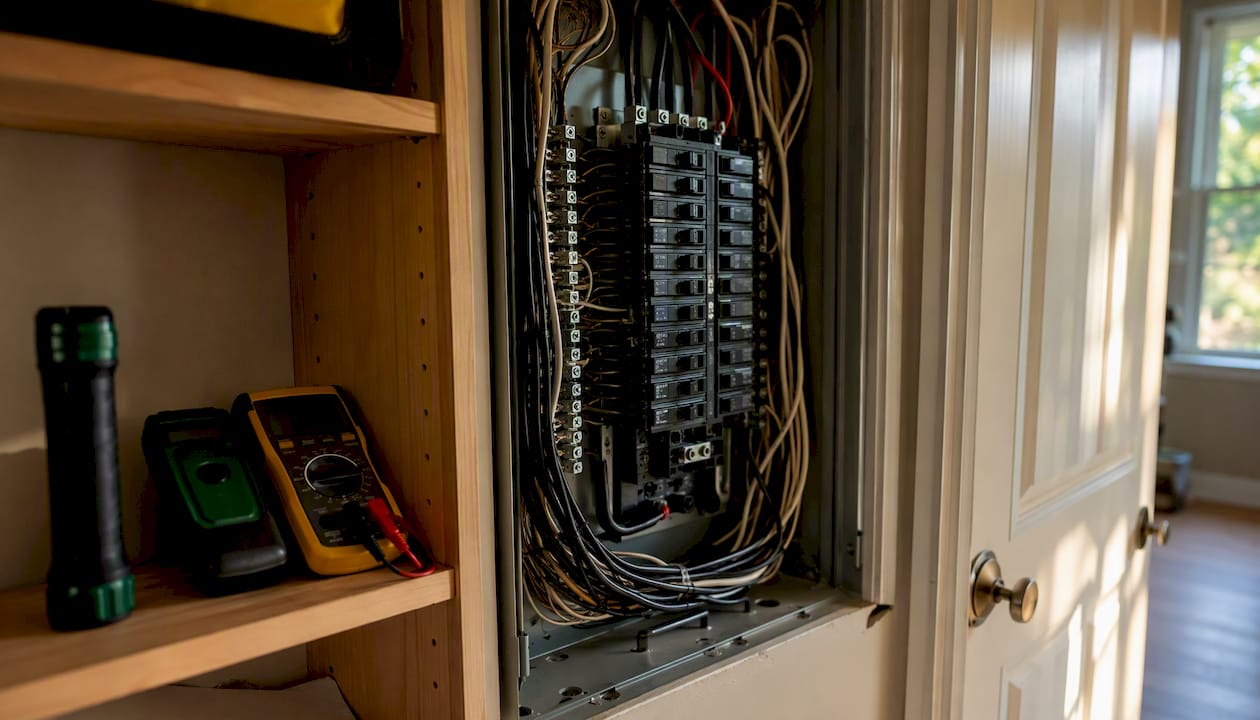
- A double-tapped breaker or outdated panel that’s a fire risk, not just a code violation note.
- An active roof leak versus old staining from a leak that’s already been fixed.
- Foundation cracks that are cosmetic versus ones that suggest ongoing movement.
- Plumbing that’s slow-draining versus a pipe that’s actively failing.
What a Consultation Covers and What It Doesn’t
The consultation clarifies your inspector’s findings, ranks them by urgency, and flags anything that needs a second opinion from a specialist, an electrician, a structural engineer, a roofer. That’s its job, and it does it well.
What it doesn’t do is replace the formal written report, which stays the legal record your agent uses when drafting a repair addendum. It also typically won’t include exact repair cost estimates or tell you whether to buy the house. Inspectors stay out of both to protect their objectivity and avoid liability for numbers a contractor should be quoting anyway.
Pro Tip: Ask “why” during the walkthrough, not just “what.” Knowing an inspector flagged a panel because it’s a fire hazard, not because it’s outdated, changes how urgently you negotiate it.
Turning Consultation Notes Into a Repair Addendum
A repair addendum is a written change to the purchase contract specifying what the seller will fix, credit, or reduce in price. The consultation is where you decide what belongs in it.
- Identify defects that are material, meaning they affect safety, structure, or major systems, not paint color or a squeaky door.
- Attach the relevant report pages and photos as evidence rather than describing issues in vague terms.
- Specify that repairs must be completed by a licensed contractor, with permits pulled where required.
- Offer alternatives: a credit at closing or a price reduction instead of repairs, if you’d rather control the work yourself.
Timing matters more than most buyers realize. Inspection contingency windows typically run about a week or two from contract acceptance, and they can be active (you must act to keep the deal alive) or passive (the deal proceeds unless you object). Sellers usually get a few days to respond to your addendum once submitted.
Vague language like “fix roof issues” gives a seller room to patch instead of properly repair. Specific language, such as requiring licensed, permitted work with invoices and signed-off inspections, closes that loophole. A focused repair request that cites the report directly and sticks to material defects gets better results than a long wish list.
Getting Ready: What to Bring and Ask
Show up with the full inspection report, any photos you’ve taken, your contract’s contingency deadline written down somewhere visible, and contractor estimates if you already have them.
Ask your inspector these questions directly:
- How severe is this, on a scale from cosmetic to safety hazard?
- Does this need attention now, or can it wait a year or two?
- What kind of specialist should evaluate this further?
- Would you recommend a re-inspection once repairs are done?
Hunt Home Inspection uses its Create Request List™ tool during the consultation to organize findings into a format your agent can drop straight into a repair addendum, cutting out the back-and-forth of re-explaining what the inspector meant.
Pro Tip: If you’re doing a video consultation, ask the inspector to screen share the live report and record the session if your contract allows it. You’ll want that reference when your agent starts drafting language two days later.
From Consultation to Submission: Your Next Steps
Once the walkthrough ends, the clock is running. Here’s the order that keeps you on track:
- Summarize the findings into a short list, safety issues first, then major systems, then everything else.
- Categorize each item as “must fix,” “credit acceptable,” or “monitor only.”
- Attach the specific report pages and photos backing each item.
- Set requested remedies and a firm deadline for the seller’s response.
- Deliver the addendum through whatever channel your contract specifies, usually your agent to the listing agent.
Sample language worth adapting: “Repairs must be completed by a licensed, insured contractor, with all required permits obtained and closed, and paid invoices provided prior to closing.”
Pro Tip: Set a calendar reminder two days before your contingency deadline, not on it. If you’re in an active contingency, missing that date can mean losing your right to object at all.
Do You Need a Re-Inspection or Just a Final Walk-Through?
A final walk-through works fine for simple, visible fixes, a repaired gutter, a patched drywall spot. A targeted re-inspection makes more sense when the repair involved permits, structural work, or anything safety-related, since hiring the original inspector to verify the work typically costs $100 to $300 and confirms it was actually done right, not just painted over.
Before closing, request:
- Paid invoices from the contractor.
- Signed-off permit cards from the municipality.
- Photos of the completed work.
- Any warranty documentation for the repair.
What Inspectors Wish Buyers Knew
Buyers who attend the walkthrough and ask pointed questions almost always end up with cleaner, faster negotiations. Inspectors flag severity differently in person than they can in a written report; a five-word note becomes a two-minute explanation of exactly why it matters. That’s why tools like Create Request List™ and fast 24-hour report delivery exist, they shorten the gap between “here’s what we found” and “here’s what to ask for.” If there’s one habit worth building, it’s this: always ask which issue would stop the inspector from buying the house themselves. That answer tells you where to focus.
How Hunt Home Inspection Supports Your Next Steps
Jhunthomeinspections is the difference between getting a report emailed to you and getting a report you actually know how to use. Every inspection includes a live consultation, in person or by video, plus access to Create Request List™, so findings arrive already organized for your agent instead of buried in forty pages of technical language.
Reports come back within 24 hours, not a week later when your contingency deadline is already tight. If repairs get made before closing, Jhunthomeinspections also handles targeted re-inspections to confirm the work holds up, not just that it looks fixed. Whether you’re a first-time buyer trying to make sense of a roof section or an agent juggling three closings this month, book your inspection or re-inspection and get a walkthrough built to end in a repair request that actually holds up at the negotiating table.
Frequently Asked Questions
What is a post-inspection consultation, exactly?
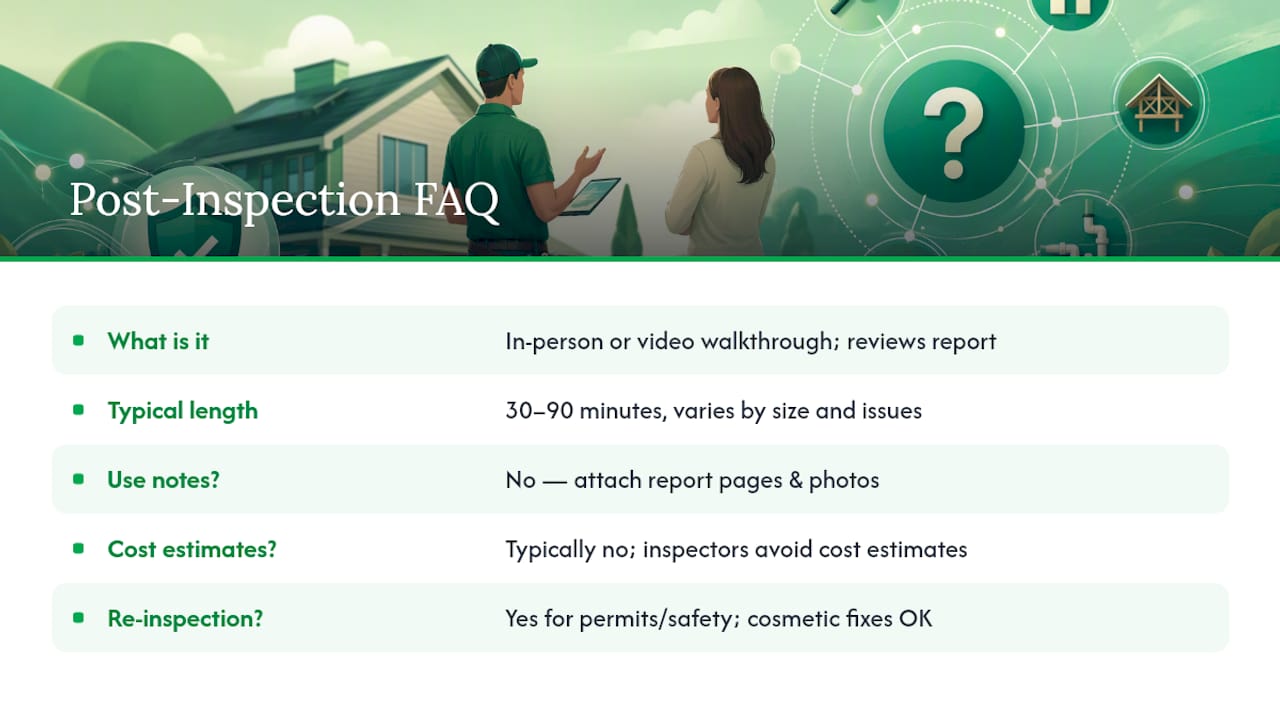
It’s the inspector’s follow-up walkthrough, in person or by video, that reviews your report’s findings and helps you decide what to request from the seller.
How long does the consultation usually take?
Most run 30 to 90 minutes depending on the home’s size and how many issues the inspector found.
Can I use the consultation notes instead of the written report in my repair addendum?
No. Attach actual report pages and photos; verbal notes from the consultation aren’t sufficient documentation for a legally binding addendum.
Will the inspector tell me how much repairs will cost?
Typically not. Inspectors flag issues and severity but leave cost estimates to contractors to avoid conflicts of interest.
Do I need a re-inspection after the seller makes repairs?
For anything involving permits or safety systems, yes. Cosmetic fixes are usually fine to verify at the final walk-through instead.
Sources
- Zillow — Home inspection guidance
- Repair Addendum: How to Request Repairs After a Home Inspection | LegalClarity
- How to Create an Inspection Repair Request That Gets Results | PropWise
Recent Comments