
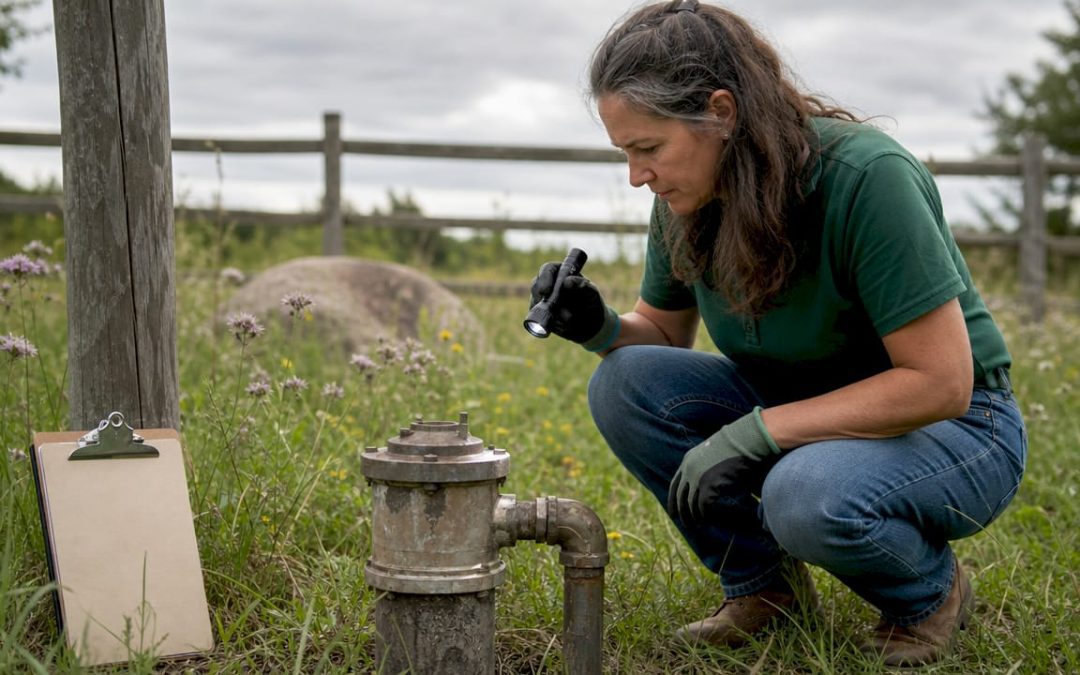
A well water inspection is a professional evaluation of both the physical condition of a private well system and the safety of its water supply through certified laboratory testing. Unlike a standard home inspection, it covers the wellhead, pump, pressure tank, casing, wiring, and water quality together. The CDC and EPA both recommend annual testing for bacteria and nitrates for private well owners. If you rely on a private well, understanding what a well water inspection covers is the first step toward protecting your household.
What is a well water inspection and what does it cover?
A well water inspection is a comprehensive safety assessment that evaluates both the visible components of your well system and the invisible quality of the water it delivers. This distinguishes it from a simple water test, which only analyzes a water sample without examining the physical system that produces it. The inspection covers the wellhead, sanitary seals, casing, pump, pressure tank, electrical wiring, and surrounding drainage conditions.
The wellhead is the above-ground portion of the well, and its condition directly predicts contamination risk. Sanitary well caps use airtight gaskets and screened vents to block vermin and surface water. An older, loose cap is not just a cosmetic issue. It creates a direct pathway for bacteria to enter the water supply, which then requires shock chlorination and retesting to resolve.
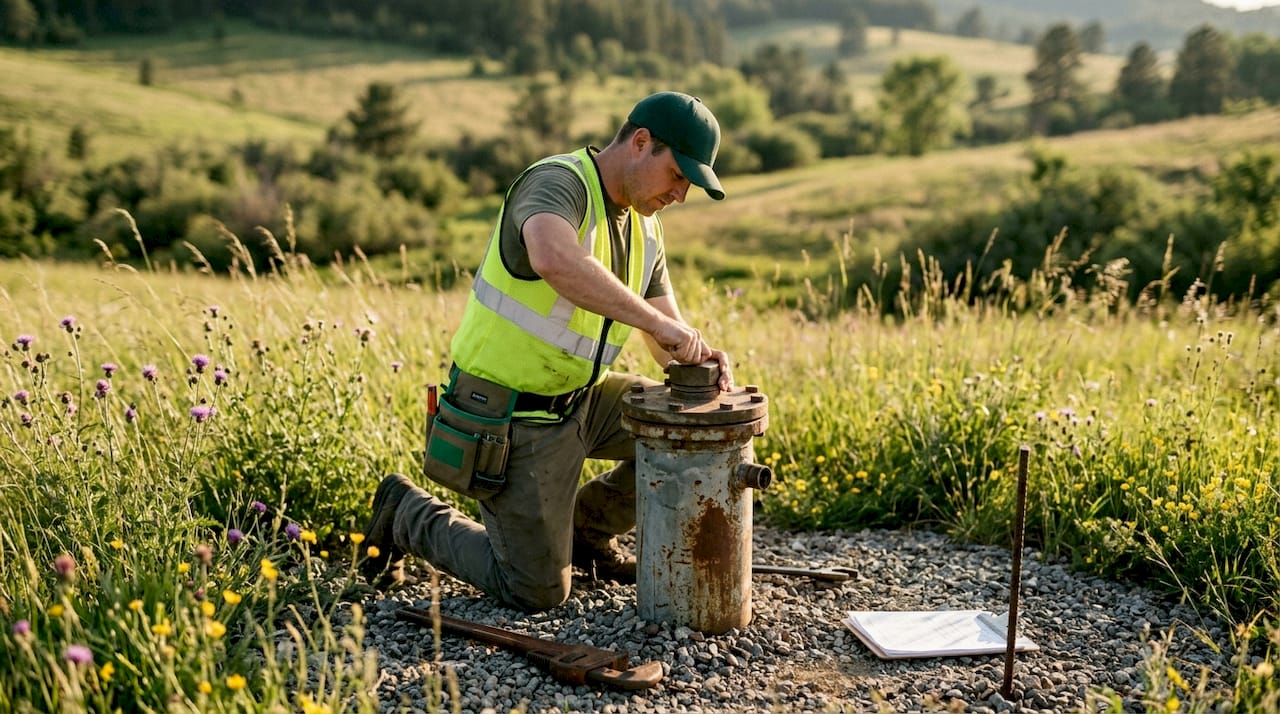
Water quality testing is the second half of the inspection. An inspector collects water samples following strict lab protocols and sends them to a state-certified laboratory. The lab screens for coliform bacteria, nitrates, arsenic, and other contaminants specific to your region. The results, combined with the physical inspection findings, give you a complete picture of your well’s health. This is why well inspections link the visible external condition of the system to laboratory results in a way that no single test alone can replicate.
What happens during a professional well water inspection?
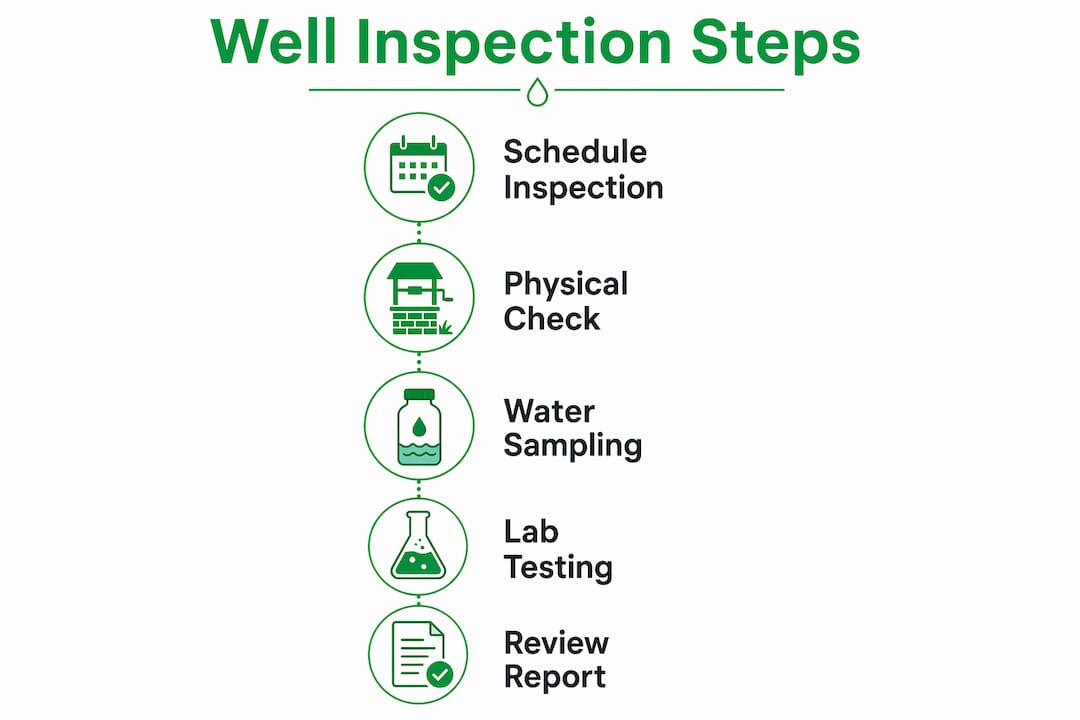
The inspection follows a structured sequence that moves from visual checks to mechanical testing to water sampling. Here is what to expect at each stage.
-
Visual inspection of the wellhead and casing. The inspector examines the well cap, casing height above grade, condition of seals, and any signs of surface water pooling near the well. Cracks, corrosion, or improper grading are flagged immediately.
-
Mechanical system evaluation. The pump, pressure tank, and electrical connections are checked for proper operation. The inspector looks for pressure fluctuations, waterlogged tanks, and wiring that does not meet code.
-
Flow and yield testing. Flow testing runs water from a high-volume source for one to four hours to confirm the well can meet sustained household demand. This test measures gallons per minute and confirms the water level does not drop below the pump intake during extended use. A well may show good static pressure but fail completely under real demand conditions.
-
Water sample collection. The inspector collects samples using sterile bottles and follows chain-of-custody protocols required by certified labs. Improper collection methods or delays can invalidate bacterial test results entirely, which is why this step requires professional handling.
-
Lab analysis and report delivery. Samples go to a state-certified laboratory. Results typically return within three to five business days. The final report categorizes findings into immediate safety issues, functional deficiencies, and maintenance recommendations.
Pro Tip: Before the inspector arrives, avoid running water for at least six hours. This allows the static water level to stabilize and gives the flow test a reliable baseline to measure against.
Why is annual well water testing important for your health?
The single most dangerous assumption a well owner can make is that clear water is safe water. Many contaminants like arsenic, nitrates, and coliform bacteria are completely colorless, odorless, and tasteless. You cannot detect them without a laboratory test. Nitrate exposure above 10 mg/L is particularly dangerous for infants and can cause methemoglobinemia, a condition that reduces the blood’s ability to carry oxygen.
The CDC and EPA both recommend testing private wells at least once per year. The Florida Department of Health specifies yearly bacteria and nitrate tests using state-certified labs, with typical costs around $20 to $30 per sample. That cost is negligible compared to the medical and remediation expenses that follow a contamination event.
Beyond the annual schedule, certain events require immediate additional testing:
- Flooding or heavy rainfall near the well
- Any repairs or modifications to the well system
- A new crack or damage to the casing
- Changes in water taste, odor, or color
- A neighbor’s well testing positive for contamination
“Routine testing is about managing long-term risk, not just a one-time safety check, because water quality can vary due to environmental changes and system aging.” — University of Wisconsin-Stevens Point
The physical inspection component matters here too. A visual check can identify contamination pathways, such as improper grading that channels surface runoff toward the wellhead, before they affect water quality. Catching these issues early is far less expensive than treating a contaminated water supply after the fact.
How to read your well inspection report and what to do next
Well inspection reports organize findings into three categories: immediate safety issues, functional deficiencies, and maintenance recommendations. Understanding which category a finding falls into tells you how urgently to act.
The table below shows common findings and the appropriate response for each.
| Finding type | Example | Recommended action |
|---|---|---|
| Immediate safety issue | Coliform bacteria detected | Shock chlorination, retest within 2 weeks |
| Immediate safety issue | Damaged or missing well cap | Replace cap, retest for bacteria |
| Functional deficiency | Waterlogged pressure tank | Replace bladder or tank before system failure |
| Functional deficiency | Flow rate below 3 GPM | Evaluate pump, aquifer yield, or storage options |
| Maintenance recommendation | Minor casing corrosion | Monitor annually, seal if deterioration continues |
Water quality lab results include a maximum contaminant level, or MCL, for each substance tested. The EPA sets MCLs for public water systems, and most states apply the same standards to private well guidance. If a result exceeds the MCL, the report will specify it as a safety issue requiring treatment. Common responses include shock chlorination for bacteria, reverse osmosis systems for arsenic, and ion exchange filters for nitrates.
Keep every inspection report and lab result in a dedicated file. These records matter for three reasons. They establish a baseline so you can detect trends over time. They satisfy disclosure requirements when you sell the property. They also support mortgage approvals, since many lenders require a passing well inspection before closing. The home inspection report you receive should be treated as a living document, not a one-time piece of paper.
DIY checks vs. professional inspections: what you can and cannot do yourself
Homeowners can perform basic visual checks between professional inspections. Walk around the wellhead and look for these conditions:
- The well cap sits flush and shows no cracks or gaps
- The casing extends at least 12 inches above the ground surface
- No surface water pools near the well after rain
- No fuel tanks, pesticide storage, or septic components sit within 50 feet of the well
These checks take five minutes and can catch obvious problems early. What they cannot do is replace a professional inspection. Combining mechanical tests with lab results is the only way to get a complete picture of well health and water safety. Flow testing requires specialized equipment. Pressure tank diagnostics require training. And water sampling for bacteriological testing requires sterile technique and certified lab submission.
Over-the-counter water test kits sold at hardware stores screen for a limited range of contaminants and do not meet the chain-of-custody standards required for legal or real estate purposes. They are useful for a quick check between annual tests, but they are not a substitute for certified lab analysis.
Pro Tip: When hiring an inspector, verify that they use a state-certified laboratory for water samples. Ask for the lab’s certification number. An inspector who cannot provide it is not meeting the standard required for accurate, legally defensible results.
Choosing a qualified inspector matters as much as the inspection itself. Look for inspectors with certifications from organizations like the American Society of Home Inspectors (ASHI) or the International Association of Certified Home Inspectors (InterNACHI), and confirm they have specific experience with private well systems. The home inspection process for well-equipped properties differs meaningfully from a standard residential inspection.
Key takeaways
A well water inspection combines physical system evaluation with certified lab water testing, and no single component alone is sufficient to confirm your water is safe.
| Point | Details |
|---|---|
| Definition matters | A well inspection covers the physical system and water quality together, not just a water sample. |
| Annual testing is required | CDC and EPA recommend yearly testing for bacteria and nitrates at minimum. |
| Clear water is not safe water | Arsenic, nitrates, and bacteria are invisible and require lab detection. |
| Reports drive action | Findings are categorized by urgency, from immediate safety issues to routine maintenance. |
| Records protect you | Keeping inspection and lab records supports property sales, mortgage approvals, and long-term safety. |
What I’ve learned after years of well water inspections
Most homeowners I work with are surprised to learn that the physical inspection and the water test are two separate things that must be done together. I have seen cases where a water sample came back clean, but the wellhead had a cracked cap and improper grading that made contamination a near certainty within one heavy rain event. A clean test result on a compromised system is a false sense of security.
The other misconception I encounter constantly is that well inspections are only necessary when buying a home. Water quality changes over time. Aquifers shift. Nearby agricultural activity introduces nitrates. Aging pump components create pressure inconsistencies that stress the casing. A well that tested perfectly five years ago may have real problems today. Treating the annual inspection as a routine maintenance task, the same way you service a furnace, is the mindset that keeps households safe.
I also want to address record-keeping directly, because most homeowners skip it entirely. Every lab result and inspection report should go into a dedicated folder, physical or digital. When you sell the property, those records demonstrate responsible ownership and can prevent a sale from falling apart at the last minute. When you notice a change in water quality, those records give you a baseline to compare against. The discipline of keeping records is what separates proactive owners from reactive ones.
— JOHN
Get a professional well water inspection from Jhunthomeinspections
Jhunthomeinspections serves homeowners and buyers across the St. Louis Metro area and Southern Illinois with thorough well water inspections that cover every component discussed in this article.

From wellhead condition and flow testing to certified lab water sampling and detailed written reports delivered within 24 hours, the team at Jhunthomeinspections gives you the documentation you need to make confident decisions. Whether you are buying a home with a private well or maintaining one you already own, their inspection services include water quality checks backed by state-certified laboratory analysis. First-time buyers, veterans, and low-income families receive the same thorough process and the same clear reporting. Schedule your inspection today and know exactly what your water supply contains.
FAQ
What does a well water inspection include?
A well water inspection covers a visual check of the wellhead, casing, and cap; mechanical testing of the pump and pressure tank; flow and yield testing; and certified laboratory analysis of water samples for contaminants like bacteria, nitrates, and arsenic.
How often should a private well be inspected?
The CDC and EPA recommend testing private wells at least once per year for coliform bacteria and nitrates, with additional testing after flooding, repairs, or any noticeable change in water quality.
Can I test my well water myself?
Hardware store test kits screen for a limited range of contaminants but do not meet the sterile sampling and chain-of-custody standards required by certified laboratories. They are not a substitute for a professional inspection and lab-certified water test.
Why does my well need a physical inspection if the water tests clean?
A clean water sample only reflects the water quality at one point in time. A physical inspection identifies structural problems like cracked caps or improper drainage that create contamination pathways, which a water test alone cannot detect.
Does a well inspection affect a home sale?
Yes. Many lenders require a passing well inspection before approving a mortgage on a property with a private well. Inspection and lab records also satisfy state disclosure requirements and can prevent delays at closing.
Recent Comments