
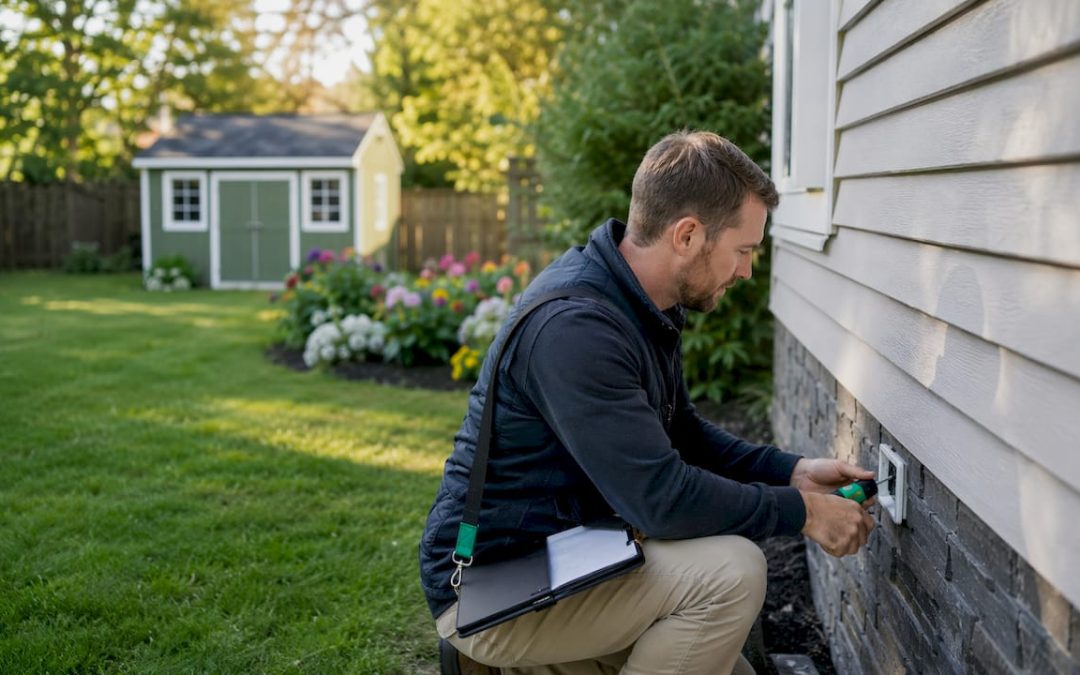
What does “inspection without buyer present” actually mean?
A home inspection without the buyer present means a licensed inspector evaluates the property independently, and the buyer reviews the findings through a detailed written report afterward. No law in the United States requires buyer attendance at a home inspection. The rules that govern who shows up come from your purchase agreement, specifically the inspection contingency clause, which typically gives you 7–10 days after offer acceptance to complete the evaluation.
The inspection itself is a visual, non-invasive examination of the home’s accessible systems and components, as defined by the American Society of Home Inspectors (ASHI) Standards of Practice. The inspector checks the roof, foundation, electrical, plumbing, HVAC, and more. Whether you stand next to them or not, the scope of that evaluation stays the same.
Here is what a buyer-absent inspection looks like in practice:
- The licensed inspector conducts a full walkthrough of all accessible systems without the buyer on-site
- The buyer’s agent or a designated representative may attend in the buyer’s place
- The inspector delivers a written report, typically 30–50+ pages with photos and severity ratings, within a couple of days
- The buyer reviews the report and acts within the contingency deadline
- The inspection remains a neutral evaluation, not a pass/fail test, regardless of who attends
Why buyers sometimes skip the inspection in person
Skipping the in-person inspection is more common than most buyers realize, and the reasons are usually practical rather than careless.
Scheduling is the most frequent obstacle. Work hours, childcare, or a tight offer timeline can make it genuinely impossible to block off a half-day on short notice. Out-of-state buyers face an even harder call: flying in for a single inspection appointment on a property that may not close is a real cost, and many remote buyers make informed decisions without ever setting foot in the home before closing.

Sellers or their agents occasionally request that only the inspector be present, citing concerns about liability or disruption. In competitive markets, some buyers have also waived inspection contingencies entirely to strengthen offers, a practice that real estate professionals widely warn against. Health concerns drove another wave of buyer absences during the COVID-19 pandemic. That shift revealed something unexpected: inspectors working without buyers present often perform more accurately, free from the pressure of real-time explanations.
Common reasons buyers are absent during inspections:
- Inflexible work schedules or last-minute conflicts
- Geographic distance, particularly for out-of-state or investor purchases
- Seller or listing agent restrictions on who may attend
- Health concerns or safety protocols
- Buyer confidence in their agent’s ability to relay findings
- Contract terms that limit on-site access to specific parties
What you actually risk when you’re not there
Buyer absence during a home inspection shifts how you receive and process information, and that shift carries real consequences.
The biggest loss is the live walkthrough. A written report tells you what is wrong; the inspector’s verbal commentary tells you how bad it actually is and what to do about it. Working inspectors widely acknowledge that they soften verbal commentary when the homeowner is present and put the full picture in the written report. When you’re not there, you miss the tone, the context, and the moment when the inspector points at a crack and says, “This one I’d watch, but this one I’d fix before winter.”
Buyers who attend inspections better understand property maintenance needs and anticipate future costs in ways a PDF alone rarely conveys. That gap in understanding can hurt you at the negotiating table. If you don’t fully grasp the severity of a finding, you may ask for too little, accept a cosmetic fix for a structural issue, or miss a repair request entirely.
Contingency deadlines add urgency to all of this. Once that window closes, your leverage disappears. Absent buyers who receive their report late, read it slowly, or fail to schedule a follow-up call with the inspector often find themselves negotiating from a weaker position, or not negotiating at all.
Key implications of buyer absence:
- Loss of real-time inspector commentary and severity context
- Reliance on written report alone, which may not capture nuance
- Potential communication gaps between inspector, agent, and buyer
- Reduced negotiation leverage if findings are misunderstood
- Risk of missing contingency deadlines without a clear action plan
- Missed opportunity to learn about the home’s maintenance needs firsthand
How to stay fully informed when you can’t attend
Buyer absence does not have to mean buyer ignorance. The right preparation closes most of the gap.
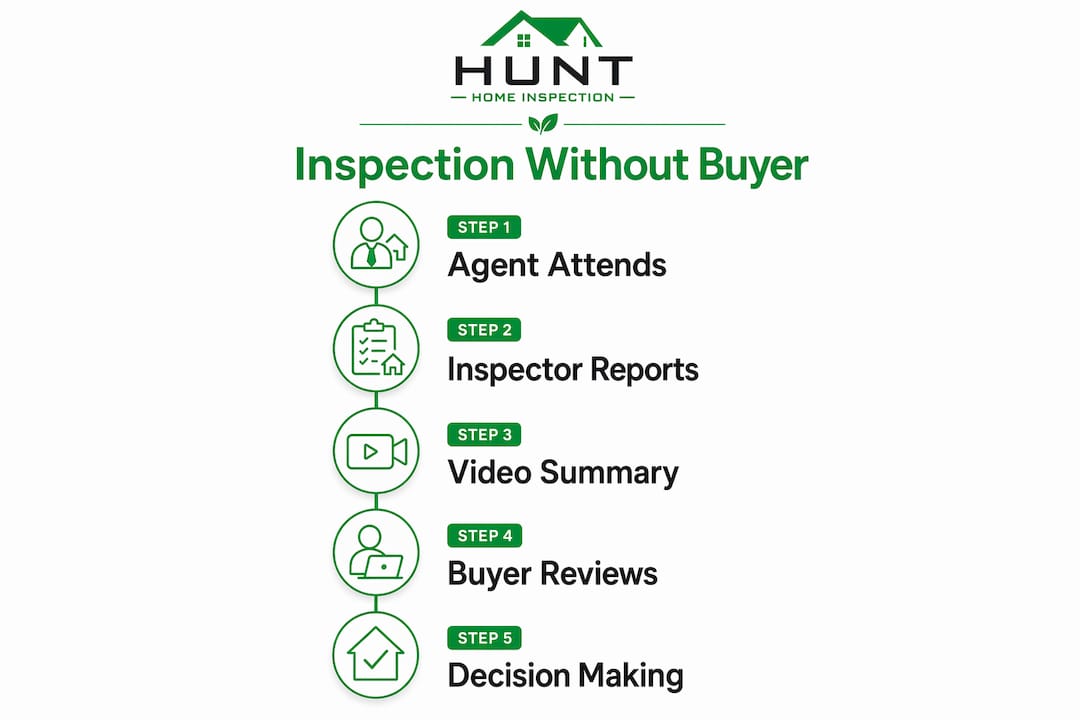
Your first move is sending your real estate agent. An experienced agent has attended dozens of inspections and knows which findings are routine and which ones should raise concern. They can ask the questions you would have asked and relay the inspector’s verbal commentary in real time. This is the closest substitute for being there yourself, and it works well when your agent is genuinely engaged rather than just present.
Pro Tip: Ask your inspector before booking whether they offer a phone or video walkthrough summary after the inspection. Not all inspectors do this, but many will walk you through the report findings in real time if you ask upfront. Jhunthomeinspections offers both in-person and video inspection options to accommodate buyers who cannot attend in person.
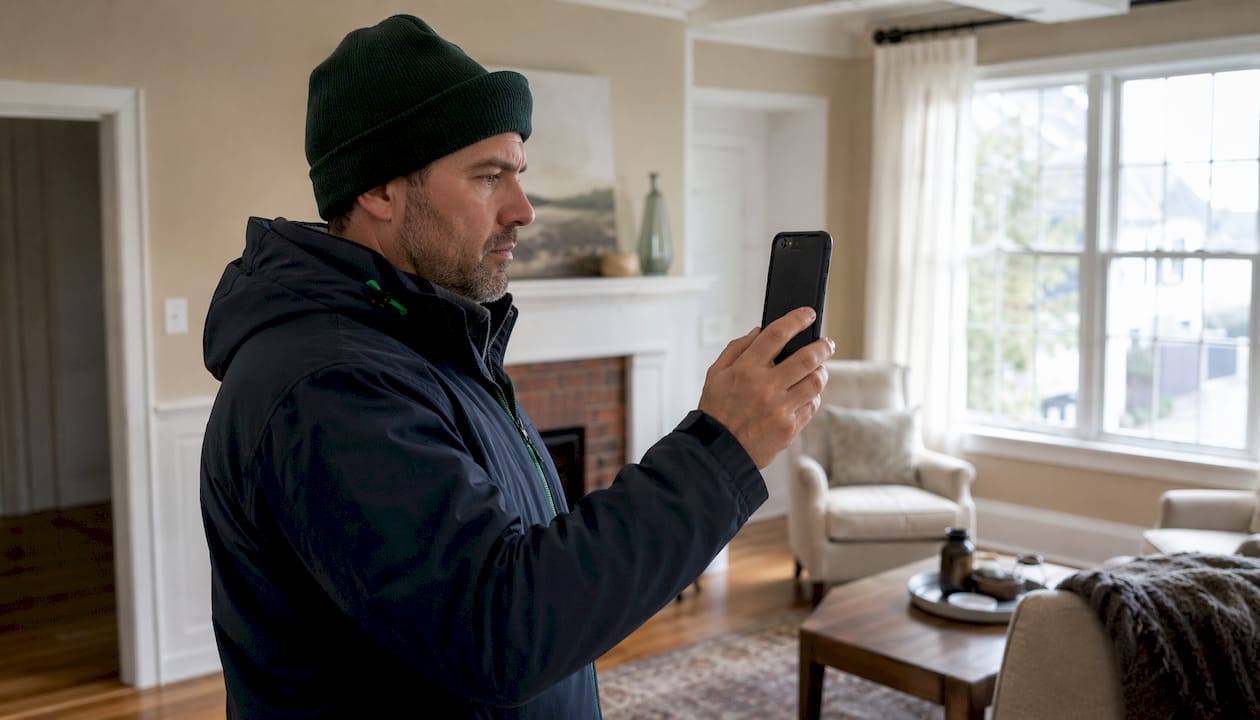
Technology has made remote participation more practical than ever. Photos, timestamped video walkthroughs, and live streaming during the inspection give absent buyers a visual record that goes well beyond the written report. Some inspectors will share a live video feed so you can watch in real time and type questions to your agent on-site.
Strategies for staying informed when absent:
- Send your buyer’s agent as a knowledgeable proxy to ask questions and take notes
- Request a post-inspection phone or video debrief directly with the inspector
- Review the full written report the same day it arrives, not the day before the deadline
- Schedule a private follow-up call with the inspector to clarify any findings you don’t understand
- Ask your agent to photograph or video specific areas of concern during the walkthrough
- Confirm your contingency deadline before the inspection so you know exactly how much time you have to act
Best practices for protecting yourself, present or not
Whether you attend the full inspection, catch the final hour, or send your agent alone, a few habits protect your interests at every scenario.
Attend if you can, even partially. Inspections last 3–4 hours on average, and showing up for the final hour gives you the summary walkthrough without requiring you to block off half a day. That last hour is when the inspector consolidates findings and walks you through the most significant issues. It’s the highest-value window of the entire appointment.
When you do attend, keep your financial plans to yourself. Don’t mention what you’d be willing to pay, where furniture might go, or what renovations you’re planning. One buyer once told an inspector, in front of the listing broker, that he’d pay $100,000 more if he had to. That information did not stay in the room. Discussing pricing or budget during an inspection hands leverage directly to the other side.
Negotiate for the seller to vacate the property during the inspection. Sellers who stay, even quietly, change the dynamic. Inspectors tend to soften their verbal commentary when the homeowner is standing nearby, and buyers lose the freedom to speak candidly about what they’re seeing. Most listing agents already advise sellers to leave, but confirming this in advance removes any ambiguity.
Best practices for buyers, regardless of attendance:
- Prioritize attending at least the final hour for the inspector’s summary
- Use your agent as a proxy when full attendance isn’t possible, and brief them on your specific concerns beforehand
- Confirm the seller will be off the property before the appointment
- Never discuss your budget, renovation plans, or emotional attachment during the inspection
- Review the report immediately upon delivery and flag questions for the inspector before the contingency deadline
- Keep the inspection report confidential; share it only when it supports your negotiation position
What industry experts say about inspections without buyers
The inspection industry’s own experience with buyer-absent inspections has produced some genuinely useful findings, not just opinions.
StructureTech, a Minneapolis-based inspection firm, changed its policy after COVID-era restrictions forced inspectors to work without buyers present. What they found surprised them: inspectors made fewer mistakes when working without buyers on-site, because they could focus entirely on the evaluation without explaining findings in real time. StructureTech now recommends that buyers attend only the final hour of the inspection for a polished summary, rather than the full walkthrough.
Jhunthomeinspections, serving the St. Louis Metro area and Southern Illinois, delivers comprehensive inspection reports within 24 hours, a standard that matters most when buyers are absent and working against a contingency deadline. Their inspection services include video inspection options specifically designed for buyers who cannot attend in person, a direct response to the reality that remote and time-constrained buyers need more than a PDF.
The ASHI Standards of Practice require inspectors to document what they observe, but they do not script how an inspector explains those observations to a buyer in real time. That gap is where absent buyers lose the most. The written report captures every finding; the live conversation around it, what it costs to fix, how urgent it is, and what to watch versus what to act on now, gets compressed or lost entirely when no one is there to hear it.
The professional consensus across the inspection industry points in one direction: skipping the inspection entirely is one of the most common buyer regrets in real estate. Absent buyers who arrange a private debrief with their inspector, either at the end of the appointment or by phone that evening, recover most of what they missed. Those who rely solely on the written report without follow-up often don’t realize what they missed until weeks after closing.
Real estate safety considerations also affect inspection dynamics. Understanding safety protocols in real estate transactions can help buyers and their agents make smarter decisions about who attends, when, and under what conditions.
Key Takeaways
A home inspection without the buyer present is legally permissible in every U.S. state, but buyers who skip the live walkthrough must take deliberate steps to recover the context and clarity that a written report alone cannot provide.
| Point | Details |
|---|---|
| No legal attendance requirement | No U.S. state requires buyers to attend; the inspection contingency in your contract governs the timeline. |
| Reports arrive within a couple of days | Inspection reports typically run 30–50+ pages with photos and severity ratings, designed to stand alone. |
| Partial attendance beats none | Inspections average 3–4 hours; attending the final hour gives you the inspector’s full summary. |
| Agent proxy fills the gap | Your buyer’s agent can ask questions and relay verbal findings when you cannot be present. |
| Private debrief is the highest-leverage move | Arranging a phone or in-person debrief with the inspector after the appointment recovers the live context absent buyers miss most. |
Why Jhunthomeinspections is built for buyers who can’t always be there

Jhunthomeinspections understands that life doesn’t pause for inspection day. Serving the St. Louis Metro area and Southern Illinois, they offer both in-person and video inspections so buyers get the full picture regardless of where they are. Reports come back within 24 hours, detailed enough to stand alone and clear enough to act on before your contingency deadline expires.
Their proprietary Create Request List™ connects buyers and agents directly to inspection findings, cutting the back-and-forth that slows negotiations. For first-time buyers, veterans, and anyone navigating a purchase from a distance, that kind of support changes the experience entirely.
Ready to protect your investment with an inspection built around your schedule? Explore buyer protection inspections or learn more about the full home inspection process before your next offer goes in.
Recent Comments