

Skipping a home inspection is one of the costliest decisions a buyer can make. You lose negotiation leverage, your paper trail, and any legal footing if hidden defects surface after closing. The short answer: don’t waive unless you meet a narrow set of conditions, and even then, use mitigation strategies.
Here’s what you give up the moment you waive:
- Documented condition record at the time of contract, which is your primary evidence if you later suspect concealment
- Negotiation leverage to request repairs, seller credits, or a price reduction
- Contingency exit that lets you walk away without losing your earnest money
- Safety hazard disclosure covering electrical, structural, mold, gas, and carbon monoxide issues a walkthrough won’t catch
- Unpermitted work discovery, which can affect insurance eligibility and resale value
A standard home inspection typically costs $300–$600 depending on the home’s size and location. That fee is a fraction of what a single undiscovered defect can cost you.
Table of Contents
- Why do buyers waive the inspection contingency?
- What are the real risks of skipping a home inspection?
- How does an inspection differ from an appraisal?
- When might waiving an inspection be a reasonable call?
- How can you reduce your risk if you decide to waive?
- Why hire a professional inspector, and what does Jhunthomeinspections offer?
- Key Takeaways
- What inspectors actually see that buyers miss
- Jhunthomeinspections protects your purchase before you close
- Useful sources and further reading
Why do buyers waive the inspection contingency?
The pressure to waive usually comes from the market, not the buyer’s preference. In competitive bidding situations, sellers favor “clean” offers with fewer contingencies. Buyers who want to win sometimes drop the inspection to stand out.
Market-driven reasons:
- Multiple-offer situations where the seller can choose the cleanest contract
- Seller preference for a fast, unconditional close
- Buyer fear that an inspection contingency will cost them the deal
Financial and strategic reasons:
- Saving the inspection fee when cash is tight
- Perceived low risk on a recently built home or a condo where the HOA covers major systems
- Investors who plan a full renovation and feel they can absorb surprises
Some buyers use a middle-ground approach: an informational inspection done before submitting an offer, or an “inspection for information only” clause that produces a report but removes the buyer’s right to demand repairs. These options let buyers stay competitive while keeping their eyes open.

What are the real risks of skipping a home inspection?
The financial exposure alone should give most buyers pause. Nearly half of homeowners report surprise repair costs exceeding $5,000, and first-year repair totals can reach $10,000–$50,000 or more when major systems fail.
Real case: A buyer who waived inspection faced $22,000 in hidden repairs discovered after closing. Without an inspector’s report, the buyer had almost no legal recourse because there was no independent, contemporaneous documentation of the home’s condition at contract time.
Safety hazards a walkthrough won’t catch
A buyer walking through a home sees surfaces. An inspector sees systems. Common inspection red flags that a casual tour misses:
- Faulty or outdated electrical panels (Federal Pacific, Zinsco) that pose fire risk
- Structural issues: foundation cracks, sagging floor joists, compromised load-bearing walls
- Mold behind walls or in crawl spaces, often invisible until it’s a remediation project
- Gas line leaks and improper HVAC venting
- Asbestos in older insulation or floor tiles
- Carbon monoxide risks from improperly sealed combustion appliances
Insurance, mortgage, and resale impacts
Lenders require appraisals, not inspections, so a mortgage can close without one. But unpermitted work discovered after closing can void insurance coverage, trigger tax reassessments, and complicate resale. Some insurers won’t bind coverage on older homes without a recent inspection report, and if an undisclosed condition surfaces later, buyers without documentation may struggle to get favorable rates.
Loss of negotiation power
Without an inspection report, you enter closing without leverage. Buyers who have reports can request repairs, negotiate seller credits, or use findings to justify a lower offer price. Waiving that step means accepting the property as-is, with no documented basis to revisit the price.
NAR tracking showed 17%–21% of buyers waived inspection contingencies during peak competitive-market periods. That figure reflects how widespread the pressure has become, not how safe the choice is.
Pro Tip: If you can only do a limited inspection, prioritize the roof, electrical panel, HVAC system, and foundation. These four systems carry the highest repair costs and the lowest visibility during a standard walkthrough.
| Risk Category | What You Miss | Typical Cost Range |
|---|---|---|
| Roof defects | Missing shingles, flashing failures, deck rot | $5,000–$50,000+ |
| Electrical issues | Outdated panels, improper wiring | — |
| HVAC failure | End-of-life furnace or AC, improper venting | — |
| Foundation/structural | Cracks, settling, water intrusion | $10,000–$50,000+ |
| Mold/moisture | Hidden mold, crawl space moisture | — |
| Unpermitted work | Garage conversions, basement finishes | Varies; affects insurance and resale |

How does an inspection differ from an appraisal?
This is the most common misconception buyers carry into a purchase. An appraisal protects the lender. An inspection protects you.
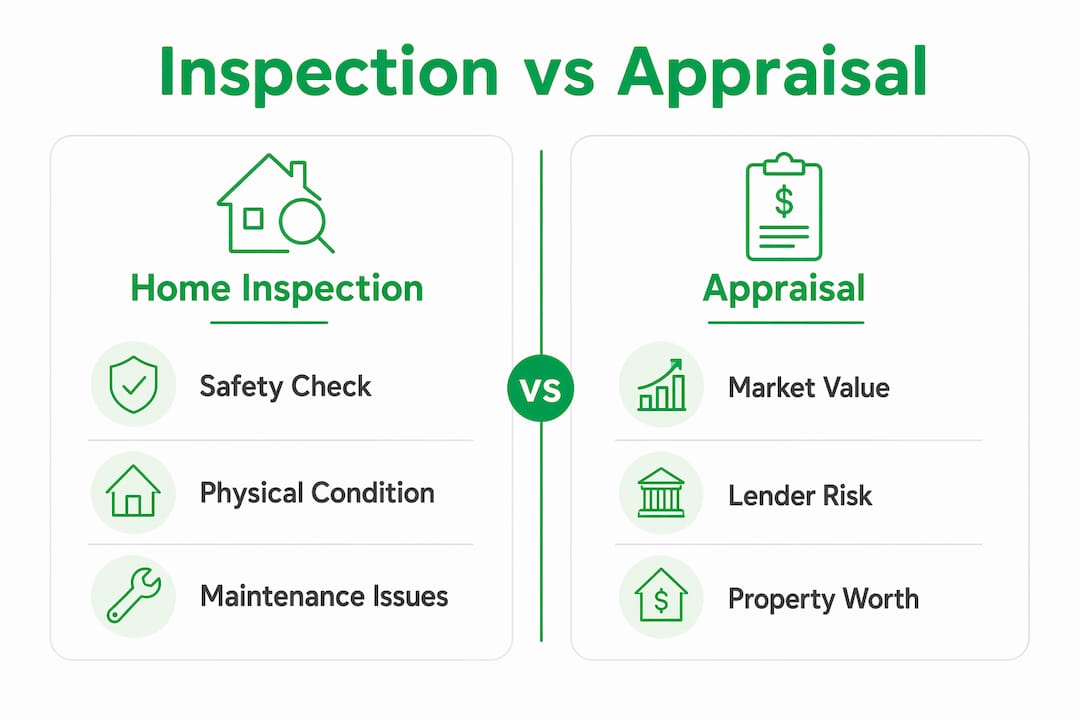
Appraisals focus on market value and lender risk, not system-level safety or deferred maintenance. An appraiser will note obvious structural damage if it affects value, but they won’t test the electrical panel, run the HVAC through a full cycle, or probe the crawl space for moisture.
| Feature | Home Inspection | Appraisal |
|---|---|---|
| Primary purpose | Assess physical condition and safety | Establish market value for the lender |
| Who orders it | Buyer (optional but recommended) | Lender (required for most mortgages) |
| Scope | All accessible systems and structure | Comparable sales, visible condition |
| Typical cost | $300–$600 | $150–$300 |
| Legal/financial effect | Buyer’s contingency and negotiation tool | Lender’s loan approval basis |
| Finds unpermitted work | Often, yes | Rarely, unless it visibly affects value |
An appraiser might flag a collapsed roof or a visibly flooded basement. They won’t catch a furnace that’s one season from failure, a panel with double-tapped breakers, or mold behind a freshly painted wall. Relying on an appraisal as a substitute for an inspection leaves a wide gap in your protection.
When might waiving an inspection be a reasonable call?
The honest answer: rarely, and only under specific, documented conditions. Here’s the narrow list:
- New construction with a transferable builder warranty and a recent independent third-party report. Even then, new builds have defects; a buyer protection inspection before the warranty expires is still worth scheduling.
- Condo purchases where the HOA covers all major systems (roof, HVAC, plumbing) and the seller provides current maintenance records and recent inspection reports.
- Experienced investors with documented cash reserves and a pre-planned renovation budget that already accounts for unknown conditions. This is a calculated risk, not a safe one.
- Informational inspection completed before the offer — you’ve already seen the report, you’ve priced the risk into your offer, and you’re waiving the contingency, not the knowledge.
Clear situations where you should never skip:
- Homes built before 1980 (asbestos, lead paint, outdated electrical)
- Visible deferred maintenance: peeling paint, soft floors, water stains, old roof
- Incomplete or vague seller disclosures
- Any property with a history of flooding, fire, or major renovation
Pro Tip: Even when waiving the contingency, you can still hire an inspector for an informational walkthrough before submitting your offer. You won’t have contractual repair rights, but you’ll know what you’re buying.
How can you reduce your risk if you decide to waive?
If market conditions force your hand, these steps reduce your exposure without requiring you to walk in blind.
- Schedule a pre-offer informational inspection. Hire an inspector while the home is still listed. You pay the fee, get the full report, and use that knowledge to price your offer accurately. You waive the contingency, not the information.
- Order targeted specialty inspections. For older homes or specific risk factors, add a sewer scope ($150–$300), roof inspection, HVAC service call, or mold test. Each one addresses a high-cost risk category.
- Use an inspection-with-no-repair-requests clause. Some contracts allow an inspection period where the buyer can walk away but cannot demand repairs. You keep the exit right without creating seller friction.
- Collect seller disclosures and service records. Request receipts for recent HVAC service, roof work, and any permitted renovations. Gaps in documentation are a signal, not just an inconvenience.
- Insist on a 24–48 hour report turnaround. If you’re doing a pre-offer inspection in a fast market, a slow report is useless. Confirm the inspector’s turnaround before you book.
- Build an emergency repair reserve. Before closing, set aside at minimum three to six months of estimated repair costs. For an older home, that number should be higher.
- Consider a short-term home warranty. A one-year policy covers major systems and appliances and buys time to discover what the inspection didn’t catch.
- Check insurer binding requirements before closing. Some carriers require a recent inspection report to bind coverage on homes over a certain age. Knowing this in advance prevents a coverage gap at closing.
Pro Tip: When negotiating, a seller credit is often more useful than a repair request. Sellers fix things cheaply; you fix them right. Ask for a dollar amount at closing instead of a repair, and use the inspection report as your documented basis.
Buyers who can’t attend in person can still get full coverage through video inspection options, which let you watch the walkthrough live and ask questions in real time. Understanding why insurance inspectors miss damage is also worth reading before you close, since insurer inspections and buyer inspections serve different purposes.
Why hire a professional inspector, and what does Jhunthomeinspections offer?
A professional inspector brings tools, training, and liability that a seller’s disclosure or a quick walkthrough can’t replicate. The role of a home inspector is to document the property’s condition independently, at a specific point in time, in a format you can use for negotiation, insurance, and legal purposes.
Jhunthomeinspections serves the St. Louis Metro area and Southern Illinois with services built around the exact risks described above:
- In-person and video inspection options for buyers who can’t be on-site, with live walkthroughs and real-time Q&A
- 24-hour report turnaround so you’re never waiting on a report while a deal moves forward
- Create Request List™, a proprietary tool that translates inspection findings directly into a structured communication between buyer and agent, cutting the back-and-forth that slows negotiations
- Specialty checks for targeted risk categories (roof, HVAC, mold, sewer) when a full inspection isn’t the right fit
- Budget-friendly options designed for first-time buyers, low-income families, and veterans who need protection without an inflated price tag
Pro Tip: Ask your inspector to walk you through the top three findings in person before the written report is finalized. That conversation often surfaces context the written report can’t fully capture, and it helps you prioritize what to negotiate.
Key Takeaways
Skipping a home inspection exposes buyers to financial, safety, and legal risks that far outweigh the cost of the inspection itself, and most buyers have better options than a full waiver.
| Point | Details |
|---|---|
| Financial exposure is real | Surprise repairs can reach $10,000–$50,000+ in the first year; one documented case totaled $22,000. |
| Appraisals don’t protect you | Appraisals serve the lender, not the buyer; they don’t assess system safety or deferred maintenance. |
| Informational inspections are the middle ground | A pre-offer inspection gives you the report without a repair contingency, keeping your offer competitive. |
| Narrow exceptions exist | New builds with warranties, investor purchases with reserves, and pre-inspected condos are the clearest cases. |
| Jhunthomeinspections delivers fast | 24-hour report turnaround and the Create Request List™ give St. Louis Metro and Southern Illinois buyers a practical, low-friction option. |
What inspectors actually see that buyers miss
The most common surprise isn’t a collapsed roof or a flooded basement. It’s the slow, quiet failure: a furnace that’s been limping along for two seasons past its expected life, a panel with double-tapped breakers that an electrician will flag immediately, or a crawl space with moisture damage that’s been there long enough to affect the floor joists above it. These aren’t dramatic. They’re expensive.
Buyers who receive inspection reports often focus on the wrong things. They fixate on cosmetic notes and overlook the system-level findings that carry real cost. A cracked outlet cover is a $5 fix. A heat exchanger crack in the furnace is a $3,000 replacement and a carbon monoxide risk. Learning to read a report means scanning for anything that touches the roof, foundation, electrical, HVAC, or plumbing first, then working down from there.
The practical takeaway: when you get your report, sort findings by system and estimated cost, not by the order they appear. Use the highest-cost items as your negotiation basis. Sellers expect some negotiation after an inspection; what they don’t expect is a buyer who’s done the math.
Jhunthomeinspections protects your purchase before you close
Buyers in the St. Louis Metro area and Southern Illinois have a direct, low-friction option for inspection protection: Jhunthomeinspections. The difference from a generic inspection service is practical. You get a 24-hour report, the Create Request List™ that turns findings into a ready-to-use negotiation document, and the choice between in-person and video inspection depending on your schedule.
For buyers who need to stay competitive without going in blind, Jhunthomeinspections offers informational inspections, targeted specialty checks, and budget-friendly packages built for first-time buyers and veterans. If cash timing is a concern, the pay-at-close option lets you defer the inspection fee until closing. Book your inspection at jhunthomeinspections.com/inspection-services and request the Create Request List™ when you schedule.
This article is general information, not legal or financial advice. Verify current inspection requirements and disclosure rules with a licensed real estate professional or your state’s regulatory authority for your specific situation.
Useful sources and further reading
The following resources were used to support the claims and data in this article:
- National Association of REALTORS® — Home Inspections: Covers inspection cost ranges ($300–$600), buyer waiver trends, and why inspections are a financial protection, not a formality.
- Realtor.com — Should I Waive a Home Inspection?: Explains competitive-market pressures, the informational inspection option, and agent guidance on waiver risks.
- Investopedia — 10 Reasons You Shouldn’t Skip a Home Inspection: Details safety, legal, and financial reasons to get an inspection, including unpermitted work and insurance implications.
- Mortgage Daily — Waiving the Home Inspection Cost This Buyer $22,000: Real-world case study of post-closing repair costs and limited legal recourse without an inspection report.
- Frontier Inspections — The Hidden Costs Lurking in Homes: Data on homeowners reporting surprise repair costs exceeding $5,000 and first-year repair ranges.
- Chase — Waiving the Home Inspection: Explains the appraisal vs. inspection distinction and lender perspective on waiving.
- Marketplace — Homebuyers Are Still Waiving Inspections: NAR-tracked data showing 17%–21% of buyers waived inspection contingencies during competitive market periods.
Recent Comments