

A limited home inspection is a scoped evaluation that examines only specific systems or components of a property, rather than assessing the entire home. Unlike a full general inspection, this type of review is intentionally narrow by design. Common contexts include insurance underwriting requirements, pre-drywall construction checks, and targeted transaction needs. Understanding what a limited inspection covers, and what it does not, is the first step toward using it correctly in any real estate transaction.
What does a limited home inspection include?
A limited home inspection restricts the contract scope to certain systems or components instead of covering the full property. The inspector performs only a visual, non-invasive review of what is readily accessible at the time of the visit. No walls are opened, no equipment is moved, and no specialized testing is conducted. This methodological boundary keeps the process fast and focused, but it also means concealed defects will not be identified.
Common types of limited inspections
The two most recognized forms are the 4-point inspection and the pre-drywall inspection. A 4-point home inspection covers only four systems: the roof, electrical panel, plumbing, and HVAC. Insurance carriers require this format during underwriting for older homes because it tells them whether those four systems present an unacceptable risk. It does not tell the buyer whether the kitchen floor is warped or the windows are drafty.

Pre-drywall inspections are performed on new construction before insulation and finishes conceal the framing. North Carolina standards define these as visual checks conducted on open framing before concealment. Once drywall goes up, those structural and mechanical details become inaccessible for years. This makes the pre-drywall window one of the most time-sensitive inspection opportunities a new-construction buyer will ever have.
What limited inspections typically exclude
| Included | Excluded |
|---|---|
| Roof condition (4-point) | Cosmetic defects and finishes |
| Electrical panel and visible wiring | Environmental hazards (mold, radon, asbestos) |
| Plumbing supply and drain lines | Hidden infrastructure behind walls |
| HVAC equipment condition | Detailed structural analysis |
| Exposed framing (pre-drywall) | Attic, crawl space, and basement details |
Limited inspections exclude environmental hazards, hidden infrastructure, and cosmetic issues. This means a buyer relying solely on a 4-point report has no information about the foundation, insulation, windows, or interior safety hazards. That gap is not a flaw in the process. It is the intended design. The problem arises when buyers do not realize how wide that gap actually is.
Pro Tip: Always request a written scope of work before the inspection begins. Ask the inspector to list every system they will and will not evaluate. This single step prevents the most common post-inspection disputes.
How does a limited inspection compare to a full home inspection?
Full home inspections cover all accessible systems and deliver detailed reports designed to support a buyer’s purchase decision. A limited inspection serves a narrower audience with a narrower purpose. The table below captures the most practical differences.
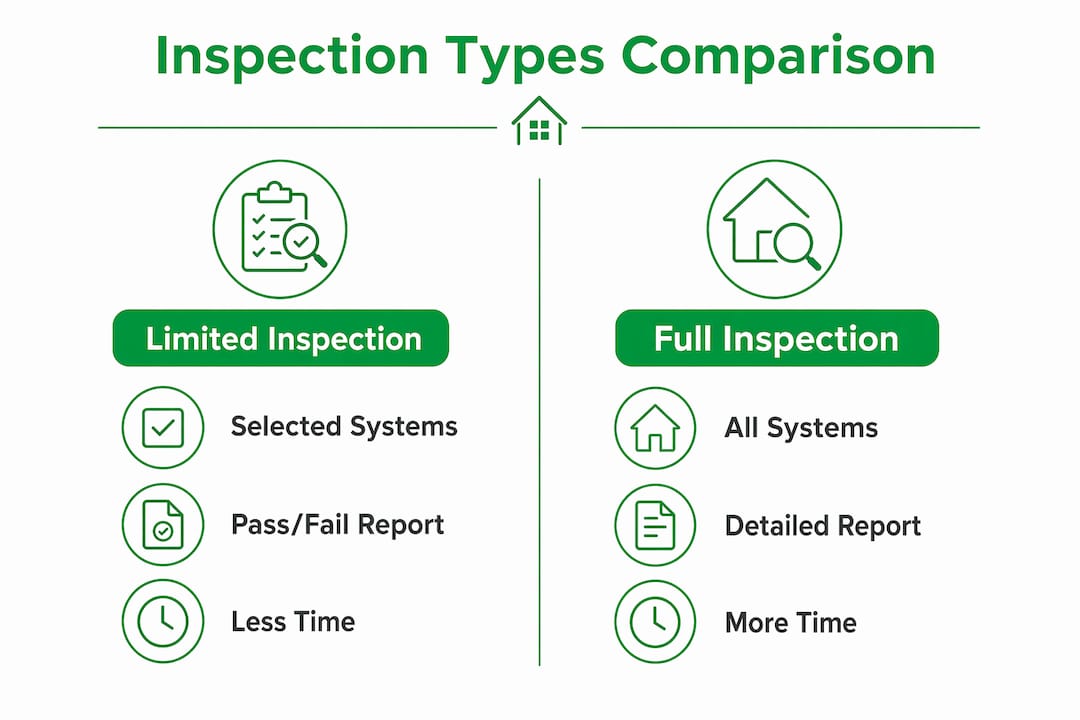
| Factor | Limited inspection | Full home inspection |
|---|---|---|
| Scope | Selected systems only | All accessible systems |
| Primary audience | Insurance carriers, lenders | Home buyers |
| Report format | Pass/fail per carrier criteria | Descriptive with repair recommendations |
| Typical cost | Lower | Higher |
| Decision impact | Insurance eligibility | Purchase negotiation |
| Time required | 30 to 60 minutes | 2 to 4 hours |
The report format difference matters more than most buyers realize. Insurance-driven limited inspections adopt a pass/fail framing based on carrier criteria, not buyer-focused due diligence. A roof that “passes” for insurance purposes may still have five years of life left and need replacement before the buyer’s first mortgage anniversary. The 4-point report will not flag that nuance. A full inspection report will.
Agents working with first-time buyers in the St. Louis Metro area frequently encounter this confusion. A buyer receives a 4-point report from the seller and assumes the home has been inspected. It has not been inspected in any meaningful buyer-protection sense. The role of a home inspector in a full inspection is to act as the buyer’s advocate across every accessible system. A limited inspector is answering a much narrower question for a different audience entirely.
A limited inspection cannot substitute for a full inspection when buying a home. This is not a matter of preference. It is a matter of what the two products are designed to do.
What are the benefits and limitations of limited home inspections?
Limited inspections offer real advantages when used for the right purpose. They are faster to schedule, less expensive, and precisely calibrated to satisfy specific transactional or insurance requirements. For a buyer purchasing a newer home who simply needs a 4-point report to satisfy their insurer, a full inspection would be redundant for that specific purpose.
Real benefits worth knowing
- Speed: A 4-point inspection typically takes under an hour, making it easy to schedule around a tight closing timeline.
- Cost: Limited inspections cost less than full inspections, which matters for budget-conscious buyers managing closing costs.
- Compliance: They satisfy insurance underwriting requirements and construction-stage checkpoints that full inspections are not designed to address.
- Focus: For pre-drywall checks, a limited scope is actually the correct tool because only the exposed systems are relevant at that stage.
Limitations that carry real risk
Limited inspections vary widely in scope and may miss major issues due to time constraints and seller control over access. Pre-offer limited inspections in particular often omit detailed analysis and safety checks. Relying on them exclusively is a documented source of buyer regret.
The deeper risk is cognitive. Misunderstanding limited inspections as comprehensive leads to buyer overconfidence and missed defects. A buyer who sees any inspection report tends to feel protected. That feeling is not always warranted. The report’s value is only as broad as its scope, and a limited scope report leaves most of the property unexamined.
Pro Tip: If your transaction requires a 4-point inspection for insurance, schedule a full home inspection separately. Treat them as two different tools serving two different purposes. Never let one replace the other.
When and how should buyers and agents use limited inspections effectively?
Knowing when to deploy a limited inspection, and when to pair it with a full inspection, separates informed buyers from those who discover problems after closing.
-
Use a 4-point inspection to satisfy insurance requirements. If your insurer requires one for a home built before 1980, order it. Then order a full inspection separately for your own due diligence. These are not competing products.
-
Schedule a pre-drywall inspection at the right construction stage. Once insulation and drywall are installed, exposed systems become inaccessible for years. Coordinate with your builder to confirm the inspection window before framing is covered.
-
Read the inspection contract before signing. Confirm which systems are included and agree on scope in writing before the inspector arrives. A clear contract prevents misunderstandings and aligns expectations on both sides.
-
Ask your agent to explain the report format. A pass/fail insurance report and a buyer-focused narrative report are not interchangeable. Agents who understand inspection scope distinctions can save buyers from costly assumptions.
-
Combine inspection types when the property warrants it. An older home in the St. Louis Metro area may require a 4-point report for the insurer, a full inspection for the buyer, and a sewer scope for the agent’s peace of mind. Each serves a distinct function. Stacking them is not redundant. It is thorough.
Key takeaways
A limited home inspection covers only specific systems by design, and it cannot replace a full inspection when a buyer’s financial protection is the goal.
| Point | Details |
|---|---|
| Limited inspection definition | Covers selected systems only, not the full property, by contractual design. |
| Common types | 4-point inspections and pre-drywall inspections are the two most recognized formats. |
| Key exclusions | Environmental hazards, hidden infrastructure, and cosmetic defects are not covered. |
| Report format difference | Insurance-driven reports use pass/fail framing, not buyer-focused repair recommendations. |
| Best practice | Always pair a limited inspection with a full inspection for complete buyer protection. |
Why buyers consistently underestimate the limited inspection gap
After years of working alongside buyers and agents in real estate transactions, the pattern I see most often is not ignorance. It is misplaced confidence. A buyer receives a document labeled “inspection report” and their brain files it under “done.” The word “limited” in the title does not register the way it should.
The uncomfortable truth is that the real estate transaction process creates pressure to move fast. A 4-point report arrives quickly, it looks official, and it checks a box. Buyers who are already stretched thin on time and money are not inclined to question it. Agents who are managing ten other transaction details may not pause to explain the scope gap either.
What I have found actually works is framing the limited inspection as a compliance document, not a safety net. When I explain to a buyer that their 4-point report answers the insurer’s question but not their question, the distinction lands. They understand that the insurer wants to know about liability exposure. The buyer needs to know about livability and long-term cost. Those are different questions requiring different tools.
The pre-drywall inspection is the one limited inspection type where I think the scope is genuinely appropriate. You are inspecting what is visible. Everything else is not yet built. That is not a limitation. That is the correct tool for the moment.
For agents, the most valuable habit is reviewing the inspection contract with your client before the inspector arrives, not after the report comes back. Scope disputes after the fact are expensive and avoidable. Clear contracts prevent them every time.
— JOHN
Get a thorough inspection from Jhunthomeinspections
Jhunthomeinspections serves home buyers, first-time buyers, veterans, and real estate agents across the St. Louis Metro area and Southern Illinois with both limited and full home inspections. Whether you need a 4-point report for your insurer or a complete buyer-focused assessment before closing, Jhunthomeinspections delivers reports within 24 hours and offers both in-person and video inspection options.

The proprietary Create Request List™ tool makes it easy for buyers and agents to communicate findings and prioritize repairs without chasing email threads. If you are weighing your inspection service options, Jhunthomeinspections gives you the scope clarity and turnaround speed that tight closing timelines demand. Schedule your inspection today and go to closing with confidence.
FAQ
What is the limited home inspection definition?
A limited home inspection is a scoped evaluation that examines only specific systems or components of a property, as defined in the inspection contract, rather than assessing the full home. Common examples include 4-point inspections and pre-drywall inspections.
What does a limited home inspection include?
The scope depends on the inspection type. A 4-point inspection covers the roof, electrical, plumbing, and HVAC systems only. A pre-drywall inspection covers exposed framing and mechanical systems before insulation and finishes are installed.
Can a limited inspection replace a full home inspection?
No. A limited inspection is designed for a specific purpose such as insurance compliance or a construction-stage check, and it does not cover the full range of systems a buyer needs evaluated before purchasing a home.
How does a limited inspection work in practice?
An inspector performs a visual, non-invasive review of only the systems listed in the contract. The visit typically takes 30 to 60 minutes, and the report uses pass/fail framing for insurance purposes rather than the detailed repair recommendations found in a full buyer inspection.
When should a buyer order a limited home inspection?
Order a limited inspection when your insurer requires a 4-point report or when your new-construction builder reaches the pre-drywall stage. Always pair it with a full home inspection for complete due diligence before finalizing a purchase.
Recent Comments