

A buyer inspection contingency is a clause in a real estate purchase agreement that gives you the right to inspect a property within a set timeframe and cancel the contract without losing your earnest money if serious defects are found. Industry professionals call this clause the “inspection contingency” or “home inspection contingency,” and it is one of the most protective provisions in any standard purchase contract. Without it, you accept the property in its current condition the moment you sign. Understanding how this clause works, what it covers, and where buyers go wrong can save you thousands of dollars and prevent a costly mistake.
What is buyer inspection contingency and how does it protect you?
A buyer inspection contingency allows a buyer a defined timeframe to inspect a home and legally terminate the contract to recover earnest money if significant defects are found. That protection disappears the moment you miss a deadline or skip a required notice. The contingency does not obligate the seller to fix anything. It simply protects your right to exit the deal with your deposit intact if the inspection reveals conditions you cannot accept.
The clause also grants you negotiating power. Once you have a written inspection report in hand, you can request repairs, ask for a price reduction, or negotiate a credit at closing. Sellers who want to close the deal often respond to well-documented repair requests. That leverage exists only because the contingency gives you a legal exit if they refuse.

How does the inspection contingency process work?
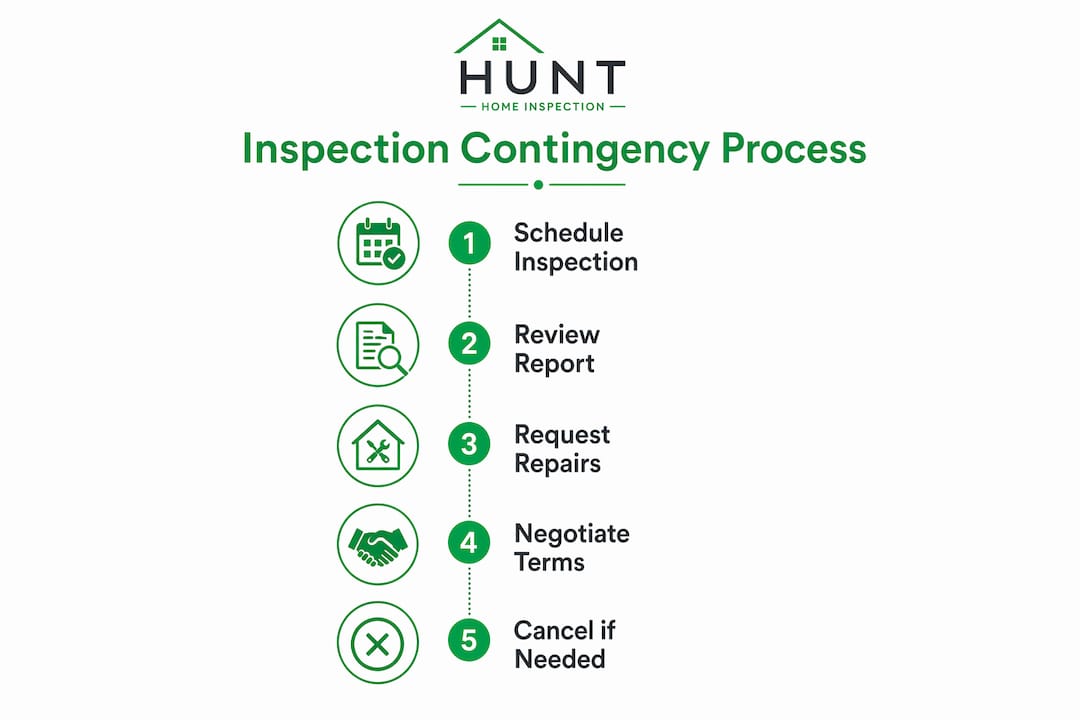
The real estate inspection process follows a clear sequence once your purchase contract is accepted. Each step has a deadline, and missing any one of them can cost you your earnest money.
- Contract acceptance. The clock starts the day the seller signs the contract. The contingency period typically lasts 7 to 14 days, depending on what you negotiated.
- Schedule the inspection. Book a licensed inspector within the first two days. Inspectors in competitive markets fill up fast, and waiting until day five leaves you no time to review findings or order follow-up inspections.
- Attend the inspection. Walk through the property with the inspector. You will learn far more in person than from reading the report alone. Jhunthomeinspections offers both in-person and video home inspections for buyers who cannot be on-site.
- Review the report. Your inspector delivers a written report, typically within 24 hours. Read it carefully and flag safety hazards, structural issues, and major system failures first.
- Submit your written response. You must respond in writing before the contingency deadline. Your options are: accept the property as-is, request specific repairs, negotiate a price credit, or cancel the contract.
- Wait for the seller’s response. Sellers generally have 3 to 7 days to respond to repair or credit requests. If they refuse and you cannot reach an agreement, you can still cancel and recover your deposit.
- Make your final decision. Once both parties agree or you decide to walk away, the contingency period closes and the transaction moves forward or terminates.
Pro Tip: Book your inspector before you even make an offer. Having a trusted inspector ready means you can schedule immediately after contract acceptance and avoid losing days to phone tag.
What issues do inspections commonly uncover?
86% of home inspections identify at least one issue requiring attention. That figure means finding problems is the norm, not the exception. The real question is whether those problems are serious enough to renegotiate or walk away.
Common defects fall into two categories: major and cosmetic. Major defects affect safety, structure, or core systems and carry the most negotiating weight.
- Structural problems: Foundation cracks, sagging floors, or compromised roof framing
- Electrical hazards: Outdated wiring, double-tapped breakers, or missing ground fault protection
- Plumbing failures: Corroded pipes, active leaks, or inadequate water pressure
- HVAC system failures: Aging furnaces, cracked heat exchangers, or non-functional air conditioning
- Roof damage: Missing shingles, deteriorated flashing, or evidence of active leaks
- Water intrusion: Basement moisture, attic condensation, or signs of past flooding
Cosmetic issues like peeling paint or worn carpet rarely justify renegotiation. Prioritize safety hazards and major structural defects over cosmetic problems when deciding what to request from the seller.
Standard inspections do not cover everything. Specialized inspections for radon, sewer lines, mold, and termites are separate services. Sewer line repairs can cost five figures if discovered after closing. For homes built before 1980, ordering a sewer scope and radon test alongside the standard inspection is a sound financial decision. Jhunthomeinspections can help you identify which home inspection red flags warrant specialized follow-up.
46% of buyers use inspection findings to negotiate price reductions or repairs, saving an average of $14,000. That number reflects what a well-used contingency is actually worth.
What variations in inspection contingencies should you know?
Not all inspection contingency clauses work the same way. The specific language in your contract determines what rights you actually have.
Negotiation-based vs. yes/no contingencies
Most standard contracts give you the right to request repairs, negotiate credits, or cancel. Some contracts use a “yes/no” inspection contingency clause that limits you to two choices: accept the property as-is or cancel the contract. There is no middle ground for negotiation. Many first-time buyers sign this clause without realizing they have given up their ability to ask for repairs.
| Contingency type | Negotiation rights | Cancel and recover deposit |
|---|---|---|
| Standard negotiation clause | Yes, request repairs or credits | Yes |
| Yes/no clause | No, accept or cancel only | Yes |
| Informational inspection | No formal requests made | Yes, if major defects found |
Inspection contingencies in as-is sales
Sellers who list a property as-is are telling you upfront they will not make repairs. That does not mean you lose your contingency rights. Buyers can still use inspection contingencies in as-is sales to protect their deposit and right to walk away. The inspection gives you the information you need to decide whether the price reflects the property’s true condition.
Informational inspections
An informational inspection means you order the inspection for your own knowledge but do not plan to request repairs. Buyers who conduct informational inspections can still cancel the contract and recover their earnest money if major defects are discovered. This approach is common in competitive markets where buyers want to appear flexible to sellers without surrendering their deposit protection.
Pro Tip: Read your contingency clause word for word before signing. Ask your agent to explain whether it is a standard negotiation clause or a yes/no clause. That one detail changes your entire negotiating position.
What mistakes cause buyers to lose their earnest money?
Earnest money losses almost always trace back to procedural errors, not bad inspection results. The contingency clause protects you only when you follow its exact requirements.
- Missing the written notice deadline. Failing to deliver written notice before the contingency deadline forfeits your right to cancel and risks losing your deposit. Verbal communication with your agent or the seller does not count.
- Relying on verbal agreements. Written notice timing and formality is the most common cause of forfeited inspection contingencies. A phone call to the seller’s agent confirming you want to cancel is not legally sufficient.
- Waiting too long to schedule. Booking an inspector on day eight of a ten-day window leaves no time for specialized follow-up inspections or report review.
- Skipping the written response entirely. Some buyers assume that silence means the contingency stays open. In most contracts, failing to respond by the deadline means the contingency expires and you are locked in.
- Assuming your agent handles the notice. You are responsible for confirming that written notice was delivered on time. Do not assume your agent filed it without checking.
The contingency clause language is your contract. Treat every deadline as a hard cutoff, not a suggestion.
How can you use your inspection contingency to make a confident decision?
Using the contingency well requires preparation before the inspection and clear thinking after it.
- Choose a licensed, experienced inspector. Verify credentials through your state’s licensing board. For older homes, look for inspectors with experience in pre-1980 construction. Review a sample report before hiring to confirm the level of detail you will receive. Jhunthomeinspections delivers comprehensive inspection reports within 24 hours, giving you maximum time to act within your contingency window.
- Order specialized inspections upfront. Schedule radon testing, a sewer scope, and a mold assessment at the same time as your standard inspection. Bundling them saves time and keeps you within your contingency window. Neglecting specialized inspections on older homes exposes you to substantial financial risk after closing.
- Prioritize your findings. Separate the report into three categories: safety hazards, major system failures, and cosmetic issues. Negotiate only on the first two. Sellers dismiss buyers who request repairs for minor cosmetic items, and it weakens your position on the issues that actually matter.
- Make repair requests specific and documented. Attach the relevant sections of the inspection report to your written repair request. Vague requests invite vague responses. Specific, documented requests are harder to dismiss. Jhunthomeinspections’ Create Request List™ tool helps you organize findings and communicate clearly with your agent.
- Know your walk-away number. Before you submit your repair request, decide what outcome would cause you to cancel the contract. If the seller refuses to address a $20,000 foundation issue, you need to be ready to act. Hesitation after the deadline costs you your deposit.
- Consult your agent on negotiation timing. Submitting your repair request too quickly can signal desperation. Waiting until day twelve of a fourteen-day window can signal disorganization. Aim for the middle of your contingency window to give both sides time to respond. Review the questions to ask your home inspector before the inspection day to get the most useful information for your negotiation.
Key Takeaways
A buyer inspection contingency is the single most effective tool homebuyers have to protect their earnest money and negotiate from a position of knowledge rather than assumption.
| Point | Details |
|---|---|
| Core protection | The contingency lets you cancel and recover your deposit if major defects are found. |
| Strict deadlines | The contingency period lasts 7 to 14 days; written notice before the deadline is required. |
| Negotiation leverage | 46% of buyers use inspection findings to negotiate, saving an average of $14,000. |
| Clause variations | Yes/no clauses remove negotiation rights; read your contract before signing. |
| Specialized inspections | Standard inspections exclude radon, sewer, and mold; order these separately for older homes. |
What I have learned from watching buyers navigate contingencies
Every buyer I have worked with assumes the inspection contingency is a formality. They sign the contract, schedule the inspector, and expect the process to run itself. The ones who get into trouble are almost always the ones who treated the deadline as flexible.
The most common surprise is not a bad inspection result. It is a buyer who found serious problems, told their agent verbally they wanted to cancel, and then discovered three days later that no written notice had been filed. The deposit was gone. The seller had no legal obligation to return it. That scenario plays out more often than most buyers realize.
What actually builds confidence is reading the contingency clause before you make an offer, not after. Knowing whether you have a standard negotiation clause or a yes/no clause changes how you approach the entire transaction. It changes how you write your offer, how you communicate with the seller, and how aggressively you negotiate after the inspection.
The inspection itself is not the hard part. The importance of buyer inspection is well understood. What buyers underestimate is the procedural discipline required to keep the contingency valid. Treat every deadline like a closing date. Confirm every notice in writing. And never assume your agent filed something without checking yourself.
— JOHN
How Jhunthomeinspections supports your contingency window
Jhunthomeinspections serves homebuyers across the St. Louis Metro area and Southern Illinois with thorough inspections designed to give you clear, usable findings before your contingency deadline.
Jhunthomeinspections delivers detailed reports within 24 hours, giving you maximum time to review findings, consult your agent, and submit a written response within your contingency period. The proprietary Create Request List™ tool organizes your inspection findings into a clear communication format your agent can use immediately. Whether you need a standard inspection in St. Peters or University City, a video inspection for remote buyers, or guidance on specialized testing for an older home, Jhunthomeinspections has the experience to support your decision. Schedule your professional home inspection early in your contingency window to protect your deposit and negotiate with confidence.
FAQ
What is a buyer inspection contingency in real estate?
A buyer inspection contingency is a clause in a purchase agreement that gives buyers a set number of days to inspect a property and cancel the contract without losing their earnest money if serious defects are found. It is one of the most common protective provisions in residential real estate contracts.
How long does the inspection contingency period last?
The inspection contingency period typically lasts 7 to 14 days after contract acceptance. Buyers must schedule inspections, review findings, and submit written notice of their decision before this window closes.
Can I use an inspection contingency in an as-is sale?
Yes. Buyers retain the right to inspect and cancel an as-is sale under the contingency clause. The seller’s refusal to make repairs does not remove your right to walk away and recover your deposit if the inspection reveals unacceptable conditions.
What happens if I miss the inspection contingency deadline?
Missing the contingency deadline forfeits your right to cancel the contract and typically results in losing your earnest money. Written notice must be delivered before the deadline, not on the same day it expires.
Do I need specialized inspections beyond the standard home inspection?
Standard home inspections exclude radon, sewer lines, mold, and termites. For homes built before 1980, ordering these specialized inspections within your contingency window is a sound financial decision, since post-closing repairs for these issues can reach five figures.
Recent Comments