

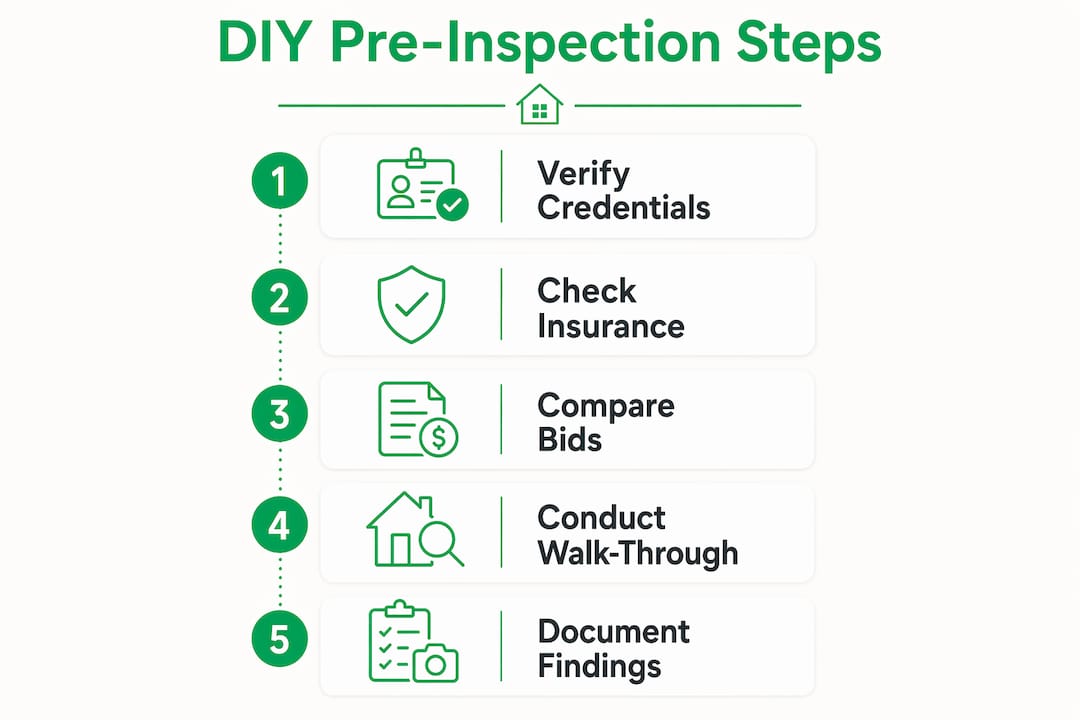
A DIY pre-inspection checklist before hiring a home inspector is a structured process that lets you verify credentials, evaluate bids, and document property conditions before committing to a professional evaluation. Homebuyers who skip this step often discover costly surprises after closing, when options are limited and leverage is gone. The American Society of Home Inspectors (ASHI) and state licensing boards set the standards inspectors must meet, but you are the one who must confirm compliance before signing anything. This guide gives you a practical, step-by-step pre-hire checklist so your home inspection delivers real answers, not just a stack of paperwork.
What are the essential credentials to verify before hiring a home inspector?
Credential verification is the single most important step in any pre-hire checklist. A license number printed on a business card means nothing until you confirm it on your state licensing board’s website. Most states maintain a public database where you can search by name or license number and see the inspector’s classification, expiration date, and any disciplinary actions.
Insurance verification is where most homebuyers make a critical error. Verifying insurance directly with the insurer is often overlooked, and lapses happen between renewals without the inspector notifying clients. Call the insurance company listed on the Certificate of Insurance (COI) and confirm the policy is active on the date of your inspection. Accepting a COI at face value without that call is a real financial risk.

References and complaint history round out the credential check. Ask for three past clients you can contact directly, and search the inspector’s name on your state attorney general’s consumer complaint database. A clean license and active insurance still leave room for poor workmanship, and past clients will tell you things a license board will not.
Here is what to confirm before you schedule:
- State license: Search the inspector’s name on your state licensing board’s public portal and confirm the license is active and in the correct classification.
- Insurance: Call the insurer listed on the COI to verify general liability and errors and omissions (E&O) coverage are both current.
- References: Contact at least two past clients and ask specifically about report clarity, timeliness, and whether the inspector found issues the seller had not disclosed.
- Complaint history: Check the Better Business Bureau and your state attorney general’s database for unresolved complaints.
- Permit awareness: Understand that permit costs for residential projects typically run $200–$2,000. Knowing whether permits were pulled on prior work at the property tells you whether mandatory inspections occurred.
Pro Tip: Ask the inspector for their InterNACHI or ASHI membership number and verify it on the association’s website. Both organizations require continuing education and maintain public member directories.
How do you compare written inspection bids to make the right choice?
Written bids are the clearest signal of an inspector’s professionalism. Three to five written bids give you a real basis for comparison. A single bid gives you no context for whether the price, scope, or timeline is reasonable.
A detailed, itemized bid signals professionalism and foresight. A vague lump sum is a warning sign. When you read through each bid, you are looking for four specific components:
- Scope of work: Does the bid specify exactly which systems the inspector will evaluate? Structural, electrical, plumbing, HVAC, and roofing should all be named explicitly.
- Exclusions: Exclusions in bids reveal what the inspector will not cover. Low bids often win jobs by omitting crawl space access, outbuildings, or pool equipment. Read every exclusion line.
- Timeline and deliverables: The bid should state when the inspection occurs and when you receive the written report. Jhunthomeinspections delivers reports within 24 hours, which is the standard serious buyers should expect.
- Payment terms: Confirm how and when payment is due. Milestone-based or post-inspection payment is standard for home inspections.
Pro Tip: Create a simple spreadsheet with each inspector’s name across the top and bid components down the left column. Fill in each cell as you read. Gaps in a column tell you exactly what a bid left out.
Organizing bids this way also protects you in a dispute. If an inspector later claims a system was outside their scope, your documented comparison shows what you were told and what you agreed to.
How to conduct a DIY walk-through before the professional inspection
A preliminary walk-through is your first line of defense. You do not need a license to notice a water stain on a ceiling, a soft spot in a floor, or a breaker panel with handwritten labels. What you need is a systematic approach and a way to document what you find.
Start a project file before your first visit to the property. This file should include dated photos, written notes, and records of any conversations with the seller or agent. Establishing a baseline early prevents disputes about when a condition appeared and gives your professional inspector context before they arrive.
Focus your walk-through on these five areas:
- Structural: Look for cracks in the foundation, uneven floors, and doors or windows that stick or fail to latch. These can signal settling or water intrusion.
- Electrical: Note the location of the main panel and check for visible wiring that is exposed, frayed, or improperly spliced. Aluminum wiring in homes built before 1980 is a specific flag.
- Plumbing: Run every faucet and flush every toilet. Look under sinks for staining, soft cabinet floors, or active drips. Check water pressure at multiple fixtures.
- HVAC: Confirm the furnace and air conditioning units are accessible. Note the age from the manufacturer’s label and check whether filters have been changed recently.
- Roof and exterior: From the ground, look for missing shingles, sagging ridgelines, and gutters pulling away from the fascia. Check grading around the foundation for slopes that direct water toward the house.
A thorough home inspection checklist covers all of these systems in detail. Your walk-through notes give the professional inspector a head start and show you are an informed buyer, which often leads to a more thorough evaluation.
Common pitfalls to avoid during your pre-inspection process
The most expensive mistakes in the pre-inspection process are not technical. They are procedural. Buyers who rely on verbal agreements, skip documentation, or pay too much upfront create problems that no inspector can fix after the fact.
“Verbal change orders cause most project disputes. All changes must be documented in writing and priced before work begins. The number one source of disputes between homeowners and contractors is an agreement that existed only in conversation.”
Never pay more than 10–15% upfront for any home project. Payments should follow milestones tied to completed, verifiable work. An inspector or contractor who demands a large deposit before doing anything is a red flag worth acting on.
Lien waivers are another protection most buyers never think about. Lien waivers protect homeowners from claims by unpaid subcontractors, even after you have paid the general contractor in full. Before releasing any final payment, collect signed lien waivers from every subcontractor who worked on the property.
Keep your project file current throughout the process. Store contracts, emails, photos, payment receipts, and any written change orders in one place. If a dispute arises, your documentation is your defense. Buyers who cannot produce records almost always lose.
Key Takeaways
A proactive DIY pre-inspection checklist before hiring a home inspector protects your investment, prevents disputes, and gives the professional inspector the context needed to deliver a thorough, reliable report.
| Point | Details |
|---|---|
| Verify credentials directly | Confirm license status and insurance by contacting the state board and insurer, not just reviewing documents. |
| Collect 3–5 written bids | Compare scope, exclusions, timelines, and payment terms side by side to spot gaps and red flags. |
| Document your walk-through | Start a dated project file with photos and notes before the professional inspection begins. |
| Limit upfront payments | Never pay more than 10–15% as a deposit; tie all remaining payments to completed milestones. |
| Get lien waivers in writing | Collect signed lien waivers from all subcontractors before releasing final payment on any project. |
What I have learned from watching buyers prepare (and not prepare)
The buyers who get the most out of a professional inspection are the ones who show up with notes. Not a printed checklist from a generic website, but actual observations from their own walk-through. They point to the water stain they photographed two weeks ago. They ask why the breaker panel has a double-tapped circuit. They already know the HVAC unit is 18 years old because they read the label themselves.
That preparation changes the entire dynamic. The inspector spends less time on obvious surface issues and more time on the things you cannot see without tools. You get a better report because you asked better questions.
The mistake I see most often is buyers treating the professional inspection as a substitute for their own judgment rather than a complement to it. A licensed inspector will catch what you miss. But you will catch things the inspector never gets to if you have not done your homework first.
One thing most articles will not tell you: the questions you ask before the inspection matter as much as the report you receive after it. An inspector who cannot clearly explain their scope, their exclusions, or their credentials before you hire them will not suddenly become transparent once they hand you a report. Clarity at the start predicts quality at the end.
Be diligent, but be practical. You are not trying to replace the professional. You are trying to make sure you hired the right one and that they have everything they need to do the job well.
— JOHN
Professional inspections that build on your preparation
Doing your own walk-through and credential checks is the right first move. The next step is pairing that preparation with a professional inspection that covers what you cannot access or evaluate on your own.
Jhunthomeinspections serves the St. Louis Metro area and Southern Illinois with in-person and video inspections, comprehensive reports delivered within 24 hours, and the Create Request List™ tool that keeps buyers and agents aligned throughout the process. Whether you are a first-time buyer, a veteran, or purchasing an investment property, the inspection services at Jhunthomeinspections are built to confirm and deepen what your DIY checklist started. Schedule your inspection before you close, not after.
FAQ
What is a DIY pre-inspection checklist before hiring?
A DIY pre-inspection checklist before hiring is a structured set of steps a homebuyer completes to verify inspector credentials, compare bids, and document property conditions before the professional inspection begins. It reduces risk and improves the quality of the final inspection report.
How many bids should I get before hiring a home inspector?
Get at least three written, itemized bids. Three to five bids give you a reliable basis for comparing scope, exclusions, and pricing without relying on a single estimate that may omit important costs.
What should I look for in a home inspector’s bid?
A professional bid names every system to be inspected, lists all exclusions, states the report delivery timeline, and specifies payment terms. Vague lump-sum quotes that omit exclusions often lead to unexpected costs and disputes.
How much should I pay upfront before a home inspection?
Never pay more than 10–15% of the total cost as a deposit. Payments beyond that amount should be tied to completed, verifiable milestones rather than paid in advance.
Why does documenting my walk-through matter?
A dated project file with photos and written notes establishes a baseline record of the property’s condition. That record supports your negotiating position, helps the professional inspector prioritize, and protects you if a dispute arises later.
Recent Comments