

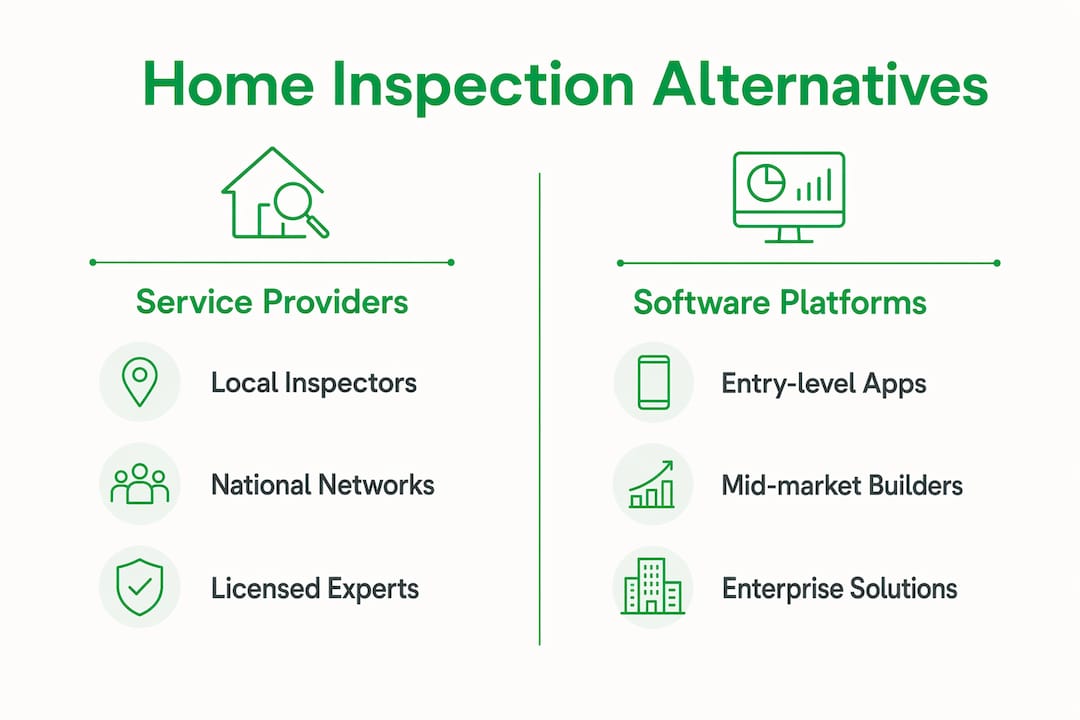
If you’re searching for bigriverhomeinspection.com alternatives, the short answer is this: your best options split into two categories — local service providers with on-site expertise and inspection-report software platforms built for inspectors managing their own workflow. For St. Louis Metro and Southern Illinois buyers, Hunt Home Inspection is the strongest local alternative. If you need a national-scale option, look for providers in verified national networks. For software, platforms like Spectora, HomeGauge, Home Inspector Pro, and Inspection Support Network are the names that come up most consistently.
Quick picks:
- Local service provider: Hunt Home Inspection (St. Louis Metro and Southern Illinois, report delivery within a day, video or in-person walkthroughs)
- National provider category: Verified national inspection networks with ASHI or InterNACHI-certified inspectors
- Inspection-report software: Spectora, HomeGauge, or Home Inspector Pro for inspectors building their own report workflow
- Buying tip: Bundle radon, mold, or sewer camera tests at booking. Specialty add-ons require separate certified technicians and equipment, so scheduling them together keeps your transaction timeline intact.
Two quick trust benchmarks worth knowing: reputable inspectors hold active ASHI or InterNACHI membership, and the industry standard for report delivery is within 24 hours of the on-site visit.
Table of Contents
- What are the best Big River Home Inspection alternatives?
- Which inspection-report software platforms should you consider?
- How do local and national service providers actually differ?
- How do you choose the right alternative for your situation?
- What does a home inspection typically cost?
- Why Hunt Home Inspection stands out as a local alternative
- Key Takeaways
- What actually matters when you’re choosing an inspector
- Book a St. Louis-area inspection with Hunt Home Inspection
- Useful sources and further reading
What are the best Big River Home Inspection alternatives?
The table below separates the two paths: hiring a different inspection company versus subscribing to inspection-report software. They serve different buyers.
| Dimension | Service Providers | Inspection Software Platforms |
|---|---|---|
| Pricing model | Flat per-inspection fee | Per-inspector subscription or per-report fee |
| Best for | Homebuyers, sellers, investors needing on-site diagnostics | Independent inspectors, agents managing branded reports |
| Primary features | On-site assessment, specialty testing, verbal walkthrough | Report builder, mobile app, client portal, integrations |
| Add-ons (radon, mold, sewer, termite) | Offered as billable add-ons by certified technicians | Supported via report templates; testing still requires a licensed inspector |
| Coverage | Local or regional | Nationwide (inspector-dependent) |
| Report turnaround | Typically within 24 hours | Depends on inspector using the platform |
| Integrations | MLS referrals, pay-at-close options | MLS, payment processors, CRM tools |
| Free trial / demo | Sample report on request | Free trials and demos widely available |
| Verified reviews | Google, Yelp, BBB, Porch | Capterra, Software Advice |
Key distinctions between the two paths:
- Service providers handle the physical inspection, diagnostics, and liability. Software platforms only power the reporting workflow.
- Buyers and sellers should always hire a licensed service provider. Software is a tool for inspectors, not a substitute for one.
- National provider networks offer consistency across markets; local independents often know regional building quirks better.
- Software platforms like Spectora and HomeGauge let inspectors produce polished, client-ready reports faster, but the underlying inspection quality still depends on the inspector.
- For portfolio investors or agents managing multiple transactions, software-first workflows can cut report turnaround significantly.
Pro Tip: Choose a software platform when you’re an inspector or agent who needs branded, shareable reports at scale. Choose a service provider when you need someone physically on-site with diagnostic tools and professional liability coverage.
Which inspection-report software platforms should you consider?
The software market for home inspectors breaks into three practical tiers, and knowing which tier fits your situation saves real time.
Entry-level field apps
These are mobile-first tools designed for solo inspectors who want to ditch paper checklists. They typically include photo capture, basic narrative templates, and PDF export. Usability is the main selling point. The tradeoff is limited customization and fewer integrations with payment or CRM systems. If you’re a new inspector or a buyer’s agent who wants a quick digital record, this tier works fine.

Mid-market report builders
Spectora and HomeGauge sit here. Both offer polished report templates, client portals, and integrations with payment processors. Spectora is particularly well-regarded for its mobile app and clean client-facing output. HomeGauge has a longer track record and a large library of sample reports. Both offer free trials, and verified user ratings on Capterra and Software Advice are a reliable way to compare real inspector experiences before committing.
Home Inspector Pro is another mid-market name with strong desktop functionality and a loyal user base. It’s been around long enough that you’ll find detailed reviews across multiple platforms.
Enterprise platforms
Inspection Support Network (ISN) operates at a different scale. It’s less a report builder and more a business-management platform: scheduling, client communication, payment processing, and report delivery all in one system. It’s built for multi-inspector firms or high-volume independents. The learning curve is steeper, but the operational payoff is real for anyone running more than a handful of inspections per week.
Questions to ask any software vendor before you buy:
- How long is the free trial, and does it include full feature access?
- Is pricing per inspector, per report, or a flat monthly subscription?
- Can I white-label reports with my own branding?
- What export formats are available (PDF, HTML, client portal link)?
- Does the platform integrate with my MLS or CRM?
- What does customer support look like after onboarding?
For buyers evaluating inspectors who use these platforms, ask to see a sample inspection report before booking. The report format tells you a lot about how the inspector thinks.
How do local and national service providers actually differ?
The practical gap between an independent local inspector and a national provider network comes down to three things: familiarity with local building stock, pricing transparency, and bundled-service availability.
Independent local inspectors
A local inspector who has worked a specific market for years knows what to look for in that region’s housing stock. In St. Louis, that means older brick construction, specific basement moisture patterns, and local radon risk zones. That context doesn’t show up in a national checklist. Local inspectors also tend to be more accessible for follow-up questions after the report lands.

National provider networks
National networks offer consistency and coverage when you’re buying in an unfamiliar market or managing properties across multiple states. The tradeoff is that you’re often working with a franchised or contracted inspector whose local knowledge varies. Pricing is usually standardized, which helps with budgeting but leaves less room for negotiation on bundled add-ons.
Add-ons: what’s typically included and what costs extra
Standard home inspection fees cover a visual assessment of major systems. Specialty tests — radon, mold, sewer camera, termite/WDO, well, septic, lead, asbestos — are almost always billed separately. Each requires certified technicians and specific equipment, and state requirements vary. Budget for them upfront rather than discovering the gap after you’ve already scheduled.
Trust-signal checklist for any provider:
- Active state license (check your state’s licensing board)
- ASHI or InterNACHI membership and adherence to their standards of practice
- General liability insurance and errors-and-omissions coverage
- Sample report available on request (recent, from a comparable property)
- Confirmed 24-hour report turnaround
- Verified reviews on Google, BBB, or Porch
- Clear pricing with add-ons itemized
Pro Tip: Schedule all add-on tests at the same time as the standard inspection. Radon and mold tests require specific setup windows, and booking them separately can push your contingency deadline.
How do you choose the right alternative for your situation?
The single most important question is fit: does this provider or platform match your transaction type, timeline, and property?
Step-by-step selection checklist:
- Define your primary need. Are you a buyer needing a full pre-purchase inspection, a seller wanting a pre-listing assessment, or an investor running multiple properties?
- Confirm credentials and insurance. Verify state licensure, ASHI or InterNACHI membership, and liability coverage before anything else.
- Request a recent sample report. Ask for one from a property similar in age and size to yours. A well-structured report with clear photos and severity ratings is a strong signal.
- Verify diagnostic tools. Does the inspector use thermal imaging, a sewer camera, or digital leveling tools? Inspectors using thermal imaging and advanced diagnostics can identify hidden moisture, electrical hotspots, and foundation deviations that a purely visual check misses.
- Confirm turnaround and delivery format. 24 hours is the standard. Ask whether the report comes as a PDF, a client portal link, or both.
- Ask about re-inspections and post-report support. Will the inspector answer follow-up questions after delivery? Is a re-inspection available if repairs are made?
- Confirm cancellation and payment policies. Know the cancellation window and whether pay-at-close is an option.
10 questions to ask any provider or software vendor:
- Do you carry state-required inspection insurance and errors-and-omissions coverage?
- Can I see a sample report from a home similar in age and size to mine?
- How are radon, mold, and sewer tests handled and billed?
- What is your typical report delivery time after the on-site visit?
- Are you an active ASHI or InterNACHI member?
- What diagnostic tools do you use on-site?
- Do you offer video inspection walkthroughs?
- What is your cancellation policy?
- Is pay-at-close available?
- How do I reach you after the report is delivered if I have questions?
Red flags to avoid:
- No sample report available
- Unlicensed or uninsured inspector
- Vague or verbal-only pricing with no itemized add-on costs
- Evasive answers about turnaround time
- No verifiable reviews on third-party platforms
- Pressure to skip add-on tests to lower the price
What does a home inspection typically cost?
| Service | Typical U.S. Price Range | Key Pricing Factors |
|---|---|---|
| Standard home inspection | — | Property size, age, location, travel time |
| Radon test | — | Test duration, lab fees |
| Sewer camera (lateral scope) | — | Pipe length, access difficulty |
| Mold inspection / air sampling | — | Number of samples, lab analysis |
| Termite / WDO inspection | — | Property size, state requirements |
| Well and septic inspection | — | System type, access, pumping required |
Prices shift based on property square footage, age, and how far the inspector travels. A 3,000-square-foot older home in a rural area will cost more than a newer 1,500-square-foot suburban property.
Common pricing models:
- Flat per-inspection fee (most service providers): one price for the standard inspection, add-ons itemized separately. No surprises if you ask upfront.
- Per-inspector subscription (software platforms): monthly or annual fee per inspector seat, sometimes with per-report caps.
- Hourly (rare for residential): more common for commercial or large-portfolio assessments.
Ways to lower costs without cutting corners:
- Bundle all add-ons at booking. Many firms offer a small discount for combined services.
- Schedule on weekdays. Weekend and evening slots often carry a premium.
- Consider a video inspection walkthrough for remote buyers. It reduces travel costs and can be scheduled faster.
- Use the pre-inspection checklist to prepare the property and reduce on-site time.
Why Hunt Home Inspection stands out as a local alternative
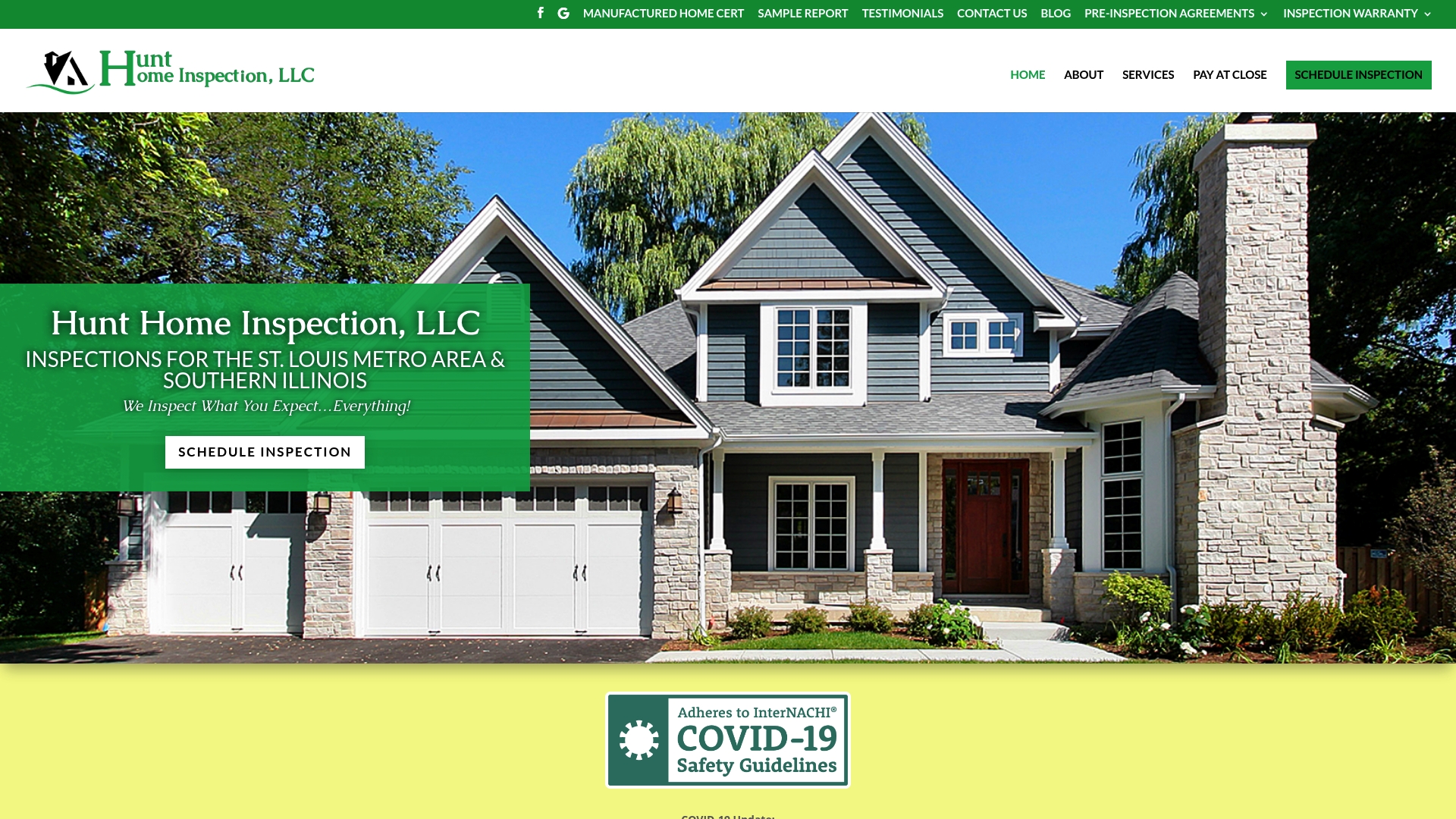
For buyers, sellers, and investors in the St. Louis Metro area and Southern Illinois, Hunt Home Inspection covers the full range of what a serious inspection should include.
Core service strengths:
- Full residential and commercial inspection coverage across St. Louis Metro and Southern Illinois
- report delivery within a day with photo documentation
- Specialty testing: radon, mold, sewer camera, termite/WDO, well, septic, lead, water, and asbestos is often complemented by specialized vacant property protocols like those detailed in a vacant property inspection workflow to ensure thorough assessment and prevention.
- Video and in-person inspection options for flexible scheduling
- Create Request List™ tool that helps buyers and agents communicate repair priorities directly from the report
- Pay-at-close option for buyers who need to align payment with transaction timing
Trust signals:
- Licensed inspectors operating under state requirements
- Professional association standards adherence
- Sample reports available on request
- Verified client reviews
- Clear, itemized pricing with add-ons disclosed upfront
Hunt Home Inspection fits best for first-time buyers who need a thorough walkthrough and clear explanations, veterans and low-income buyers navigating the process with limited margin for error, and local investors who need fast turnaround on multiple properties. If you’re buying outside St. Louis Metro or Southern Illinois, a national network or a locally licensed inspector in that market is the right call. For inspectors managing their own reporting workflow, the software platforms covered above are worth evaluating independently.
Key Takeaways
Choosing the right alternative to Big River Home Inspection means deciding between a licensed local service provider and an inspection-report software platform, then verifying credentials, sample reports, and add-on availability before booking.
| Point | Details |
|---|---|
| Service vs. software | Buyers and sellers need a licensed provider; software platforms are tools for inspectors, not substitutes for on-site work. |
| Credentials matter most | Verify state licensure, ASHI or InterNACHI membership, and liability insurance before hiring any inspector. |
| Budget for add-ons | Radon, mold, sewer camera, and termite tests are billed separately; bundle them at booking to protect your timeline. |
| 24-hour turnaround is standard | Request a sample report and confirm quick delivery before committing to any provider. |
| Hunt Home Inspection | St. Louis Metro and Southern Illinois buyers get 24-hour reports, specialty testing, video walkthroughs, and the Create Request List™ tool. |
What actually matters when you’re choosing an inspector
The home inspection industry has a credentialing problem that most buyers don’t notice until it’s too late. ASHI and InterNACHI membership sounds like a checkbox, but the standards of practice those associations enforce are meaningfully different from a state license alone. A license tells you the inspector passed a minimum competency test. Association membership tells you they’re held to an ongoing code of ethics and continuing education requirements.
The other thing most comparison articles skip: the report format is as important as the inspection itself. A technically thorough inspector who delivers a disorganized, jargon-heavy PDF is less useful than one who delivers a clean, photo-rich report with clear severity ratings and a repair priority list. The Create Request List™ that Hunt Home Inspection uses is a good example of what post-report workflow should look like. It turns the report into a working document for negotiation, not just a record of findings.
Software platforms like Spectora and HomeGauge have pushed the industry toward better report quality across the board. But they’re only as good as the inspector using them. A polished report template doesn’t compensate for a rushed inspection.
Book a St. Louis-area inspection with Hunt Home Inspection
Hunt Home Inspection serves buyers, sellers, and investors across the St. Louis Metro area and Southern Illinois with same-day scheduling, report delivery within a day, and a full menu of specialty tests. You get both video and in-person walkthrough options, a pay-at-close payment path for buyers working within transaction timelines, and the Create Request List™ to keep your agent and repair negotiations organized.
Request a sample report by email before you book. It’s the fastest way to see exactly what you’ll receive. When you’re ready, book your inspection directly on the services page. Commercial buyers and investors can review the commercial inspection options for larger properties.
Useful sources and further reading
These are the primary sources worth bookmarking when you’re vetting inspectors, understanding standards, or evaluating software platforms.
- ASHI (American Society of Home Inspectors): Sets the standards of practice and code of ethics that define what a compliant inspection must cover. Verify any inspector’s active membership directly on the ASHI site.
- InterNACHI (International Association of Certified Home Inspectors): The largest inspector association globally. Their certified inspector database lets you search by zip code and verify credentials, including Certified Professional Inspector (CPI) and Certified Master Inspector (CMI) designations.
- EPA Radon Guidance: The U.S. Environmental Protection Agency publishes the definitive guidance on radon testing protocols, acceptable levels, and mitigation. Use it to understand what a radon test should include and what action levels mean for your property.
- Capterra and Software Advice: The most reliable aggregators of verified user reviews for inspection-report software. Capterra’s Home Inspector Pro alternatives page is a practical starting point for comparing Spectora, HomeGauge, ISN, and similar platforms side by side.
- Porch Pro Directory: Useful for checking local inspector profiles, project history, and client reviews for regional providers like Big River Home Inspections.
Recent Comments