
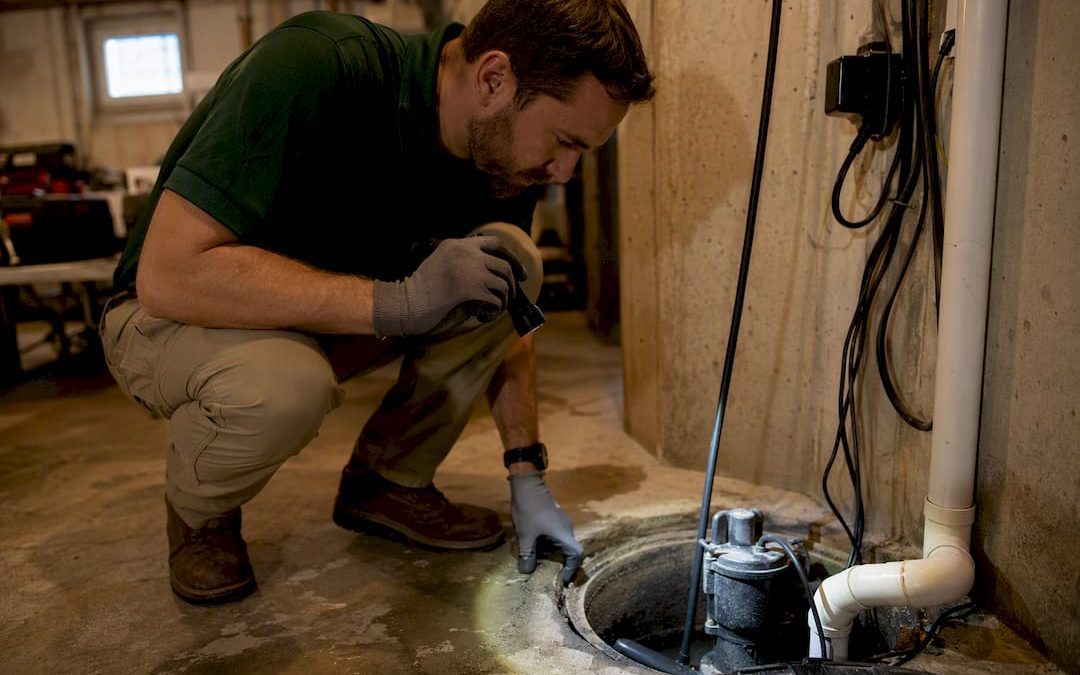
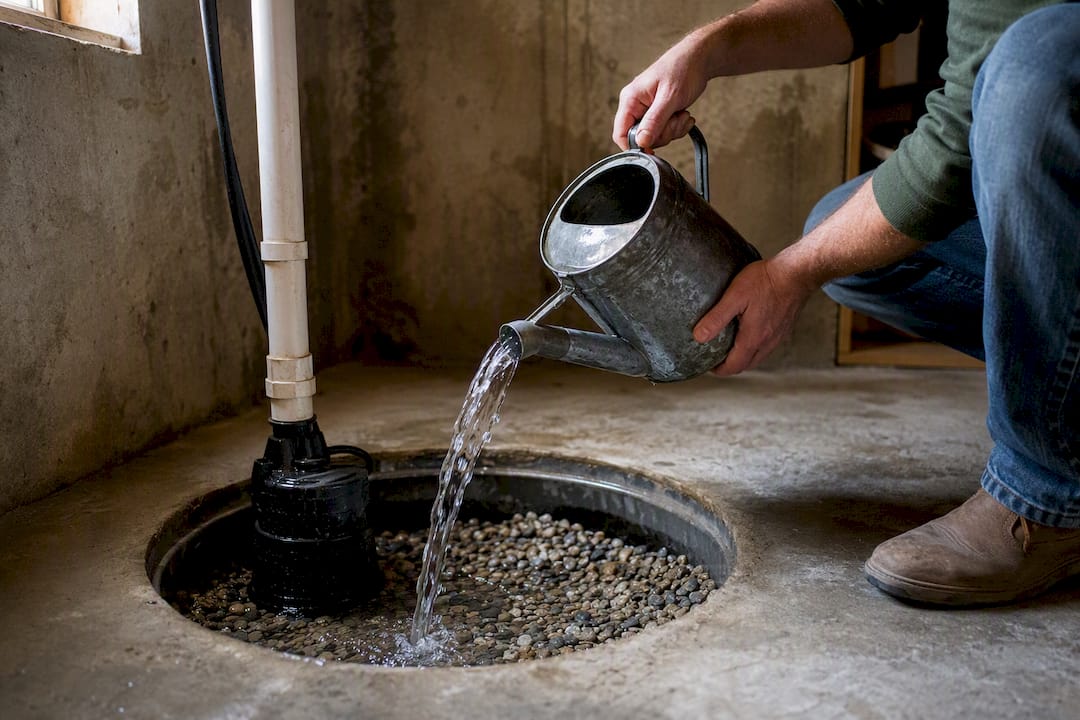
Yes. Inspect your sump pump at least once a year, and test it right now with a quick pour test. Pour 3 to 5 gallons of water into the pit, watch for the float to rise, confirm the pump kicks on within a few seconds, and listen for water clearing through the discharge line without gurgling or backflow.
- Check the pit for debris and confirm the float has clear space to move
- Pour the water, time the activation, and watch the discharge outside
- Note any grinding, humming without water movement, or delayed starts
If the pump hesitates, doesn’t activate, or you hear anything unusual, stop testing and schedule a full inspection. A professional check typically covers 20 separate points, well beyond what a pour test alone can catch, and The Spruce recommends doing this at least once a year, twice if your pump cycles often.
TL;DR:
- Regularly test your sump pump by pouring 3 to 5 gallons of water and ensure the pump activates within a few seconds with proper water discharge.
- Professional inspections cover over 20 points, including float clearance, check valves, discharge routing, and electrical connections, and are recommended annually or after any failure signs.
- Manually lifting the float during self-inspection confirms free movement, preventing silent failures caused by float binding or debris.
- Backup systems, either battery or water-powered, should be tested regularly, with batteries replaced every 3 to 5 years and backup operation verified every six months.
- If your pump shows persistent issues or fails the pour test repeatedly, calling a licensed inspector ensures a thorough assessment and accurate repair recommendations.
Table of Contents
- What Does a Professional Sump Pump Inspection Cover?
- How Do You Inspect a Sump Pump Yourself?
- Battery or Water-Powered Backup: Which One Do You Need?
- When Should You Call a Professional Inspector?
- Why Hunt Home Inspection’s Approach Works for Buyers and Owners
- Why Most Sump Pump Advice Undersells the Backup System
- Get a Sump Pump Checked as Part of a Full Home Inspection
- Key Takeaways
- Sources
What Does a Professional Sump Pump Inspection Cover?
A licensed inspector isn’t just running the same pour test you can do yourself. They’re documenting the mechanical, electrical, and structural condition of a system that only gets noticed when it fails, usually during a storm when it’s too late to fix cheaply.
A typical inspection walks through the pump type first (submersible units sit inside the pit; pedestal units have the motor mounted above it) because each has different failure patterns. From there, the inspector checks pit dimensions and cover condition, float clearance and movement, the impeller and intake screen for clogs, the weep hole for proper drainage, and check valve function to prevent water from flowing back into the pit after each cycle.
The electrical side matters just as much as the mechanical side. Inspectors verify the outlet and circuit, confirm GFCI protection is present, and note whether the pump is hardwired or plugged in. If a battery backup or water-powered backup exists, they test it independently of the primary pump. High-water alarms get tested too, along with a check for corrosion on the mounting hardware and discharge piping support.
Inspectapedia’s inspection guidance flags missing check valves, short-cycling, and improper discharge routing as the defects that show up most often, and recommends documenting any limitation, like a sealed radon lid, rather than breaking a seal to get a better look.
That documentation matters. Reports use standardized language such as “limited functional test” because a pour test on a dry day tells you the pump works under light load, not whether it can keep pace during a two-inch rain event. A full 20-point audit usually takes under an hour, and a well-run inspection service turns the written report around within a day.
How Do You Inspect a Sump Pump Yourself?
Before touching anything, unplug the pump. Sump pits mix water and electricity, and that combination doesn’t forgive shortcuts. Use a non-conductive tool, like a wooden dowel or plastic rod, to lift the float rather than your bare hand, and wear gloves since pit water often carries sediment and bacteria.
- Look before you touch. Check the pit for debris, confirm the float has full clearance on all sides, and inspect the weep hole for blockages.
- Check the check valve. Look for cracks, corrosion, or an arrow indicating flow direction installed backward.
- Inspect the piping. Confirm it’s secured, not sagging, and that covers seal properly (unless it’s a sealed radon lid, which you should never break open).
- Plug the pump back in and run the pour test. Add 3 to 5 gallons of water and time the activation.
- Watch the discharge. It should exit at least 20 feet from your foundation, according to municipal maintenance guidance, with no backflow into the pit once the cycle ends.
- Lift the float manually to confirm it triggers the pump independent of water level, since binding is one of the most common causes of silent failure.
- Test the GFCI outlet by pressing the test and reset buttons.
- If you have a battery backup, unplug the primary pump and confirm the backup activates on its own.
Pro Tip: Float switches often fail not because the motor dies, but because the float gets stuck against the pit wall, the discharge pipe, or its own power cord. A pump that ran fine last month can be silently disabled right now, so always manually lift the float and watch for free 360-degree movement instead of assuming it’s fine because it worked recently.
Stop and call a professional if you spot exposed or damaged wiring, if the system is sealed and you can’t safely access it, if the pit has heavy sediment buildup, or if the pump fails the pour test more than once.
Battery or Water-Powered Backup: Which One Do You Need?
A primary pump without a backup is a single point of failure, and power outages tend to hit during the exact storms that flood basements. Your two main options are battery backups and water-powered backups, and the right choice depends on how your home is set up.
- Battery backups work anywhere but have a limited run time, and Consumer Reports testing shows they degrade with age, so replacing the battery every 3 to 5 years and checking voltage every six months keeps them reliable.
- Water-powered backups use municipal water pressure to run the pump, which means they can operate indefinitely during an outage, as long as your water utility stays online and supplies adequate pressure.
- High-water alarms are a low-cost addition that alert you before a full failure rather than after, giving you a chance to act while the basement is still dry.
If your home relies on well water instead of a municipal supply, a water-powered backup won’t help you during an outage, since it depends on pressurized city water. Battery backups become the more practical choice in that scenario, provided the battery is fresh and tested regularly.
When Should You Call a Professional Inspector?
Some problems are visible enough to catch yourself. Others hide until the pump fails at the worst possible moment. Call a licensed inspector or plumber immediately if the pump fails the pour test, runs continuously without shutting off, shows visible leaks anywhere along the discharge line, or if the check valve is missing or clearly not functioning. Heavy sediment in the pit or repeated evidence of water intrusion around the foundation are also signs the issue goes beyond a quick DIY fix.
When choosing who to hire, look for a few specific things:
- A licensed inspector or plumber with documented sump pump experience
- A written scope that includes a full multi-point inspection, not just a glance at the pump
- A clear, itemized report rather than a verbal summary
- Add-on options like battery backup testing or a sewer camera inspection if you suspect broader drainage issues
- A stated turnaround time for the written report, ideally within 24 to 48 hours
Most standalone sump pump inspections take under an hour on-site. If you’re bundling it into a full home inspection ahead of a purchase, the sump pump check becomes one line item within a much broader property review, and it’s worth asking your inspector how they document backup power systems specifically.
Why Hunt Home Inspection’s Approach Works for Buyers and Owners
John, the lead inspector, built his process around one idea: a report is only useful if it’s specific enough to act on. A sump pump entry that just says “functional” tells you nothing. A 20-point audit that notes float clearance, check valve condition, discharge routing, and backup status gives you something you can actually use to negotiate a repair or plan maintenance.
- Every inspection includes a documented sump pump check as part of the full report
- Reports arrive within 24 hours, with findings organized so buyers and agents can act fast
- Add-on tests, including battery backup checks and sewer camera work, are available on request
- Video inspection options let clients review sealed or hard-to-access systems remotely
- Booking is straightforward, and pay-at-close is available for eligible services
| Feature | What It Means for You |
|---|---|
| 20-point sump audit | Every mechanical, electrical, and backup component gets documented |
| 24-hour report turnaround | You get findings fast enough to act before closing deadlines |
| Video inspection option | Sealed or hard-to-reach systems can still be reviewed remotely |
Why Most Sump Pump Advice Undersells the Backup System
The internet is full of pour-test tutorials, and that test genuinely matters. But focusing only on whether the pump activates misses the bigger risk: most basement floods happen during power outages, exactly when a pump without a backup goes silent.
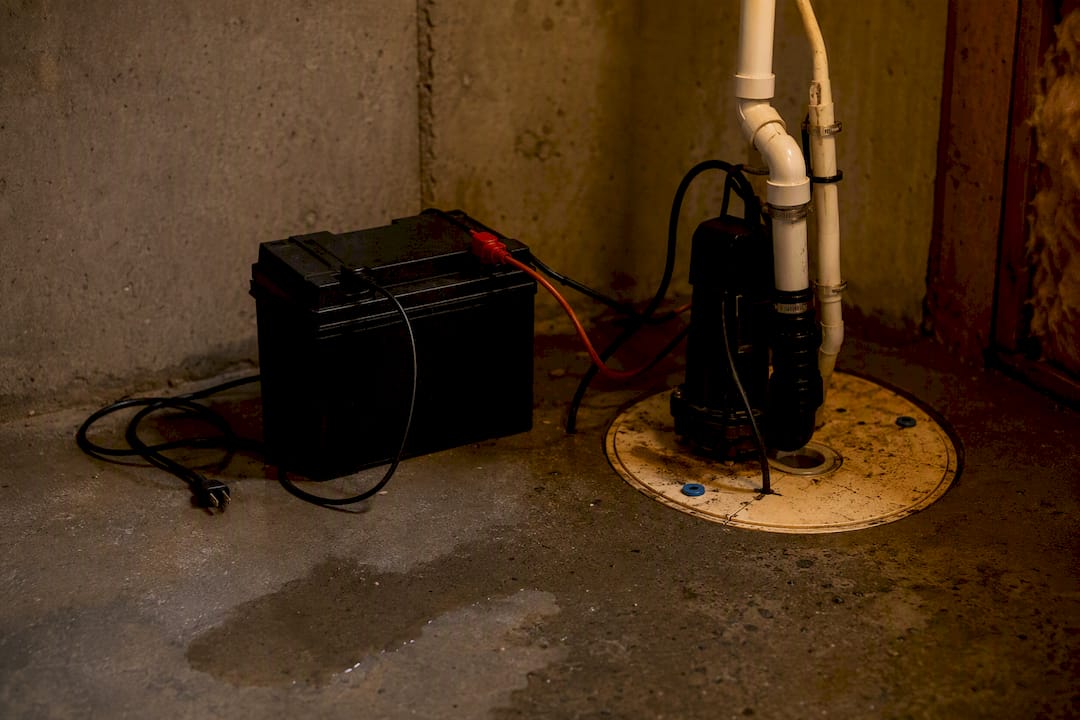
Conventional advice treats the backup system as optional, an upsell rather than a core part of the inspection. That’s backward. A pump that passes every test on a dry Tuesday tells you nothing about what happens when the power goes out mid storm. If your home has ever lost power during heavy rain, a battery or water-powered backup isn’t a luxury add-on. It’s the difference between a dry basement and a five-figure repair bill.
If you take one thing from this article, let it be this: test your primary pump today, but don’t stop there. Ask whether your backup has been tested in the last six months, and if you don’t know, that’s your answer.
— JOHN
Get a Sump Pump Checked as Part of a Full Home Inspection
Jhunthomeinspections gives you something a quick online checklist can’t: a licensed inspector physically testing your sump pump, backup, and every other major system, with a written report back in your hands within 24 hours instead of days. That speed matters when you’re working against a closing deadline or trying to catch a problem before the next storm.

Every inspection through Hunt Home Inspection, LLC includes the sump pump as part of a documented, itemized report, not a vague pass or fail. Need eyes on a sealed system or a hard-to-reach crawlspace pump? The video inspection option lets you review findings remotely. Working with a tight budget around closing? Pay-at-close is available for eligible services, so the inspection doesn’t compete with your moving costs.
If you’re a first-time buyer, a veteran using VA benefits, or a homeowner who just wants a straight answer on your sump system’s condition, schedule an inspection with Hunt Home Inspection and get a full report in your inbox within a day.
Key Takeaways
A sump pump needs an annual pour test at minimum, plus a professional 20-point inspection whenever the system shows any sign of hesitation, corrosion, or backup uncertainty.
| Point | Details |
|---|---|
| Test annually, minimum | Pour 3 to 5 gallons into the pit and confirm activation, discharge, and no backflow. |
| Float binding causes silent failure | Manually lift the float to check for free 360-degree movement, not just recent motor activity. |
| Backups need separate testing | Check battery voltage every 6 months and replace batteries every 3 to 5 years. |
| Red flags mean call a pro | Continuous running, missing check valves, or failed pour tests require a licensed inspector. |
| Hunt Home Inspection covers it fully | A documented 20-point sump audit comes standard in every inspection, with reports back in 24 hours. |
Sources
- Sump pump maintenance and inspection tips (The Spruce)
- Best sump pump backup systems — Consumer Reports
- Sump pump inspection (Inspectapedia)
Recent Comments