
Commercial building inspection cost typically ranges broadly, from lower amounts for small, simple properties to higher costs for large or complex campuses, with most mid-size buildings costing in the mid-thousands of dollars. The number that actually matters isn’t the square footage on the listing. It’s the scope you request and the systems the inspector has to test. Before you sign anything, use the questions later in this guide to pull comparable quotes from at least two firms.
TL;DR:
- The cost increases with property type, age, system complexity, and access restrictions, often raising the final bill beyond simple square footage calculations.
- Flat fee and per-square-foot pricing models are typically more transparent and easier to compare than hourly rates, especially for mid-size or larger buildings.
- Additional services like sewer scopes, mold testing, or environmental sampling can significantly raise costs and should be included in the initial scope to prevent delays and surprises.
- Accurate quotes depend on providing identical property details and scope requests across multiple inspectors to avoid comparing different levels of service.
- Inspection timelines range from a day to several weeks based on scope, with lab-dependent add-ons potentially extending the process beyond standard deadlines.
Table of Contents
- What Drives Commercial Property Inspection Cost: Pricing Methods Explained
- Why Two Similar Buildings Get Very Different Quotes
- Add-On Services and What They Typically Cost
- Sample Cost Bands by Building Size
- How to Get Quotes You Can Actually Compare
- How Long Commercial Inspections Actually Take
- What Buyers Should Expect From a Fast, Transparent Inspection Process
- The Real Cost Question Isn’t the Fee, It’s the Scope
- Get a Straight Answer on Commercial Inspection Cost Before You Buy
- Standards and Resources Behind This Guide
- Sources
What Drives Commercial Property Inspection Cost: Pricing Methods Explained
Inspectors price commercial work four different ways, and the method affects your final bill as much as the property itself.
Hourly rates show up most often on smaller or unusual properties where scope is hard to predict upfront. Flat fees dominate for standard buildings, like a single-tenant retail box or a small office, where the inspector can estimate field time accurately from square footage and building type. Cost per square foot is the most common formula for mid-size and larger commercial properties, and it typically runs $0.12 to $0.30 per square foot depending on region and complexity. A percentage of the sale price shows up occasionally on large commercial deals, though it’s the least common of the four methods used by commercial building inspectors.
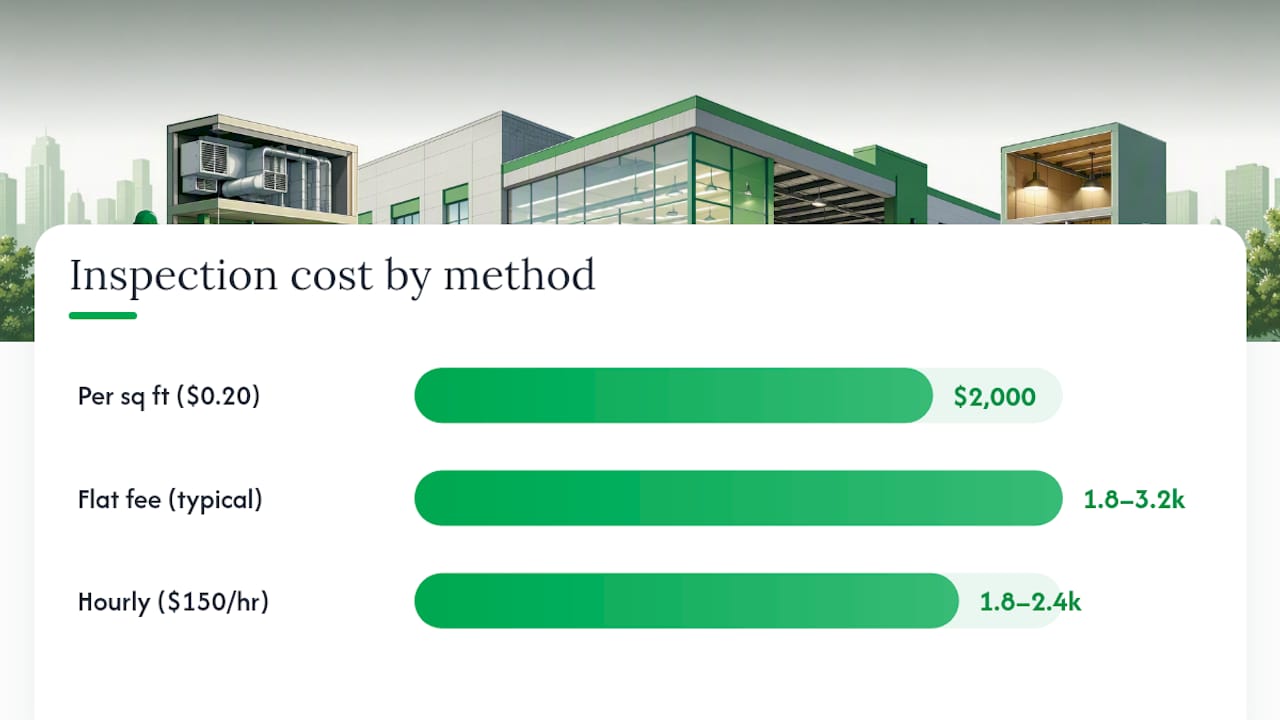
Here’s how the math actually plays out on a 10,000 square foot building:
- Per square foot at $0.20: roughly $2,000 base
- Flat fee quote for the same building type: often $1,800 to $3,200 depending on age and systems
- Hourly at $150/hour, 12 to 16 hours of field and report time: $1,800 to $2,400
The totals land in a similar range, but the flat fee and per square foot models are far easier to compare across bids. Hourly quotes hide the real cost until the inspector finishes, since a building with a locked mechanical room or a tenant who won’t grant access can add hours you didn’t budget for. Ask every firm whether travel time, mileage, or after-hours scheduling triggers a surcharge. Those add-ons rarely show up in the headline number, and they’re where a “cheap” quote quietly catches up to a fair one.
Why Two Similar Buildings Get Very Different Quotes
Square footage sets the floor for price, but it doesn’t set the ceiling. A 20,000 square foot warehouse with one HVAC unit and a flat roof takes far less field time than a 20,000 square foot restaurant with a commercial kitchen, grease trap, walk-in coolers, and a fire suppression system.
Several factors push cost up independent of size, according to inspection cost breakdowns from commercial firms:
- Property type: restaurants, medical offices, and manufacturing facilities carry specialized systems that add hours; a straightforward warehouse or office rarely does.
- Age and condition: older buildings with deferred maintenance take longer to document because there’s simply more to write up.
- Systems complexity: elevators, fire suppression, commercial kitchen equipment, and multiple HVAC zones each require dedicated inspection time and sometimes specialized expertise.
- Access and scheduling: locked tenant suites, multi-tenant buildings requiring coordinated access, and off-hours-only availability all extend the timeline and the invoice.
Pro Tip: Ask upfront whether the quoted price assumes full, unrestricted access on inspection day. If tenants need advance notice or certain suites are occupied, tell the inspector before they quote, not after they arrive and have to reschedule half the building.
Add-On Services and What They Typically Cost
The base inspection covers structure, roofing, electrical, plumbing, and HVAC. Anything beyond that is an add-on, and most commercial buyers end up ordering at least one.
- Sewer camera scope: a few hundred dollars, recommended for older buildings or any property with a history of drain backups.
- Mold inspection: pricing varies by size and sampling needs, worth ordering if there’s visible staining, past water intrusion, or musty odors.
- Radon testing: a modest add-on, especially relevant for basements or ground-floor occupied space in radon-prone regions.
- Environmental sampling (lead, asbestos, water): cost depends on the number of samples and lab turnaround, and it’s standard for pre-1980s buildings.
- Structural engineer review: several hundred to several thousand dollars, reserved for visible cracking, settlement, or major renovation plans.
- Thermal imaging: typically a few hundred dollars, useful for spotting hidden moisture or electrical hot spots, according to commercial inspection process guides.
Bundling add-ons with your base inspection usually costs less than calling in separate specialists later, and it keeps your due diligence timeline on track. You can review the full inspection service menu to see how these pair with a standard commercial visit.
Sample Cost Bands by Building Size
These ranges give you a starting point for budgeting, not a quote. Every property’s final price shifts based on age, systems, and add-ons.
These figures track with published estimate ranges across U.S. commercial inspection firms. Treat the high end as your planning number if the property has any of the complicating factors listed, and treat the low end as realistic only for a genuinely simple, single-use building.
How to Get Quotes You Can Actually Compare
A quote is only useful if it’s built on the same information as every other quote you’re collecting. Give each inspector the same details: square footage, occupancy type, building age, known issues, access restrictions, and which add-ons you want included.
Then ask the same set of questions across every firm:
- Can I see a sample report from a similar property?
- Which systems are included in the base fee, and which are excluded?
- What’s the report format, and how is it delivered?
- What’s your turnaround time from inspection to final report?
- What certifications or insurance coverage do you carry?
Pro Tip: A lower number on paper can mean a narrower scope or a rushed, thin report, not a better deal. Pricing transparency and scope clarity matter more than the headline fee, so map each quote against the same checklist before you decide. Reviewing selection criteria built for buyers before you call the first firm will save you from comparing apples to oranges later. It’s also worth building a financial due diligence checklist alongside your inspection quotes, since repair estimates from the report often factor into your final negotiation.
How Long Commercial Inspections Actually Take
Field time on a commercial inspection ranges from a few hours for a small retail space to multiple days for a large industrial site with several buildings. Report delivery in the U.S. commonly falls between 24 hours and two weeks, depending on the firm and the complexity of what was found.
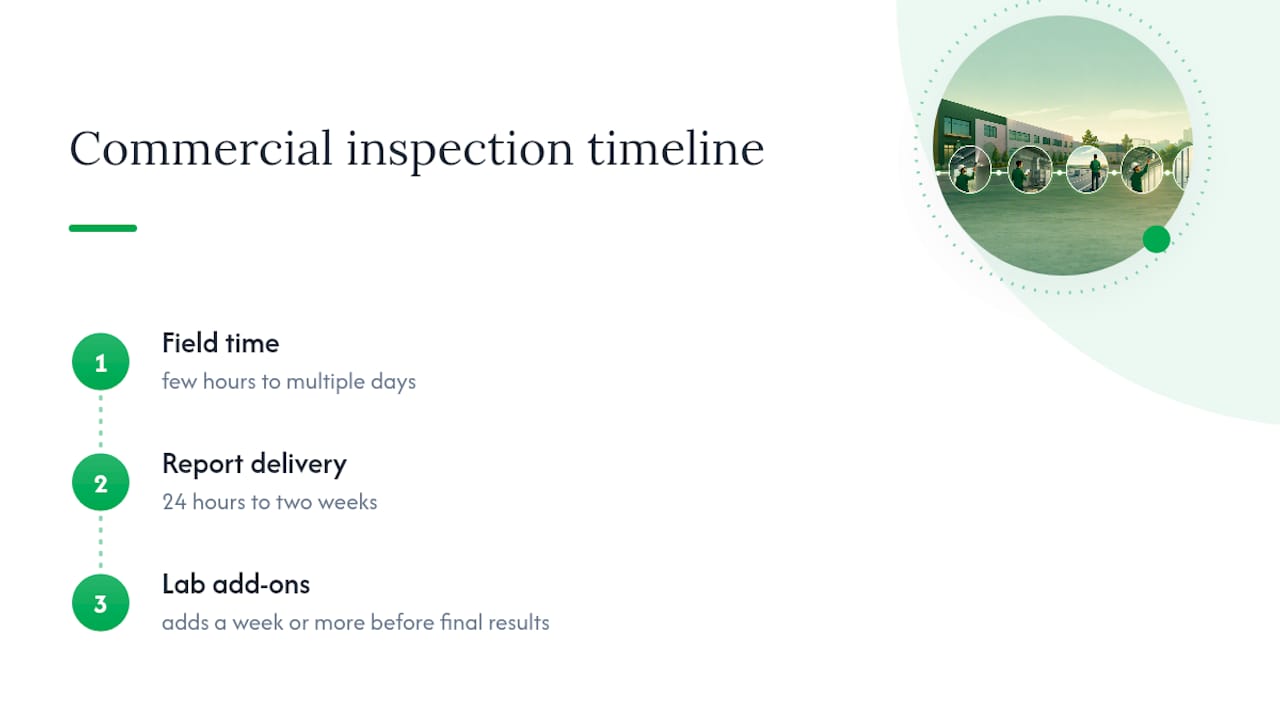
Lab-dependent add-ons change that timeline. Asbestos or water sampling, mold testing, and some environmental work require outside lab processing, which can add a week or more before you get final results. Build that lag into your closing timeline if any of those tests are part of your scope, especially if you’re working against a financing contingency deadline.
What Buyers Should Expect From a Fast, Transparent Inspection Process
Some commercial inspection firms emphasize a process built around two things buyers consistently say they want: speed and clarity. Reports come back within 24 hours, and buyers can choose in-person or video inspection formats depending on scheduling needs. Certain tools can turn inspection findings directly into negotiation documents, which can shorten the back-and-forth between buyer and seller agents. For buyers juggling financing deadlines, a fast report and an organized request list can often help deals close on time.
The Real Cost Question Isn’t the Fee, It’s the Scope
Most buyers fixate on the dollar figure and skip the question that actually protects their money: what exactly does that number buy? A $2,500 flat fee that skips the sewer scope and skims the roof report is a worse deal than a $3,200 quote that covers both, even though the second number looks scarier on paper.
The conventional advice tells buyers to “get three quotes and compare.” That’s incomplete. Three quotes built on three different scopes just produce three numbers you can’t actually rank. The useful version of that advice is to standardize your request first, then collect quotes against identical criteria. Only then does the lowest number mean anything.
If there’s one thing I’d tell every commercial buyer before they call an inspector: budget for add-ons before you see the base quote, not after. Sewer scopes, environmental sampling, and structural review aren’t upsells tacked onto a finished report. They’re often the findings that change your offer price. Treat them as part of the inspection, not an afterthought bolted onto it once the base report lands.
— JOHN
Get a Straight Answer on Commercial Inspection Cost Before You Buy
You’ve seen the ranges, the pricing models, and the add-ons that push a bill higher. What most buyers actually want next is a real number tied to their specific building, not another range. Some inspection services offer commercial buyers a scoped quote based on a property’s size and systems, a timely report turnaround, and options to schedule video walkthroughs if in-person access is limited.
Some inspection services provide tools that turn findings into documents that can be handed to sellers’ agents, potentially speeding up negotiation. If you’re weighing whether to pay at closing rather than upfront, Hunt Home Inspection also offers a pay-at-close option for qualifying transactions. Ready to see what your property actually costs to inspect? Visit the commercial inspection page to request a scoped quote today.
Standards and Resources Behind This Guide
This guide draws on ASTM E2018, the recognized framework for property condition assessment scope and reporting. CCPIA’s Standards of Practice inform the pricing transparency guidance above, and life-safety documentation follows OSHA electrical safety guidance where hazards apply.
Sources
- How to Price a Commercial Building Inspection — CCPIA
- ASTM E2018-15: Standard Guide for Property Condition Assessments
- Commercial Building Inspection Cost Explained — Howson Inspections
Recent Comments