
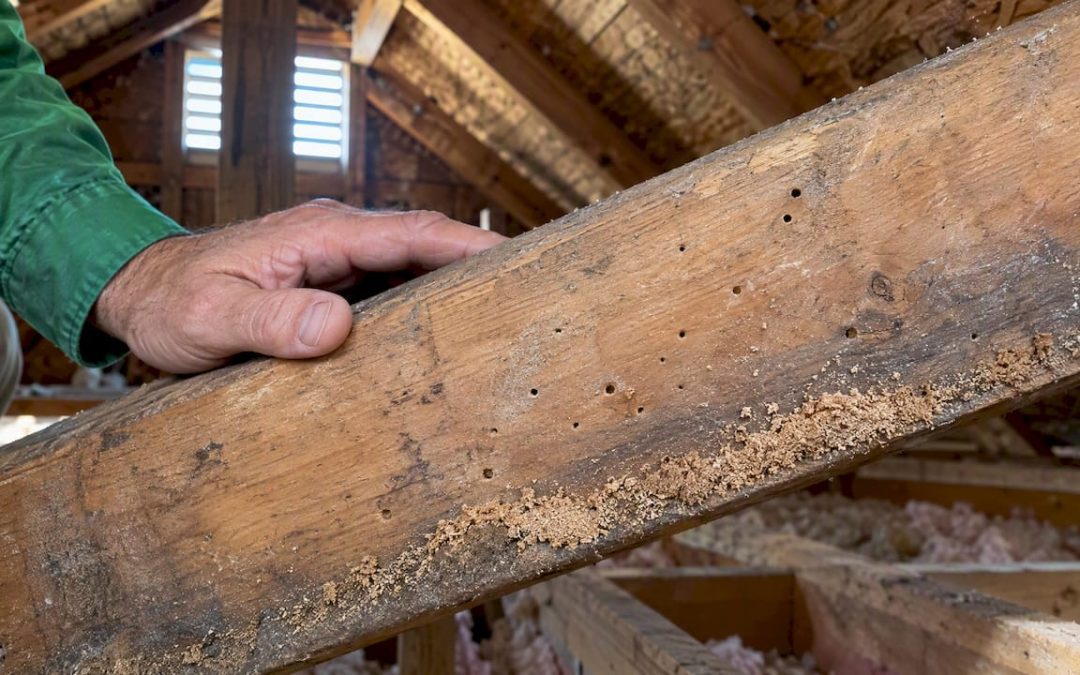
Small, round exit holes and fresh, talc-like powder around them are the two clearest powderpost beetle signs a homeowner will find. Photograph and measure what you see, then seal the area and watch for new powder. If holes appear in structural framing or keep reappearing after cleaning, arrange a professional inspection before doing any repair.
TL;DR:
- Powderpost beetle activity is best confirmed by checking for small exit holes and fresh talc-like powder that reappears after cleaning.
- Monitoring involves sealing holes, recording dates, and observing for new signs over a full emergence cycle, especially in spring and summer.
- Damage in structural wood, multiple rooms, or behind finished surfaces warrants a professional inspection to accurately assess extent and risk.
- Sealing, avoiding damp wood, and using finishes like paint or varnish can prevent beetle eggs from infesting wood in homes.
- Homemade identification relies on hole size, frass texture, and beetle activity patterns, but professional evaluation is recommended for conclusive results.
Table of Contents
- Reading the evidence: hole size, frass texture, and how to document it
- Where infestations usually start: wood type and location
- Telling powderpost beetles apart from termites and other borers
- Confirming activity with a simple mark-and-monitor test
- When the situation calls for a professional inspection
- Practical prevention: finishes, moisture, and handling infested wood
- How an inspector reads the same evidence homeowners find
- What experienced inspectors want homeowners to stop overreacting to
- Get a professional read on suspected beetle damage
- Sources
- FAQ
Reading the evidence: hole size, frass texture, and how to document it
The size of an exit hole is your first clue to which beetle group made it. Extension entomologists at University of Maryland note that hole diameters generally run from about 1/32 to 1/8 inch, with the smaller end pointing to lyctid beetles and the larger end more typical of anobiid or bostrichid activity.
Fresh, talc-fine powder streaming from a hole, especially if it returns after you sweep it away, is one of the strongest visible signs of an active infestation, according to University of Maryland Extension.
Once you spot a hole, build a simple record before touching anything:
- Lay a ruler or coin next to the hole and take a close-up photo.
- Collect a small, uncontaminated sample of the frass in a bag or envelope.
- Rub a pinch of frass between your fingers: talcum-like powder suggests lyctids, while a grittier, pellet-like texture points to anobiids.
- Note the wood type and its exact location in the house.
This record matters later, whether you are monitoring the area yourself or handing evidence to an inspector.
Where infestations usually start: wood type and location
Powderpost beetles are picky about wood, and knowing their preferences narrows your search fast. NC State Extension explains that lyctid beetles favor hardwood sapwood, while anobiid beetles tend toward structural softwoods, particularly where moisture is elevated.
Start your inspection in these spots:
- Hardwood flooring, trim, molding, and furniture, common lyctid targets.
- Structural joists, studs, and rafters in crawl spaces and attics, more typical of anobiid or bostrichid damage.
- Stored or stacked lumber, especially anything kept in a damp basement or garage.
- Exposed beams and any wood that stays consistently damp.
Moisture is the connecting thread: anobiids develop best in wood with a moisture content in roughly the 13% to 30% range, so damp crawl spaces and poorly ventilated basements carry more risk than dry, finished rooms.
Telling powderpost beetles apart from termites and other borers
Not every hole in wood means a beetle problem, and not every beetle is a powderpost species. A few quick checks help you sort out what you are dealing with before assuming the worst.
- Try the ballpoint-pen test: press an empty pen tip into the hole. If it slides in easily and meets a wandering, meandering gallery, that fits typical powderpost beetle tunneling more than a straight-line borehole. This test narrows possibilities but does not confirm the species on its own, according to UC IPM.
- Feel the frass. Talc-like powder that clumps and sticks to your fingers suggests lyctid beetles, gritty powder suggests anobiids, and hard, ridged, barrel-shaped pellets are the signature of drywood termites, not beetles at all, per UC IPM.
- Watch for adult beetles on windowsills in spring, a seasonal cue that points toward beetle emergence rather than termite swarming.
Pro Tip: Keep a labeled frass sample from each suspect area. Comparing texture side by side is far more reliable than judging from memory.
Confirming activity with a simple mark-and-monitor test
Old holes with weathered, caked frass do not necessarily mean an active problem. University of Kentucky Entomology recommends a mark-and-monitor approach to settle the question before spending money on treatment.
- Clean out all visible frass and seal or lightly mark each hole with tape or a dab of paint.
- Record the date and photograph the sealed area.
- Recheck every few weeks for six to twelve months, or through a full emergence season.
- New holes or fresh powder at the same spot confirms current activity; nothing new after a full season suggests the damage is old.
Emergence often peaks in spring and summer, so a check that spans that window gives you a clearer answer than a single winter inspection, per guidance from Maine’s Department of Agriculture, Conservation and Forestry. Monitoring has limits, though: it cannot tell you what is happening inside a wall cavity or a joist you cannot access, and it should never delay action where structural safety is in question.
When the situation calls for a professional inspection
Homeowner checks answer a lot of questions, but some situations need a trained eye and tools you likely do not own. A professional wood-destroying-organism inspection becomes worthwhile when:
- Holes or frass appear on structural framing such as joists, beams, or subfloor rather than trim or furniture.
- Damage shows up in multiple rooms or across a wide area.
- Wood is hidden behind finished walls, flooring, or insulation where you cannot see the extent of galleries.
- Mark-and-monitor results stay ambiguous after a full season.
An inspection, as UF/IFAS explains, identifies the beetle group, maps which wood members are affected, checks moisture content, and weighs severity and reinfestation risk against repair or replacement costs. That mapping is what turns a guess into a decision: replace one board, treat a targeted area, or keep monitoring.
Practical prevention: finishes, moisture, and handling infested wood
Most prevention comes down to blocking beetles from laying eggs and keeping wood dry enough that larvae cannot thrive.
- Paint, varnish, or shellac finished wood surfaces; beetles generally avoid laying eggs on sealed wood.
- Inspect any secondhand furniture, firewood, or reclaimed lumber for holes or frass before it enters the house.
- Choose kiln-dried lumber for new construction or repairs whenever possible.
- Keep crawl spaces and basements ventilated and dry, since anobiid beetles favor damp, high-moisture wood.
Pro Tip: Small, isolated infested items like a picture frame or a single board are often easiest to replace outright rather than treat, while structural wood usually calls for professional evaluation first.
How an inspector reads the same evidence homeowners find
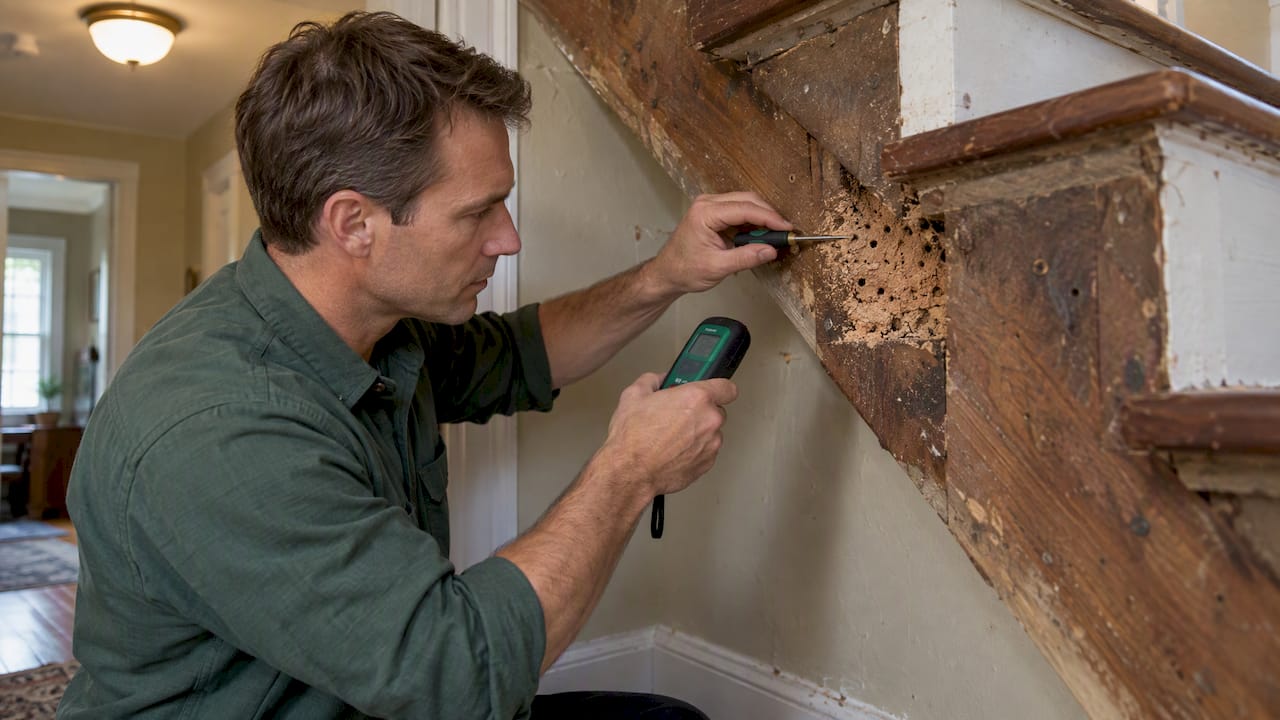
A home inspector builds on exactly what you have already gathered, mapping galleries across framing members rather than judging one hole in isolation, probing suspect wood, and taking moisture readings to see whether conditions still favor beetle development, following the approach NC State Extension describes for assessing affected structures. Bring your marked-and-monitored holes, dated photos, and frass samples to the visit. That documentation, paired with a same-day report, turns a vague worry into a specific repair plan you and your agent can act on through tools like the Create Request List™.
What experienced inspectors want homeowners to stop overreacting to
One old, sealed hole with no fresh powder rarely justifies panic. Save real concern for structural wood, repeated fresh frass, or damage you cannot fully see. Monitor calmly first, act decisively when the evidence, not the fear, says to.
— JOHN
Get a professional read on suspected beetle damage
Photographs and a mark-and-monitor test tell you a lot, but they cannot map what is happening inside a joist or behind a finished wall. Professional inspection services are available to confirm whether powderpost beetle activity is current, how far it extends, and what it means for your repair budget.

- Bring your dated photos, frass samples, and monitoring notes to speed up the visit.
- Choose an in-person or video-enabled inspection depending on your schedule and access needs.
- Receive a full written report in a timely manner, so you are not waiting weeks for a repair decision.
If you suspect powderpost beetle damage anywhere in your home, schedule an inspection service and get a clear answer instead of a guess.
Sources
- Powderpost Beetles | University of Maryland Extension
- Wood-boring beetles in homes | UC IPM
- Powderpost beetles | University of Kentucky Entomology
- Powderpost Beetles and Other Wood-Infesting Insects | UF/IFAS
- Powderpost beetles and wood-inhabiting fungi | NC State Extension
FAQ
Are powderpost beetles hard to get rid of?
Isolated infestations in small items like furniture are usually easy to resolve by replacing the piece, while widespread or structural damage takes more time to treat and repair. The real difficulty is confirming whether activity is current, which is why mark-and-monitor testing or a professional inspection matters before treatment.
How can I get rid of powderpost beetles?
Treatment choice depends on severity, location, and reinfestation risk, according to UF/IFAS. Small isolated items are often simplest to replace outright, while structural or widespread infestations typically call for a professional inspection to map the damage before any targeted treatment.
What time of year do powder post beetles come out?
Adult beetles most commonly emerge in spring and summer, based on guidance from University of Kentucky Entomology and Maine’s Department of Agriculture. That is also the best window to run a mark-and-monitor check, since fresh holes or powder are more likely to appear during peak emergence.
What bug spray can I use to get rid of powderpost beetles?
Extension sources frame treatment as a decision based on severity, wood type, and reinfestation risk rather than a default pesticide application, per UF/IFAS. For anything beyond a small, isolated item, a professional inspection should confirm activity and scope before choosing any chemical or non-chemical treatment.
Recent Comments