
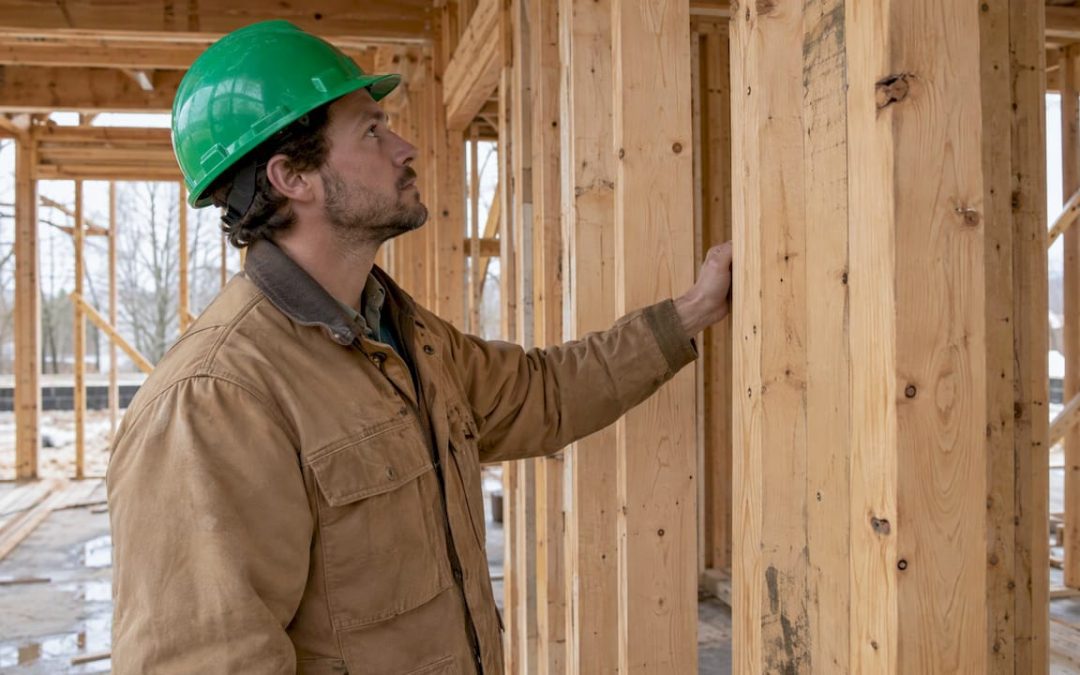
A draw inspection is a site visit by an independent inspector, ordered before your lender releases each installment of a construction loan. The inspector confirms that the work you are asking to be paid for is actually in place, and the lender funds the draw based on that report. The process is short once you know the sequence, and the people who get paid fastest are the ones whose paperwork, site access and report are ready before the inspector arrives. We handle loan draw inspections for lenders, builders, investors and owner-builders in the St. Louis Metro area and Southern Illinois, and the steps below are the ones that decide whether a draw takes days or weeks.
TL;DR
- A draw inspection verifies completed work on site so the lender can release the matching share of the construction loan.
- The usual order is: work is finished, you submit a draw request, the lender orders the inspection, the report comes back, the lender funds.
- Inspectors measure percent complete per budget line. They do not grade the quality of the workmanship.
- Fees in lender guidelines run from about $265 to $500 per draw, usually paid by the borrower and often netted from the draw itself.
- Being on site, having line items documented and booking the inspection early prevents most delays.
Table of Contents
- What a draw inspection is, and why lenders insist on it
- The draw inspection process, step by step
- What the inspector checks, and what they do not
- Draw inspection, appraisal and home inspection: how they differ
- Who pays, and what it costs
- How long it takes
- The final draw and moving in
- Where we fit
- Our perspective
- FAQ
- Sources
What a draw inspection is, and why lenders insist on it
A construction loan is not paid out in one lump sum. Money is released in stages, called draws, tied to milestones such as a finished foundation, framed walls or installed plumbing. An FDIC working paper explains that banks commonly hire independent third-party inspectors, at the borrower’s expense, to assess progress before approving a draw request.
The reason is simple. In a construction loan, the collateral (the finished house) does not exist yet. It only grows as the work gets done. The same paper describes inspections as the way a bank limits its exposure to a project that is failing or overpaid. For you as the borrower, that means the inspector’s report is the document your money depends on.
If you are a first-time buyer building or renovating with a loan, an investor funding a rehab, or a builder waiting on payment, the inspector is not an adversary. A clear, well-documented report is the fastest route to your next draw.
The draw inspection process, step by step
Lenders word it differently, but the sequence is consistent. American Heritage Lending’s description of the draw process follows the same order as the steps below.
1. Finish a defined phase of work
Your loan has a budget broken into line items: site prep, foundation, framing, roofing, mechanical systems, drywall, finishes and so on. A draw is requested when a phase, or a meaningful part of a line item, is done. Some lenders allow partial draws on a line item. Hingham Institution for Savings says the amount is based on the percent of work completed in that line, and that it funds work completed and in place.
Where it goes wrong: requesting a draw for work that is only started, or for materials sitting in the driveway. Many lenders treat stored materials and deposits case by case, so do not count on them.
2. Submit the draw request with documentation
The request typically comes with supporting paperwork such as invoices, lien waivers (a signed statement from a contractor or supplier that they have been paid and will not claim a lien on the property) or a progress report. Thresholds vary. Elite Commercial Servicing’s ground-up draw guide requires lien waivers for draws over $75,000 or when draws reach $100,000 in aggregate.
Where it goes wrong: missing or mismatched paperwork. If your request lists “framing 100%” and your invoice covers half the framing, expect questions before anyone visits the site.
3. The lender orders the inspection
In most programs the lender, not you, orders the inspection from an independent provider. The inspector then contacts you to schedule. Washington Capital Partners’ draw guidelines say the inspection company contacts the borrower within 24 hours of the request. Elite’s guide gives one to two business days for that first contact.
Where it goes wrong: not answering the scheduling call. A missed contact pushes everything back, and some lenders still charge the fee. Searchers Capital states its draw fee is charged even when the inspector cannot access the property.
4. The site visit
The inspector walks the property, photographs the completed work, and estimates what percentage of each budget line is finished. They also look at whether materials on site match the draw request and whether changes to the plan are documented. Elite advises borrowers to accompany the inspector, in person or by phone, so that every item in the request is noted. If you cannot be there, ask for a review of the findings before the inspector leaves.
Where it goes wrong: the inspector cannot see the work. Wiring, plumbing and insulation vanish behind drywall. Visits timed before the walls close give photo proof of what is inside. Our pre-drywall inspection page shows what that looks like for new construction buyers.
5. The report goes to the lender
The report lists completed work, attaches photos and assigns a completion percentage to each stage. Town & Country Bank’s sample construction loan report shows exactly this layout, with percentages running from site prep to 100% completion, and states the draw is based on that completion percentage. Timing varies by lender. Conventus says its construction team receives findings within 24 to 48 hours after the visit. Washington Capital Partners says the report typically arrives within 48 hours.
Our own loan draw inspection reports are returned within 24 hours, which is the part of the cycle we control.
6. Lender review and funding
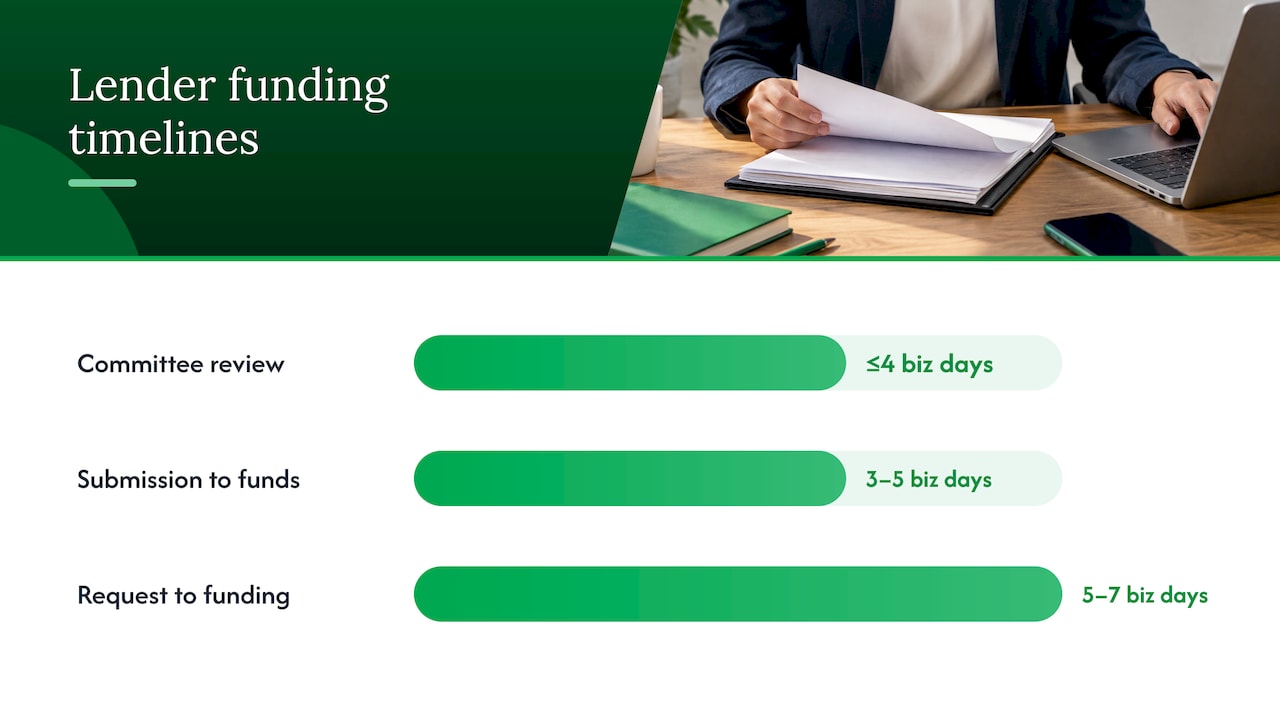
The lender compares the report to the request, checks title for new liens where required, and approves an amount. Funds are typically wired, and in many programs go only to the borrower. Washington Capital Partners notes that loan committee review can take up to four business days. Searchers Capital describes three to five business days from submission to funds, and Elite reports an average of five to seven business days from request to funding, with title updates able to add more.
What the inspector checks, and what they do not
The inspector answers one question: how much of the budgeted work is physically in place? That usually includes:
- Percent complete for each line item in the budget
- Photos of every area being drawn against
- Whether materials and stages match the approved plans, and whether any change orders appear
- Access to the site and visible safety or progress concerns the lender should know about
The scope is narrower than many borrowers assume. Columbia Bank’s construction loan FAQ says the inspector does not check the quality of materials or workmanship, and that disbursement follows the percentage of work completed in the third-party report. A draw inspection protects the lender’s money. It is not a code review and it is not a warranty check.
That gap matters if you are buying or building a home you will live in. A draw report tells your lender the framing is 100% done. It does not tell you whether the framing is straight, flashed or sealed correctly. Buyers who want that second layer of eyes pair the lender’s draw inspection with their own phased inspections. Our new construction inspection checklist shows what to photograph and ask about at each stage.
Draw inspection, appraisal and home inspection: how they differ
These three get confused constantly.
| Draw inspection | Appraisal | Home inspection | |
|---|---|---|---|
| Question answered | How much work is complete? | What is the property worth? | What condition are the systems and structure in? |
| Who relies on it | Lender, to release funds | Lender, to size the loan | Buyer, to decide and negotiate |
| When it happens | Before each draw | Usually once at the start (sometimes by the same appraiser for progress checks) | Before purchase or at a set stage |
| Output | Percent complete per line, photos | Value opinion | Condition report |
The same loan can involve all three. As Town & Country Bank’s guide notes, some banks have the original appraiser perform the progress inspections, with a title update at each inspection to check for mechanic’s liens. Others use an independent inspection firm. Ask your lender which model it uses before you budget.
Who pays, and what it costs
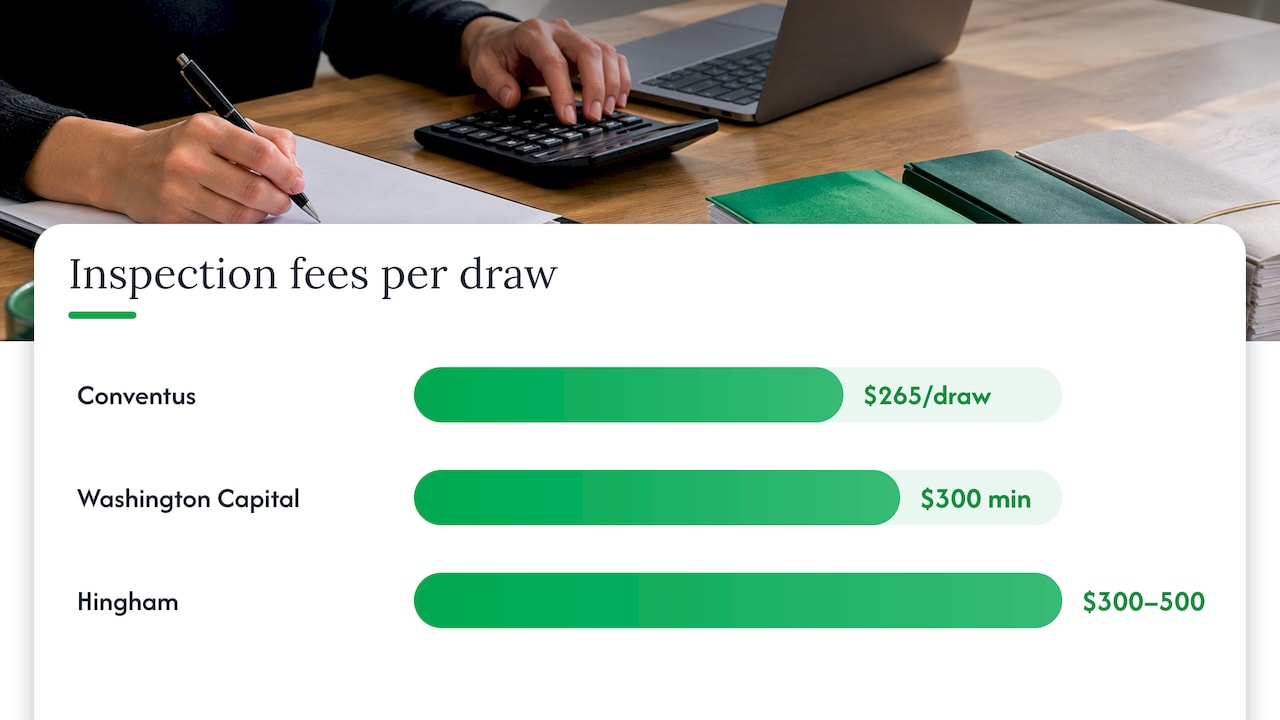
The borrower usually pays. A draw inspection fee is typically built into the project budget or taken out of the draw. Fees differ by lender, property type and location, so treat the following as published examples from lender guidelines, not a quote:
| Lender guideline | Published inspection fee | Source year |
|---|---|---|
| Conventus | Typically $265 per draw request, varying by property type | 2025 |
| Washington Capital Partners | Minimum $300 per draw, or actual cost if greater, netted from the wire | 2025 |
| Hingham Institution for Savings | $300 to $500, funded from the approved draw | 2026 |
Hingham adds that owner-occupied residential projects pay seven inspection fees at closing, with additional inspections at no cost, and that a $150 title fee applies before the final advance in some cases. Other lenders also charge title date-down or wire fees on top. A typical home build runs through several draws, so multiply the per-draw figure by the number of draws in your schedule, and ask your lender for the full list of draw-related fees before you sign.
On a $400,000 build with five draws at $300 each, inspections come to $1,500. That is a real line in the budget, and it is far cheaper than a stalled project. Make sure it is in your soft-cost line from day one.
How long it takes
Expect a few days to two weeks from request to money, depending on the lender. The published figures above show how the clock splits: first contact within one to two days, a site visit when you can be there, a report in 24 to 72 hours, then lender review. Lenders quote anywhere from three business days to about a week from request to funding, and title work can add more.
Three habits shorten the cycle:
- Request only when the work is truly done. A rejected or reduced draw costs a full cycle.
- Be reachable and be there. Meeting the inspector on site is the single most effective step.
- Line up documents before you submit. Lien waivers and invoices that match the budget lines keep the lender’s review short.
If you work a day job, scheduling is often the real bottleneck. We offer evening and weekend appointments, and video walkthroughs when you cannot be on site. Our home inspection report timeline page explains how fast reports can fit a contract’s deadlines.
The final draw and moving in
The last draw is released when the property is complete. Searchers Capital ties it to the property being complete or ready for sale or refinance, and Elite requires an updated insurance policy and a Certificate of Occupancy before the final draw. Plan the closing timeline around those two documents.
Once the keys are in your hands, the new house still needs setting up for the people who live in it. If a baby is coming, this two-phase babyproofing checklist helps you work through the finished home room by room.
Where we fit
We are Hunt Home Inspection, LLC, serving the St. Louis Metro area and Southern Illinois. Loan draw inspection is one of our listed services, alongside re-inspections, buyer’s inspections, radon testing, sewer camera inspections and commercial work. Reports come back within 24 hours, and we offer in-person or video inspections plus evening and weekend scheduling. We also offer discounts for veterans and first-time buyers, and some services can be paid at closing, as described on our pay at close page. Our certifications include NACA, ASHI and HUD 203k.
If your project is commercial, see our commercial inspection page. For everything else, start with our inspection services.

To line up a draw inspection, contact us through the inspection services page with your property address, your lender and the phase of work you are drawing against.
Our perspective
A draw is a promise made in photographs. The lender promises money, and you promise that the work is in place. The report is the place where both promises meet.
What we tell first-time buyers and small builders is to treat the inspection as part of the build schedule, not as a surprise at the end of it. Know which budget lines you are drawing against, book the visit while the work is still visible, and make sure someone is there to walk it with the inspector.
Speed matters most to the people waiting on the money: agents, contractors and busy owners who cannot take a day off. That is why our reports are returned within 24 hours and why we schedule evenings and weekends, so a finished stage turns into funded progress quickly.
JOHN
FAQ
What is a bank draw inspection?
It is an inspection ordered by a construction lender before it releases a loan installment. An independent inspector visits the site, documents the completed work and estimates the percentage complete for each budget line. The lender uses that report to decide how much to fund.
How long does a construction draw inspection take?
The visit itself is usually brief on a small residential site. Lender guidelines cited above put the report at 24 to 72 hours after the visit, and the full cycle from request to funding at about three to seven business days, longer when title updates are required.
Does the borrower have to be present?
Not always, but it helps. Elite Commercial Servicing recommends walking the site with the inspector, in person or by phone, so every item in the request is noted. If you cannot attend, ask for a review of the findings before the inspector leaves.
Does a draw inspection replace a home inspection?
No. A draw inspection confirms progress for the lender. It does not evaluate workmanship, as the Columbia Bank FAQ states. A buyer who wants a condition review of the finished systems still needs a full home inspection.
Sources
- FDIC working paper: Bank Monitoring with On-Site Inspections
- American Heritage Lending: How Does the Construction Draw Process Work?
- Elite Commercial Servicing: Ground-Up Construction Draw Process Guide
- Hingham Institution for Savings: Construction Inspection Process
- Washington Capital Partners: Construction Draw Guidelines
- Searchers Capital: Draw Process
- Town & Country Bank: sample construction loan report
- Conventus: Construction Draws Administration guide
- Columbia Bank: Custom Construction Loan FAQ
Recent Comments