
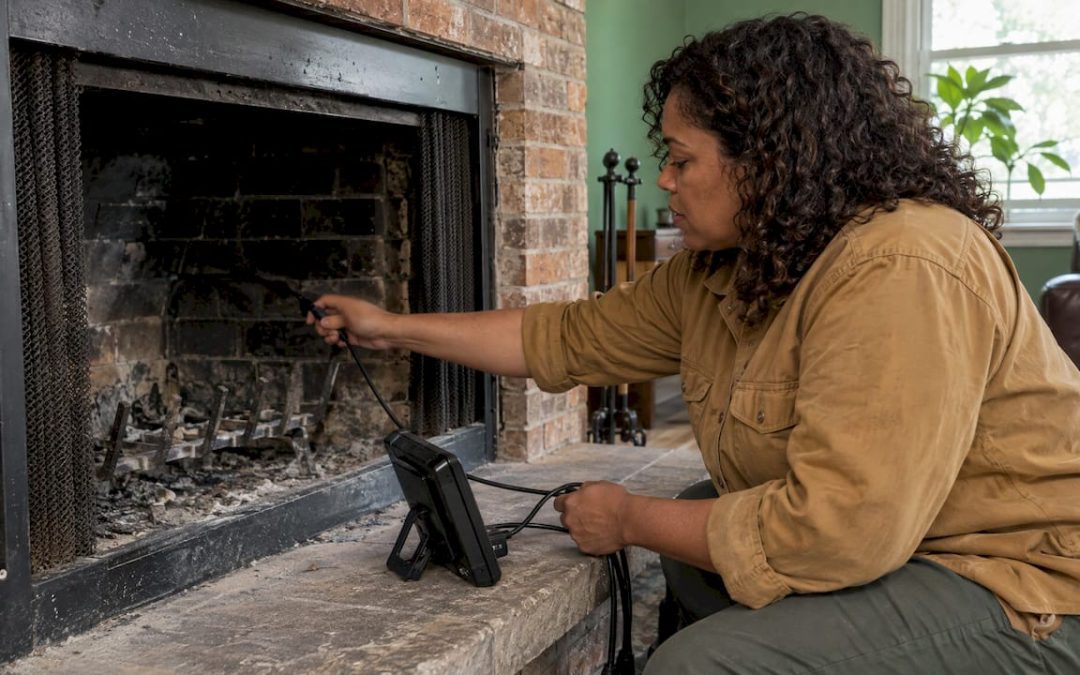
If the house you want has a fireplace, a general home inspection is the start of the job, not the end of it. The part of a chimney that fails most quietly is the inside of the flue, and the standard that governs sales, a Level 2 inspection with a camera scan, is a separate, specialized look. Book it in the first days of your inspection window, read the report next to your general inspection report, and use any findings to ask for repairs, a credit or a lower price. Our buyer’s inspections come with a report within 24 hours, so you can line up the fireplace work well inside your deadlines.
TL;DR
- Ask for a Level 2 chimney inspection on any home with a fireplace or chimney. It is the level the national standard points to when a property is sold.
- Level 2 includes a video scan of every flue plus the attic, crawl space and basement areas around the chimney. Redfin puts it at about $150 to $500 and 1 to 2 hours.
- Order it right after your contract is signed. Chimney specialists book up in fall and your contingency clock is short.
- Buyers usually pay for specialty inspections themselves, then negotiate repairs, a credit or a price cut using the written report.
- Use a fast general inspection report, scheduled on an evening or weekend if you work days, to protect the time you need for the fireplace follow-up.
Table of Contents
- Why a fireplace needs its own look before you buy
- What a general home inspection does and does not cover
- The three inspection levels, in plain English
- What it costs
- When to book it
- Who pays for the fireplace inspection
- What to do when the report finds problems
- How often to inspect after you move in
- Get your inspection scheduled while your contingency clock is ticking
- FAQ
- Sources
Why a fireplace needs its own look before you buy
A fireplace feels simple: a firebox, a flue, a cap. But most of what can go wrong is out of sight. Cracked flue tiles, a missing liner, water damage in the masonry and creosote buildup sit inside walls and above the roofline, where you cannot judge them from the living room.
Redfin’s buyer guidance says a fireplace inspection is needed if the home has a fireplace or chimney, and that even an unused fireplace can put a home at risk for indoor air pollution. Insurers care too: the same guide notes that some insurance providers require the inspection before closing to confirm the fireplace and chimney are in good shape.
There is also a plain money argument. A home improvement writer’s roundup quotes one expert saying an inspection costing $200 to $300 or more is cheaper than a chimney fire, and another who has seen buyers skip it and face deteriorating flue tiles or a full chimney rebuild in under a year.
As a first-time buyer, a veteran stretching a budget, or a family watching every dollar, you do not have room for a $4,000 to $15,000 surprise after closing. A few hundred dollars before closing is the cheaper way to find out.
What a general home inspection does and does not cover
A buyer’s home inspection is a broad, visual review of the whole house: roof, structure, electrical, plumbing, heating and more. The scope for fireplaces is limited by design. InterNACHI’s inspection standards, for example, call for looking at the readily accessible and visible parts of fireplaces and chimneys, such as the lintel over the opening, the damper door and the cleanout door, and describe the scope as visual and not technically exhaustive.
That is why a chimney sweep organization and many experienced agents treat the fireplace as a specialty item. The Chimney Safety Institute of America (CSIA), the certifying body for chimney professionals, says a regular home inspection won’t substitute for a dedicated chimney inspection; the home improvement roundup above reports that CSIA calls for this extra inspection when you buy a home with a chimney.
The practical takeaway: your general inspection tells you the fireplace is there, looks intact from the room and from the yard, and whether other systems need attention. The flue interior needs a specialist with a camera.
The three inspection levels, in plain English
The levels come from NFPA 211, the national standard for chimneys, fireplaces and vents. They are not good, better and best packages. They are scopes for different situations.
| Level | When it applies | What it covers |
|---|---|---|
| Level 1 | Routine annual check, same appliance, no changes | Readily accessible parts of the appliance and chimney |
| Level 2 | Property sale or transfer, a changed appliance, before relining, after a fire, storm or seismic event | Everything in Level 1, all flues, accessible attic, basement and crawl-space areas, and a required video scan of the interior |
| Level 3 | A specific concealed problem found earlier | Concealed areas, and may require removing parts of the chimney or building |
CSIA’s own procedure for Level 2 masonry fireplaces says a Level 2 is recommended when a property is being sold and includes all Level 1 work, all flues and connected appliances, accessible attic, basement and crawl-space areas, and a required video scan of the chimney interior. Level 1, by contrast, is aimed at routine cleanings and annual inspections when an appliance is replaced with a similar one.
A Georgia brokerage’s buyer guide makes a point worth knowing: the Level 2 recommendation for sales comes from the industry standard, not state law. Requirements vary by area and by insurer, so treat Level 2 as the safe default and confirm anything local with your agent.
The same guide explains why a sale points to Level 2: the new owner has no sweep records or usage history, and the camera scan examines the one part a buyer cannot judge from the room.
When Level 3 comes into play
You do not order Level 3 up front. It only follows a Level 2 that finds something concealed and unexplained, because it can involve opening masonry or walls. Redfin puts it at $1,000 or more for that reason. If your Level 2 report recommends it, get your agent to ask the seller about access and timing right away, since this is the step that eats the calendar.
What it costs
Redfin’s 2025 figures are a useful budgeting range for the whole country:
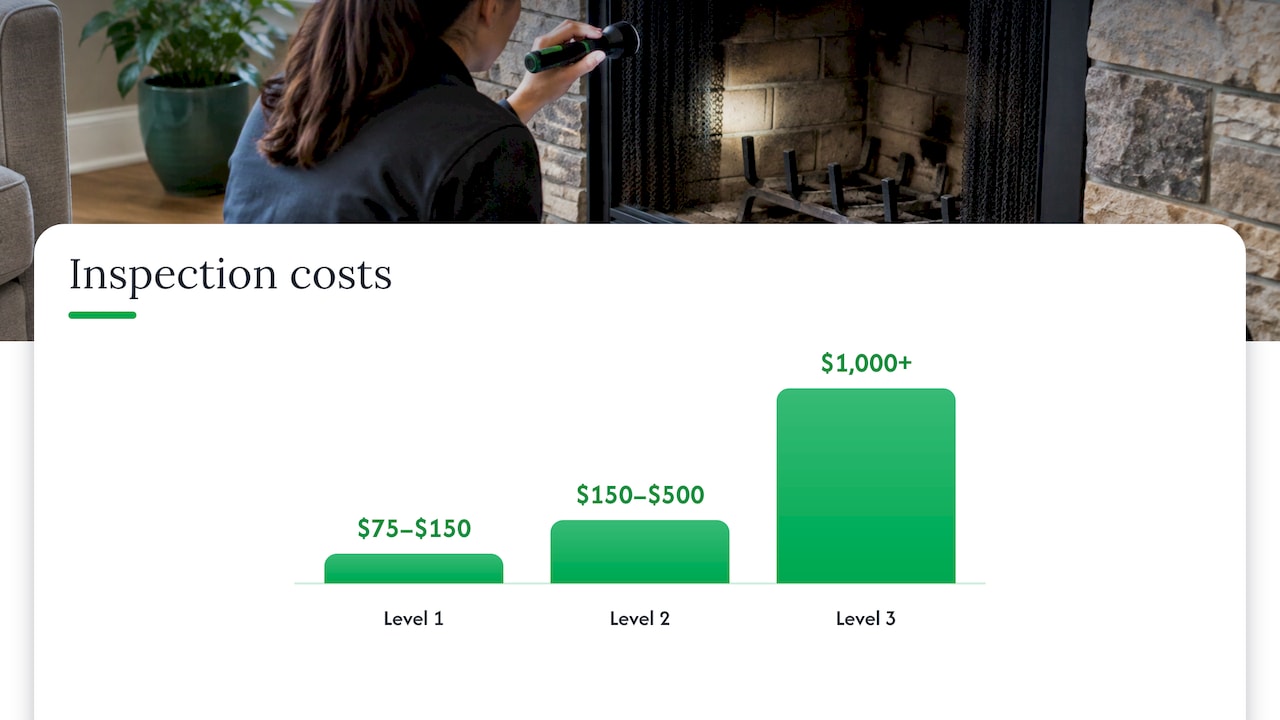
- Level 1: $75 to $150, 30 to 60 minutes, often bundled with a basic sweep.
- Level 2: $150 to $500, 1 to 2 hours, depending on home size, camera use and how accessible the chimney is.
- Level 3: $1,000 or more, several hours.
Other sources in the trade press quote $200 to $300 or more for a pre-purchase chimney inspection. Prices differ by region and by how many flues the house has, so a house with two fireplaces and a furnace flue will cost more than a single masonry fireplace. Ask for a written quote that says Level 2 and mentions the video scan.
For budget-minded buyers, that is the whole planning figure: a few hundred dollars. Compare it with what the repairs can cost, and the case is clear. Trade estimates run from under $100 for a missing cap, to several thousand dollars for a stainless liner, to a full rebuild that can run into five figures. The inspection is what tells you which of those you are facing, before the money is committed.
If you are trying to hold down your total inspection spend, our guide to inspection savings tips for homebuyers walks through where it makes sense to economize and where it does not.
When to book it
Early. Your inspection contingency, the clause that lets you negotiate or walk away based on inspection results, has a short fuse. Redfin notes there is usually a 5 to 10 day deadline after the inspection to submit your request. The Georgia brokerage guide advises requesting the Level 2 as soon as the contract is signed, so there is time for a Level 3 follow-up or contractor estimates inside the due diligence period.
Fall is the crunch. Chimney companies fill up when the weather turns cold, and a specialist booked three weeks out is useless to a buyer with ten days. A good order of operations looks like this:
- Day 1: Contract signed. Book your general inspection and call a CSIA-certified chimney specialist the same day.
- Days 2 to 5: General inspection and chimney inspection happen. Ask the specialist for the written report with the video of every flue.
- Within 24 hours of each visit: Reports arrive. Ours come back within 24 hours, which keeps your decision window intact. Our report timeline guide explains how that protects your contingency.
- Before the deadline: Collect repair estimates, then send your written request.
If your workday leaves no daylight slots, we schedule evening and weekend appointments, and we offer video walkthroughs as well as in-person ones. That matters when your chimney appointment and your general inspection have to fit around your job.
Who should be there
If you cannot attend, you can still follow along by video, and you can read how we think about the seller’s presence in our guide on whether the seller should stay. For the chimney visit, ask to see the camera footage. The footage is the evidence you will hold up in negotiation.
Who pays for the fireplace inspection
In most transactions the buyer does. HomeLight reports that buyers usually pay for specialty inspections like chimney work, and Zillow says a buyer who chooses to inspect pays the licensed inspector out of pocket rather than through the mortgage or closing costs. A seller pays for a pre-listing inspection they order themselves. If you are on the selling side, our pre-listing inspection guide shows how a report in hand before listing keeps surprises out of the negotiation.
The seller may offer a recent chimney report. Use it as a starting point, but hire your own specialist. The report you rely on should be written for you, on the day you are buying.
What to do when the report finds problems
Findings are normal. Most older chimneys have something: a cracked crown, loose mortar, a cap that is rusted through. The question is what it costs and who carries it.
The Consumer Financial Protection Bureau explains your leverage: you may negotiate with the seller about who makes or pays for repairs, and if your contract is contingent on a satisfactory inspection, you may be able to cancel without penalty if you are not satisfied. Read your own contract for the exact wording and deadlines, and ask your agent or a real estate attorney if you are unsure what you signed.
A workable approach:
- Prioritize. Redfin advises a written request focused on the top two or three issues with cost estimates attached. A 15-item list gets ignored.
- Get estimates. A written estimate from a licensed contractor turns an opinion into a number.
- Pick the remedy. Repairs by the seller, a closing credit, a price reduction or walking away inside the contingency are the usual options. For big items, a credit often gives you control over who does the work.
- Budget for the use you want. The Georgia guide suggests planning three buckets: the inspection fee, repairs the report identifies, and any work needed to use the fireplace the way you intend, such as converting wood to gas.
This is where our Create Request List™ earns its keep: it is built to streamline communication between buyers and their agents, so your fireplace items and everything else from the general inspection go to the agent in one clear request instead of a scattered email thread.
An unusable fireplace is not always a deal breaker. A flue marked do-not-use can be relined or the fireplace can be closed off, and many buyers simply price that in. What you want is to know before closing.
Wildfire-area homes
If the property sits in a wildfire-prone region, embers are a second question beyond the chimney cap. This breakdown of WUI compliant windows shows what ember-resistant glazing proof looks like, which is worth knowing when you assess the whole house.
How often to inspect after you move in
Plan on a yearly check. Redfin reports that the NFPA recommends at least one fireplace inspection a year, regardless of use, plus another after extreme weather, changes to the chimney or ventilation, or before buying a home with a chimney. Keep each report and any repair invoice. They are your records for insurance, and for the next buyer when you sell.
Our view: the fireplace is part of the whole-house decision
We inspect homes across the St. Louis Metro area and Southern Illinois, and the buyers we work with are often purchasing their first home on a tight budget. For them, the worst outcome is not a failed inspection. It is learning about a big expense after the keys change hands.
That is why we treat the fireplace as one piece of a bigger picture. A buyer’s inspection gives you the full-house view, and a Level 2 chimney scan gives you the detail on the one system a general inspection reads only on the surface. Together, they let you decide with open eyes.
Speed matters just as much as thoroughness. Our reports are returned within 24 hours, and we offer evening and weekend appointments and video options, because a good report that arrives after your deadline protects no one. We also offer discounts for veterans and first-time buyers, and we hold NACA, ASHI and HUD 203k credentials.
Our advice is simple: book everything in the first days of your contingency, keep the reports side by side, and negotiate from the numbers.
JOHN
Get your inspection scheduled while your contingency clock is ticking
Hunt Home Inspection, LLC performs buyer’s inspections for homes in the St. Louis Metro area and Southern Illinois, with reports returned within 24 hours and your choice of in-person or video walkthroughs. We also offer radon testing, mold inspection, sewer camera lateral inspections, termite inspections and septic and well inspections, so the rest of the house gets the same attention as the fireplace. See the full list on our inspection services page and book the visit that fits your schedule.
Wondering how to choose among inspectors? Our selection criteria for homebuyers covers what to ask before you book.
FAQ
Is a Level 2 fireplace inspection required when buying a house?
Not always by law. Industry standards point to Level 2 on a sale or transfer, and Redfin notes it is required in some areas and that some insurers want it before closing. Check with your agent and insurer, and treat it as the default for any home with a working chimney.
How much does a chimney inspection cost for a buyer?
Redfin’s 2025 figures put a Level 2 at roughly $150 to $500, with Level 1 at $75 to $150 and Level 3 at $1,000 or more. Home size, the number of flues and access to the roof or attic move the price inside that range.
Does my regular home inspector check the inside of the chimney?
Generally not in full. Common inspection standards focus on readily accessible and visible parts, which is why a Level 2 with a video scan of the flue is the way to see the interior. Read your inspector’s standards of practice and the report to see exactly what was covered.
Who pays for a fireplace inspection during a sale?
Usually the buyer, who pays the specialist directly. A seller pays only for a pre-listing inspection they order themselves. Your negotiation afterward can shift repair costs through a credit, a price reduction or seller repairs.
How often should a fireplace be inspected after I buy?
At least once a year, according to the NFPA recommendation Redfin cites, and again after storms, a fire or any change to the chimney or appliance. Keep every report for your insurer and your eventual buyer.
Sources
- Redfin: Buyers, Don’t Skip a Fireplace Inspection
- Bob Vila: Buying a house with a chimney
- CSIA: Level 2 inspection of a masonry fireplace
- CSIA: Level 1 inspection of a masonry chimney
- InterNACHI: How to inspect fireplaces, stoves and chimneys
- The Agency Atlanta: Chimney and fireplace inspections when buying
- Redfin: 6 steps to negotiating after the home inspection
- HomeLight: Who pays for a home inspection
- Zillow: Who pays for home inspections and repairs
- CFPB: Schedule a home inspection
- WUI compliant windows
Recent Comments