
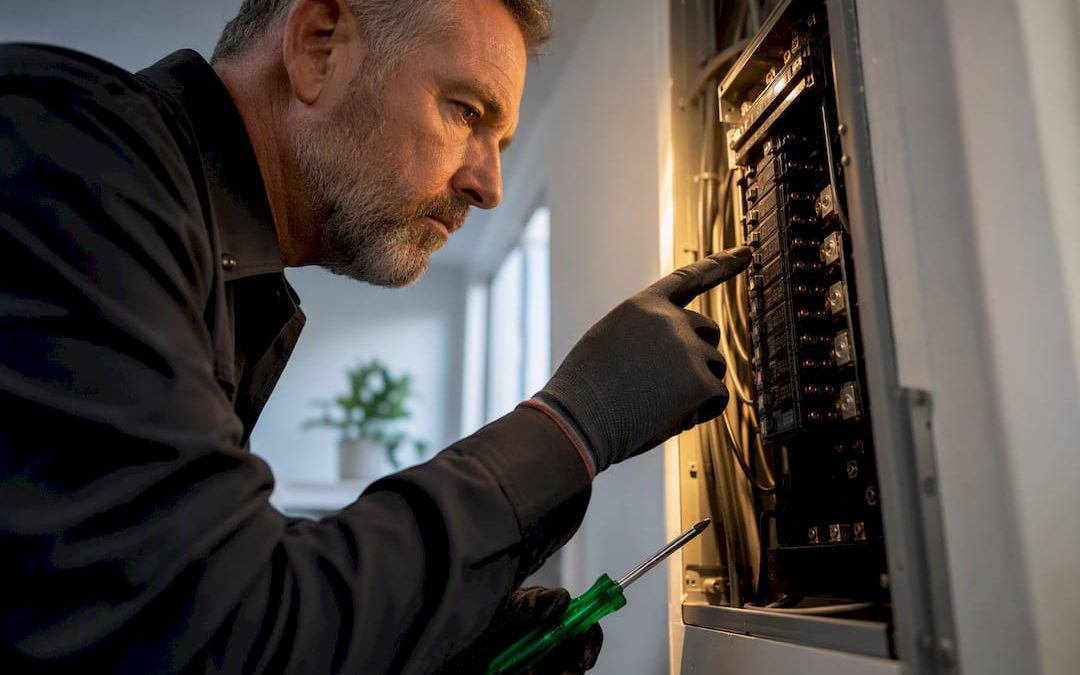
Federal Pacific panels with Stab-Lok breakers carry a documented history of failing to trip during overloads, and multiple fire departments link them to elevated fire risk in homes built between 1950 and 1990. If your home has one, don’t panic, but don’t ignore it either: photograph the panel, avoid overloading suspect circuits, and call a licensed electrician for a full evaluation. Most inspectors recommend budgeting for replacement rather than waiting for a failure to force the issue.
TL;DR:
- Failure rates for Federal Pacific breakers can be as high as 60%, with many failing to trip during overloads, which poses a significant fire hazard.
- Visual clues like a compact bus configuration and specific breaker toggle colors help identify FPE panels, but professional inspection is essential.
- Immediate replacement is advised if visible damage, melting, or non-resetting breakers are present, while older panels without visible issues should be evaluated soon.
- Full panel replacement costs between 1,000 and 2,500 dollars, with permits and inspections typically required, making professional assessment crucial before action.
- Insurers, buyers, and inspectors increasingly recognize FPE panels as high-risk, and documentation, including photos and reports, is vital for safety and negotiations.
Table of Contents
- How to Spot a Federal Pacific Panel in Your Home
- What the Evidence Shows About Federal Pacific Panel Safety
- Should You Replace a Federal Pacific Panel Now?
- What Panel Replacement Actually Costs and Involves
- What to Do the Moment You Find an FPE Panel
- Why Federal Pacific Panels Never Got a National Recall
- An Inspector’s Take on Federal Pacific Panels
- Get a Professional Electrical Assessment Before You Decide
- Where to Verify These Findings
- Sources
- FAQ
How to Spot a Federal Pacific Panel in Your Home
Before touching anything, look for the nameplate inside the panel door. It usually reads “Federal Pacific Electric” or carries the “Stab-Lok” brand name, sometimes shortened to “FPE” on older labels. The breakers themselves are a giveaway too: they’re stubby, often gray or red-tipped toggles arranged in a tight bus configuration that looks noticeably more compact than breakers you’d find in a modern Square D or Eaton panel.
A few identification steps you can do safely from outside the panel:
- Check the panel door and interior label for “Federal Pacific,” “FPE,” or “Stab-Lok” text.
- Compare breaker toggle shape and color to photos your electrician or inspector can reference.
- Photograph the label, the full breaker layout, and any visible scorch marks or discoloration.
- Note the panel’s approximate age based on the home’s electrical permit history, if available.
Pro Tip: Take wide and close-up photos of the panel interior before you call an electrician. A clear picture of the label and breaker rows lets a professional pre-screen the job over the phone, which often speeds up scheduling.
Never open a panel cover yourself if you’re not trained to work around live electrical parts. Leave that to a licensed electrician or a qualified inspector.
What the Evidence Shows About Federal Pacific Panel Safety
The Columbus Fire Department put a number on the risk that most homeowners never see quoted: FPE panels may be tied to thousands of fires, multiple deaths, and significant property damage every year, concentrated in homes built between 1950 and 1990.
That statistic didn’t come from nowhere. The Consumer Product Safety Commission investigated Stab-Lok breakers back in 1983 and closed the case without a definitive hazard ruling. CPSC testing did turn up failures, but the agency’s data at the time wasn’t sufficient to support a broad recall under its own standards. That’s a critical distinction: the investigation closing without a recall is not the same as the panels being cleared.
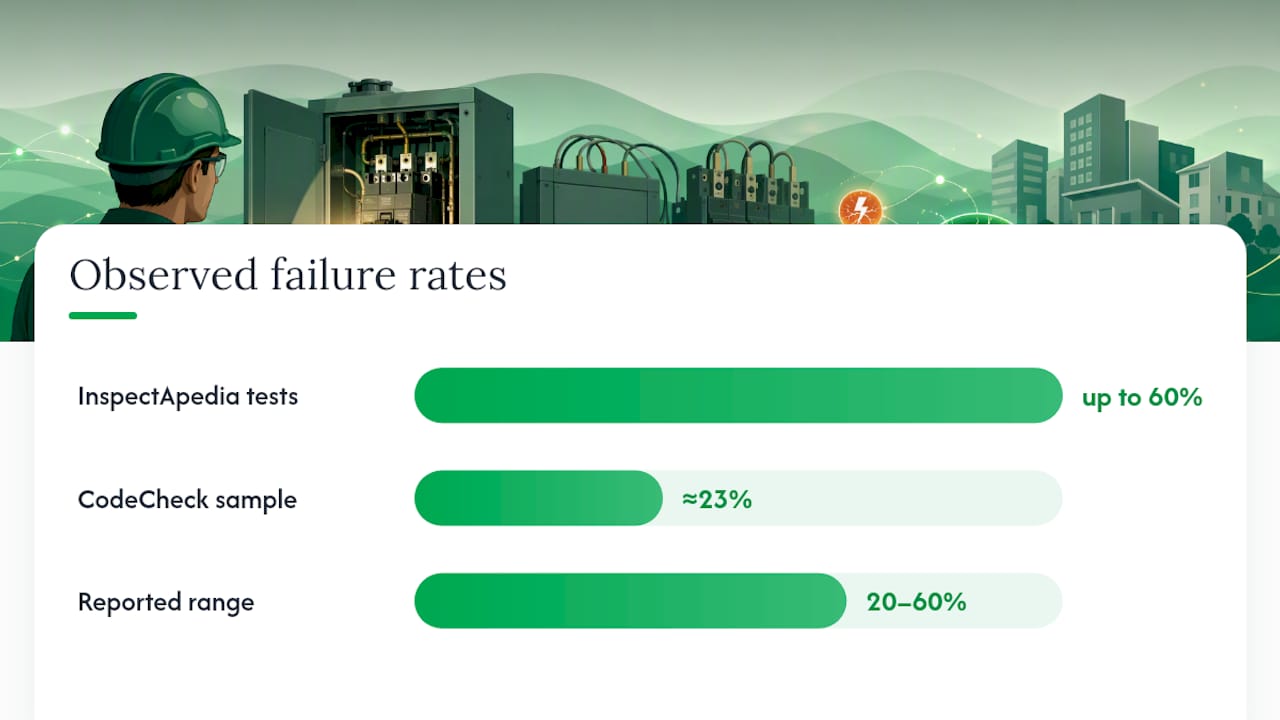
Independent testing filled in more of the picture afterward. InspectApedia’s analysis of harvested breakers documented failure rates as high as 60% in some test batches, and a CodeCheck technical summary cites a 470-breaker sample with roughly 23% failing to perform as designed. Double-pole breakers show up repeatedly in these studies as a particular weak point, since a failure on one pole can leave a 240-volt circuit only partially protected.
Here’s what those numbers mean in practice:
- A breaker that doesn’t trip under overload can let wiring overheat well past the point where a working breaker would cut power.
- Failure rates in the 20% to 60% range are far above what’s acceptable for a life-safety device.
- No single study proves every FPE panel will fail, but the pattern across independent sources is consistent enough that most inspectors treat replacement as the conservative, sensible call.
Should You Replace a Federal Pacific Panel Now?
The honest answer depends on what you find, but the decision tree isn’t complicated. Here’s how to think through it:
- Replace immediately if you see scorch marks, melted plastic, breakers that won’t reset, or if a licensed electrician refuses to service the panel as-is.
- Schedule replacement soon if the panel is original FPE equipment with no visible damage but is decades old and hasn’t been evaluated by an electrician.
- Get a professional trip test if you’re unsure which category applies. An electrician’s diagnostic will tell you whether specific breakers are already underperforming.
A few practical realities shape this decision beyond the panel itself:
- Insurance underwriters increasingly decline or condition coverage on homes with known FPE panels, which can complicate a sale or refinance.
- Buyers frequently use an FPE panel finding as a negotiating point for repair credits or price reductions.
- Inspectors are trained to document findings factually (brand, model, visible condition) and recommend electrician evaluation rather than declare the panel unsafe outright. That protects buyers while keeping the report defensible.
If your inspection report flags a double-tapped breaker or similar defect alongside an FPE panel, treat both as reasons to get an electrician’s estimate before closing, not after.
What Panel Replacement Actually Costs and Involves
Swapping in a “replacement” breaker marketed as FPE-compatible is not the fix most professionals recommend. The concern isn’t just the breaker, it’s the bus bar and panel design underneath it, and InspectApedia’s guidance is blunt on this point: full panel replacement addresses the risk, a breaker swap generally doesn’t.
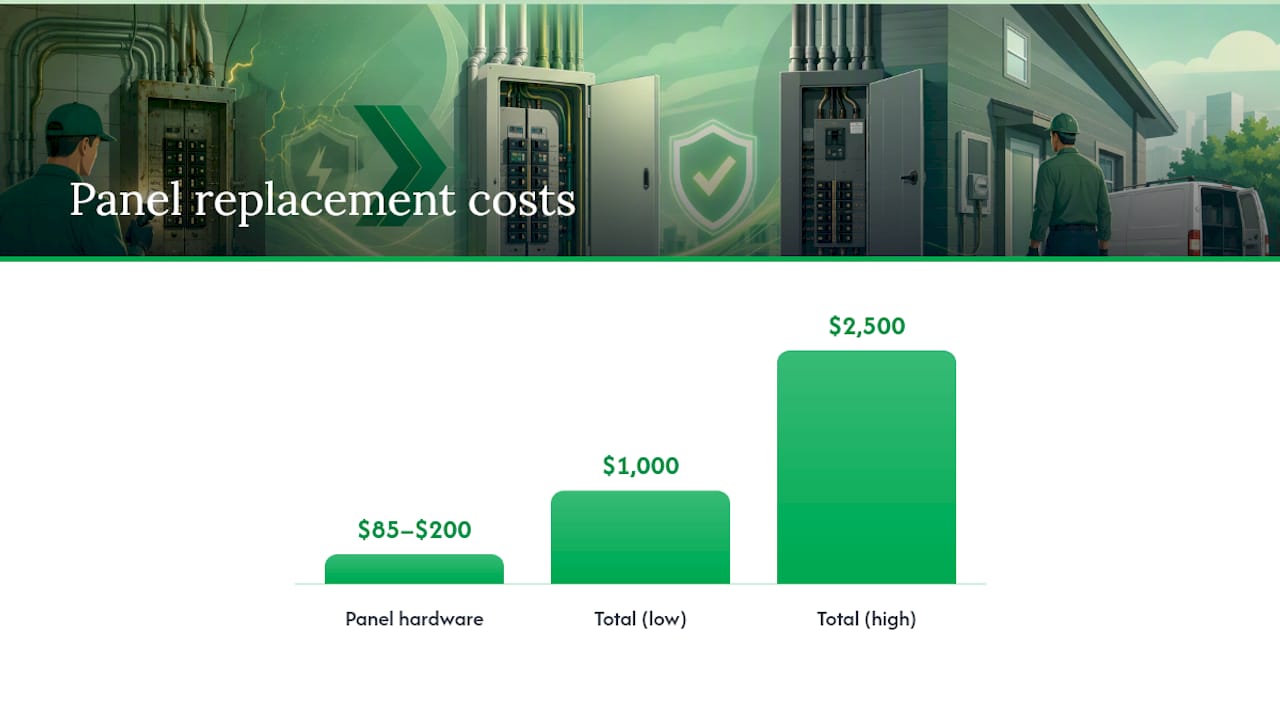
Cost-wise, the panel hardware itself is often the cheapest part of the job, typically $85 to $200 at retail. The real expense is labor, permitting, and code-compliance work, which usually brings total replacement costs to a range of $1,000 to $2,500 depending on your home’s wiring layout and local permit fees.
A few things to expect during the process:
- Most jurisdictions require an electrical permit and a follow-up inspection before the new panel is signed off.
- Timelines run anywhere from a single day for a straightforward swap to several days if wiring needs updating to meet current code.
- Ask contractors for proof of licensing and insurance, and get a written estimate before work starts.
Pro Tip: Keep every receipt, permit, and photo from the replacement. If you sell the home later, that documentation answers the FPE question before a buyer’s inspector even asks it.
What to Do the Moment You Find an FPE Panel
Finding a Federal Pacific panel during a walkthrough or after closing doesn’t mean an emergency, but it does mean a clear sequence of steps.
- Document the panel with photos of the label, breaker rows, and any visible damage, the same way you’d document other red flags on an inspection report.
- Avoid adding new high-draw appliances to circuits you suspect might be underperforming until an electrician checks them.
- Get at least two estimates from licensed, insured electricians, and ask specifically whether they perform trip tests or infrared thermal scans as part of the evaluation.
- Request a written report noting breaker condition, bus bar wear, and any recommended repairs, not just a verbal opinion.
- If any circuit shows heat, discoloration, or a breaker that won’t reset, have that circuit disconnected until it’s repaired or replaced.
A licensed electrician’s trip test and infrared scan reveal far more than a visual check ever will, since a breaker can look fine and still fail to trip under real load.
Why Federal Pacific Panels Never Got a National Recall
Federal Pacific began producing Stab-Lok breakers around 1951, and Reliance Electric identified problems with the design as early as 1980 after acquiring the company. FPE exited the breaker business entirely by 1986. The CPSC’s 1983 investigation closed without a formal recall, largely because the available test data at the time didn’t meet the threshold for mandatory action. Later independent testing and legal findings, including consumer fraud rulings in New Jersey for original owners, only reinforced what many electricians already suspected: the absence of a recall was a regulatory outcome, not a safety endorsement.
An Inspector’s Take on Federal Pacific Panels
In practice, FPE panels show up more often than people expect, usually in homes that haven’t touched their electrical system since the original build. The pattern is consistent: a panel that looks fine on the surface, breakers that haven’t been tested in decades, and an owner who’s never had a reason to think twice about it. Translating that into an inspection report means naming the brand, describing the condition honestly, and pointing the buyer toward an electrician rather than making the call ourselves. That’s how you protect a buyer without overstating what a visual inspection can prove. That documentation, backed by same-day photos and a report back within 24 hours, is what turns a vague worry into a concrete negotiating point.
— JOHN
Get a Professional Electrical Assessment Before You Decide
You’ve got the evidence. What you need next is documentation specific enough to act on, whether that’s negotiating a repair credit or simply knowing what you’re buying. Certified inspectors document panel brand, breaker condition, and any visible defects with photos, then return a full report within 24 hours instead of making you wait through the closing clock.

The Buyer’s Home Inspection service covers electrical system evaluation as part of a full walkthrough, available in-person or by video for buyers who can’t be on-site. If you’re weighing options before you commit, the guide on choosing the right inspector walks through what to look for in licensing and reporting quality. Ready to get a Federal Pacific panel documented properly before closing? Schedule an inspection and get your report back within 24 hours.
Where to Verify These Findings
- CPSC’s 1983 press release on the closed FPE investigation
- Columbus Fire Department’s FPE safety advisory
- InspectApedia’s FPE Stab-Lok hazard analysis
- CodeCheck’s technical summary on FPE panels
- Saferproducts to file an incident report
Sources
- Commission Closes Investigation Of FPE Circuit Breakers And Provides Safety Information For Consumers | CPSC
- Federal Pacific Electrical Panels Pose Fire Risk – Fire Department
- The Federal Pacific Electric FPE Stab-Lok® Electrical Hazards — InspectApedia
- FPE panel analysis — CodeCheck / technical summary
FAQ
Should a Federal Pacific panel be replaced?
Most licensed electricians and inspectors recommend replacement, especially for panels showing any sign of wear, given documented failure rates as high as 60% in independent breaker testing.
Is it safe to live with an FPE panel?
A Federal Pacific panel with no visible damage isn’t an automatic emergency, but the Columbus Fire Department’s data linking these panels to thousands of fires annually is reason enough to get a professional evaluation soon rather than later.
Is Federal Pacific a good electrical panel?
No. Independent testing consistently shows Stab-Lok breakers failing to trip at rates well above what’s expected of a functioning circuit breaker, which is why the product is no longer manufactured and why replacement is widely recommended.
Are Federal Pacific breakers worth anything?
Federal Pacific breakers have no meaningful resale or reuse value given their documented failure rates, and replacing individual breakers doesn’t resolve the underlying bus bar design issue that independent analyses flag as the bigger concern.
How do I know if my panel is a Federal Pacific panel?
Check the interior label for “Federal Pacific Electric,” “FPE,” or “Stab-Lok” branding, and photograph the panel for a licensed electrician to confirm, since visual identification alone shouldn’t replace a professional evaluation.
Recent Comments