

Housing program inspections are mandatory evaluations that verify properties meet the safety, health, and habitability standards required by federal and local regulations. Whether you are a first-time homebuyer, a tenant in an assisted rental, or a landlord participating in a federal housing program, understanding the role of inspection in housing programs protects your investment and your family. The U.S. Department of Housing and Urban Development (HUD) sets the baseline standards, and programs like HOME and the Housing Trust Fund (HTF) build on those standards with specific inspection cycles and procedures. Inspections are not punitive. They exist to confirm that every assisted unit is safe, decent, and sanitary before anyone moves in and throughout the life of the assistance agreement.
What are the new NSPIRE inspection standards and how do they impact housing programs?
The National Standards for the Physical Inspection of Real Estate, known as NSPIRE, is replacing the older Housing Quality Standards (HQS) model across all HUD-assisted programs. PHAs must fully implement NSPIRE by February 1, 2027, making 2026 the critical transition year for landlords and housing authorities alike. The shift matters because NSPIRE moves away from a simple pass/fail system toward a graded, risk-based evaluation. That means inspectors now classify every defect by how dangerous it is, not just whether it exists.
NSPIRE uses four severity tiers to prioritize corrections:
| Severity Tier | Examples | Correction Timeline |
|---|---|---|
| Life-Threatening | Gas leaks, exposed live wiring | 24 hours |
| Severe | Broken heating in winter, missing smoke alarms | 24 hours |
| Moderate | Damaged flooring, inoperable windows | Approximately 30 days |
| Low | Minor peeling paint, cosmetic damage | Up to 60 days |
This tiered structure changes how landlords and housing authorities plan repairs. A Life-Threatening defect shuts down assistance until it is fixed. A Low-tier issue gives you time to schedule a contractor without losing your voucher or compliance status. The practical result is that NSPIRE’s risk-based approach focuses resources on the hazards that actually harm people, rather than treating a cracked outlet cover the same as a faulty smoke detector.
Pro Tip: Walk your unit before every scheduled inspection and check each NSPIRE tier from top to bottom. Fix anything in the Life-Threatening or Severe category immediately, even if your inspection is months away. A surprise interim inspection can trigger a 24-hour correction clock.
How does the inspection process work in HOME and HTF housing programs?
The inspection process in housing programs like HOME and HTF follows a structured cycle tied directly to federal compliance requirements. HOME and HTF rental projects require an on-site inspection within 12 months of project completion, then at least every three years during the affordability period. That three-year minimum is a floor, not a ceiling. Housing authorities can and do inspect more frequently when a property has a history of deficiencies.

Sample size rules determine how many units get inspected in any given cycle. HUD’s tiered sampling guidance sets a minimum of 4 units for projects with 1–20 units, scaling up to 32 units for projects with 921 or more units. This approach balances thoroughness with practicality. Inspecting every unit in a 500-unit complex every three years would be logistically impossible, so the sample method gives housing authorities a statistically sound picture of overall property conditions.
The inspection process itself moves through four distinct phases:
- Initial inspection: Conducted within 12 months of project completion to confirm the property meets program standards before tenants move in.
- Progress inspections: Used during construction or rehabilitation to verify work quality at key milestones.
- Final inspection: Confirms all required work is complete and the unit is ready for occupancy.
- Ongoing inspections: Periodic reviews during the affordability period to confirm continued compliance with HUD standards.
Inspectors must meet HUD qualification requirements. Housing authorities may use their own staff or hire qualified third-party inspectors. Either way, the inspector must be independent from the property owner to avoid conflicts of interest. For housing program participants, this independence is the guarantee that the inspection result reflects actual conditions, not a relationship between the landlord and the reviewer.
Pro Tip: If you are a tenant in a HOME-assisted unit, you have the right to be present during inspections. Use that opportunity to point out maintenance concerns you have reported but not seen addressed. Inspectors document what they observe, and your input can support a formal finding.
Why are inspections vital for homebuyers and housing participants?
Inspections protect homebuyers from the single biggest financial risk in a property purchase: defects you cannot see. Structural problems, faulty electrical systems, and water intrusion rarely show up in a walkthrough. A professional inspection surfaces these issues before you close, giving you the information you need to negotiate repairs, adjust your offer price, or walk away entirely.
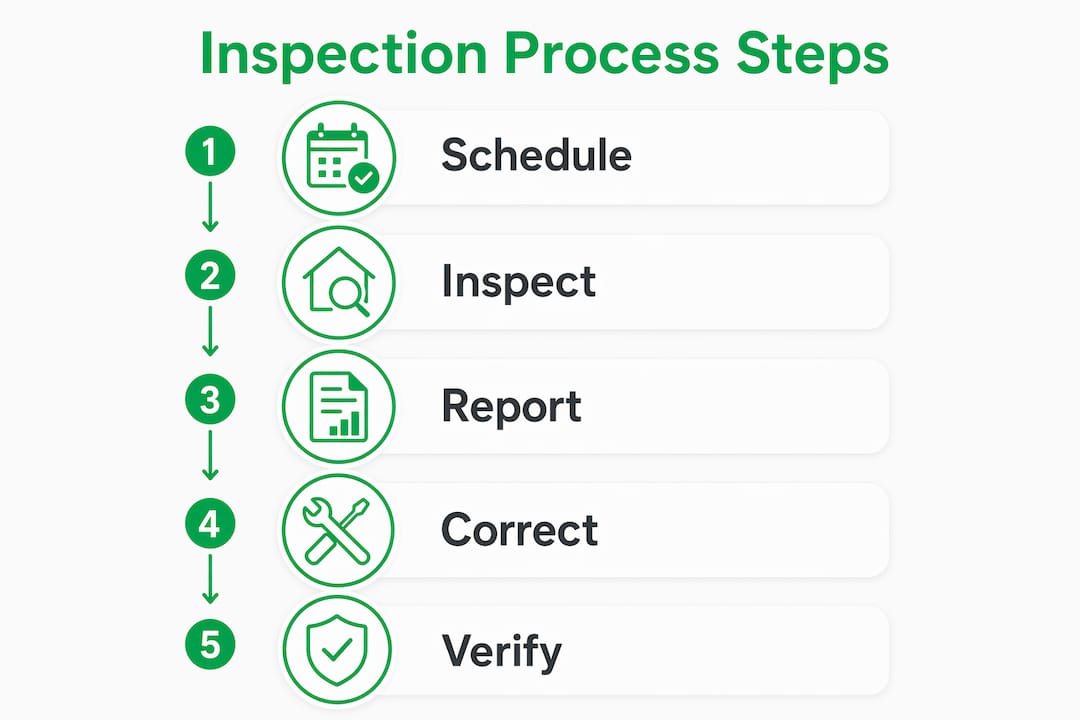
The cost argument against inspections does not hold up. The inspection cost is minor compared to the risk of undiscovered structural problems and the absence of insurance coverage for owner-builder defects. A foundation repair can run tens of thousands of dollars. An inspection that catches it early costs a fraction of that. The math is straightforward.
One point that surprises many buyers: relying on a vendor-provided inspection report leaves you without legal recourse. The legal contract binds that report to the seller, not to you. Only an inspection you commission yourself gives you actionable legal standing if defects surface after closing. This is not a technicality. It is the difference between having a claim and having nothing.
For housing program participants, the stakes are similar. An inspection before you sign a lease in an assisted unit confirms the property actually meets the standards the program requires. You can learn more about what tenants and landlords need from the rental inspection process before your first walkthrough. The real estate industry’s track record on safety makes independent verification more important than ever.
How do inspections maintain ongoing housing program compliance?
Ongoing inspections are the mechanism that keeps housing programs honest over time. A property that passes its initial inspection can deteriorate. Without periodic reviews, tenants in assisted units have no formal protection against landlords who defer maintenance once the initial approval is secured.
The consequences of failing an ongoing inspection are real and immediate:
- The housing authority notifies the property owner of all deficiencies in writing.
- The owner must correct Life-Threatening and Severe deficiencies within 24 hours.
- Moderate deficiencies require correction within approximately 30 days.
- Low-severity items must be resolved within 60 days.
- Failure to correct deficiencies within the required timeframe can result in suspension of housing assistance payments.
Regular inspections beyond legal minimums help identify maintenance concerns early, preventing expensive repairs and protecting tenant leases. A landlord who inspects quarterly catches a slow roof leak before it becomes a mold problem. That proactive approach saves money and keeps tenants in place.
Inspectors also provide value beyond the formal report. Inspectors may provide informal feedback on maintenance issues that are not yet violations, giving landlords a chance to address problems before they become formal findings. This informal channel is one of the most underused tools in property management. A landlord who listens to that feedback and acts on it rarely faces the stress of a failed inspection.
Housing inspections work best when landlords, housing authorities, and tenants treat them as a shared tool for maintaining safe communities, not as an adversarial process where one side wins and the other loses. The goal is a property that protects the people who live in it.
Key Takeaways
Inspections in housing programs are the primary mechanism for verifying that assisted properties remain safe, habitable, and compliant with federal standards throughout the life of the assistance agreement.
| Point | Details |
|---|---|
| NSPIRE replaces HQS | PHAs must fully implement NSPIRE by February 1, 2027, using severity tiers to prioritize repairs. |
| Mandatory inspection cycles | HOME and HTF programs require inspections within 12 months of completion, then every three years. |
| Independent inspections protect buyers | Only an inspection you commission yourself provides legal standing if defects surface after closing. |
| Informal inspector feedback has value | Landlords who act on informal inspector observations reduce the risk of formal violations. |
| Ongoing inspections prevent emergencies | Regular reviews beyond the legal minimum catch maintenance issues before they become costly failures. |
Why I think inspections deserve more respect than they get
Most people treat a housing inspection as a box to check. Pass it, move on, forget about it until the next cycle. That mindset costs landlords money and leaves tenants in properties that are technically compliant but practically deteriorating.
I have seen what happens when landlords treat inspections as the finish line rather than the starting point. They fix what the inspector flags, then do nothing until the next scheduled visit. Three years later, the property has new problems that were visible eighteen months ago to anyone paying attention. The inspection cycle did not fail them. Their attitude toward it did.
The most effective landlords I have worked with treat every inspection as a baseline, not a verdict. They use the report to build a maintenance calendar. They schedule their own walkthroughs between official visits. They ask inspectors questions during the walkthrough instead of waiting outside. That approach turns a compliance requirement into a genuine property management tool.
For homebuyers, the lesson is simpler but equally important. Get your own inspection. Read the full report, not just the summary. Ask your inspector to walk you through the findings in person. The home inspection process is one of the few moments in a real estate transaction where the information flows entirely in your favor. Use it.
— JOHN
Jhunthomeinspections: professional inspections for housing program participants
Navigating HUD standards, NSPIRE requirements, and housing program compliance is complex. Jhunthomeinspections serves homebuyers, landlords, and housing program participants across the St. Louis Metro area and Southern Illinois with thorough, timely inspections and reports delivered within 24 hours.

Whether you need a pre-purchase inspection, a rental property review, or help confirming your unit meets federal standards, Jhunthomeinspections has the expertise to give you a clear picture before you commit. First-time buyers, low-income families, and veterans receive the same level of detail and care. Explore professional inspection services from Jhunthomeinspections and go into your next housing decision with confidence.
FAQ
What is the role of inspection in housing programs?
Inspections in housing programs verify that assisted properties meet federal safety, health, and habitability standards before and during the period of housing assistance. They protect tenants from unsafe conditions and protect program integrity by confirming that public funds support quality housing.
What does NSPIRE replace and when does it take effect?
NSPIRE replaces the Housing Quality Standards (HQS) model, with PHAs required to fully implement it by February 1, 2027. It grades defects by severity rather than using a simple pass/fail system.
How often are HOME-assisted rental units inspected?
HOME-assisted rental units require an on-site inspection within 12 months of project completion, then at least every three years during the affordability period. Housing authorities may inspect more frequently if a property has a history of deficiencies.
Why should homebuyers commission their own inspection?
A vendor-provided inspection report is legally bound to the seller, leaving the buyer without recourse if defects appear after closing. An independent inspection gives buyers legal standing and negotiation leverage before they sign anything.
Can a landlord lose housing assistance payments for failing an inspection?
Yes. Failure to correct deficiencies within the required timeframes, 24 hours for Life-Threatening and Severe issues and up to 60 days for Low-severity items, can result in suspension of housing assistance payments under NSPIRE standards.
Recent Comments