
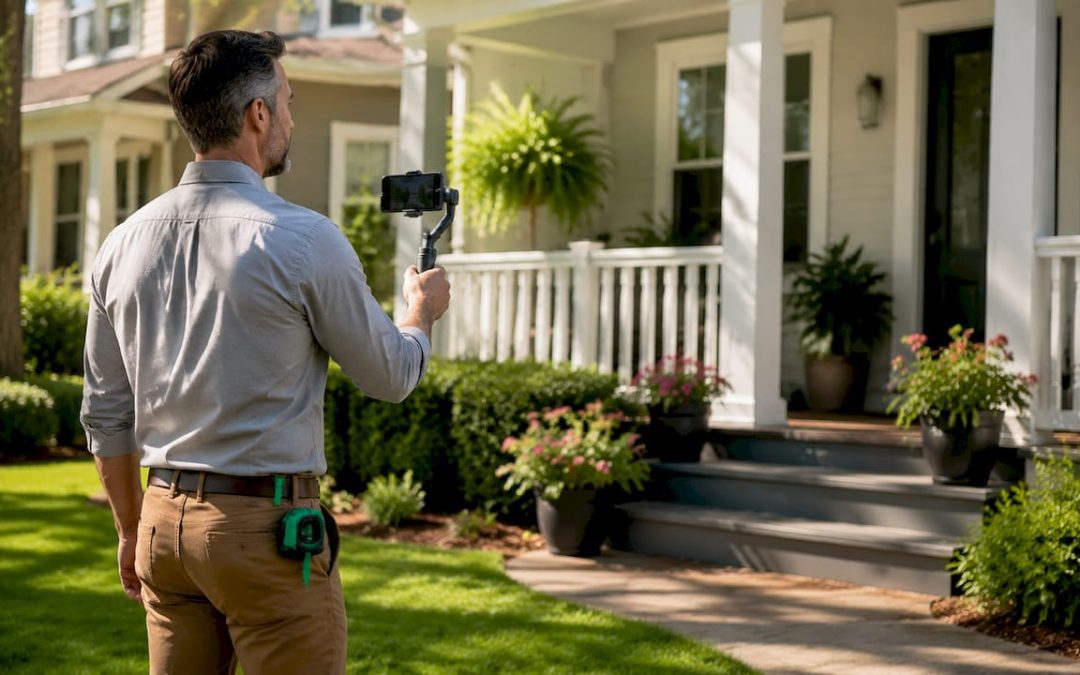
A video home inspection is a professional property assessment conducted remotely via live video, where a licensed inspector directs an on-site person to capture detailed visual evidence of the home’s condition. This method is not a DIY walkthrough or a simple FaceTime call. It is a structured, credentialed process that produces legally defensible documentation. Platforms like Zoom and FaceTime serve as the communication layer, but the inspector controls the session entirely. For remote buyers, out-of-state investors, and anyone navigating a tight schedule, understanding the video inspection process is the first step toward a confident purchase decision.
How does the video home inspection process work?
A video home inspection follows a defined workflow from scheduling through final report delivery. Each stage is designed to replicate the rigor of an in-person visit while adding digital documentation advantages.
Step 1: Scheduling and Setup
The buyer or agent books the inspection and arranges an on-site contact. This contact is typically a tenant, a seller’s representative, or a property manager. The inspector confirms the property address, inspection scope, and the video platform to be used.
Step 2: The Live Session
Inspector-led sessions typically run 45–60 minutes. The inspector directs the on-site contact room by room, specifying exactly where to point the camera, which fixtures to activate, and which panels to open. Nothing gets skipped because the inspector controls the sequence.
Step 3: Capturing Evidence
The inspector captures two types of media during the session:
- Short video clips (5–15 seconds): These target active defects like dripping pipes, flickering lights, or rattling HVAC components.
- High-resolution photos: These provide spatial context, showing the location of a defect within the broader room or system.
Combining photos with video creates a hybrid report that is far more useful than either format alone. Photos orient the reader; video proves the defect is active.
Step 4: Final Report Delivery
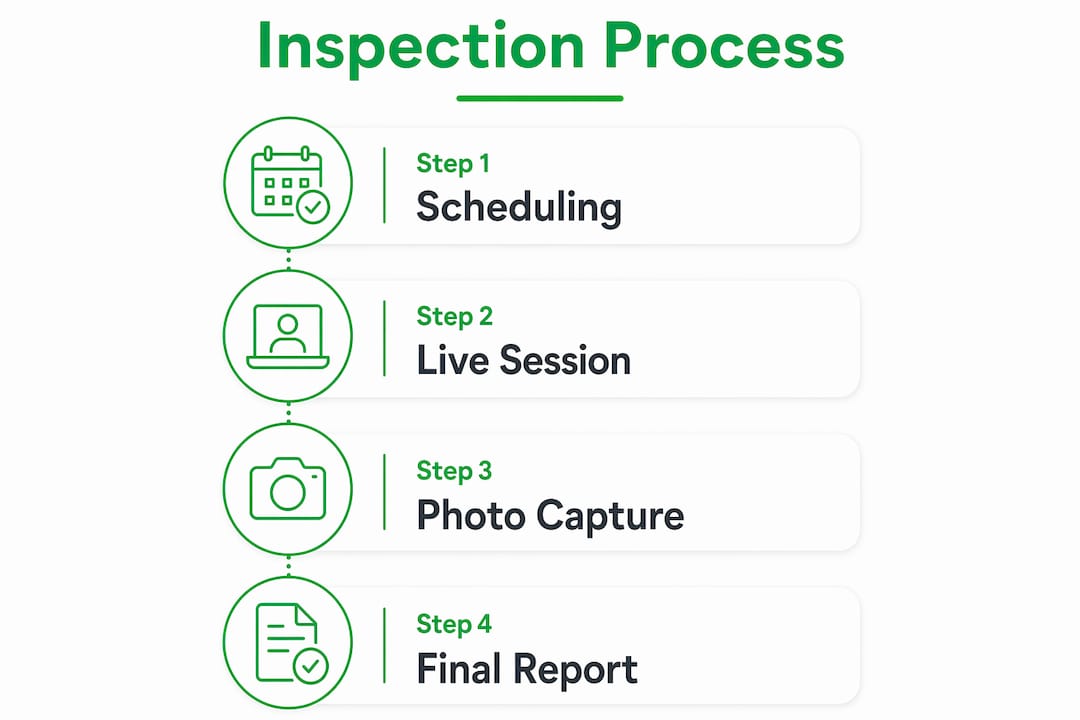
Jhunthomeinspections delivers completed reports within 24 hours. The report embeds video clips and photos alongside written findings, with tamper-proof metadata locking the time, date, and GPS location of each capture. That metadata is what separates a professional video inspection from an informal walkthrough.
Pro Tip: Ask your inspector to confirm the video platform before the session. A stable Wi-Fi connection on the on-site contact’s end is the single biggest factor in session quality.
What are the main benefits of video home inspections?
The benefits of video home inspections go well beyond convenience. They change what an inspection can actually prove.
- Cost reduction: Video inspections cut costs by up to 60% compared to traditional in-person visits. That savings comes from eliminated travel time, reduced scheduling complexity, and faster report turnaround.
- Dynamic evidence: A photo of a wet ceiling stain tells you water was present. A 10-second video clip of an active drip tells you the leak is ongoing. Video captures movement and sound that photos simply cannot replicate.
- Live buyer participation: Buyers can join the session via Zoom or FaceTime, ask questions in real time, and request close-up views of specific concerns. Live participation reduces buyer anxiety and builds confidence before closing.
- Faster documentation: Digital reports with embedded media are generated faster than traditional written reports. Buyers and agents get findings sooner, which accelerates negotiation timelines.
- Legal defensibility: Tamper-proof metadata attached to each video and photo creates an evidence record that holds up in disputes with sellers, contractors, or insurance companies.
- Flexible access: Remote buyers purchasing property in the St. Louis Metro area or Southern Illinois can participate fully without traveling to the site. This is a genuine advantage for out-of-state investors and military families.
The importance of video home inspections is clearest when a deal goes sideways after closing. Without dynamic documentation, a buyer arguing that a leak was present at inspection has only a written report. With video evidence, the argument is settled.
What defects does video document better than photos?
Not every defect benefits equally from video. The format is most powerful when the problem is active, audible, or dynamic.
| Defect Type | Why Video Beats Photos |
|---|---|
| Active plumbing leaks | Video shows water flow rate and drip frequency in real time |
| HVAC mechanical noise | Audio captures grinding, whistling, or rattling that photos cannot convey |
| Structural movement | Loose railings and flexing floorboards are visible only under load |
| Electrical panel issues | Buzzing or visible arcing captured on video signals fire risk clearly |
| Roof drainage problems | Running water reveals slope failures and pooling that dry photos miss |
Effective video clips focus on active defects. A 5–15 second clip of a grinding furnace motor is more persuasive in a repair negotiation than three paragraphs of written description. Longer clips add file size without adding clarity.
Pro Tip: If you are the on-site contact, pause and hold the camera still for audio checks. Movement during audio capture makes it harder for the inspector to isolate the sound source.
The inspector’s role during this phase is to direct, not just observe. A credentialed inspector knows which systems require audio documentation and which require movement tests. That expertise is what makes the session defensible rather than just informative.
How secure and legally defensible is video inspection evidence?
Video inspection evidence is only as strong as the technology behind it. Professional platforms use metadata to lock each capture at the moment it is taken.
Tamper-proof metadata records the time, date, and GPS location of every photo and video clip at the moment of capture. That data cannot be altered after the fact. It confirms that the footage was taken at the inspected property on the inspection date, which matters enormously in insurance claims and legal disputes.
Inspector-led sessions add a second layer of security. Because the inspector controls the session sequence and directs the on-site contact, sellers or tenants cannot steer the camera away from problem areas. The inspector decides what gets documented.
“Digital video documentation shields inspectors from liability disputes by eliminating conflicting accounts of observed defects.” — Swift Reporter
Real estate attorneys and insurance adjusters increasingly rely on this type of documentation. A buyer who discovers a foundation crack six months after closing has a much stronger case when a timestamped video clip from the inspection date shows the crack was visible and documented. Without that evidence, disputes become “he said, she said” arguments that rarely resolve in the buyer’s favor.
The pre-purchase inspection benefits extend beyond the closing table. A well-documented video inspection report is a long-term asset for the property owner.
How to prepare for a video home inspection
Preparation on the buyer’s side and the on-site contact’s side directly affects report quality. A poorly lit room or a shaky camera hand can obscure a defect that would otherwise be obvious.
- Confirm the inspection scope in advance. Know which systems will be covered: roof, HVAC, plumbing, electrical, foundation, and interior spaces. Create a checklist so nothing is overlooked.
- Arrange a reliable on-site contact. This person must follow the inspector’s instructions precisely and promptly. A hesitant or distracted contact slows the session and creates documentation gaps.
- Prepare the property for access. Unlock all panels, clear access to the water heater and electrical box, and remove obstacles from crawl space entries.
- Test the internet connection. The on-site contact should confirm a stable Wi-Fi or strong cellular signal before the session starts. A dropped connection mid-session can mean a missed defect.
- Run appliances and fixtures on cue. The inspector will direct the contact to turn on the HVAC, run faucets, flush toilets, and operate appliances. On-site operators must follow these cues actively, not passively.
- Join the session as the buyer. Platforms like Zoom allow buyers to observe live. Ask questions as they arise. Request close-up views of anything that concerns you.
Pro Tip: Write down your top three concerns about the property before the session starts. Share them with your inspector so those areas receive extra attention during the walkthrough.
Good lighting is the most overlooked preparation factor. Basements, attics, and utility closets are often dark. Ask the on-site contact to bring a flashlight or confirm that the property’s lighting is functional before the session begins.
Key takeaways
A video home inspection delivers legally defensible, cost-effective property documentation through inspector-led live sessions that capture dynamic evidence no static photo report can match.
| Point | Details |
|---|---|
| Definition and structure | A video home inspection is a live, inspector-led remote session producing tamper-proof digital evidence. |
| Cost advantage | Video inspections reduce costs by up to 60% compared to traditional in-person visits. |
| Dynamic evidence value | Short 5–15 second video clips document active leaks, sounds, and movement that photos cannot prove. |
| Legal defensibility | Metadata locking time, date, and GPS location makes video evidence usable in disputes and insurance claims. |
| Preparation matters | On-site contact quality, lighting, and internet stability directly determine the inspection’s documentation quality. |
Why video inspections are more than a pandemic workaround
I have seen a lot of inspection methods come and go over the years. Video inspection gets dismissed by some buyers as a lesser substitute for walking through a property in person. That view misses the point entirely.
The inspector-led model is the key distinction. When a credentialed inspector controls the session, the documentation is more thorough than most in-person walkthroughs where the buyer is trailing behind and half-listening. The inspector decides what gets captured, in what order, and at what level of detail. That discipline produces better reports.
What I find most compelling is the evidence quality. A buyer who has never owned a home cannot interpret a written description of “minor HVAC noise.” A 10-second video clip of a grinding blower motor communicates the problem instantly. Video bridges the knowledge gap between technical inspectors and non-expert buyers in a way that written reports never fully managed.
The legal defensibility angle is where I expect the biggest industry shift. As more real estate disputes end up in mediation or court, timestamped video evidence will become the standard of care, not a premium add-on. Inspectors who do not adopt video documentation will face higher liability exposure. Buyers who do not request it will have weaker protection.
The hybrid approach, combining static photos for context with short video clips for dynamic proof, is the format that delivers the most complete picture. That is not a prediction. It is already the best practice among the most thorough inspectors working today.
— JOHN
Get a professional video home inspection with Jhunthomeinspections
Jhunthomeinspections offers both in-person and video home inspections across the St. Louis Metro area and Southern Illinois, with reports delivered within 24 hours.
Whether you are a first-time buyer, a remote investor, or a veteran navigating the homebuying process, Jhunthomeinspections provides inspector-led video sessions with embedded video clips, high-resolution photos, and tamper-proof metadata in every report. The proprietary Create Request List™ tool makes it easy to share findings directly with your agent and prioritize repair requests. You can review all available inspection services or explore budget-friendly inspection options that protect your investment without cutting corners.
FAQ
What is a video home inspection exactly?
A video home inspection is a live, remote property assessment where a licensed inspector directs an on-site contact via video call to document the home’s condition. The session produces a digital report with embedded video clips, photos, and tamper-proof metadata.
How long does a video home inspection take?
Most video inspection sessions run 45–60 minutes, depending on property size and the number of systems being evaluated. The final report is typically delivered within 24 hours of the session.
Can a video inspection replace an in-person inspection?
A professional, inspector-led video inspection covers the same systems and produces comparable documentation to an in-person visit. It is a recognized alternative, not a shortcut, and is especially effective for remote buyers and investors.
How does video inspection evidence hold up in disputes?
Tamper-proof metadata locking the time, date, and GPS location of each capture makes video inspection evidence legally defensible. Insurance adjusters and real estate attorneys increasingly rely on this type of documentation to resolve post-closing disputes.
What should i look for in a video inspection report?
A quality report includes short video clips (5–15 seconds) of active defects, high-resolution photos for context, written findings, and metadata confirming when and where each capture was taken. Jhunthomeinspections delivers all of these within 24 hours of the inspection session.
Recent Comments