
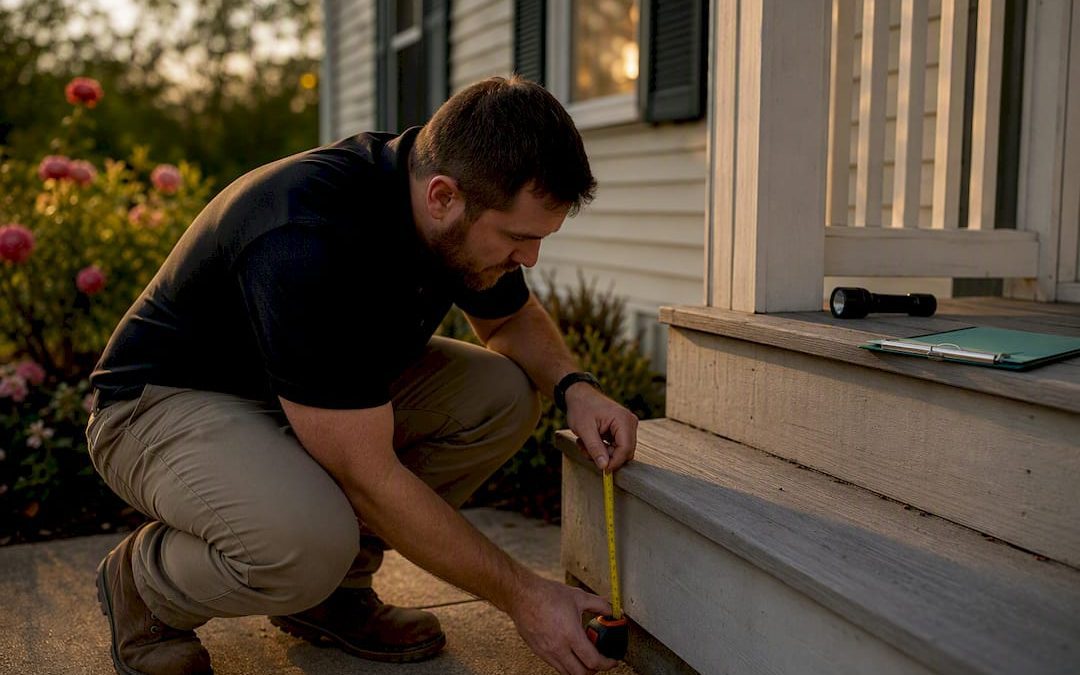
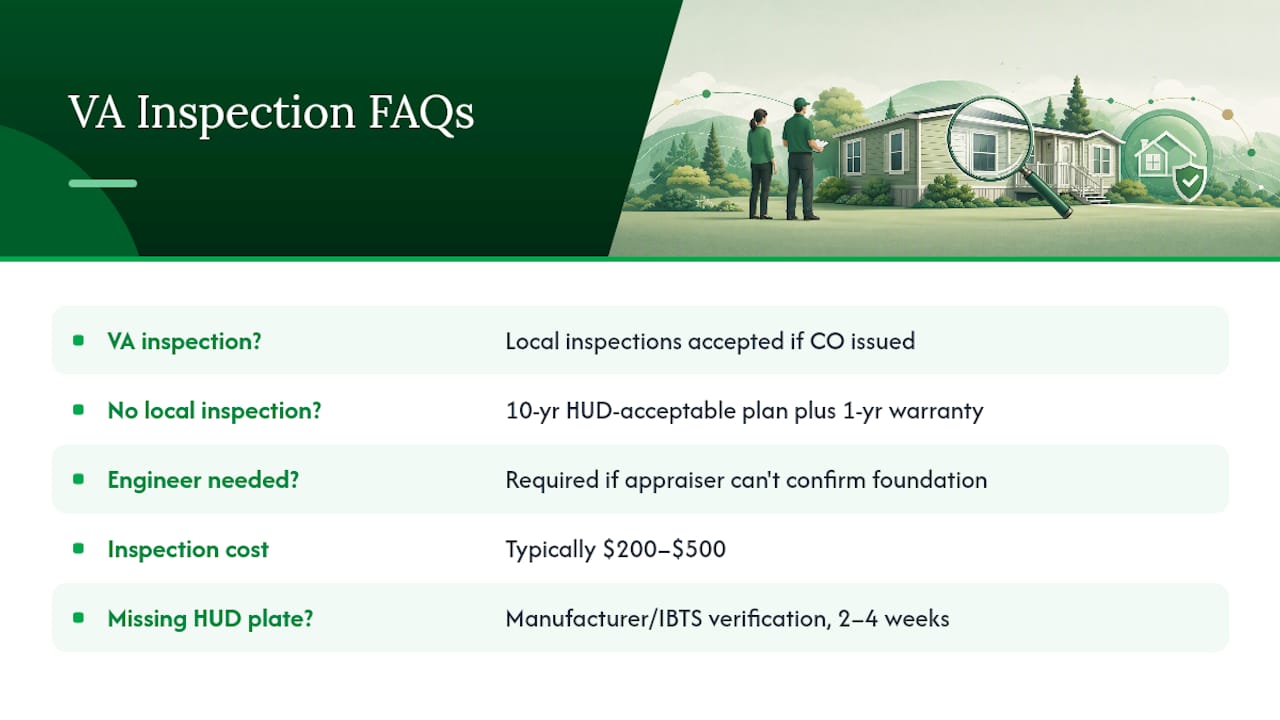
A VA loan can close on a manufactured home without a separate VA compliance inspection if the local building authority already performed foundation, framing, and final inspections and issued a Certificate of Occupancy. That rule comes straight from VA Circular 26-06-01, which lets VA accept local inspection reports in place of duplicate paperwork. If your municipality skipped that step, expect two fallback requirements instead: a 10-year insurance-backed protection plan and the standard 1-year VA builder’s warranty.
Before you go further, gather these:
- Certificate of Occupancy or written confirmation of local inspections
- HUD certification label and data plate photos
- Foundation certification from a licensed structural engineer, if your lender requests one
Hunt Home Inspection, LLC works with Virginia buyers on exactly this kind of paperwork trail, and its Create Request List™ tool keeps repair negotiations organized once the report lands. VA Pamphlet 26-7 (the Lender’s Handbook) is the other document your lender will reference throughout underwriting.
Key Takeaways
The manufactured home VA inspection process hinges on documenting HUD compliance, local inspection or CO evidence, and a timely foundation certification when a lender requires one.
| Point | Details |
|---|---|
| Confirm real property status first | Check county tax and title records before ordering any paid inspections. |
| Gather HUD label evidence early | Photograph the data plate and certification seal to avoid weeks of verification delays. |
| Know VA’s acceptance rule | VA Circular 26-06-01 lets local foundation, framing, and final inspections replace VA compliance inspections when a CO or reports exist. |
| Order the engineer certification early | Foundation certification from a licensed structural engineer often costs $300–$600 and commonly causes delays when ordered late. |
| Hire a VA-aware inspector | Hunt Home Inspection, LLC offers 24-hour reports, video inspections, and the Create Request List™ to keep repair negotiations moving. |
Table of Contents
- Manufactured Home VA Inspection Process: Buyer and Lender Checklist
- When VA Accepts Local Inspections Instead of Its Own
- Common Manufactured Home Defects That Stall VA Loans
- Termite Reports and Warranty Coverage You’ll Need
- Choosing an Inspector Who Actually Knows VA Manufactured Homes
- Frequently Asked Questions
- Sources
Manufactured Home VA Inspection Process: Buyer and Lender Checklist
Getting a manufactured home through VA underwriting is less about one big inspection and more about assembling the right proof at the right time. Here’s the order that actually works.
- Confirm the home is real property. Pull the county tax record and deed before you spend a dime on inspections. If the home is still titled as personal property on leased land, VA financing usually isn’t available, so this check saves you from wasted fees.
- Locate the HUD data plate and certification label. These sit inside a kitchen cabinet or on the frame near the tongue. Photograph both. A missing label doesn’t kill the deal, but it triggers a verification process through the manufacturer or IBTS that can add two to four weeks.
- Check with your lender about overlays. Some lenders add stricter age or foundation requirements on top of VA’s baseline rules, so ask before you schedule anything.
- Order local inspection reports or the CO. If the home is new construction or recently placed, your builder or the municipality should have foundation, framing, and final inspection records on file.
- Schedule a manufactured-home-specific pre-purchase inspection. This is separate from any VA compliance inspection and covers roof, walls, subfloor, plumbing, electrical, appliances, and foundation condition.
- Order the structural engineer’s foundation certification early if required. This step causes more VA closing delays than almost anything else on this list.
- Assemble the lender’s file. That means CO or inspection reports, VA Form 26-1839 if a VA compliance inspection was performed, builder ID, and any third-party system reports for used homes.
Who pays for what varies. The lender typically orders the VA appraisal and any VA compliance inspection; you order your own pre-purchase inspection and the engineer’s certification. Manufactured-home inspection fees commonly run $200 to $500 depending on square footage and location, while a PE foundation certification typically adds another $300 to $600.
Pro Tip: Call the structural engineer the same week you go under contract, not after your inspection report comes back. Engineers book out, and a late-ordered foundation certification is one of the most common reasons VA closings slip past their target date.
When VA Accepts Local Inspections Instead of Its Own
VA doesn’t want to duplicate work a city or county inspector already did well. Under Circular 26-06-01, VA will accept local authority inspections covering foundation, framing, and final stages, plus a CO or equivalent inspection reports, in place of a separate VA compliance inspection for proposed or under-construction homes.
That acceptance depends on a few conditions actually being met:
- The local inspections must cover all three stages: foundation, framing, and final.
- A CO must be issued, or the local authority must provide copies of inspection reports or a written statement confirming compliance.
- The builder’s ID number and state or local licensing need to be documented.
- Required exhibits referenced on the Notice of Value, including items 12, 12a, 13, 17, and 19, need to be satisfied before the loan moves forward.
If the local authority never inspected the home at all, VA falls back on a stricter standard: a 10-year insurance-backed protection plan acceptable to HUD, combined with the 1-year VA builder’s warranty described in VA Pamphlet 26-7. Both protections exist because nobody else verified the construction, so VA needs a longer safety net written into the deal itself.
Common Manufactured Home Defects That Stall VA Loans
Inspectors and appraisers tend to find the same handful of problems again and again. Here’s how they rank by urgency.
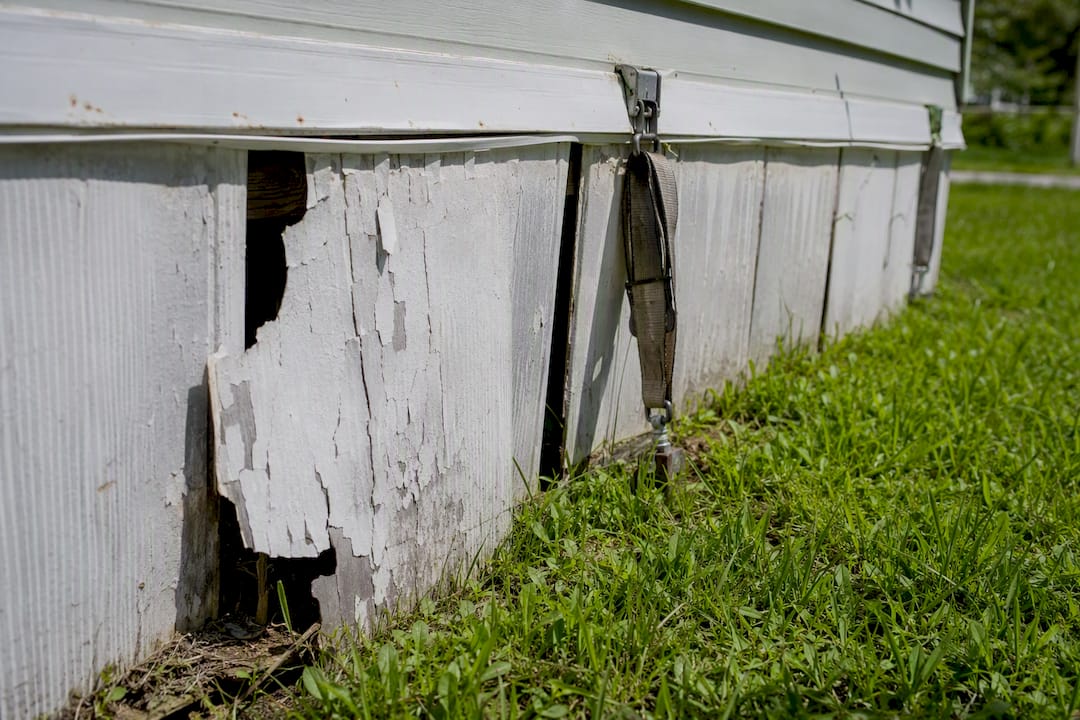
- Foundation and anchoring failures. Missing or degraded piers, loose tie-downs, or a chassis that was never properly secured to a permanent foundation. This is the single biggest trigger for a required engineer certification.
- Subfloor moisture and rot, often tied to plumbing leaks under the home or torn belly paper that let groundwater and pests in.
- Sagging floors or frame corrosion, particularly in older homes that sat on inadequate footings for years before the current owner bought them.
- Missing HUD certification label or data plate. Without it, lenders can’t confirm the home meets post 1976 HUD code standards, and verification takes weeks.
- Title still showing personal property status, which blocks VA financing outright until it’s corrected through the state.
On the utilities side, expect inspectors to flag electrical panels that are undersized or outdated, old polybutylene plumbing, missing GFCI protection near water sources, and heating systems that don’t meet current safety codes. None of these typically kill a deal on their own, but they show up as repair items on the appraiser’s Notice of Value.
Repair priority runs safety and structural first, systems second, cosmetic last. A cracked skirting panel can wait. A missing tie-down cannot. Budget accordingly, and expect a re-inspection fee any time the lender requires proof that a safety item was actually fixed.
Termite Reports and Warranty Coverage You’ll Need
Wood-destroying organisms cause the kind of hidden damage that appraisers can’t spot from a visual walkthrough, so lenders frequently require a separate WDO inspection before closing, especially in Virginia’s humid climate where termite activity runs high. Get this scheduled alongside your main inspection rather than after, since a positive finding can require treatment and a clearance letter before the lender signs off.
- Request the WDO report as soon as you’re under contract
- Confirm your builder’s warranty covers equipment, materials, and workmanship for the full 1-year VA period
- If local inspections weren’t performed, gather the 10-year insurance-backed protection plan documents before closing, not during
Pro Tip: Ask your pest control provider whether their termite prevention treatment includes a transferable warranty. A transferable clearance can save the next buyer, and you, real money down the line.
Choosing an Inspector Who Actually Knows VA Manufactured Homes
Not every home inspector has worked a manufactured-home VA file before, and that gap shows up fast once the lender starts asking for documentation. Look for someone who can verify a HUD data plate on sight, knows how to photograph findings the way an underwriter expects, and has coordinated with structural engineers on foundation certifications.
Before you hire, ask directly:
- Have you inspected manufactured homes for VA buyers before?
- Can you help coordinate the engineer’s foundation certification, or do I need to arrange that separately?
- Will you bring in specialists for WDO, electrical, or plumbing if something looks off?
- How fast do you turn around the written report?
Deliverables matter as much as credentials. You want a photo-rich report with clear repair items, not vague notes. Hunt Home Inspection, LLC returns reports within 24 hours and offers video inspections for buyers who can’t attend in person, plus the Create Request List™ to turn findings into a negotiable repair list your agent can send straight to the seller.
Pro Tip: Ask upfront whether the inspector’s report format matches what your specific lender and appraiser typically request. A report that’s clear to you but disorganized to an underwriter can add days to your closing timeline.
Why a VA-Aware Inspection Keeps Your Closing on Schedule
Most delays I’ve seen trace back to the same root cause: someone ordered the engineer’s foundation certification too late, or nobody checked the HUD data plate until the appraisal was already back. A manufactured-home inspection built around VA’s actual documentation needs, not a generic walkthrough, catches those gaps while there’s still time to fix them. Fast turnaround and a clear repair list matter here more than almost anywhere else in the home-buying process, because every day spent chasing paperwork is a day your rate lock is burning. Loop in your inspector, lender, and agent early, and keep them talking to each other.
Book a VA-Ready Manufactured Home Inspection
If you’re navigating this checklist and would rather have someone who’s done it before, Hunt Home Inspection, LLC handles VA-focused manufactured-home inspections across the St. Louis Metro area and Southern Illinois, including coordination on WDO reports, radon testing, and structural engineer referrals for foundation certifications. Reports come back within 24 hours, video inspections are available when you can’t be on-site, and the Create Request List™ turns your findings into a repair request your agent can send the same day.
Payment-at-close options are available so inspection costs don’t compete with your other closing expenses. Visit the inspection services page to see what’s included, or check the company selection criteria guide if you’re comparing inspectors before you book.
Frequently Asked Questions
Does VA always require its own inspection for a manufactured home?
No. When the local building authority already performed foundation, framing, and final inspections and issued a CO or equivalent reports, VA typically accepts that documentation instead of ordering a separate compliance inspection.
What happens if my local jurisdiction never inspected the home?
Your lender will require a 10-year insurance-backed protection plan acceptable to HUD, combined with the standard 1-year VA builder’s warranty, to cover the gap in oversight.
Do I need a structural engineer for every manufactured home?
Not always, but lenders commonly require it when the appraiser can’t visually confirm the foundation meets HUD’s permanent foundation standards. Ordering this early avoids the most common cause of closing delays.
How much does a manufactured home inspection typically cost?
Specialist manufactured-home inspections generally run $200 to $500 depending on size and location, separate from any engineer foundation certification fee.
What if the HUD data plate is missing?
It doesn’t automatically disqualify the home, but it triggers a verification process through the manufacturer or IBTS that can take two to four weeks, so start that process as soon as you spot the issue.
This article is general information, not a substitute for advice from a qualified financial advisor. Consult a qualified financial professional about your own circumstances before acting on anything here.
Sources
These primary sources back the compliance and documentation rules covered above:
- Circular 26-06-01 (February 15, 2006)
- VA Loans for Manufactured Homes 2026: Eligibility Checker
- Mobile Home Inspection: Checklist & Guide (2026)
Recent Comments